
Syrian security forces were sent to villages on the outskirts of Sweida on Saturday as sectarian clashes between Druze and Bedouin fighters continued despite a ceasefire announced earlier in the day.
Fighting persisted in the Druze-majority city of Sweida on Saturday afternoon, with video showing plumes of black smoke rising over the city amid heavy gunfire and shelling.
There were no immediate reports of casualties from the renewed violence.
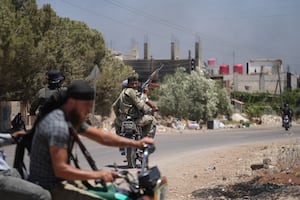
A witness described the situation in Sweida as “catastrophic, with homes burnt, bodies in the streets, and Bedouin fighters roaming on scooters. The witness told The National that tribal fighters had entered the centre of the city on Saturday, following days of clashes on its outskirts.
Syrian President Ahmad Al Shara said the clashes in the Druze heartland of Sweida over the past week constituted a “dangerous turning point” that was worsened by Israeli intervention.
In his first address since a ceasefire was announced, Mr Al Shara said the violent clashes were “about to spiral out of control” had it not been for the intervention of Syrian forces.
“The recent events witnessed in Sweida have marked a dangerous turning point,” the Syrian leader said after his seven-month rule witnessed several waves of bloody sectarian fighting.
Days of violence in Sweida were marked by widespread reports of assaults, especially against the Druze community.
The International Committee of the Red Cross (ICRC) said it received “distress calls” from residents who were facing “severe shortages of food, clean water, electricity and medical care”.
“The humanitarian situation in Sweida is critical,” said Stephane Sakalian, head of the ICRC delegation in Syria.
The UN Commission of Inquiry on Syria has said it is “deeply alarmed” by the violence in Sweida, quoting reports from local residents of “killings, abductions, burning of properties and looting, as well as an increase in incitement and hate speech online and in person”.
A spokesperson for the interior ministry said on Saturday that “the kidnapped and detainees will be released from Sweida in co-ordination with local forces and government officials”.
Sectarian clashes in Syria’s Sweida province began last week as tit-for-tat attacks between Bedouin tribal factions and Druze fighters.
The violence quickly escalated into indiscriminate bloodshed, drawing in government forces, which were accused of widespread violations against the Druze community, and Israel, which launched a series of strikes in southern Syria and on Damascus.
Israeli intervention
On Wednesday, Israel attacked the Ministry of Defence and the presidential palace, in what it claimed was an effort to “defend” the Druze community. But diplomats and analysts said its goal is to weaken the new Syrian authorities
“The Israeli intervention has renewed tensions and pushed the country into a dangerous phase that threatens its stability as a result of the blatant bombing of the south and government institutions in Damascus,” Mr Al Shara said, shortly after his office announced an “immediate ceasefire” in the southern province.
The Israeli military said on Saturday that dozens of Israeli citizens crossed the border with Syria into Majdal Shams, a Druze village in the occupied Golan Heights.
It said the Israeli citizens used violence against Israeli forces trying to disperse a gathering in the area overnight.
Early on Saturday, US envoy to Damascus Tom Barrack announced a ceasefire between Israel and Syria. He also called on the Druze and Bedouin factions to put their weapons down.
Mr Barrack met Jordan’s Foreign Minister Ayman Safadi on Saturday in Ankara to discuss the situation in Syria, including efforts to consolidate the ceasefire in Sweida.
Mr Safadi condemned Israeli strikes on Syria as “violations of international law”, and warned they threaten Syria’s stability and civilian safety.
Mr Al Shara thanked the US for its support and for “affirming its stance alongside Syria in these difficult circumstances”.
He also vowed to protect minorities in the country. “The Syrian state is committed to protecting all minorities and communities in the country … We condemn all crimes committed” in Sweida, he said.
Israel's Foreign Minister Gideon Saar on Saturday dismissed his renewed pledge to protect minorities after deadly sectarian clashes, saying it was “very dangerous” to be a minority in the country.
The international community had “a duty to ensure the security and rights of the minorities in Syria and to condition Syria's renewed acceptance into the family of nations on their protection”, he added.
-
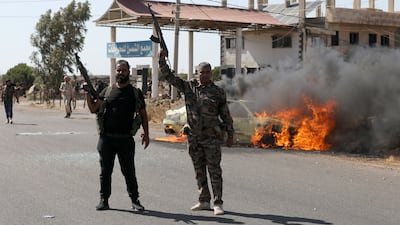
Armed men in front of a burning car near the site of clashes between Druze fighters and Bedouin tribesmen in Sweida, southern Syria. Getty Images -
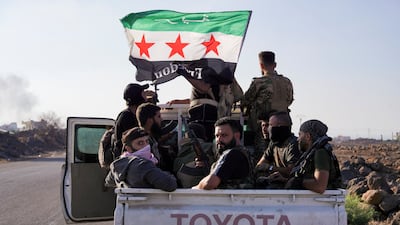
Members of Syria's security forces sit together in the back of a truck, amid fighting in Sweida. Reuters -
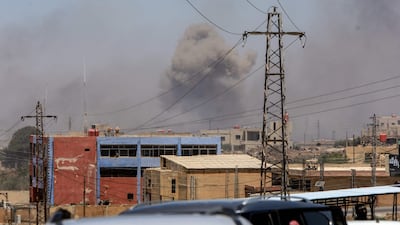
Smoke billows on the horizon during Israeli strikes near the city of Sweida. AFP -
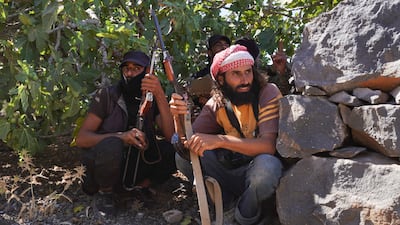
Armed men sit in wait in Sweida. Reuters -
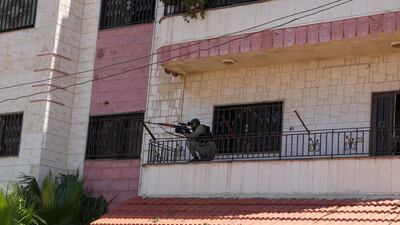
A member of Syria's security forces takes position in Sweida. AFP -
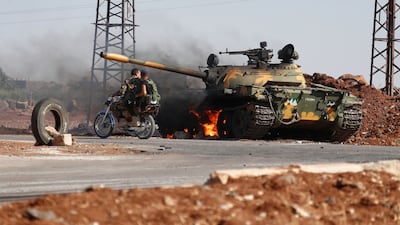
Syrian government soldiers pass a burning tank on the outskirts of Sweida city. Dozens of people were reported killed in the fighting. AP -
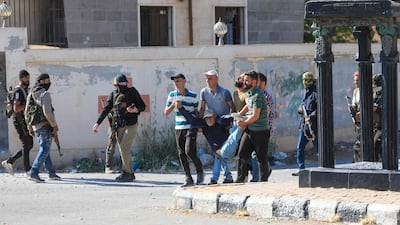
An injured man is carried away during clashes in an area between the villages of Mazraa and Walga, near the predominantly Druze city of Sweida. AFP -
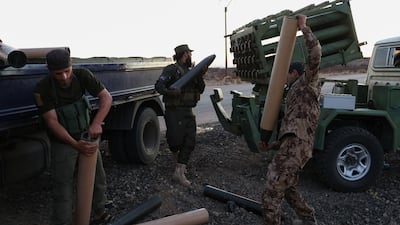
Syrian government forces prepare to fire a rocket launcher near Sweida. Getty images -
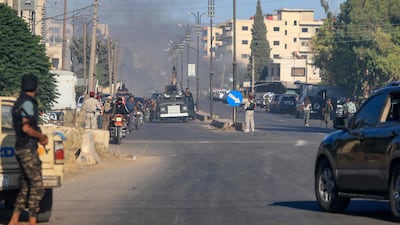
Members of Syria's security forces look on as smoke billows from clashes between Bedouin tribes and Druze fighters, between Mazraa and Walga. AFP -
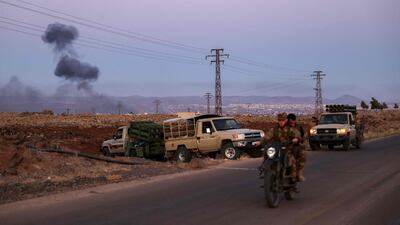
Smoke billows from Israeli air strikes in an area between Mazraa and Walga. Israel said it was acting in defence of the Druze minority. AFP -
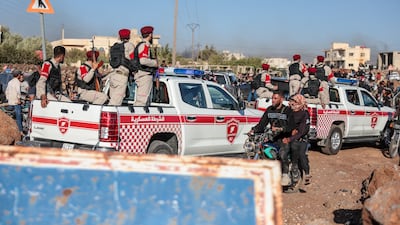
Syrian military police sent to the area. Government troops and auxiliary forces were among those killed in the fighting, said officials. EPA -
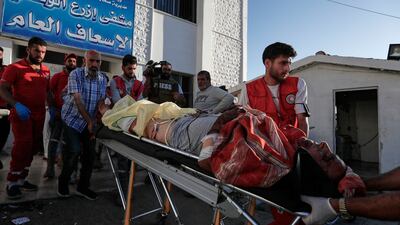
Syrian Red Crescent volunteers bring an injured man to Ezra Hospital, in southern Syria. AP


Bloody week
While the Syrian government announced an end to its military offensive in Sweida on Wednesday, sectarian violence erupted again on Thursday evening as Bedouin clashed with Druze militia in the south-western region.
Clashes broke again when Druze fighters launched retaliatory attacks on Bedouin communities, according to Syria's National news agency, Sana.
On Friday, Bedouin fighters took control of Mazraa, a Druze-majority town on the city’s outskirts, torching homes and leaving behind graffiti accusing the Druze of being “collaborators”.
Many described harrowing scenes as they ventured back into the streets after days of confinement amid indiscriminate shelling.
The UN's migration agency said on Friday that nearly 80,000 people had been displaced by sectarian violence.
According to the Syrian Observatory for Human Rights, a UK-based monitor, at least 718 people have been killed in Sweida in about a week of violence.

