


Russia's ambassador to the UN said on Tuesday he sees no willingness from Israel to engage in mediation efforts to end its conflict with Iran, warning of “unpredictable consequences” as hostilities intensify.
“This thing should be stopped, because it has absolutely unpredictable consequences, given that we're talking about nuclear sites that are under threat and given that the ballistic exchange continues with heavy casualties on both sides,” Vasily Nebenzya told reporters in New York.
The remarks come as retaliatory attacks between Israel and Iran continue, and as international calls grow for de-escalation. It also comes as President Donald Trump has indicated the US could enter the conflict.
Moscow is seeking to be a mediator, but its overtures have yet to translate into concrete talks.
“There was a conversation between President [Vladimir] Putin and President Trump the other day, and President Putin said that we are ready to do what we can to facilitate … so in that sense, yes, we are co-ordinating, but we don't have any mediation efforts on the ground,” he said.
Iran provided critical drone support to Russia during the first year of Moscow’s war in Ukraine, helped it establish a domestic drone factory, and signed a 20-year strategic partnership in January, deepening defence and political ties between the two allies.
Yet months after that agreement, as Iran faces unprecedented Israeli strikes threatening its stability, Russia has offered little beyond diplomatic statements and phone calls, leaving Tehran increasingly isolated.
Moscow is walking a tightrope, Lulia-Sabina Joja, a senior fellow at the Middle East Institute, told The National, as it weighs support for Tehran against protecting its broader regional interests amid Iran’s declining influence.
Any prolonged instability in the Middle East, especially involving Iran, could undermine Russia’s delicate balancing act in the region, Ms Joja said.
“Russia has to play now a very difficult balancing game,” she said. “On the one hand, they want to support Iran but have to be on the winning side in the Middle East to pursue their interests, and Iran is looking weak, with its interests on the losing side across the region, particularly in Syria with the Assad regime and other elements.”
At the same time, Moscow's immediate priority remains its war in Ukraine, she noted, where it aims to prolong the conflict while stringing along the US with illusory negotiations.
“For them to be able to do that for as long as possible, which is their aim, they have to play nice, or at least pretend to play nice, with the United States,” Ms Joja said. “That's why we're seeing them take a step back or adopt a more reluctant position than some expected in their partnership with Iran.”
If the US joins Israel in striking Iran, Ms Joja said direct Russian intervention is unlikely. “The US and Israel have the upper hand,” she said of their air superiority.
Still, any escalation of the conflict would necessarily make Moscow uncomfortable, as it would jeopardise Russia's goals in Ukraine and its broader Middle East ambitions, including access to warm-water trade routes, she added.
-
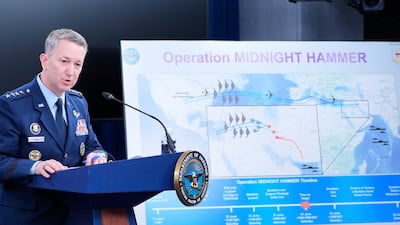
Gen Dan Caine, Chairman of the Joint Chiefs of Staff, holds a press conference at the Pentagon after the US military struck three sites in Iran. AP -
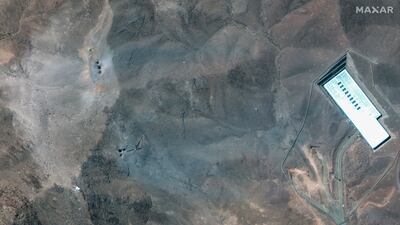
A handout satellite image made available by Maxar Technologies shows craters and ash on a ridge at the Fordow underground uranium enrichment following US air strikes. EPA -
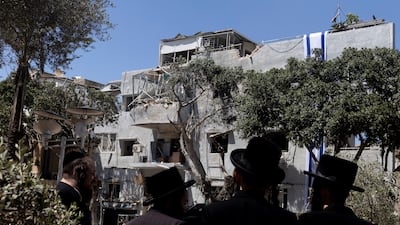
Ultra-Orthodox Jewish men look in shock at a building ruined in an Iranian missile strike in Haifa, Israel. Getty Images -
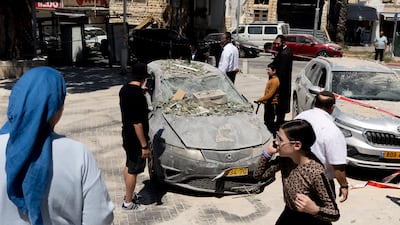
Cars damaged in Haifa. Getty Images -
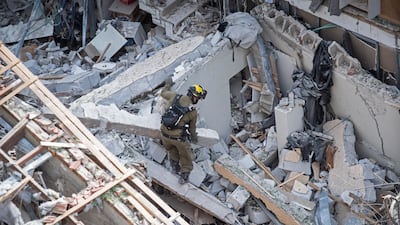
Debris in Tel Aviv. Israel was hit by a wave of aerial attacks from Iran after the US entered the war overnight and bombed several Iranian nuclear sites. Getty Images -
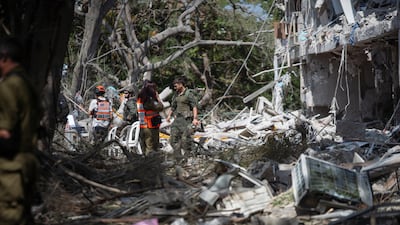
Emergency workers search for survivors in the Ramat Aviv neighbourhood of Tel Aviv, after it was bombed. Getty Images -
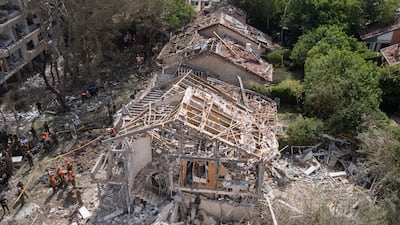
Residential buildings destroyed at the site of an Iranian air strike in Ramat Aviv. Getty Images -
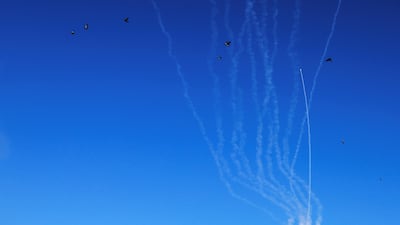
Missiles launched from Iran are intercepted over Tel Aviv. Reuters -
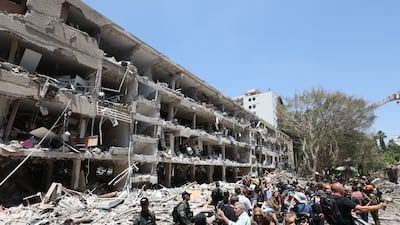
Israeli emergency teams at the site of an Iranian missile strike on a residential complex in Tel Aviv. EPA -
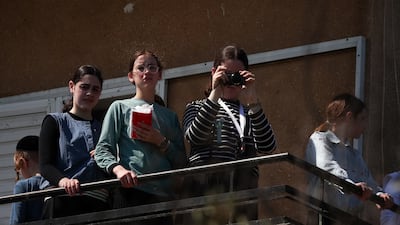
People look at a site bombed in Haifa. Reuters -
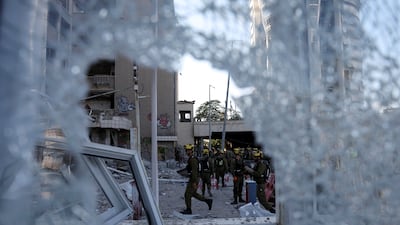
Israeli emergency personnel at a building hit by an Iranian missile strike, in Haifa. Reuters -
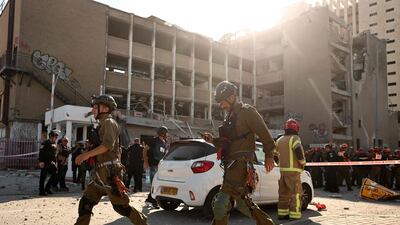
Israeli emergency personnel at a building hit by an Iranian missile strike, in Haifa. AFP -
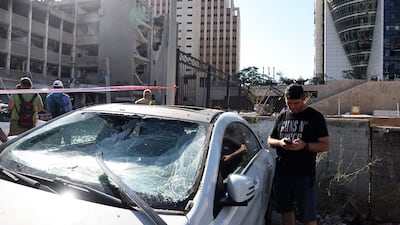
A car hit by a missile launched from Iran, in Haifa. AFP -

Israeli emergency personnel at a building hit by an Iranian missile strike, in Haifa. AFP -
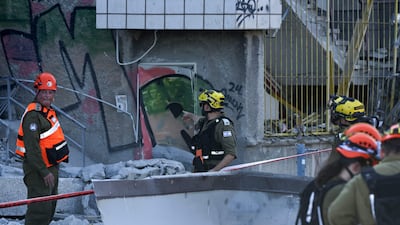
Israeli emergency personnel at a building hit by an Iranian missile strike, in Haifa. AFP -
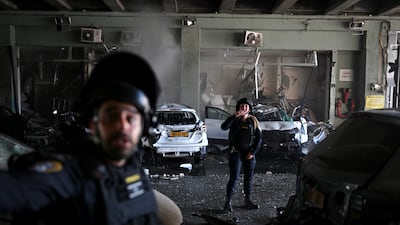
Israeli emergency personnel at a building hit by an Iranian missile strike, in Haifa. AFP -
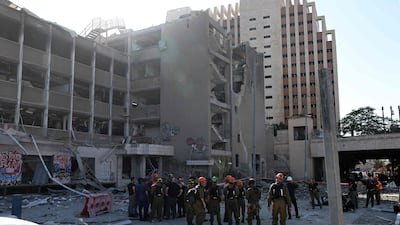
Israeli emergency personnel at a building hit by an Iranian missile strike, in Haifa. AFP -
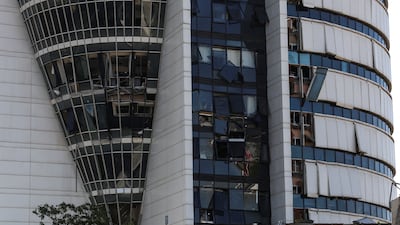
People gather outside a damaged building in Haifa. Reuters -
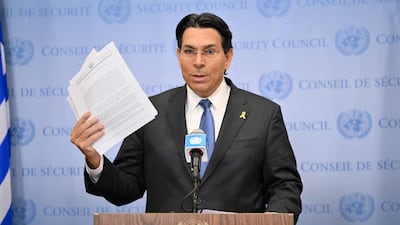
Israeli ambassador to the UN in Geneva addresses and emergency session. AFP -
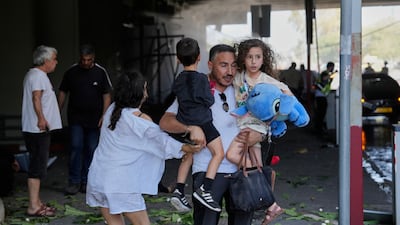
Israelis flee an Iranian missile strike in the port city of Haifa. AP Photo -
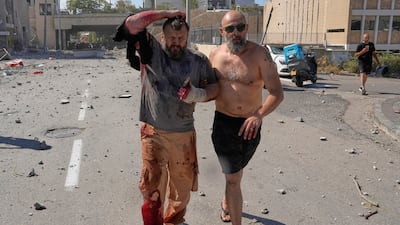
An injured man is helped after an Iranian missile strike in Haifa. AP Photo -
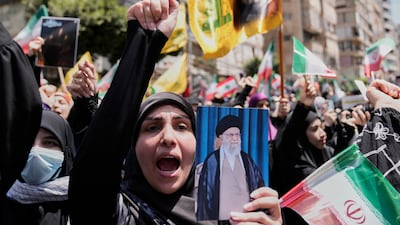
A protester holds up a portrait of Iran's supreme leader Ayatollah Ali Khamenei at a demonstration against Israeli attacks on Iran, in Beirut, Lebanon. AP Photo -
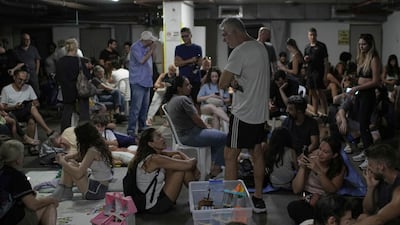
People take shelter as air raid sirens warn of incoming Iranian strikes in Tel Aviv. AP Photo -
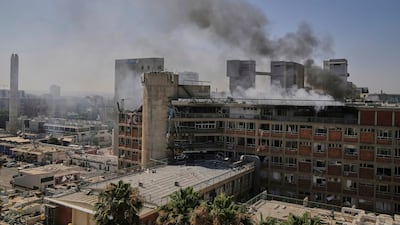
Smokes rises from Soroka Medical Centre, in Beersheba, southern Israel, after it was hit by an Iranian missile. AP -
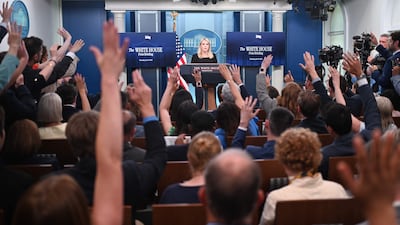
White House press secretary Karoline Leavitt takes questions from reporters. She said President Donald Trump would decide whether the US would join Israel’s war on Iran 'in the next two weeks'. AFP -
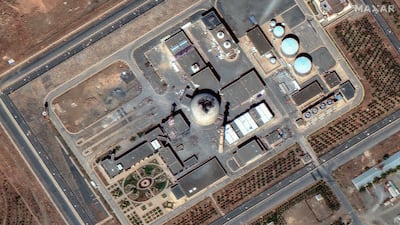
Iran's Arak heavy water reactor, in central Iran, after Israeli air strikes. Reuters -
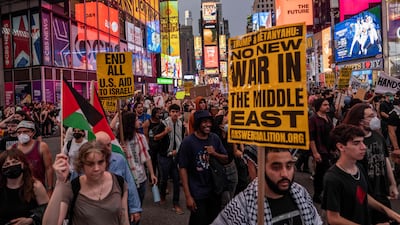
People march in Times Square, New York, to call on President Trump not to go to war with Iran. AFP -
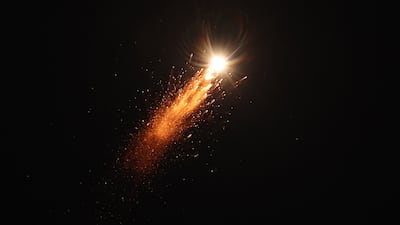
Israel's Iron Dome air defence system intercepts missiles fired from Iran over Tel Aviv. EPA -
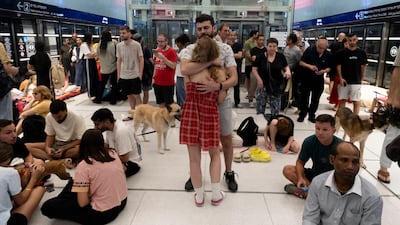
Israelis shelter in an underground train station in Ramat Gan after a missile warning. Getty Images -
Israeli special forces check the remains of a suspected Iranian ballistic missile in northern Israel. Reuters -
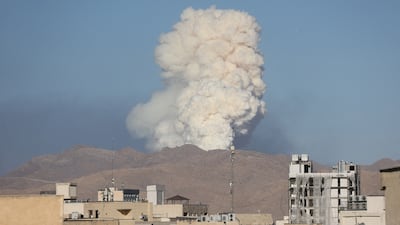
Smoke rises after an Israeli attack in the Iranian capital, Tehran. Reuters -
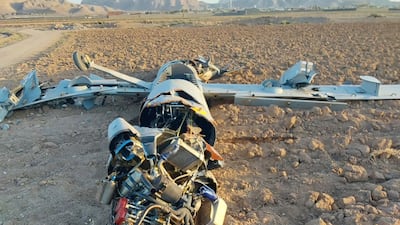
A picture released by Iran's armed forces claims to show an Israeli drone shot down outside the central city of Isfahan. AP -
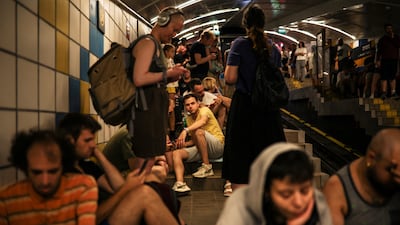
People take cover inside a cable car tunnel in Haifa after an Iranian missile attack. Reuters -
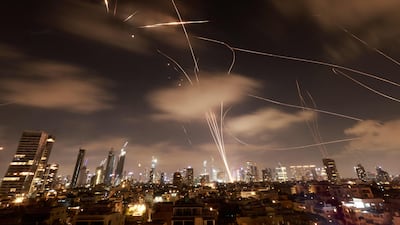
Israeli air defence systems fire at Iranian missiles over Tel Aviv. AFP -
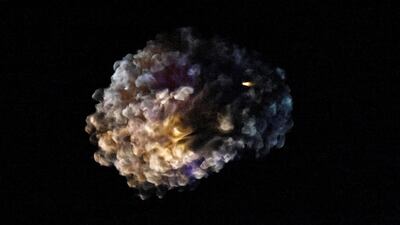
Missiles are intercepted above Ashkelon, Israel. Reuters -
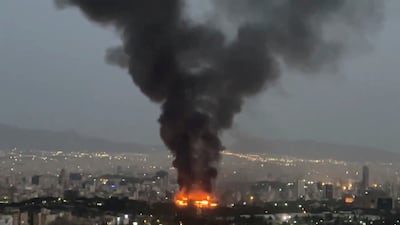
Smoke rises in Tehran. Reuters -
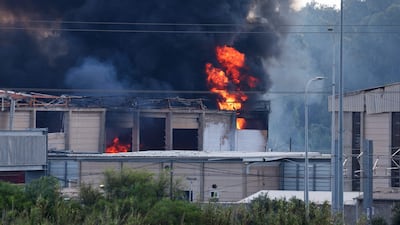
A building burns after strikes on the Israeli city of Herzliya, near Tel Aviv. AFP -
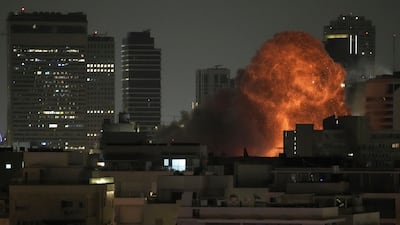
An Iranian missile causes an explosion in Tel Aviv. AP -
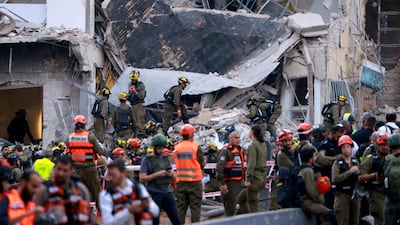
Rescuers sift through the remains of a damaged building in Tel Aviv after a barrage of Iranian rockets. AFP -

A wounded man is treated after an explosion in Tehran. AP



