The jailed leader of the Kurdistan Workers' Party (PKK), Abdullah Ocalan, said on Sunday he is "ready to make a call" to back a new initiative by the Turkish government to end decades of conflict, Turkey's pro-Kurdish party confirmed.
Two politician's from the Peoples' Equality and Democracy Party (DEM) party made a rare visit to Ocalan on Saturday on his prison island, the first by the party in almost a decade, amid signs of easing tension between the Turkish government and the PKK.
President Recep Tayyip Erdogan's government approved DEM's request on Friday to visit the founder of the PKK, which is designated a terrorist group by Turkey and its western allies.
Ocalan has been serving a life sentence on the island of Imrali, south of Istanbul, since 1999.
The government's approval of the visit comes two months after the head of Turkey's nationalist MHP party, Devlet Bahceli, extended Ocalan an olive branch, inviting him to parliament to renounce terror and disband his group, in a move backed by Mr Erdogan.
"I have the competence and determination to make a positive contribution to the new paradigm started by Mr Bahceli and Mr Erdogan," Ocalan said, according to a DEM statement on Sunday.
He said the visiting delegation would share his approach with the state and political circles. "In light of this, I am ready to take the necessary positive steps and make the call."
DEM party co-chairman Tuncer Bakirhan praised Ocalan's appeal as a "historic opportunity to build a common future", in a message on social media platform X.
"We are on the eve of a potential democratic transformation across Turkey and the region. Now is the time for courage and foresight for an honourable peace," Mr Bakirhan said.
The PKK has waged an insurgency against the Turkish state since 1984, claiming tens of thousands of lives. A peace process between the PKK and the government collapsed in 2015, unleashing violence especially in the Kurdish-majority south-east.
The initiative launched in October by Mr Bahceli, who has been hostile to the PKK, sparked a public debate, with Mr Erdogan hailing it as a "historic window of opportunity".
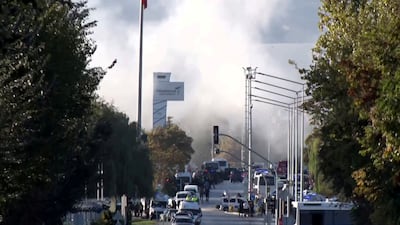
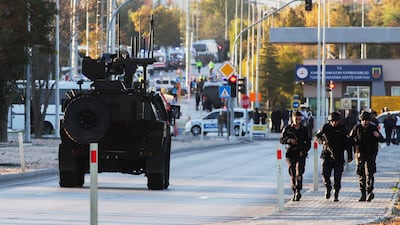
But a deadly terror attack in October on a Turkish defence company in the capital Ankara, for which PKK militants claimed responsibility, put those hopes on hold. Turkey launched strikes on Kurdish militants in Iraq and Syria after the attack, which killed five people.
"Re-strengthening the Turkish-Kurdish brotherhood is not only a historical responsibility but also … an urgency for all peoples," Ocalan said, according to the DEM statement.
He said all the efforts would "take the country to the level it deserves" and become a "very valuable guide for a democratic transformation".
"It's time for peace, democracy and brotherhood in Turkey and the region."
PKK attacks Ankara security firm - in pictures
The new contact by both sides comes as Islamist rebels consolidate their control in neighbouring Syria after toppling its strongman president Bashar Al Assad.
Turkey hopes Syria's new leaders will address the issue of Kurdish forces in the country, which Ankara sees as a terror group affiliated to the PKK.
Foreign Minister Hakan Fidan told US Secretary of State Antony Blinken in a phone call on Saturday that Kurdish fighters "cannot be allowed to take shelter in Syria", the ministry spokesman said.
According to the DEM statement, Ocalan said developments in Syria had shown that outside interference would only complicate the problem, and a solution could no longer be postponed.

NBA FINALS SO FAR
(Toronto lead 3-2 in best-of-seven series)
Game 1 Raptors 118 Warriors 109
Game 2 Raptors 104 Warriors 109
Game 3 Warriors 109 Raptors 123
Game 4 Warriors 92 Raptors 105
Game 5 Raptors 105 Warriors 106
Game 6 Thursday, at Oakland
Game 7 Sunday, at Toronto (if needed)
Who's who in Yemen conflict
Houthis: Iran-backed rebels who occupy Sanaa and run unrecognised government
Yemeni government: Exiled government in Aden led by eight-member Presidential Leadership Council
Southern Transitional Council: Faction in Yemeni government that seeks autonomy for the south
Habrish 'rebels': Tribal-backed forces feuding with STC over control of oil in government territory
Oppenheimer
%3Cp%3E%3Cstrong%3EDirector%3A%20%3C%2Fstrong%3EChristopher%20Nolan%3C%2Fp%3E%0A%3Cp%3E%3Cstrong%3EStars%3A%20%3C%2Fstrong%3ECillian%20Murphy%2C%20Emily%20Blunt%2C%20Robert%20Downey%20Jr%2C%20Florence%20Pugh%2C%20Matt%20Damon%3C%2Fp%3E%0A%3Cp%3E%3Cstrong%3ERating%3A%20%3C%2Fstrong%3E5%2F5%3Cbr%3E%3C%2Fp%3E%0A
Company%20Profile
%3Cp%3E%3Cstrong%3EName%3A%20%3C%2Fstrong%3ENadeera%3Cbr%3E%3Cstrong%3EBased%3A%3C%2Fstrong%3E%20Abu%20Dhabi%2C%20UAE%3Cbr%3E%3Cstrong%3EFounders%3A%20%3C%2Fstrong%3ERabih%20El%20Chaar%20and%20Reem%20Khattar%3Cbr%3E%3Cstrong%3ESector%3A%20%3C%2Fstrong%3ECleanTech%3Cbr%3E%3Cstrong%3ETotal%20funding%3A%3C%2Fstrong%3E%20About%20%241%20million%3Cbr%3E%3Cstrong%3EInvestors%3A%20%3C%2Fstrong%3EHope%20Ventures%2C%20Rasameel%20Investments%20and%20support%20from%20accelerator%20programmes%20%3Cbr%3E%3Cstrong%3ENumber%20of%20employees%3A%3C%2Fstrong%3E%2012%3C%2Fp%3E%0A
KILLING OF QASSEM SULEIMANI
THE BIO
Family: I have three siblings, one older brother (age 25) and two younger sisters, 20 and 13
Favourite book: Asking for my favourite book has to be one of the hardest questions. However a current favourite would be Sidewalk by Mitchell Duneier
Favourite place to travel to: Any walkable city. I also love nature and wildlife
What do you love eating or cooking: I’m constantly in the kitchen. Ever since I changed the way I eat I enjoy choosing and creating what goes into my body. However, nothing can top home cooked food from my parents.
Favorite place to go in the UAE: A quiet beach.
It Was Just an Accident
Director: Jafar Panahi
Stars: Vahid Mobasseri, Mariam Afshari, Ebrahim Azizi, Hadis Pakbaten, Majid Panahi, Mohamad Ali Elyasmehr
Rating: 4/5
Bahrain%20GP
%3Cp%3EFriday%20qualifying%3A%207pm%20(8pm%20UAE)%3C%2Fp%3E%0A%3Cp%3ESaturday%20race%3A%207pm%20(UAE)%3C%2Fp%3E%0A%3Cp%3ETV%3A%20BeIN%20Sports%3C%2Fp%3E%0A
Explainer: Tanween Design Programme
Non-profit arts studio Tashkeel launched this annual initiative with the intention of supporting budding designers in the UAE. This year, three talents were chosen from hundreds of applicants to be a part of the sixth creative development programme. These are architect Abdulla Al Mulla, interior designer Lana El Samman and graphic designer Yara Habib.
The trio have been guided by experts from the industry over the course of nine months, as they developed their own products that merge their unique styles with traditional elements of Emirati design. This includes laboratory sessions, experimental and collaborative practice, investigation of new business models and evaluation.
It is led by British contemporary design project specialist Helen Voce and mentor Kevin Badni, and offers participants access to experts from across the world, including the likes of UK designer Gareth Neal and multidisciplinary designer and entrepreneur, Sheikh Salem Al Qassimi.
The final pieces are being revealed in a worldwide limited-edition release on the first day of Downtown Designs at Dubai Design Week 2019. Tashkeel will be at stand E31 at the exhibition.
Lisa Ball-Lechgar, deputy director of Tashkeel, said: “The diversity and calibre of the applicants this year … is reflective of the dynamic change that the UAE art and design industry is witnessing, with young creators resolute in making their bold design ideas a reality.”
What is blockchain?
Blockchain is a form of distributed ledger technology, a digital system in which data is recorded across multiple places at the same time. Unlike traditional databases, DLTs have no central administrator or centralised data storage. They are transparent because the data is visible and, because they are automatically replicated and impossible to be tampered with, they are secure.
The main difference between blockchain and other forms of DLT is the way data is stored as ‘blocks’ – new transactions are added to the existing ‘chain’ of past transactions, hence the name ‘blockchain’. It is impossible to delete or modify information on the chain due to the replication of blocks across various locations.
Blockchain is mostly associated with cryptocurrency Bitcoin. Due to the inability to tamper with transactions, advocates say this makes the currency more secure and safer than traditional systems. It is maintained by a network of people referred to as ‘miners’, who receive rewards for solving complex mathematical equations that enable transactions to go through.
However, one of the major problems that has come to light has been the presence of illicit material buried in the Bitcoin blockchain, linking it to the dark web.
Other blockchain platforms can offer things like smart contracts, which are automatically implemented when specific conditions from all interested parties are reached, cutting the time involved and the risk of mistakes. Another use could be storing medical records, as patients can be confident their information cannot be changed. The technology can also be used in supply chains, voting and has the potential to used for storing property records.
Mercer, the investment consulting arm of US services company Marsh & McLennan, expects its wealth division to at least double its assets under management (AUM) in the Middle East as wealth in the region continues to grow despite economic headwinds, a company official said.
Mercer Wealth, which globally has $160 billion in AUM, plans to boost its AUM in the region to $2-$3bn in the next 2-3 years from the present $1bn, said Yasir AbuShaban, a Dubai-based principal with Mercer Wealth.
“Within the next two to three years, we are looking at reaching $2 to $3 billion as a conservative estimate and we do see an opportunity to do so,” said Mr AbuShaban.
Mercer does not directly make investments, but allocates clients’ money they have discretion to, to professional asset managers. They also provide advice to clients.
“We have buying power. We can negotiate on their (client’s) behalf with asset managers to provide them lower fees than they otherwise would have to get on their own,” he added.
Mercer Wealth’s clients include sovereign wealth funds, family offices, and insurance companies among others.
From its office in Dubai, Mercer also looks after Africa, India and Turkey, where they also see opportunity for growth.
Wealth creation in Middle East and Africa (MEA) grew 8.5 per cent to $8.1 trillion last year from $7.5tn in 2015, higher than last year’s global average of 6 per cent and the second-highest growth in a region after Asia-Pacific which grew 9.9 per cent, according to consultancy Boston Consulting Group (BCG). In the region, where wealth grew just 1.9 per cent in 2015 compared with 2014, a pickup in oil prices has helped in wealth generation.
BCG is forecasting MEA wealth will rise to $12tn by 2021, growing at an annual average of 8 per cent.
Drivers of wealth generation in the region will be split evenly between new wealth creation and growth of performance of existing assets, according to BCG.
Another general trend in the region is clients’ looking for a comprehensive approach to investing, according to Mr AbuShaban.
“Institutional investors or some of the families are seeing a slowdown in the available capital they have to invest and in that sense they are looking at optimizing the way they manage their portfolios and making sure they are not investing haphazardly and different parts of their investment are working together,” said Mr AbuShaban.
Some clients also have a higher appetite for risk, given the low interest-rate environment that does not provide enough yield for some institutional investors. These clients are keen to invest in illiquid assets, such as private equity and infrastructure.
“What we have seen is a desire for higher returns in what has been a low-return environment specifically in various fixed income or bonds,” he said.
“In this environment, we have seen a de facto increase in the risk that clients are taking in things like illiquid investments, private equity investments, infrastructure and private debt, those kind of investments were higher illiquidity results in incrementally higher returns.”
The Abu Dhabi Investment Authority, one of the largest sovereign wealth funds, said in its 2016 report that has gradually increased its exposure in direct private equity and private credit transactions, mainly in Asian markets and especially in China and India. The authority’s private equity department focused on structured equities owing to “their defensive characteristics.”
Key findings of Jenkins report
- Founder of the Muslim Brotherhood, Hassan al Banna, "accepted the political utility of violence"
- Views of key Muslim Brotherhood ideologue, Sayyid Qutb, have “consistently been understood” as permitting “the use of extreme violence in the pursuit of the perfect Islamic society” and “never been institutionally disowned” by the movement.
- Muslim Brotherhood at all levels has repeatedly defended Hamas attacks against Israel, including the use of suicide bombers and the killing of civilians.
- Laying out the report in the House of Commons, David Cameron told MPs: "The main findings of the review support the conclusion that membership of, association with, or influence by the Muslim Brotherhood should be considered as a possible indicator of extremism."
What is tokenisation?
Tokenisation refers to the issuance of a blockchain token, which represents a virtually tradable real, tangible asset. A tokenised asset is easily transferable, offers good liquidity, returns and is easily traded on the secondary markets.