


Live updates: Follow the latest news on Israel-Gaza
When Israeli bombs began pounding southern Lebanese villages late last month, thousands of families were forced to flee, with many leaving behind their domestic workers.
Miriam Kargabo, 32, from Sierra Leone, had been working for a family in the eastern city of Baalbek when she was abandoned. After Israel warned villagers to leave ahead of its ground invasion, her employers packed their bags and locked her out of the house.
“They just asked me to go and find somewhere safe,” Ms Kargabo told The National.
With no home and no passport, she made her way to Beirut, aided by three other migrant workers also left stranded by their employers. Like thousands of others, she is now sleeping rough on the streets of Beirut, surviving on handouts of food and water as the country comes under intense attack from Israel.
“I have no money and don’t even know when or how to go home,” she said.
According to Lebanese authorities, more than 1.2 million people – almost a quarter of the population – have been displaced since the conflict escalated last month. The death toll from Israeli air strikes has surpassed 2,000.
The Syrian Arab Red Crescent reported about 185,000 Lebanese and Syrians have fled to Syria since Israel intensified its offensive, with the aim of disabling militant group Hezbollah, preventing it from firing rockets at Israel.

As fears grow of a full-blown regional war, airlines have halted flights and several countries have begun evacuating their citizens. Yet many migrant workers, like Ms Kargabo, remain stranded, with no assistance available.
The International Organisation for Migration (IOM) said it has received more than 700 evacuation requests since the onset of the war. Joe Lowry, an IOM spokesman, told The National the conflict poses a greater danger for migrants as they have no means to escape.
“We are aware of cases of migrants being locked in the homes of Lebanese citizens who are fleeing to look after their properties,” he said.
The IOM estimates about 175,000 migrants live in Lebanon, primarily from Ethiopia, Kenya, Bangladesh, the Philippines and Sri Lanka. Many endure bonded labour, forced into exploitative working conditions with no legal recourse under the "kafala" system.
Mr Lowry said evacuations were a challenge due to limited services at Beirut's airport and most migrants lacking funds. Many workers based in the southern villages initially sought shelter in Beirut, but with Israel later expanding its air strikes to the capital they are again in harm's way.
Ayesha Safrulla, a migrant from Bangladesh living in southern Beirut, narrowly escaped when air strikes destroyed her apartment complex in the southern suburb of Dahieh.
“I think my madam and her two children are injured and in hospital. I slept on the streets for four days,” she said.
Ms Safrulla said she was turned away from government-run shelters that catered exclusively to Lebanese citizens. “Nobody wants us. We are also human beings trying to survive in this war,” she said.
Eventually, she found refuge in an overcrowded shelter run by an NGO. “I cannot go back home penniless. My children and parents depend on me,” said the mother of two, who has been in Lebanon for six years. “These bombs have killed my dreams.”
The only ray of hope are grass roots organisations that have stepped in to help.

In a country already suffering economic collapse, NGOs say they are doing what they can to help marginalised communities. Reman, a collective of African migrant workers in Lebanon, said it has been distributing food, blankets and other essentials.
“Yesterday, we distributed 100 plates of food in downtown Beirut, where many people are sleeping rough,” said the group’s founder Viany De Marceau.
A domestic worker turned fashion designer from Gambia, Viany established Reman in 2021 to support migrant workers affected by the Beirut port blast, which killed more than 200 people.
“Today we have more than 280 members trying to support other migrants,” she said. “There are rape victims, people who were abused, or not paid. We know what they have gone through and are doing what we can.”
Salma Sakr, spokeswoman for the Anti-Racism Movement, said a lack of state protection for migrant workers made them more vulnerable. “This was the case during the Covid-19 pandemic and other emergencies,” she added.
The workers rely heavily on small collectives for assistance. “Our volunteers are helping those on the streets by connecting them to shelters and NGOs,” Ms Sakr said. “It is believed there are an estimated 30,000 migrant workers in the south who were displaced. But that is a conservative estimate. And most of them are homeless now.”
Many NGOs have established hotlines and said they are receiving hundreds of calls from women seeking help finding shelter or returning home.
A member of the group This is Lebanon, who asked to remain anonymous, said there was an influx of phone calls from people living on the streets and domestic workers abandoned by employers. “We are referring them to shelters and ensuring they have food and safe places to stay,” she said.
“We are also helping [them] find flights and covering their air tickets. We co-ordinate with embassies to disseminate information about evacuation plans.”
-
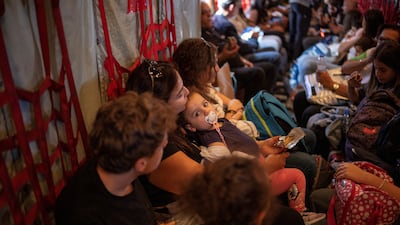
Greeks and Greek-Cypriots on board a Hellenic Air Force C130 being evacuated from Lebanon. Reuters -
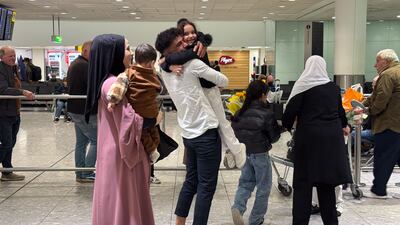
People greet their family members arriving from a commercial flight from Beirut at Heathrow Airport in London. EPA -

Gigi Khalifa, 46, with her daughter Jood, 15, and son Karim, 12, speak to the media after being evacuated from Lebanon, in Larnaca, Cyprus. Reuters -
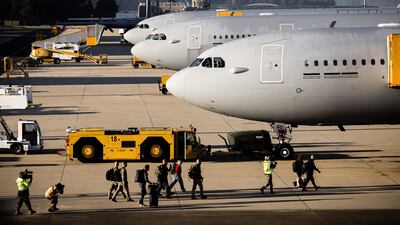
A plane prepares to depart from Eindhoven Air Force base for Beirut to evacuate Dutch citizens. EPA -
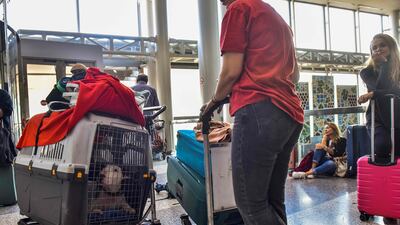
German citizens arrive at Beirut's airport as they flee Lebanon. AFP -
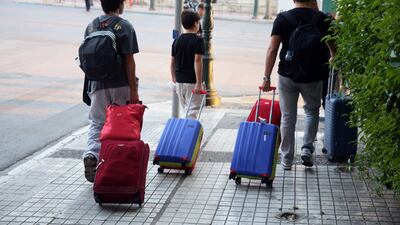
Greek citizens, who where evacuated from Beirut, arrive outside the Foreign Ministry building in Athens. EPA -
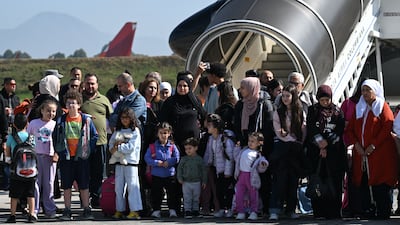
Passengers pose for a picture after disembarking a Colombian government evacuation flight from Lebanon at El Dorado International Airport in Bogota. AFP -
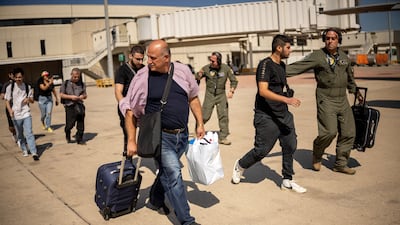
Greeks and Greek-Cypriots prepare to board a Hellenic Air Force C130 in Beirut. Reuters -
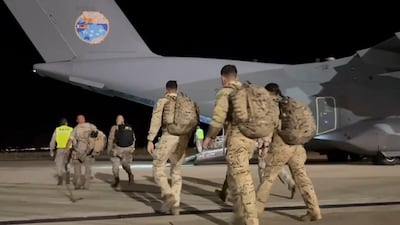
Spanish military personnel boarding a plane headed to Beirut, at the Torrejon military base in Madrid. EPA -
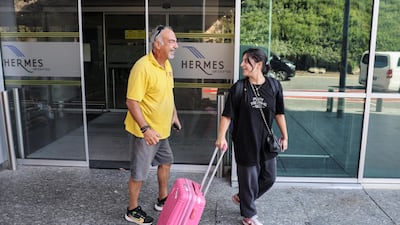
Clea Rita Barsamian with her father after being evacuated from Lebanon, at Larnaca International Airport, Cyprus. Reuters -
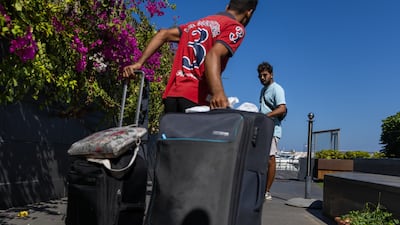
People in Beirut take their suitcases to a yacht that will ferry people to Cyprus. Getty Images



