


Live updates: Follow the latest on Israel-Gaza
The Gaza war, which has dragged on for almost a year, has unleashed unprecedented death, destruction and mass displacement of the enclave's population.
What has turned this conflict into one of the most brutal of recent times is not only the scale of death and violence, but Israel’s ‘systematic obstruction’ of aid, international humanitarian agencies say.
Since the outbreak of hostilities on October 7, 2023 after militant group Hamas launched surprise attacks on Israel resulting in the deaths of more than 1,200 people and the kidnapping of 250, Gaza has borne the brunt of military retaliation.
The aerial bombardment and ground invasion have so far killed more than 41,700 people – mostly women and children – and destroyed two thirds of its infrastructure, including homes, schools, hospitals, even UN facilities.
For the 2.3 million people of Gaza, many of whom who were already dependent on humanitarian relief before the conflict, aid became the last straw in their battle for survival this past year.
Weaponisation of aid
But that critical supply of relief, international agencies say, has been systematically delayed, reduced, or outright denied to Gazans since the beginning of the war, a charge Israel vehemently denies. Prime Minister Benjamin Netanyahu says accusations of Israel limiting humanitarian aid were “outrageously false.”
“You can say anything – it doesn’t make it true,” he said in a press conference on Wednesday. But as the war drags on, Israel is continuing to manipulate aid, said the Norwegian Refugee Council.

Ahmed Bayram, communications adviser for the group, told The National the flow of aid into Gaza has "hit rock bottom", leaving more people facing starvation, disease and displacement. “The number of aid trucks going into Gaza is going down and down now, with an average of just 50 entering daily, far fewer than what is needed,” he said.
The UN independent investigator on the right to food, Michael Fakhri, has accused Israel of carrying out a “starvation campaign” against Palestinians. “Never in post-war history has a population been made to go hungry so quickly and so completely, as was the case for the 2.3 million Palestinians living in Gaza," he said this week.
A joint statement released by 15 international aid agencies said 83 per cent of the required food aid was not reaching the people as of September 2024. In August, more than one million people in southern and central Gaza did not receive any food rations, they added.
Medical supplies are also in need, with 65 per cent of the insulin required unavailable and half of the required blood supply undelivered, the statement read. This drastic reduction is having catastrophic consequences for the people of Gaza.
“There is no soap, no shampoo. Some of our colleagues are using rags instead of sanitary napkins,” said Ruth James, regional humanitarian co-ordinator for Oxfam, who is currently in Gaza. Even those with money can't lay their hands on many items, she added. “In all of the south of Gaza, there is only one ATM that is functioning,” she said.
Collective punishment
Israel’s siege of Gaza and obstruction of aid represent what the UN has called “collective punishment”.
On October 9, 2023, two days after the Hamas attack, Israel’s Defence Minister Yoav Gallant announced a complete siege on Gaza. "There will be no electricity, no food, no fuel, everything is closed,” he said.
In the place of 500 aid and commercial lorries that were entering Gaza daily before the conflict began, the number by 75 per cent, according to aid groups. Fuel shortages also dipped to critical levels, with a huge gap between the estimated daily need of 400,000 litres for humanitarian purposes and fewer than 100,000 that is actually arriving.
As Israeli tanks pushed deeper into the northern parts of Gaza supported by a massive aerial bombing campaign, more than a million people were asked to move south. This first wave of mass displacement further squeezed humanitarian aid.
Mohammed Sadiq, a resident of Gaza city, said his children went without proper food for weeks after they moved southwards last October.
"You have to be lucky to find some bread or canned beans. There were long queues to get a small cup of soup. I had to see my children fall asleep on half-empty stomachs," Mr Sadiq told The National.
Aid agencies were faced with another challenge – a communication blockade when Israel cut off telephone and internet connections in Gaza. Louise Wateridge, spokeswoman for the agency for Palestinian refugees (UNRWA) told The National that the first 10 weeks of war "was utter chaos".
“We were in a situation where we could not even get in touch with our own colleagues on the ground,” she said.
Hunger and disease spread rapidly across the Gaza Strip within the first three months of the war, with the UN's Office for Co-ordination of Humanitarian Aid (Ocha) declaring in December that only 10 per cent of Gaza’s food needs were met in the first 70 days.
In a report issued in December, Human Rights Watch accused Israel of using starvation as a method of warfare by deliberately blocking the delivery of food, water and fuel into Gaza. The organisation warned this practice constituted a war crime under international law.
UN experts had warned about an impending famine in Gaza as early as May. Later in June, the findings from the Integrated Food Security Phase Classification (IPC) analysis, conducted from May 27 to June 4, said about 495,000 people – 22 per cent of the population – were experiencing the highest level of starvation, known as IPC Phase 5.
The report said about 2.1 million people, or 96 per cent of the population, would face high levels of acute food insecurity through to September.
UN experts later declared famine had spread across much of Gaza, particularly in the north, where Israel had focused much of its military campaign. On June 22, the government media office reported at least 34 children had already died of malnutrition.
The impact on health care has also been devastating, with Israel’s siege of hospitals, and detention of doctors and medical workers. By January, more than 600 healthcare workers had been killed, the World Health Organisation said, and 94 medical facilities had come under attack, including 26 hospitals and 79 ambulances.
Hunger when aid is plentiful
The biggest irony of the hunger crisis in Gaza is that Israel and the UN agencies agree there is enough aid to feed the population. But they disagree on whether it is reaching the people.
Israel's Co-ordinator of Government Activities in the Territories (Cogat) claims there is no famine in Gaza.
"One million tonnes of aid entered Gaza since the start of the war, 70 per cent was food," Cogat said last week in a post on X. The agency claims more than 3,000 calories per day per person has entered Gaza since January, citing an independent academic study.

"Over 53,989 trucks containing approximately 1,058,804 tonnes of humanitarian aid, including more than 819,943 tonnes of food and 51,350 tonnes of water, have been delivered to the Gaza Strip," a Cogat spokesman told The National.
He also claimed only 498 of 53,000 aid lorries had been denied entry due to containing dual-use items that require specific security evaluation to prevent their exploitation by Hamas for military purposes.
The spokesman said Israel has worked to expand routes through which aid can enter Gaza, including extending working hours of Kerem Shalom and the opening of new crossings such as Erez East, Erez West and Crossing 96.
Despite mounting international pressure and criticism, Israel argues the delays and shortages in aid distribution are the result of logistical failures on the part of the UN and other organisations, not a deliberate policy.
However, these claims have been disputed by numerous NGOs and aid agencies on the ground, which cite harsh inspections, restrictions on goods and exhaustively long delays in getting permits as a major obstacle to the smooth flow of aid.
Ruth James, Oxfam's regional humanitarian co-ordinator, told The National that lorries laden with food, water and medicine often sit for days at Israeli checkpoints, awaiting clearance that sometimes never comes. The process is fraught with rejection and delay, she said.
“Even basic items such as chlorine for water purification and bandages or scissors for hospitals have been held up or denied entry,” she said.
Ms Wateridge of UNRWA said her colleagues are forced to "constantly reinvent humanitarian response" on a day-to-day or weekly basis due to the constant displacement of people, the access restrictions and the changing security situation on the ground.
She said the turning point for humanitarian distribution was the closure of southern Rafah crossing point on May 6 that disrupted the "rhythm and routine" of aid flowing in.
"After Rafah was closed, aid agencies had to relocate to the middle areas. We had to move hospitals, solar panels, generators and warehouses."
The collapse of law and order in the north, and the increase in looting of lorries in the north, where Israel dismantled the existing security apparatus, also dealt a severe blow to the humanitarian response, she said.
Israel's chokehold on aid supply
Israel tightly controls entry and exit from Gaza by land, air and sea, meaning aid cannot enter without its approval. Lorries that enter through Kerem Shalom are checked at the southern border crossing before being driven to Rafah city, where distribution is organised.
Lorries entering through the Rafah crossing are first scanned at Nitzana in Israel and then sent back over to Al Owga in Egypt and driving to Rafah before entering Gaza.
Most aid has been entering by lorries arriving from Egyptian territory through Kerem Shalom, since Israel shut the Rafah border crossing, the only land route to cross from Egypt to Gaza, in early May.
The floating pier built by the US in May to increase the flow of humanitarian aid into Gaza was short-lived and was dismantled several times before being scrapped permanently in July, leaving the land crossing as the most viable form for aid entry.
Cogat said private groups are moving their supplies into Gaza from the Erez crossing, also known as Beit Hanoun, in the north, that connects the enclave to the occupied West Bank.
As the conflict drags on, agencies have expressed deep frustration over the failure of diplomacy to secure the unimpeded delivery of humanitarian aid.
"The biggest disappointment over the last year is that diplomacy has failed the people of Gaza," said Mr Bayram of the Norwegian Refugee Council. "If the big powers were serious about helping, they would have put more pressure on Israel to allow the free flow of aid."
Political analysts and humanitarian workers alike agree that without a ceasefire and a comprehensive peace agreement, the crisis will only deepen. With Israel expanding its military campaign into southern Gaza, and with the conflict threatening to spill over into Lebanon and Iran, hopes for a ceasefire are growing dim.
Meanwhile, as winter approaches, aid agencies are scrambling to provide shelter for the more than one million people who have been displaced numerous times. "We’re preparing for a harsh winter and shelters are desperately needed," said Ms Wateridge. "But at the rate we’re going, with the level of supply we’re able to move, it could take years to meet those needs."
Despite the overwhelming scale of the crisis, aid agencies say they remain steadfast in their efforts to reach the people of Gaza. “We have the people, we have the resources, we have the means. It is the restrictions that are stopping us,” said Ms James.
“We need to see the political will in removing the restrictions and allowing unimpeded aid into Gaza," she said. Twelve months into the war, as Gaza is teetering on the brink of collapse, people will continue to suffer, with no end in sight if free flow of aid is not restored, she said.
-
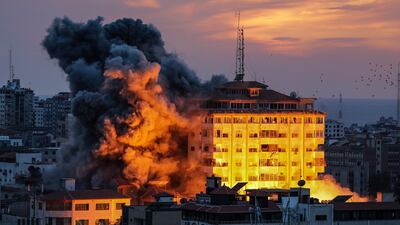
Smoke rises after Israeli air strikes targeted Palestine Tower in Gaza city on October 7, 2023. EPA -
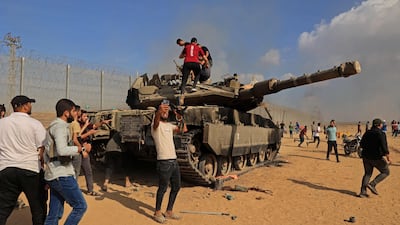
Palestinians take control of an Israeli Merkava battle tank after crossing the border fence with Israel from Khan Yunis in the southern Gaza Strip on October 7, 2023. AFP -
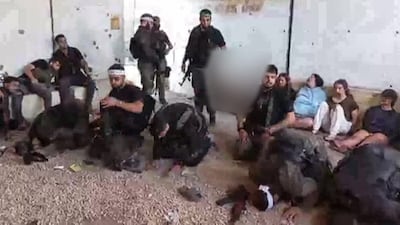
This video grab from footage released by the Israeli Hostage and Missing Families Forum campaign group on May 22 shows what the group described as Israeli female soldiers being captured by Palestinian Hamas militants during the October 7, 2023, attack on Israel. AFP -
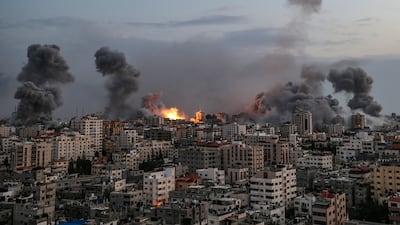
Smoke rises following an Israeli air strike in Gaza city on October 9, 2023. EPA -
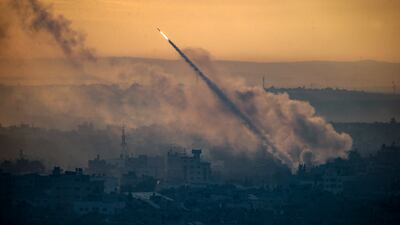
A rocket is launched from the coastal Gaza strip towards Israel by militants of the Ezz Al-Din Al Qassam militia, the military wing of Hamas movement, in Gaza city. EPA -

Israel's Iron Dome anti-missile system intercepts rockets launched from the Gaza Strip, as seen from the city of Ashkelon, Israel, on October 9, 2023. Reuters -

Lightning strikes as smoke billows following an Israeli air strike in Gaza city on October 9, 2023. AFP -
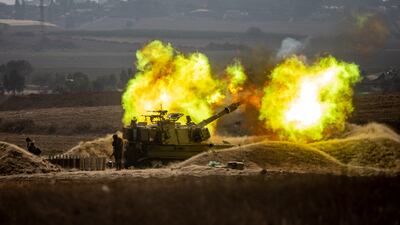
An Israeli artillery unit fires at an area along the border with Gaza, southern Israel, on October 11, 2023. EPA -

Ultra-Orthodox Jewish people carry their belongings before boarding a ship for US nationals and their immediate family members, as they leave Israel headed for Cyprus. Reuters -
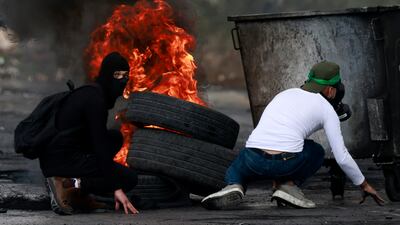
Palestinian youths take cover behind a rubbish container as they clash with Israeli forces at the northern entrance of the West Bank city of Ramallah near the Israeli settlement of Beit El on October 20, 2023. AFP -

A man mourns as he attends a funeral of Palestinians killed in Israeli strikes in Khan Younis in the southern Gaza Strip on October 24, 2023. Reuters -
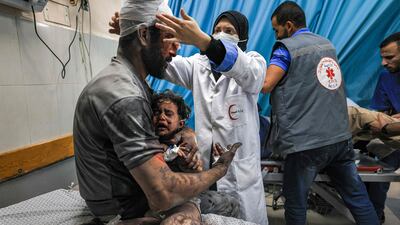
A man holds a child, survivors of Israeli bombardment, as they are treated at a trauma ward at Nasser hospital in Khan Yunis in the southern Gaza Strip on October 24, 2023. AFP -

People search for survivors and the bodies of victims through the rubble of buildings destroyed during Israeli bombardment in Khan Yunis in the southern Gaza Strip on October 26, 2023. AFP -

Anti-war protesters raise their 'bloody' hands behind US Secretary of State Antony Blinken during a Senate Appropriations Committee hearing on President Biden's $106 billion national security supplemental funding request to support Israel and Ukraine, as well as bolster border security, on Capitol Hill in Washington on October 31, 2023. Reuters -
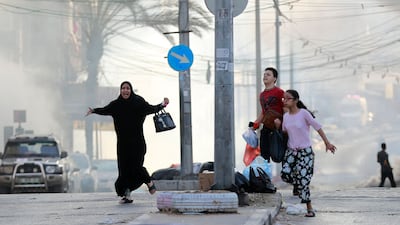
Palestinians run for cover after a strike near the Al Shifa hospital in Gaza city on November 1, 2023. AFP -
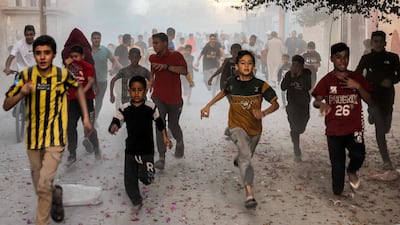
Palestinian children run as they flee from Israeli bombardment in Rafah in the southern Gaza Strip on November 6, 2023. AFP -
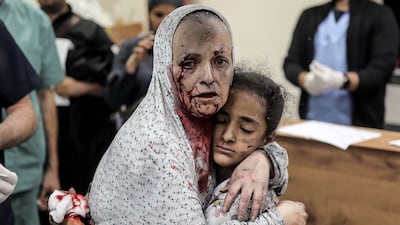
An injured Palestinian woman covered in dust and blood hugs an injured girl child at the hospital following the Israeli bombardment of Khan Yunis in the southern Gaza Strip on November 15, 2023. AFP -

Hostages released by Hamas Gal, left, and Tal Almog-Goldstein, second left, stand in a bus transporting them to an army base in Ofakim in southern Israel after they were released by the Palestinian militant group from the Gaza Strip on November 26, 2023. AFP -
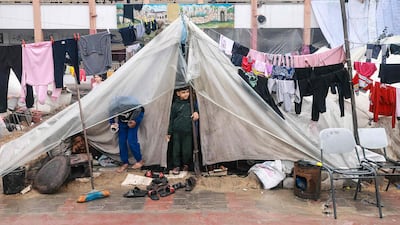
Palestinian boys stand in their makeshift tent at a camp set up on a schoolyard in Rafah in the southern Gaza Strip where most civilians have taken refuge, on December 13, 2023. AFP -
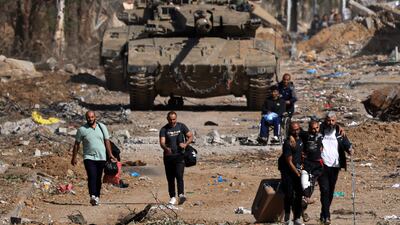
Palestinians fleeing the north through the Salaheddin road in the Zeitoun district on the southern outskirts of Gaza city, walk past Israeli army tanks on November 24, 2023. AFP -
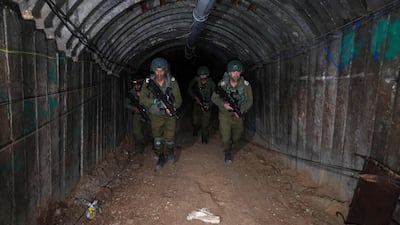
In this picture taken during a media tour organised by the Israeli military on December 15, 2023, soldiers visit a tunnel that Hamas reportedly used to attack Israel through the Erez border crossing on October 7. AFP -

Jewish protesters block the passage of aid trucks being sent to Gaza in Ashdod, Israel on February 1, 2024. Reuters -
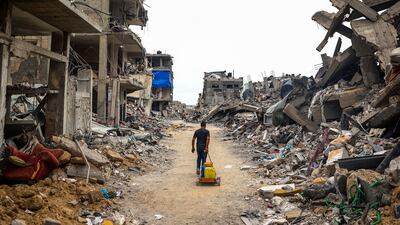
A man pulls water containers as he walks past destroyed buildings in Khan Younis on May 5, 2024. AFP -

Relatives of Hanan Yablonka, one of the Israeli hostages held in the Gaza Strip since the October 7, 2023 attack by Palestinian Hamas militants, mourn during his funeral in Tel Aviv on May 26. AFP -

Humanitarian aid packages land after being dropped from a plane in Al Mawasi district of Khan Younis, on May 30, 2024. Reuters -
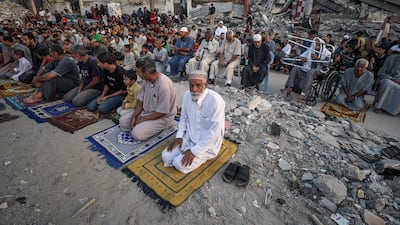
Palestinians attend Eid al-Adha prayer in Khan Younis town, southern Gaza strip, on June 16. EPA -
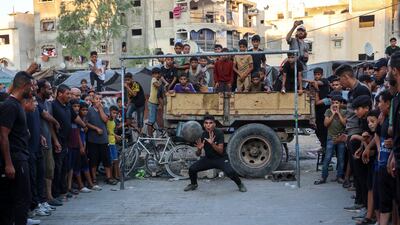
Displaced Palestinians play football in Jabalia on July 23, 2024. AFP -
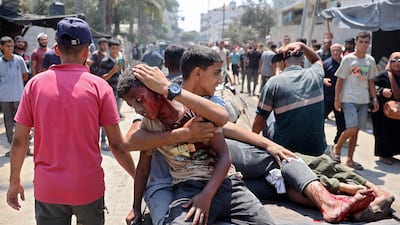
Palestinians injured in an Israeli strike on a school ride on the back of a cart in Deir Al Balah on July 27, 2024. AFP -
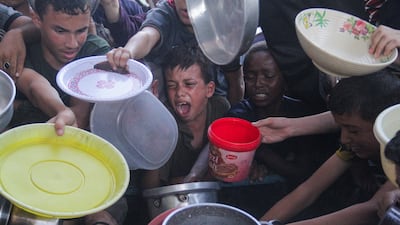
Palestinians gather to receive food cooked by a charity kitchen, amid the Israel-Hamas conflict, in the northern Gaza Strip, September 11. Reuters -

Palestinians survey the damage at the site of Israeli strikes on a displacement camp in Khan Younis on September 10, 2024. AFP -
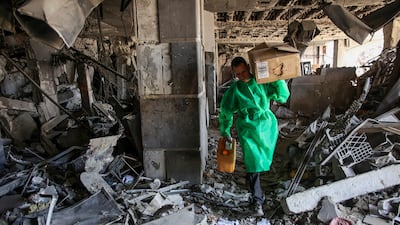
A medical staff member carries supplies through a destroyed section of Al Shifa hospital in Gaza city on September 17. AFP -
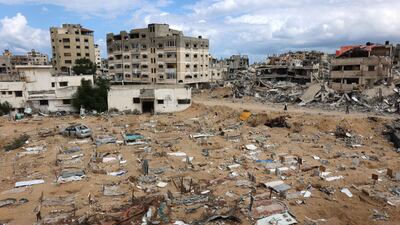
People walk past makeshift graves in Gaza city on September 17. AFP



