

Live updates: Follow the latest on Israel-Gaza
Descending towards Beirut, Middle East Airlines Flight ME201 was half-full and the food service limited. Passengers arriving in the Lebanese capital sensed the mood was dramatically different to the atmosphere only two weeks before.
Several passengers on the state carrier's flight were returning to worried family members, others for work, as fears continued to mount that Lebanon's only civilian airport would shut as Israel massively ramped up its onslaught on the country.
The near year-long conflict between Israel and Hezbollah had mostly been contained to the border area, but now it has firmly come to Beirut.
More than 1,000 people have been killed in two weeks alone, some 1.2 million people have been displaced and many parts of the capital have been obliterated. The sounds of repeated Israeli strikes on Beirut are a daily occurrence for people as they try to fall asleep at night.
-
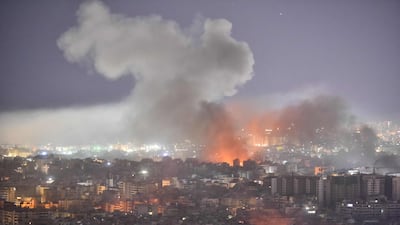
Smoke rises from the site of an Israeli air strike that targeted a neighborhood in Beirut’s southern suburb. AFP -
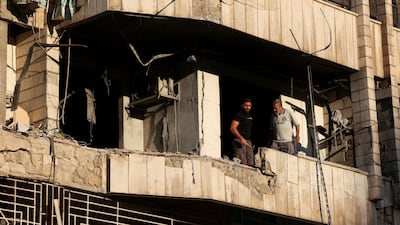
People inspect damage at the site of an Israeli strike on central Beirut's Bachoura neighbourhood. Reuters -

Smoke rises over Dahieh in Beirut's southern suburbs. Reuters -

A man walks amid the rubble of a building hit in an overnight Israeli air strike that targeted the neighbourhood of Moawwad in Beirut's southern suburbs. AFP -

Smoke rises from the site of an Israeli air strike in Dahiyeh, Beirut. AP -
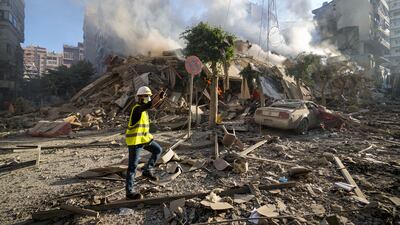
Smoke rises from the site of an Israeli air strike in Dahiyeh, Beirut. AP -
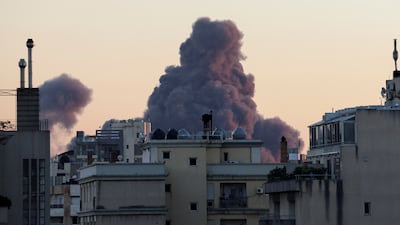
Smoke rises from a reported Israeli strike in Beirut's southern suburbs on September 27. Reuters -

Rescuers amid the rubble of a building destroyed in an Israeli strike on Beirut's southern neighbourhood of Haret Hreik. AFP -

A building hit by an Israeli strike in Beirut's southern suburbs. Reuters -
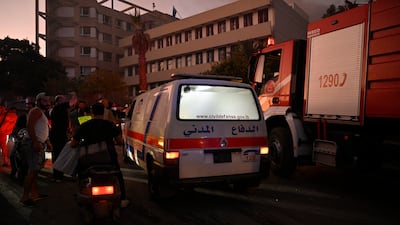
An ambulances removed casualties from an Israeli strike on Dahieh, in southern Beirut. Israel's military claimed to have struck "the central headquarters of the Hezbollah". EPA -
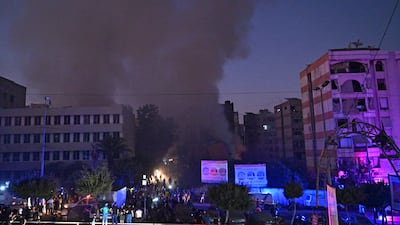
Smoke rises from an Israel strike in Dahieh, southern Beirut. Israel claimed it had struck Hezbollah headquarters 'intentionally built under residential buildings'. EPA -
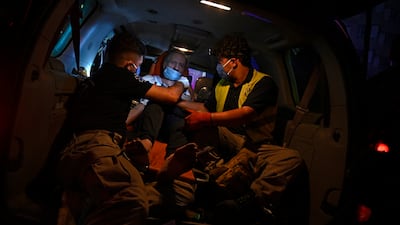
A casualty is taken by ambulance from the Dahieh, southern Beirut, following an Israeli strike. EPA -
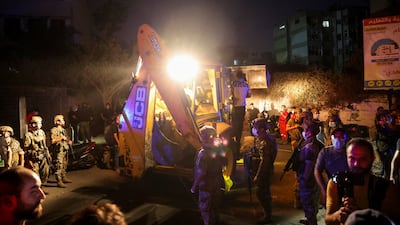
Members of the Lebanese military gather after an Israeli strike in Beirut's southern suburbs. Reuters -
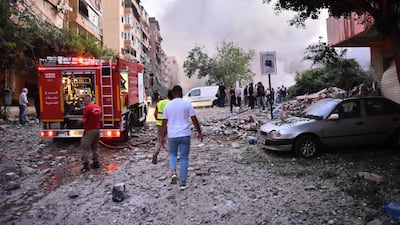
The aftermath of an Israeli air strike in the southern Beirut neighbourhood of Haret Hreik. AFP


“Beirut is a mess,” said Mohammed, a long-time resident of the city who chose not to disclose his last name. “Until about a week ago, it was only the people of the south who came to Beirut after the large strikes in the south, searching for a place to hide. Now all the apartments and hotels are full, and a lot people – kids, families – are all over the city on the streets. They'll sit on the corniche to sleep. All the gardens are full.”
As Mohammed points out, many people are now sleeping on the street, relying on support from charities or NGOs and trying to shut out the constant buzzing of Israeli drones in the sky.
“Everything has changed,” said shopkeeper Hammoudi Al Ayan, who is originally from south Lebanon but lives in Beirut. “It's a disaster.”
With a family of nine siblings Hammoudi has been facing the stress of ensuring his relatives are able to leave their homes in the south and in Beirut's southern suburbs after Israel ordered residents to leave, then launched a land invasion in south Lebanon.
The situation escalated even further, Mohammed says, when Israel assassinated Hezbollah leader Hassan Nasrallah in the southern suburbs of Beirut – also known as Dahieh – in a strike that levelled about six buildings.
“When they struck Dahieh, [the residents] also came to Beirut. The garbage is building up, many streets are closed because of it. When they killed Hassan Nasrallah people didn't believe he was dead, screaming, crying on the street,” Hammoudi said. “They didn't know where to go or what to do.”
Middle East Airlines continues to be one of the carriers to still fly amid a wave of cancellations due to security concerns, particularly given the airport's proximity to Dahieh. Many governments have chartered additional flights to ensure their citizens can get out, while others fleeing have taken boats to Cyprus or crossed into Syria.
“Another sleepless night in Beirut,” UN special co-ordinator in Lebanon Jeanine Hennis-Plasschaert said on Thursday. “Counting the blasts shaking the city. No warning sirens. Not knowing what’s next, only that uncertainty lies ahead. Anxiety and fear are omnipresent.”
Initially limited to the southern suburbs, Israeli strikes this week have struck deeper into Beirut. At least four people were killed in an Israeli air strike on an apartment block near the Cola Bridge on Monday, marking the first attack on the city centre since the current conflict between Hezbollah and Israel began in October last year.
At least nine paramedics were killed on Thursday in a strike on the central neighbourhood of Bachoura, just 500 metres from the Lebanese parliament and prime minister's office.
“It was crazy and until now it is crazy,” said Mohammed. “And now they are targeting in [central] Beirut, not just Dahieh. I don't know what to say, this is Beirut.
“Beirut has become a garage,” he added, referring to the influx of cars to the capital as people flee their homes.

