Tunisian President Kais Saied. AP

Tunisia's Kais Saied calls presidential election on October 6


  • English
  • Arabic

Tunisia's President Kais Saied has called for presidential elections on October 6, his office said in a statement early on Wednesday.

Tunisia has been under a state of emergency since 2015, which is due to remain in place at least until the end of the year, making it the longest in the country's history.

Since the 2011 uprising, the state of emergency has been lifted only between 2013 and 2015.

It has been renewed every few months since November 2015, when it was reinstated after a terrorist attack by ISIS on a presidential guards’ bus killed 12 of its members and injured 16 others, including civilians.

The legal measure enables authorities to do whatever is considered to be necessary to protect the country from “imminent danger”.

Mr Saied consolidated all branches of authority in July 2021, using the emergency law to dissolve the Tunisian Parliament and the high judicial council, and ruling by presidential decree.

Tunisia’s political standoff - in pictures

  • Mr Saied celebrating with his supporters after the projected outcome of a constitutional referendum was announced. EPA
    Mr Saied celebrating with his supporters after the projected outcome of a constitutional referendum was announced. EPA
  • Rached Ghannouchi, leader of Tunisia's Ennahda party, after appearing before a judge in connection with the alleged dispatch of terrorists to Syria and in Iraq. AFP
    Rached Ghannouchi, leader of Tunisia's Ennahda party, after appearing before a judge in connection with the alleged dispatch of terrorists to Syria and in Iraq. AFP
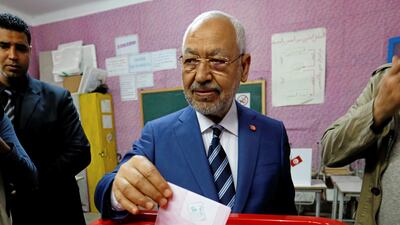
  • Mr Ghannouchi, who heads the Islamist party, casts his vote during municipal elections in Tunis. Reuters
    Mr Ghannouchi, who heads the Islamist party, casts his vote during municipal elections in Tunis. Reuters
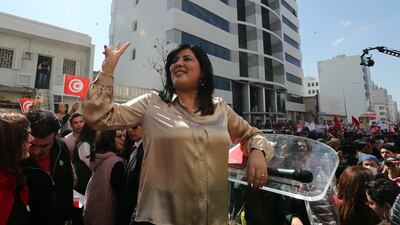
  • Abir Moussi, leader of Tunisia's Free Destourian Party during a protest to demand the dissolution of parliament, early elections and an end to the state of exception. EPA
    Abir Moussi, leader of Tunisia's Free Destourian Party during a protest to demand the dissolution of parliament, early elections and an end to the state of exception. EPA
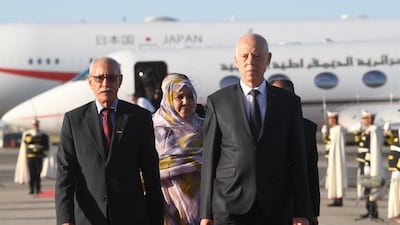
  • Tunisian President Kais Saied, right, welcomes the head of the Polisario Front movement, Brahim Ghali, on his arrival in Tunis. EPA
    Tunisian President Kais Saied, right, welcomes the head of the Polisario Front movement, Brahim Ghali, on his arrival in Tunis. EPA
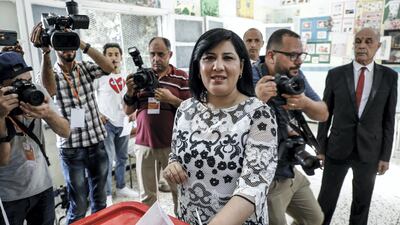
  • Ms Moussi votes during presidential elections. Getty Images
    Ms Moussi votes during presidential elections. Getty Images
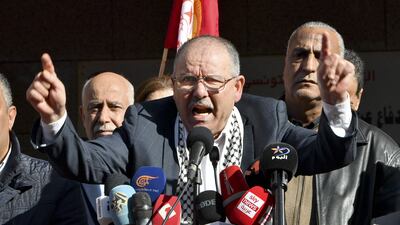
  • Noureddine Taboubi, secretary general of the Tunisian General Labour Union, during a speech in which he warned against the deterioration of the social situation and economy of the country. AFP
    Noureddine Taboubi, secretary general of the Tunisian General Labour Union, during a speech in which he warned against the deterioration of the social situation and economy of the country. AFP
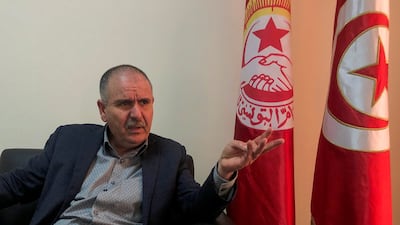
  • Mr Taboubi during an interview. Reuters
    Mr Taboubi during an interview. Reuters
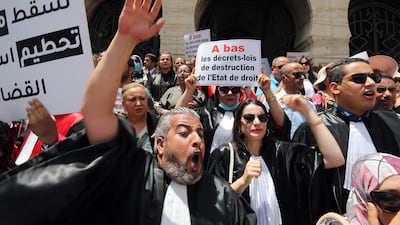
  • Tunisian judges outside the courthouse in Tunis protest against Kais Saied's June 1 decision to dismiss 57 magistrates. EPA
    Tunisian judges outside the courthouse in Tunis protest against Kais Saied's June 1 decision to dismiss 57 magistrates. EPA
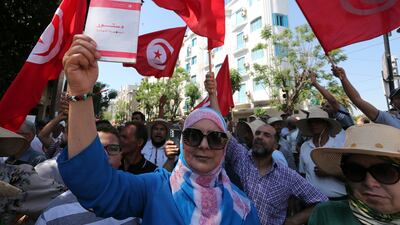
  • A woman holds up the Tunisian constitution during a protest against Mr Saied and his call for a constitutional referendum. EPA
    A woman holds up the Tunisian constitution during a protest against Mr Saied and his call for a constitutional referendum. EPA

But he defended the measures, saying they were necessary to prevent the state from “total collapse”.

More than 20 critics have been arrested and placed under pre-trial detention or house arrest, with others banned from travelling – sometimes without being officially charged – due to the continuing state of emergency.

There are concerns about the validity of the elections as many of Mr Saied's opponents are currently imprisoned.


BELGIUM%20SQUAD
%3Cp%3EGoalkeepers%3A%20Thibaut%20Courtois%2C%20Simon%20Mignolet%2C%20Koen%20Casteels%0D%3Cbr%3E%0D%3Cbr%3EDefenders%3A%20Jan%20Vertonghen%2C%20Toby%20Alderweireld%2C%20Leander%20Dendoncker%2C%20Zeno%20Debast%2C%20Arthur%20Theate%2C%20Wout%20Faes%0D%3Cbr%3E%0D%3Cbr%3EMidfielders%3A%20Hans%20Vanaken%2C%20Axel%20Witsel%2C%20Youri%20Tielemans%2C%20Amadou%20Onana%2C%20Kevin%20De%20Bruyne%2C%20Yannick%20Carrasco%2C%20Thorgan%20Hazard%2C%20Timothy%20Castagne%2C%20Thomas%20Meunier%0D%3Cbr%3E%0D%3Cbr%3EForwards%3A%20Romelu%20Lukaku%2C%20Michy%20Batshuayi%2C%20Lo%C3%AFs%20Openda%2C%20Charles%20De%20Ketelaere%2C%20Eden%20Hazard%2C%20Jeremy%20Doku%2C%20Dries%20Mertens%2C%20Leandro%20Trossard%3C%2Fp%3E%0A
Specs – Taycan 4S
Engine: Electric

Transmission: 2-speed auto

Power: 571bhp

Torque: 650Nm

Price: Dh431,800

Specs – Panamera
Engine: 3-litre V6 with 100kW electric motor

Transmission: 2-speed auto

Power: 455bhp

Torque: 700Nm

Price: from Dh431,800

Global Fungi Facts

• Scientists estimate there could be as many as 3 million fungal species globally
• Only about 160,000 have been officially described leaving around 90% undiscovered
• Fungi account for roughly 90% of Earth's unknown biodiversity
• Forest fungi help tackle climate change, absorbing up to 36% of global fossil fuel emissions annually and storing around 5 billion tonnes of carbon in the planet's topsoil

The biog

DOB: March 13, 1987
Place of birth: Jeddah, Saudi Arabia but lived in Virginia in the US and raised in Lebanon
School: ACS in Lebanon
University: BSA in Graphic Design at the American University of Beirut
MSA in Design Entrepreneurship at the School of Visual Arts in New York City
Nationality: Lebanese
Status: Single
Favourite thing to do: I really enjoy cycling, I was a participant in Cycling for Gaza for the second time this year

While you're here
COMPANY PROFILE
Company name: BorrowMe (BorrowMe.com)

Date started: August 2021

Founder: Nour Sabri

Based: Dubai, UAE

Sector: E-commerce / Marketplace

Size: Two employees

Funding stage: Seed investment

Initial investment: $200,000

Investors: Amr Manaa (director, PwC Middle East) 

UEFA CHAMPIONS LEAGUE FIXTURES

All kick-off times 10.45pm UAE ( 4 GMT) unless stated

Tuesday
Sevilla v Maribor
Spartak Moscow v Liverpool
Manchester City v Shakhtar Donetsk
Napoli v Feyenoord
Besiktas v RB Leipzig
Monaco v Porto
Apoel Nicosia v Tottenham Hotspur
Borussia Dortmund v Real Madrid

Wednesday
Basel v Benfica
CSKA Moscow Manchester United
Paris Saint-Germain v Bayern Munich
Anderlecht v Celtic
Qarabag v Roma (8pm)
Atletico Madrid v Chelsea
Juventus v Olympiakos
Sporting Lisbon v Barcelona

Ten tax points to be aware of in 2026

1. Domestic VAT refund amendments: request your refund within five years

If a business does not apply for the refund on time, they lose their credit.

2. E-invoicing in the UAE

Businesses should continue preparing for the implementation of e-invoicing in the UAE, with 2026 a preparation and transition period ahead of phased mandatory adoption. 

3. More tax audits

Tax authorities are increasingly using data already available across multiple filings to identify audit risks. 

4. More beneficial VAT and excise tax penalty regime

Tax disputes are expected to become more frequent and more structured, with clearer administrative objection and appeal processes. The UAE has adopted a new penalty regime for VAT and excise disputes, which now mirrors the penalty regime for corporate tax.

5. Greater emphasis on statutory audit

There is a greater need for the accuracy of financial statements. The International Financial Reporting Standards standards need to be strictly adhered to and, as a result, the quality of the audits will need to increase.

6. Further transfer pricing enforcement

Transfer pricing enforcement, which refers to the practice of establishing prices for internal transactions between related entities, is expected to broaden in scope. The UAE will shortly open the possibility to negotiate advance pricing agreements, or essentially rulings for transfer pricing purposes. 

7. Limited time periods for audits

Recent amendments also introduce a default five-year limitation period for tax audits and assessments, subject to specific statutory exceptions. While the standard audit and assessment period is five years, this may be extended to up to 15 years in cases involving fraud or tax evasion. 

8. Pillar 2 implementation 

Many multinational groups will begin to feel the practical effect of the Domestic Minimum Top-Up Tax (DMTT), the UAE's implementation of the OECD’s global minimum tax under Pillar 2. While the rules apply for financial years starting on or after January 1, 2025, it is 2026 that marks the transition to an operational phase.

9. Reduced compliance obligations for imported goods and services

Businesses that apply the reverse-charge mechanism for VAT purposes in the UAE may benefit from reduced compliance obligations. 

10. Substance and CbC reporting focus

Tax authorities are expected to continue strengthening the enforcement of economic substance and Country-by-Country (CbC) reporting frameworks. In the UAE, these regimes are increasingly being used as risk-assessment tools, providing tax authorities with a comprehensive view of multinational groups’ global footprints and enabling them to assess whether profits are aligned with real economic activity. 

Contributed by Thomas Vanhee and Hend Rashwan, Aurifer

5 of the most-popular Airbnb locations in Dubai

Bobby Grudziecki, chief operating officer of Frank Porter, identifies the five most popular areas in Dubai for those looking to make the most out of their properties and the rates owners can secure:

• Dubai Marina

The Marina and Jumeirah Beach Residence are popular locations, says Mr Grudziecki, due to their closeness to the beach, restaurants and hotels.

Frank Porter’s average Airbnb rent:
One bedroom: Dh482 to Dh739 
Two bedroom: Dh627 to Dh960 
Three bedroom: Dh721 to Dh1,104

• Downtown

Within walking distance of the Dubai Mall, Burj Khalifa and the famous fountains, this location combines business and leisure.  “Sure it’s for tourists,” says Mr Grudziecki. “Though Downtown [still caters to business people] because it’s close to Dubai International Financial Centre."

Frank Porter’s average Airbnb rent:
One bedroom: Dh497 to Dh772
Two bedroom: Dh646 to Dh1,003
Three bedroom: Dh743 to Dh1,154

• City Walk

The rising star of the Dubai property market, this area is lined with pristine sidewalks, boutiques and cafes and close to the new entertainment venue Coca Cola Arena.  “Downtown and Marina are pretty much the same prices,” Mr Grudziecki says, “but City Walk is higher.”

Frank Porter’s average Airbnb rent:
One bedroom: Dh524 to Dh809 
Two bedroom: Dh682 to Dh1,052 
Three bedroom: Dh784 to Dh1,210 

• Jumeirah Lake Towers

Dubai Marina’s little brother JLT resides on the other side of Sheikh Zayed road but is still close enough to beachside outlets and attractions. The big selling point for Airbnb renters, however, is that “it’s cheaper than Dubai Marina”, Mr Grudziecki says.

Frank Porter’s average Airbnb rent:
One bedroom: Dh422 to Dh629 
Two bedroom: Dh549 to Dh818 
Three bedroom: Dh631 to Dh941

• Palm Jumeirah

Palm Jumeirah's proximity to luxury resorts is attractive, especially for big families, says Mr Grudziecki, as Airbnb renters can secure competitive rates on one of the world’s most famous tourist destinations.

Frank Porter’s average Airbnb rent:
One bedroom: Dh503 to Dh770 
Two bedroom: Dh654 to Dh1,002 
Three bedroom: Dh752 to Dh1,152 

The%20specs
%3Cp%3E%3Cstrong%3EEngine%3A%20%3C%2Fstrong%3E2.0-litre%20turbocharged%204-cyl%0D%3Cbr%3E%3Cstrong%3ETransmission%3A%20%3C%2Fstrong%3E8-speed%20auto%0D%3Cbr%3E%3Cstrong%3EPower%3A%20%3C%2Fstrong%3E300bhp%20(GT)%20330bhp%20(Modena)%0D%3Cbr%3E%3Cstrong%3ETorque%3A%20%3C%2Fstrong%3E450Nm%0D%3Cbr%3E%3Cstrong%3EPrice%3A%20%3C%2Fstrong%3EDh299%2C000%20(GT)%2C%20Dh369%2C000%20(Modena)%3Cbr%3E%3Cstrong%3EOn%20sale%3A%20%3C%2Fstrong%3Enow%3C%2Fp%3E%0A

Mercer, the investment consulting arm of US services company Marsh & McLennan, expects its wealth division to at least double its assets under management (AUM) in the Middle East as wealth in the region continues to grow despite economic headwinds, a company official said.

Mercer Wealth, which globally has $160 billion in AUM, plans to boost its AUM in the region to $2-$3bn in the next 2-3 years from the present $1bn, said Yasir AbuShaban, a Dubai-based principal with Mercer Wealth.

Within the next two to three years, we are looking at reaching $2 to $3 billion as a conservative estimate and we do see an opportunity to do so,” said Mr AbuShaban.

Mercer does not directly make investments, but allocates clients’ money they have discretion to, to professional asset managers. They also provide advice to clients.

“We have buying power. We can negotiate on their (client’s) behalf with asset managers to provide them lower fees than they otherwise would have to get on their own,” he added.

Mercer Wealth’s clients include sovereign wealth funds, family offices, and insurance companies among others.

From its office in Dubai, Mercer also looks after Africa, India and Turkey, where they also see opportunity for growth.

Wealth creation in Middle East and Africa (MEA) grew 8.5 per cent to $8.1 trillion last year from $7.5tn in 2015, higher than last year’s global average of 6 per cent and the second-highest growth in a region after Asia-Pacific which grew 9.9 per cent, according to consultancy Boston Consulting Group (BCG). In the region, where wealth grew just 1.9 per cent in 2015 compared with 2014, a pickup in oil prices has helped in wealth generation.

BCG is forecasting MEA wealth will rise to $12tn by 2021, growing at an annual average of 8 per cent.

Drivers of wealth generation in the region will be split evenly between new wealth creation and growth of performance of existing assets, according to BCG.

Another general trend in the region is clients’ looking for a comprehensive approach to investing, according to Mr AbuShaban.

“Institutional investors or some of the families are seeing a slowdown in the available capital they have to invest and in that sense they are looking at optimizing the way they manage their portfolios and making sure they are not investing haphazardly and different parts of their investment are working together,” said Mr AbuShaban.

Some clients also have a higher appetite for risk, given the low interest-rate environment that does not provide enough yield for some institutional investors. These clients are keen to invest in illiquid assets, such as private equity and infrastructure.

“What we have seen is a desire for higher returns in what has been a low-return environment specifically in various fixed income or bonds,” he said.

“In this environment, we have seen a de facto increase in the risk that clients are taking in things like illiquid investments, private equity investments, infrastructure and private debt, those kind of investments were higher illiquidity results in incrementally higher returns.”

The Abu Dhabi Investment Authority, one of the largest sovereign wealth funds, said in its 2016 report that has gradually increased its exposure in direct private equity and private credit transactions, mainly in Asian markets and especially in China and India. The authority’s private equity department focused on structured equities owing to “their defensive characteristics.”

Scoreline

Swansea 2

Grimes 20' (pen), Celina, 29'

Man City 3

Silva 69', Nordfeldt 78' (og), Aguero 88'

OPTA'S PREDICTED TABLE

1. Liverpool 101 points

2. Manchester City 80 

3. Leicester 67

4. Chelsea 63

5. Manchester United 61

6. Tottenham 58

7. Wolves 56

8. Arsenal 56

9. Sheffield United 55

10. Everton 50

11. Burnley 49

12. Crystal Palace 49

13. Newcastle 46

14. Southampton 44

15. West Ham 39

16. Brighton 37

17. Watford 36

18. Bournemouth 36

19. Aston Villa 32

20. Norwich City 29


Updated: July 03, 2024, 5:34 AM