• Rapid Support Forces commander Gen Mohamed Dagalo, then deputy head of Sudan's sovereign council, gives a media briefing in Khartoum in February last year. Reuters
    Rapid Support Forces commander Gen Mohamed Dagalo, then deputy head of Sudan's sovereign council, gives a media briefing in Khartoum in February last year. Reuters
  • Smoke rises after blasts in Khartoum amid clashes between the Sudanese Army and the Rapid Support Forces paramilitary on April 15 last year. AFP
    Smoke rises after blasts in Khartoum amid clashes between the Sudanese Army and the Rapid Support Forces paramilitary on April 15 last year. AFP
  • Sudanese Army soldiers at the Rapid Support Forces base in Port Sudan on April 16 last year. AFP
    Sudanese Army soldiers at the Rapid Support Forces base in Port Sudan on April 16 last year. AFP
  • Black smoke covers the sky over Khartoum as clashes continued on April 19. AFP
    Black smoke covers the sky over Khartoum as clashes continued on April 19. AFP
  • Displaced Khartoum residents flee the city after a 24-hour truce collapsed on April 19. AFP
    Displaced Khartoum residents flee the city after a 24-hour truce collapsed on April 19. AFP
  • Foreign citizens board a plane at a French military air base in Khartoum to leave Sudan on April 23. AFP
    Foreign citizens board a plane at a French military air base in Khartoum to leave Sudan on April 23. AFP
  • A soldier carries a child as people evacuated from Sudan disembark from a plain at a military airport in Amman on April 24. AFP
    A soldier carries a child as people evacuated from Sudan disembark from a plain at a military airport in Amman on April 24. AFP
  • Evacuees from Sudan sit in a military plane as they wait to be processed by Kenyan troops in Nairobi on April 24. Reuters
    Evacuees from Sudan sit in a military plane as they wait to be processed by Kenyan troops in Nairobi on April 24. Reuters
  • Sudanese refugees gather to receive humanitarian aid in Koufroun, Chad, on April 30. AFP
    Sudanese refugees gather to receive humanitarian aid in Koufroun, Chad, on April 30. AFP
  • Sudanese Army chief Gen Abdel Fattah Al Burhan visits troop positions in Khartoum on May 30. AFP
    Sudanese Army chief Gen Abdel Fattah Al Burhan visits troop positions in Khartoum on May 30. AFP
  • Sudanese refugees at the Zabout camp in Goz Beida, Chad, on July 1. AP
    Sudanese refugees at the Zabout camp in Goz Beida, Chad, on July 1. AP
  • Smoke rises from a fire at a lumber warehouse in southern Khartoum on June 7. AFP
    Smoke rises from a fire at a lumber warehouse in southern Khartoum on June 7. AFP
  • People prepare to leave Khartoum during a ceasefire on June 19. AP
    People prepare to leave Khartoum during a ceasefire on June 19. AP
  • People sit on top of a lorry carrying furniture on the road between Khartoum and Wad Madani, Al Gezirah state, on July 18. AFP
    People sit on top of a lorry carrying furniture on the road between Khartoum and Wad Madani, Al Gezirah state, on July 18. AFP
  • Men load goods from Ethiopia on to a lorry in the border town of Gallabat on August 2. AFP
    Men load goods from Ethiopia on to a lorry in the border town of Gallabat on August 2. AFP
  • Sudanese Army troops ride in a military convoy accompanying the governor of Darfur State in the eastern city of Gedaref on August 30. AFP
    Sudanese Army troops ride in a military convoy accompanying the governor of Darfur State in the eastern city of Gedaref on August 30. AFP
  • A fire rages at a livestock market after RSF bombardment in Al Fasher, the capital of North Darfur state, on September 1. AFP
    A fire rages at a livestock market after RSF bombardment in Al Fasher, the capital of North Darfur state, on September 1. AFP
  • People cook on a campfire at a school that has been turned into a shelter for displaced Sudanese in the northern border town of Wadi Halfa, near Egypt, on September 11. AFP
    People cook on a campfire at a school that has been turned into a shelter for displaced Sudanese in the northern border town of Wadi Halfa, near Egypt, on September 11. AFP
  • Displaced Sudanese ride on top of a lorry in Wad Madani on December 16. AFP
    Displaced Sudanese ride on top of a lorry in Wad Madani on December 16. AFP
  • Sudanese refugees queue to board a lorry to go to a transit centre after crossing the border into South Sudan on February 14. AFP
    Sudanese refugees queue to board a lorry to go to a transit centre after crossing the border into South Sudan on February 14. AFP
  • People watch as fighters from the army-aligned Sudan Liberation Movement attend a graduation ceremony in the south-eastern Gedaref state on March 28. AFP
    People watch as fighters from the army-aligned Sudan Liberation Movement attend a graduation ceremony in the south-eastern Gedaref state on March 28. AFP
  • Fighters from the SLM attend a graduation ceremony in Gedaref state on March 28. AFP
    Fighters from the SLM attend a graduation ceremony in Gedaref state on March 28. AFP

Year of war has pushed Sudan closer to the abyss


  • English
  • Arabic

A year of war between Sudan’s army and the rival paramilitary Rapid Support Forces has pushed the vast Afro-Arab nation closer to the abyss, with more factions joining the conflict and hopes for a political settlement rapidly diminishing.

The conflict is widely viewed as a fight for control between two previously allied generals – army chief Gen Abdel Fattah Al Burhan and paramilitary Rapid Support Forces commander Gen Mohamed Dagalo.

The first anniversary of the start of the war on April 15 caps 12 months of death, displacement, hunger and alleged war crimes on both sides.

The impact of the war is perhaps most clearly seen in videos posted online of the usually bustling streets of the capital Khartoum, now almost completely deserted against a backdrop of badly damaged buildings and burnt out cars.

To experts and many ordinary Sudanese, the scars caused by the almost wanton brutality of the war may take decades to heal.

And the worst may be yet to come.

“Things are getting worse for everyone,” said Noaman Ishaq, a political activist from Omdurman, a historical city that is part of the larger Khartoum area. He fled to Atbara, north of the capital, eight months after the war broke out.

“I have seen so many people getting killed before my own eyes and I myself was detained three times, twice by the RSF and once by the army. Now that I fled Omdurman, I feel free, but I lost my home.”

An elderly man waits to refill his donkey-drawn water tank in Port Sudan in the Red Sea State of war-torn Sudan. AFP

Emboldened by a recent spate of battlefield gains in the capital, the army appears determined to end the war militarily, regardless of the political cost or the future stability of the country.

Indirect peace negotiations sponsored by the US and Saudi Arabia are expected to resume later this month, but there is not much hope that they can produce a ceasefire, let alone a settlement of the conflict.

Showing its desire to fight on, the army has dramatically stepped up its drive to recruit civilians, organising thousands into brigades of lightly armed volunteers to compensate for its shortage of soldiers.

Videos posted online show induction ceremonies being held in cities and towns across the country and feature fiery motivational speeches denouncing international and regional schemes against Sudan and demonising the RSF as a tool of foreign powers.

Underlining the importance of the volunteers fighting on the army's side, Gen Al Burhan mentioned them in a brief televised address on Tuesday to mark the Eid Al Fitr holiday at the end of Ramadan.

“Greetings to the sons of my homeland as they join the ranks of the popular resistance everywhere to defeat the aggression and cleanse the land of Sudan from mercenaries,” he said.

The army has rejected a UN Security Council resolution adopted last month that called for a ceasefire during Ramadan, denying the RSF a chance to reorganise.

Underlining its new appetite for attack after months of faring poorly on the battlefield, it is amassing troops for what could be the war’s biggest and bloodiest battle south of Khartoum.

Sudanese refugees attending a cultural event at a restaurant in Cairo's Manial district. AFP

Some 40,000 troops and volunteers are believed to have been readied to wrest back control of Wad Madani, capital of Al Jazirah state south of the capital, that was captured by the RSF in December.

Videos shared online in recent days show dozens of all-terrain vehicles fitted with machine-guns and loaded with fighters moving on a dirt road towards Wad Madani. The outcome of the anticipated battle over the city, located in the middle of Sudan’s breadbasket, could determine the outcome of the war.

However, victory for the army would come at a price.

“Virtually all rebel groups that signed a peace deal with the army in 2020 now aspire to seize power, although their methods vary,” said Amin Magzoob, a retired army general who is now a political and military analyst.

“Some of them joined the army, others joined the RSF.

“Will all these factions be assimilated into the armed forces when the war ends? Will they surrender their weapons and return to civilian life?

“These militias have become an integral part of today’s political landscape and pose the gravest threat to national security.

The increase in the number of factions has created the impression of a country at war with itself, said political analyst Omar Arbab.

“It’s a war that pits armies against armies,” he said, alluding to the multitude of rebel groups that have recently declared their allegiance to the army or the RSF.

“If you take a moment to think about this war, you’ll find that it’s really one between everyone and everyone else. The army says it’s fighting the Rapid Support Forces because it’s a mutinous militia, but then it goes and forges alliances with other militias.”

Army generals have repeatedly claimed that foreign mercenaries from some of Sudan’s neighbours, such as Chad and the Central African Republic, are fighting alongside the RSF.

Significantly, Islamists who once served as the enforcers of the regime of former leader Omar Al Bashir are joining the army in droves, taking advantage of an opportunity to find a way back to political power.

Sudan’s army has a long track record of enlisting the help of militias in its war effort against rebels. The RSF’s own forerunner, the notorious Janjaweed militia, fought on the government’s side against mostly ethnic African rebels during the civil war in Darfur in the 2000s.

During the 1983-2005 civil war in South Sudan, the army used militias made up of Islamists loyal to Al Bashir to fight southern rebels seeking self-determination for the mostly Christian and animist south that seceded in 2011.

Further complicating the wartime political landscape, Sudan’s army-backed chief prosecutor last week dealt a body blow to the already slim chances for a political settlement.

He issued arrest warrants for 17 prominent politicians who played a role in the popular 2018-2019 uprising that led to Al Bashir’s removal and later partnered with the military in a civilian-led transitional government before it was overthrown in 2021 by Gen Al Burhan and Gen Dagalo.

Now members of a newly formed coalition seeking to end the war, the 17, who include former transitional prime minister Abdalla Hamdok, are charged with incitement against the state and undermining the constitutional system.

If convicted, they could receive the death sentence. However, all of them are at large, mostly living in exile outside Sudan.

Sudanese men shop for sweets ahead of Eid Al Fitr in Gedaref city. AFP

The war broke out after months of simmering tension between Gen Al Burhan and Gen Dagalo. The pair were at odds over details of Sudan’s democratic transition, particularly the powers and mandate of the military and paramilitaries such as the RSF.

Mounting tension boiled over into violence last April but no one has since been able to conclusively determine who fired the first shot.

The conflict has wrought a level of devastation and human suffering never seen previously in the many civil wars that have bedevilled Sudan since independence in 1956.

It has displaced about eight million people and killed tens of thousands. About a third of Sudan’s population, or 18 million people, face acute hunger, according to the UN World Food Programme, with the most desperate trapped behind the front lines. They include five million who face starvation, the WFP said.

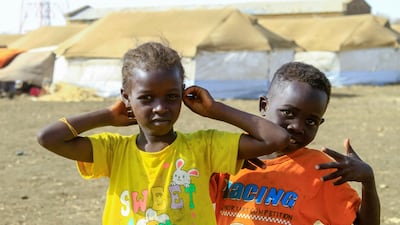
  • Children who fled Sudan's Khartoum and Jazira states to escape the civil war are living in a camp for the internally displaced in Gadaref state. All photos: AFP
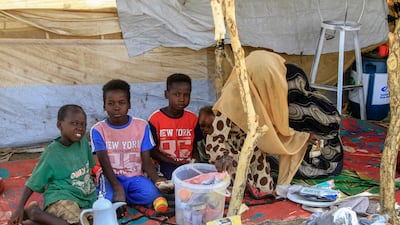
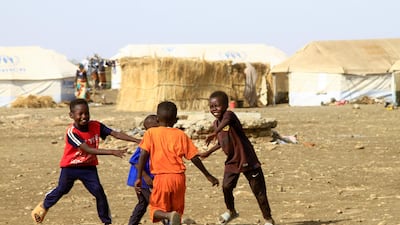
    Children who fled Sudan's Khartoum and Jazira states to escape the civil war are living in a camp for the internally displaced in Gadaref state. All photos: AFP
  • After nearly a year of war, Sudan is suffering one of the worst humanitarian crises in recent history, the UN has warned
    After nearly a year of war, Sudan is suffering one of the worst humanitarian crises in recent history, the UN has warned
  • There has barely been any let up in the fighting between the Sudanese army and the paramilitary Rapid Support Forces (RSF)
    There has barely been any let up in the fighting between the Sudanese army and the paramilitary Rapid Support Forces (RSF)
  • The UN said about 730,000 children in Sudan, including more than 240,000 in Darfur, are believed to be suffering from severe acute malnutrition
    The UN said about 730,000 children in Sudan, including more than 240,000 in Darfur, are believed to be suffering from severe acute malnutrition
  • About eight million people have been displaced by the war, which has destroyed the nation’s infrastructure
    About eight million people have been displaced by the war, which has destroyed the nation’s infrastructure
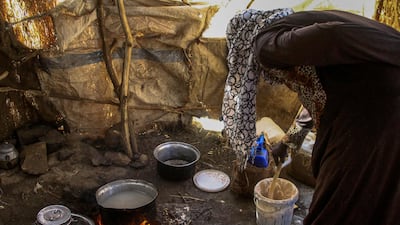
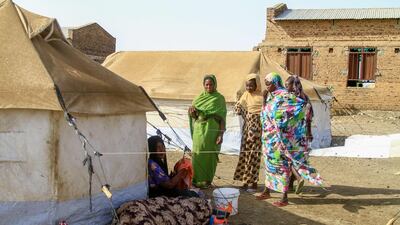
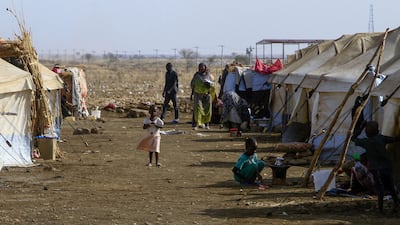
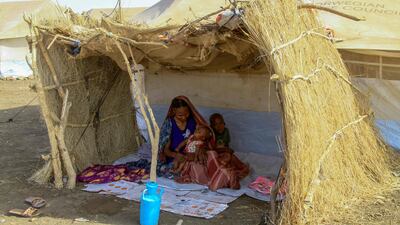
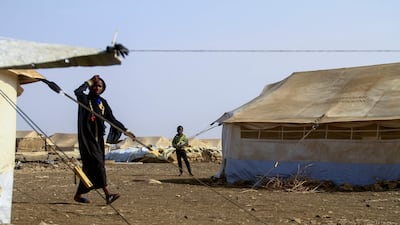
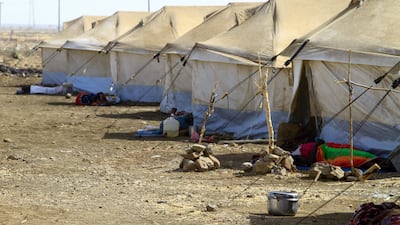
  • Many are stuck in tented camps like this one in Gadaref. The UN said 18 million of Sudan's 48 million people are acutely food insecure, five million of whom have reached the last level before famine
    Many are stuck in tented camps like this one in Gadaref. The UN said 18 million of Sudan's 48 million people are acutely food insecure, five million of whom have reached the last level before famine
  • The Security Council this month called for an immediate ceasefire during Ramadan and better access to humanitarian aid
    The Security Council this month called for an immediate ceasefire during Ramadan and better access to humanitarian aid
  • 'Since then, I regret to report that there has not been major progress on the ground,' said Edem Wosornu, a UN director of humanitarian operations
    'Since then, I regret to report that there has not been major progress on the ground,' said Edem Wosornu, a UN director of humanitarian operations
  • Meanwhile, heavy fighting continues in what has become a war of attrition
    Meanwhile, heavy fighting continues in what has become a war of attrition
  • But much suffering prevails among the internally displaced
    But much suffering prevails among the internally displaced
  • Relief operations are 'severely hampered' by a lack of access and resources, the UN said
    Relief operations are 'severely hampered' by a lack of access and resources, the UN said
  • The UN also called on regional powers to stop supplying arms to the warring parties in Sudan immediately, but there is no end in sight to the brutal civil war
    The UN also called on regional powers to stop supplying arms to the warring parties in Sudan immediately, but there is no end in sight to the brutal civil war

Both the RSF and the army have been accused of war crimes.

While the army has been singled out for killing hundreds of civilians through its use of air strikes and heavy artillery in urban areas, the RSF is accused of torture, sexual assault, arbitrary detentions and ethnically motivated killings in western Sudan that left thousands dead and forced tens of thousands to flee to neighbouring nations.

“We have lived day by day since this war started. Trying to think beyond the day can only cause despair,” said Sulaima Ishaq, a political activist and women’s rights campaigner who left the Sudanese capital last year with her family and found refuge in the city of Kosti to the south.

“At the end of the day, I prefer the army over the RSF, but I know it’s the army that landed us where we are today.”

Al Shafie Ahmed reported from Kampala, Uganda

GAC GS8 Specs

Engine: 2.0-litre 4cyl turbo

Power: 248hp at 5,200rpm

Torque: 400Nm at 1,750-4,000rpm

Transmission: 8-speed auto

Fuel consumption: 9.1L/100km

On sale: Now

Price: From Dh149,900

The burning issue

The internal combustion engine is facing a watershed moment – major manufacturer Volvo is to stop producing petroleum-powered vehicles by 2021 and countries in Europe, including the UK, have vowed to ban their sale before 2040. The National takes a look at the story of one of the most successful technologies of the last 100 years and how it has impacted life in the UAE. 

Read part four: an affection for classic cars lives on

Read part three: the age of the electric vehicle begins

Read part two: how climate change drove the race for an alternative 

The specs

Engine: 5.2-litre V10

Power: 640hp at 8,000rpm

Torque: 565Nm at 6,500rpm

Transmission: 7-speed dual-clutch auto

Price: From Dh1 million

On sale: Q3 or Q4 2022 

Who's who in Yemen conflict

Houthis: Iran-backed rebels who occupy Sanaa and run unrecognised government

Yemeni government: Exiled government in Aden led by eight-member Presidential Leadership Council

Southern Transitional Council: Faction in Yemeni government that seeks autonomy for the south

Habrish 'rebels': Tribal-backed forces feuding with STC over control of oil in government territory

GOLF’S RAHMBO

- 5 wins in 22 months as pro
- Three wins in past 10 starts
- 45 pro starts worldwide: 5 wins, 17 top 5s
- Ranked 551th in world on debut, now No 4 (was No 2 earlier this year)
- 5th player in last 30 years to win 3 European Tour and 2 PGA Tour titles before age 24 (Woods, Garcia, McIlroy, Spieth)

Results

Men's finals

45kg:Duc Le Hoang (VIE) beat Zolfi Amirhossein (IRI) points 29-28. 48kg: Naruephon Chittra (THA) beat Joseph Vanlalhruaia (IND) TKO round 2.

51kg: Sakchai Chamchit (THA) beat Salam Al Suwaid (IRQ) TKO round 1. ​​​​​​​54kg: Veerasak Senanue (THA) beat Huynh Hoang Phi (VIE) 30-25.

57kg: Almaz Sarsembekov (KAZ) beat Tak Chuen Suen (MAC) RSC round 3. 60kg: Yerkanat Ospan (KAZ) beat Ibrahim Bilal (UAE) 30-27.

63.5kg: Abil Galiyev (KAZ) beat Nouredine Samir (UAE) 29-28. 67kg: Narin Wonglakhon (THA) beat Mohammed Mardi (UAE) 29-28.

71kg: Amine El Moatassime (UAE) w/o Shaker Al Tekreeti (IRQ). 75kg:​​​​​​​ Youssef Abboud (LBN) w/o Ayoob Saki (IRI).

81kg: Ilyass Habibali (UAE) beat Khaled Tarraf (LBN) 29-28. 86kg: Ali Takaloo (IRI) beat Emil Umayev (KAZ) 30-27.

91kg: Hamid Reza Kordabadi (IRI) beat Mohamad Osaily (LBN) RSC round 1. 91-plus kg: Mohammadrezapoor Shirmohammad (IRI) beat Abdulla Hasan (IRQ) 30-27.

Women's finals

45kg: Somruethai Siripathum (THA) beat Ha Huu Huynh (VIE) 30-27. 48kg: Thanawan Thongduang (THA) beat Colleen Saddi (PHI) 30-27.

51kg: Wansawang Srila Or (THA) beat Thuy Phuong Trieu (VIE) 29-28. 54kg: Ruchira Wongsriwo (THA) beat Zeinab Khatoun (LBN) 30-26.

57kg: Sara Idriss (LBN) beat Zahra Nasiri Bargh (IRI) 30-27. 60kg: Kaewrudee Kamtakrapoom (THA) beat Sedigheh Hajivand (IRI) TKO round 2.

63.5kg: Nadiya Moghaddam (IRI) w/o Reem Al Issa (JOR).

Updated: April 14, 2024, 9:51 AM