Oman said appropriate conditions were not in place for a meeting between Iran and Gulf states, as the sultanate announced that plans for the discussions had been put on hold.
The meeting, scheduled for Monday in the Omani city of Salalah, was delayed to allow conditions for a "constructive dialogue" that could produce lasting understandings supporting regional security and stability, Oman's state news agency reported.
The postponement comes as Iran's attacks on its Gulf neighbours and commercial shipping through the Strait of Hormuz continue to fuel regional tensions and disrupt the vital global energy route. Iranian officials said the delay followed a request from "some regional countries", with Tehran and Muscat jointly agreeing to reschedule the talks.
Mohammad Ali Bak, Iran's director general for Gulf affairs, told state news agency Irna that the meeting was postponed "at the request of some regional countries and by a joint decision by Oman and Iran". Iran would co-ordinate closely with Oman on a suitable date for the meeting, Mr Bak added.
Omani Foreign Minister Badr Al Busaidi said the postponement had been made "in the interests of consensus", without identifying which countries had sought the delay.
The announcement followed mounting disagreements over an Iran-Oman framework for managing navigation through the strait, which has been heavily disrupted since the US and Israel launched the war on Iran in February.
Oman and Iran said last month that they had agreed on a framework including a temporary navigational corridor through the strait and plans to clear mines, with the two countries saying regional states bordering the Gulf should be involved in further discussions.
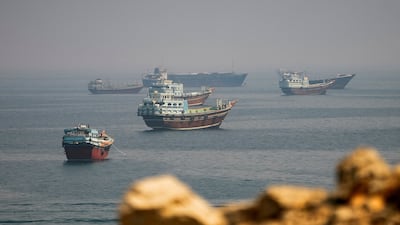
Shipping traffic through the strait has also fallen sharply. Daily commodity vessel transits dropped to single digits at the weekend, well below a 10-day average of 14, ship tracking data showed. Four vessels exited the Gulf through the strait at the weekend, while 10 entered, the data showed, although the figures exclude vessels that may have switched off their transponders to avoid detection.
The strait is a crucial global energy chokepoint and its disruption has pushed oil prices higher, while sharply reducing commercial traffic.
Saudi Arabia had raised concerns over proposed changes to the Iran-Oman arrangement, according to reports. The Financial Times said disagreements among Gulf Co-operation Council states, including Saudi concerns, had prevented consensus on the meeting.
The AP reported separately that Saudi Arabia objected to proposed amendments to the Iran-Oman agreement, while Bahrain had already said it would not take part in the talks.
No new date has been announced. Iran has claimed it remains committed to regional consultations, while Oman has sought to use its long-standing ties with Tehran to broker arrangements that could restore safe navigation through the waterway.

