


Pilgrims were cautioned on Saturday to avoid politicising the Hajj and were advised to focus on their rites and worship instead, as the pilgrimage reached its climax on the Day of Arafah.
“Hajj is a manifestation of the ritual and sincerity in worshipping God, and it is not a place for political slogans or partisanship,” said Saudi cleric Maher Al Muaiqaly, who was chosen to present the sermon at the Namirah mosque on the plains of Arafat.
“The Hajj requires adherence to the regulations and instructions that guarantee the pilgrims’ performance of their rites and rituals in safety and in a reassuring manner,” added Mr Al Muaiqaly, who is the Grand Mosque's imam and preacher.
Saudi authorities before the Hajj said they would not tolerate politicising the pilgrimage. They cautioned against potential protests or chants about any regional developments during the Hajj.
This year, the war is taking place against the backdrop of high regional tensions, including Israel’s continuing war on Gaza.
Col. Talal Al Shalhoub, a spokesperson for the Interior Ministry, told reporters that the Saudi government “will not allow any attempt to turn the sacred sites (in Makkah) into an arena for mob chanting”.
Iran's Supreme Leader Ali Khamenei said days before the Hajj that his annual message to pilgrims will be read by the Guardian Jurist’s Representative, the head of the Iranian pilgrims, during a ceremony in the plains of Arafat desert on Saturday.
"It should not come as a surprise if the enemies of the Islamic Ummah attempt to ruin some aspects of the Hajj – whether it is by accentuating denominational and political differences, or by trying to diminish the importance of its sacred and spiritual aspects," Mr Khamenei said on X.
Recently, Saudi Minister of Hajj and Umrah Tawfiq Al Rabiah renewed his warning against any attempts to politicise Hajj, stressing that this ritual is “for worship and not for political slogans”.
“Hajj is for worship and not for any political slogans, and this is what the Kingdom’s leadership is working on to have the highest manifestations of reverence, tranquillity and spirituality," the minister said. "The kingdom completely rejects political and sectarian slogans, and wants Hajj to be an act of worship and seeking forgiveness, and not a place for pilgrims to be exploited.”
Saudi Arabia's push to spare the Hajj from being politicised stems from previous experiences, most notably a deadly incident in the Hajj of 1987, when clashes erupted between Saudi security forces and mostly Shia pilgrims, who planned to demonstrate at the pilgrimage that year.
-
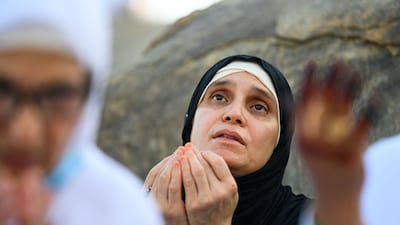
Muslim pilgrims gather on Mount Arafat during the Hajj 2024 pilgrimage, southeast of Mecca, Saudi Arabia. EPA -
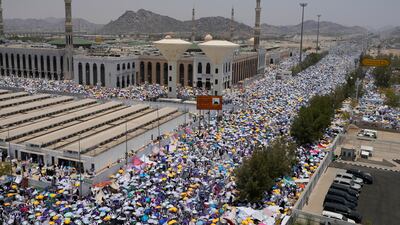
Muslim pilgrims use umbrellas to shade themselves from the sun as they gather outside Nimrah Mosque to offer the noon prayers in Arafat, on the second day of the annual hajj pilgrimage, near the holy city of Mecca, Saudi Arabia. AP Photo -
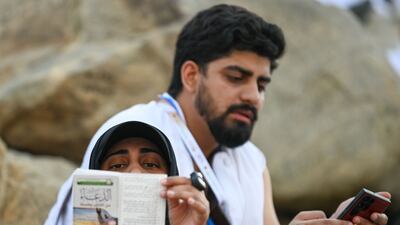
Muslim pilgrims gather on Mount Arafat during the Hajj 2024 pilgrimage, southeast of Mecca, Saudi Arabia. EPA -

Muslim pilgrims gather on Mount Arafat during the Hajj 2024 pilgrimage, southeast of Mecca, Saudi Arabia. EPA -

Pilgrims gather at top of the rocky hill called the Mountain of Mercy on the Plain of Arafat, during the annual Hajj pilgrimage, near the city of Makkah, Saudi Arabia. AP Photo -
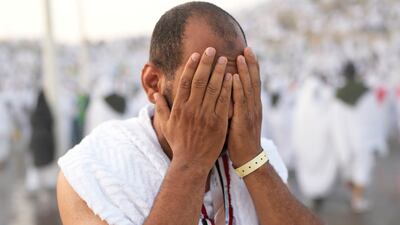
A Muslim pilgrim offers prayer at top of the known as the Mountain of Mercy. AP Photo -

Pilgrims gather at Mountain of Mercy on the plain of Arafat during the annual Hajj pilgrimage, outside the city of Makkah, on June 15, 2024. Reuters -

Pilgrims arrive from a day of prayer and reflection on the Mountain of Mercy. AP Photo -
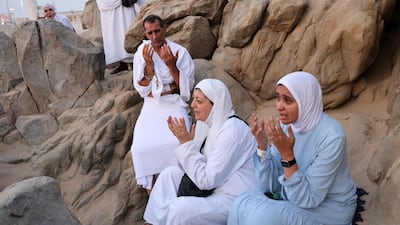
Pilgrims gather at Mountain of Mercy as part of the annual Hajj to pray for the blessing of God. Reuters -
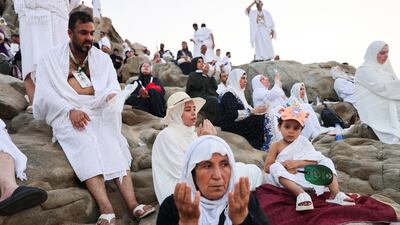
Officials in Saudi Arabia say that more that 1.5 million pilgrims arrived in Makkah last week to begin Hajj and they estimate that between 1.8 million and two million in total will have made the journey. Reuters -

The Mountain of Mercy, also referred to as Mount Arafat, is about 20km south-east of Makkah and is the place where the Prophet Mohammed delivered the Farewell Sermon to his followers. Reuters -
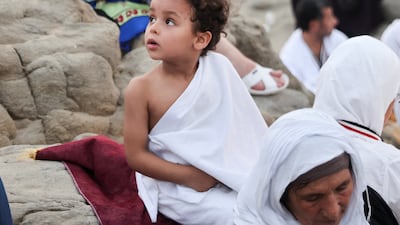
A young pilgrim at the Mountain of Mercy on the plain of Arafat. Reuters -

The gathering at the Mountain of Mercy is a day of intense emotion and reflection for pilgrims. Reuters -
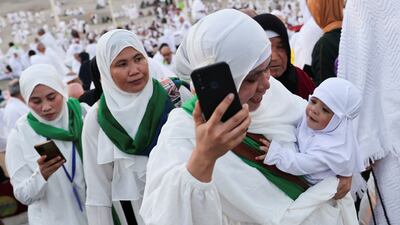
Pilgrims record their journey to the Mountain of Mercy for posterity. Reuters -
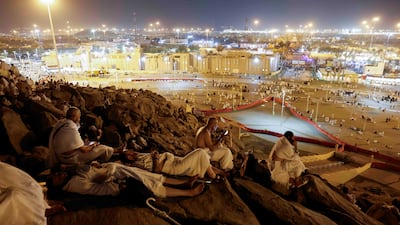
The Hajj is one of the largest religious gatherings on Earth. Reuters -

Pilgrims from all over the world travel to Mount Arafat, honouring the message of unity from the Prophet Mohammed in his sermon at the site. Reuters -
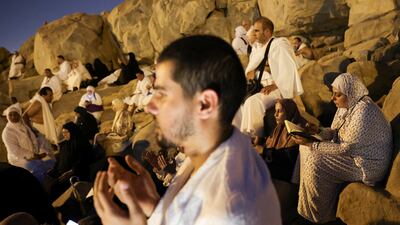
Pilgrims gather in prayer at Mountain of Mercy. Reuters -
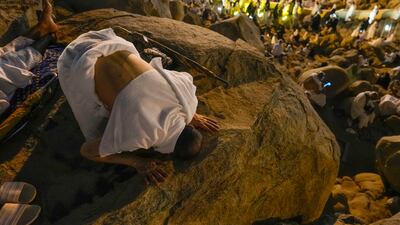
A pilgrim kneels in prayers at top the Mountain of Mercy, also referred to a Mount Arafat. AP Photo


The sermon’s theme this year also focused on harm and Islamic Sharia rules regarding harming others.
“The Sharia emphasised the necessity of preserving the five necessities that the laws agreed to take care of, which are the preservation of religion, self, mind, money, and honour. Rather, any law considered transgressing them is to be a crime that would be a reason for punishment,” Mr Al Muaiqaly said.
The sermon delivered by Mr Al Muaiqaly had been interpreted live in 50 languages on Saturday, an increase in live translations from past years.
"The number of languages for interpreting the sermon on the Day of Arafah due Saturday has increased to 50 to impart moderate Islam and promote affinity, fraternity and co-operation among humanity. The interpretations target about 1 billion people across the globe," said Sheikh Abdulrahman Al Sudais, head of religious affairs of the Two Holy Mosques.

