Europe’s five largest defence spenders are set to warn that Russia represents the most acute and long-term threat to the continent’s security as they pledge unflagging support for Ukraine.
“Russia’s ongoing war of aggression against Ukraine, on the one hand, and its continued violations of Allied airspace, acts of sabotage and growing use of multi-domain hybrid attacks, on the other, do not undermine our unity, solidarity and cohesion,” said a draft joint statement from France, Germany, Italy, Poland and the UK, or E5, according to Bloomberg News.
The ministers also plan to say that Europe “must assume greater responsibility for its own security.”

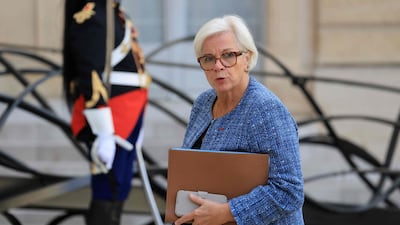
The statement, whose language could change before publication, is expected to be released after a meeting in Paris on Monday hosted by French Defence Minister Catherine Vautrin and attended by her counterparts from the other four countries.
Ministers will also be discussing "security challenges in the Middle East," Ms Vautrin's office said. Their meeting comes as Saudi Defence Minister Prince Khalid bin Salman heads to Iran with other officials from countries in the Makkah Agreement to push forward a diplomatic solution to the crises in the region.

The European ministers' message is a response to Russia intensifying a campaign of hybrid attacks across Europe, including suspected sabotage, cyber attacks, arson, drone incursions and threats to critical infrastructure and defence companies.
Testing Nato
European officials see the activity as an effort by Moscow to test Nato's limits, disrupt support for Ukraine and exploit uncertainty over how the alliance should respond without triggering a broader conflict.
While highlighting that the US will remain an “indispensable ally,” the draft said that “this greater responsibility must begin with the empowerment of European Allies within Nato”.
The European leaders are expected to say in the statement that they will assume greater political and military leadership to modernise their forces and capabilities, strengthening Nato’s collective defence to “adapt to current and future challenges” and also bolstering Europe’s defence readiness.
The EU’s regulatory and financial resources can help support member states’ defence ambitions, according to the draft, while stressing that the bloc’s defence efforts should reinforce Nato rather than duplicate its work and should remain open to members outside the military alliance.
German Chancellor Friedrich Merz warned last week that Russia’s threat to Europe extends beyond the war in Ukraine, arguing that Moscow is increasingly seeking to destabilise European democracies through pressure, interference and hybrid attacks.
In an interview on Bloomberg Television on October 19, Mr Merz said Europe must take the threat more seriously, strengthen its defences and reduce its reliance on the US while continuing to support Ukraine.

This step by European leaders comes after rising tension between America and Ukraine, following US President Donald Trump’s deal with Russian President Vladimir Putin, in which Washington agreed to refrain from imposing further sanctions in exchange for Moscow supplying diesel to the global market in a bid to reduce rising energy prices.
The agreement was met with a strong backlash from US politicians allied with Mr Trump, as well as from Ukraine and European leaders.
“We will maintain our unwavering commitment to supporting Ukraine in its fight back against Russian aggression,” the draft said, emphasising the combating of Russia’s shadow fleet and its continued violations of European airspace. “Ukraine’s ability to defend itself now and in the future is critically important to Euro-Atlantic collective security.”
Agencies contributed to this report