
The Dutch government plans to impose a capital gains levy from 2028, after dropping plans for a much-criticised wealth tax.
It scrapped plans to tax any increase in the value of shares, bonds or cryptocurrency – even if they were not sold – after warnings that the move could lead to an exodus of investors.
The Netherlands' plan had been described as “insane” by former Wall Street executive Andrew Lokenauth, while Elon Musk liked a social media post that insulted the scheme. An online petition demanding the government rethink its plan gained 50,000 signatures in a week.

The scheme could have left investors having to sell assets to pay the bill if they did not have enough available cash.
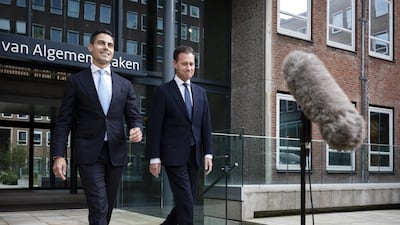
The Dutch cabinet is now opting for the fastest route to bring as much wealth as possible under a capital gains tax, Prime Minister Rob Jetten and Finance Minister Eelco Heinen wrote in a letter to the Dutch House of Representatives on Tuesday. Mr Jetten, a liberal, took office in February. That move would tax gains on investments at a rate of 36 per cent when they are cashed in.
The change would draw a line under a long period of legal wrangling and uncertainty over the country’s approach to taxing wealth, while strengthening the investment climate, the government said.
The proposal would extend capital gains tax to most financial instruments, including shares, bonds and options, covering about 90 per cent from 2028. Remaining assets would transition two years later.

To help fund the switch, the government plans to set the tax-free income on savings and investments at €1,000 ($1,135) from 2028, alongside other changes, bringing small investors into the net.
The proposed amendment must be adopted by the upper house of the Dutch parliament before the end of the year, the letter said.
Critics had warned that the plan to tax paper profits would backfire. Tobias Lutke, the founder of e-commerce platform Shopify, described it as the “dumbest thing any government on planet Earth is pursuing right now”.
The government tried to allay concerns by saying that was a stopgap measure to raise funds during the tax overhaul and it would eventually switch to a standard capital gains tax scheme. However, Mr Jetten’s coalition then backed down.
The Prime Minister said he had listened to complaints, writing: “The government has responded to the criticism voiced in both houses of parliament regarding the capital gains system, and provides clarity to Dutch citizens regarding taxing wealth. In addition, this measure strengthens the investment climate.”
The Netherlands previously taxed paper profits, using a standard gain for the year so every investor paid the same. This drew in around 2.5 million of the country’s 9.7 million taxpayers, but this was dropped in 2021.
Tax the rich
Amsterdam briefly displaced London as Europe’s largest share trading centre after some investors switched following Brexit.
As European governments have sought to grow their sluggish economies, increasing taxes has been mooted, to inevitable opposition.
The French government has been urged by parties on the left to introduce a wealth tax. This led to Economy Minister Roland Lescure saying the country must avoid “replicating a mass exodus of millionaires from the UK”, reportedly triggered by tax reform.
In Britain, proposals by campaign groups have included an annual levy on individuals with a net worth above £10 million, rising for those worth more than £100 million, or a one-off emergency wealth tax.
Prime Minister Andy Burnham’s government is expected to raise taxes to pay for increased public spending. This has resulted in the departure of several high-wealth individuals to countries such as the UAE, Monaco and Italy.
Billionaires with UK tax obligations are pushing back against sweeping requests for information from authorities seeking to map out their wealth and financial structures.
Letters sent by His Majesty’s Revenue and Customs seeking in-depth information on assets, investments and financial structures are raising concerns over the legality of the requests and the cost of compliance, according to tax experts and other advisers to the wealthy.
HMRC sent letters to all billionaires with a UK tax footprint in the summer, assigning each a “customer compliance manager”. Last year, a cross-party parliamentary committee found that the tax authority had an incomplete grasp of billionaires’ financial affairs. In short, HMRC did not know how many billionaires paid tax in the UK.
The tax authorities in the UK are also to send inspectors to high-value properties to determine whether owners will pay a new wealth levy, known as a mansion tax.

