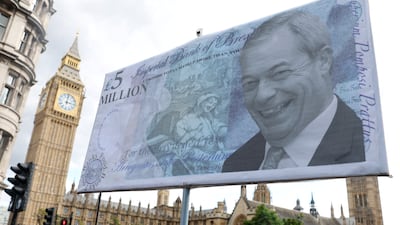

It’s difficult in democracies to make sense of how political parties are funded. What we do know is that politics is expensive.
Fighting elections costs eye-watering sums – tens of millions of pounds in Britain, billions of dollars in the US. Loyal party members pay membership fees but that does not raise much money, and raising membership fees would put off many ordinary people who do not earn a big salary.
In the UK, membership of traditional political parties has declined for years. In the 1950s, membership of the Conservative party peaked at almost three million members. Now it’s believed to be about 130,000. New paying members are hard to find. But there is one rich source of funding – literally. It’s millionaires and billionaires who say they fund election campaigns to support democracy and their chosen party.
That’s true. But there are also suspicions that some wealthy people may hope for better access to politicians to make things easier for their business interests. Some big-money donors to British political parties find themselves honoured by gaining a seat in the House of Lords. Potentially, donors may have some access to government ministers.
In the US, the deluge of cash in politics makes even the biggest British donations look tiny. One report by Ballotpedia, an encyclopaedia of American politics, noted that “during the 2024 election cycle, the six [fundraising] committees associated with the Democratic and Republican parties reported raising a combined $2.3 billion”.
Britain has not reached anywhere near American figures for political fundraising. But the country has suddenly been engulfed by a deluge of money for one party, Nigel Farage’s Reform UK.
Reform has received commitments for £72 million ($97 million) in two perfectly symmetrical donations of exactly £36 million each. The donations have come from two billionaires, Ben Delo and Christopher Harborne, both in the same business – cryptocurrency – and both one-time residents of foreign countries. Mr Harborne was based in Thailand and Mr Delo lived in Hong Kong, but reports say that they may have returned to the UK.
An earlier donation by Mr Harborne of £5 million to Mr Farage personally is also under investigation. Mr Farage claims it was to pay for personal security. Others, noting that £5 million would potentially buy an armoured Chieftain tank – wonder if the donation may have other uses. Investigation into whether that donation breaks parliamentary rules has begun.
Meanwhile, Mr Farage is also embroiled in other money matters. Secret filming for a television programme showed top Reform officials allegedly trying to avoid electoral rules on donations. Two key aides have been suspended although Mr Farage himself denies any wrongdoing. But the enormous new £72 million donations from crypto-billionaires have led to sharp questions about what super-wealthy donors may expect for their money from a party that might find itself in government.
-

Reform UK leader Nigel Farage poses with winning councillors outside Havering Town Hall following the 2026 local election results in May. All photos: Getty Images -

Mr Farage is interviewed by GB News near where two men were attacked in the Golders Green area of north London in April 2026 -

Mr Farage embraces former Conservative home secretary Suella Braverman, who had defected to Reform, in London, in January 2026 -

Mr Farage poses with a named shirt on day one of the Reform UK conference in Birmingham in November 2025 -
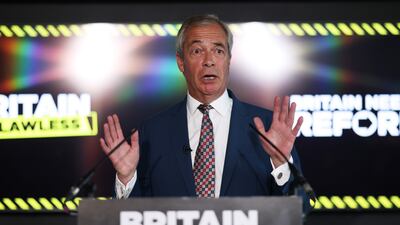
Mr Farage attends a press conference on law and order in London in August 2025 -
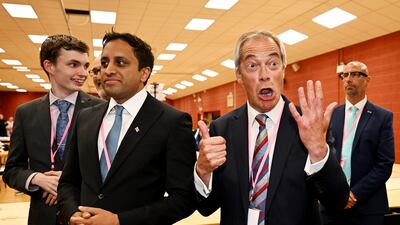
Mr Farage celebrates as Reform candidate Sarah Pochin is declared the winner of the Runcorn and Helsby by-election in May 2025 -
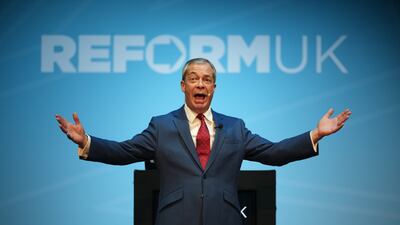
Mr Farage speaks on stage during the Reform UK East Midlands Conference in Leicester in January 2025 -
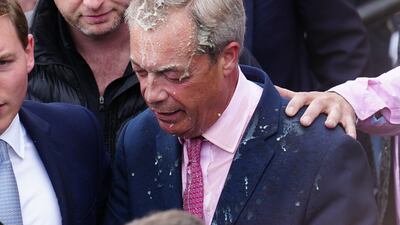
Mr Farage after a woman threw a drink over him at the launch of his general election candidacy at Clacton Pier in 2024 -

Mr Farage shares a joke with boxer Derek Chisora during a visit to a gym in Clacton-on-Sea in 2024 -
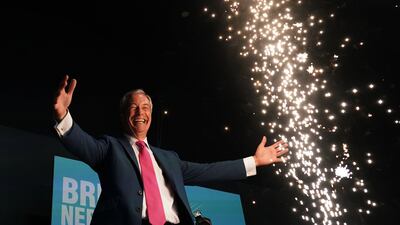
Mr Farage at a campaign event in Sunderland in 2024 -
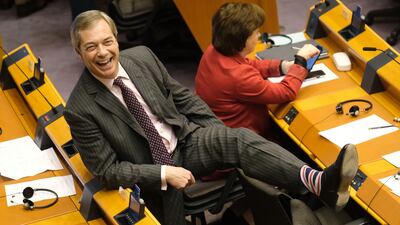
Mr Farage, then Brexit Party leader and member of the European Parliament, before the Brussels parliament was to approve the Brexit deal, in January 2020 -
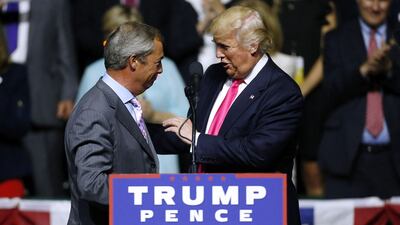
Republican presidential nominee Donald Trump greets Mr Farage at a 2016 campaign rally in Jackson, Mississippi -
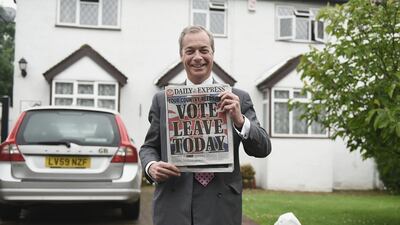
Mr Farage, as leader of Ukip and a prominent Vote Leave campaigner, holds up the Daily Express as he returns home after buying newspapers in Westerham in 2016 -
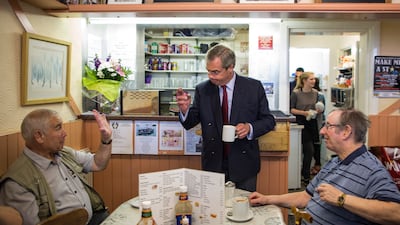
Mr Farage speaks to members of the public at a cafe in Ramsgate in 2016 -
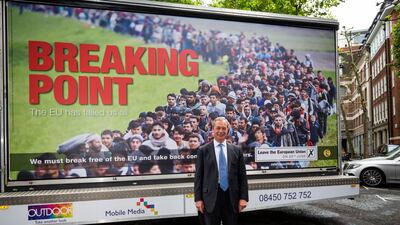
Mr Farage poses with the Ukip's EU referendum poster in Westminster in 2016 -
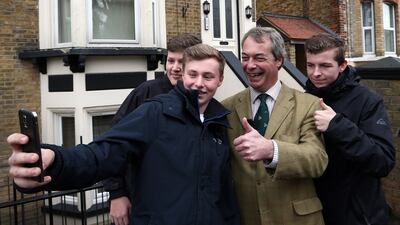
Mr Farage has a selfie taken as he canvasses in the Thanet South constituency in Broadstairs in 2015 -

Mr Farage is interviewed after being announced as Ukip leader again in 2010 -
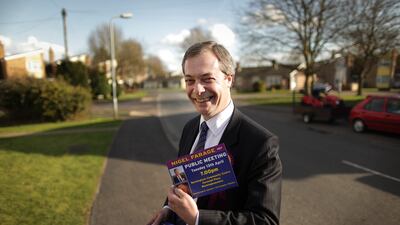
Mr Farage on the campaign trail in Winslow in 2010 -
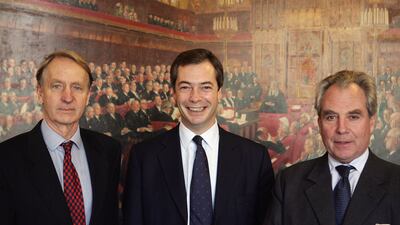
Mr Farage with Lord Willoughby de Broke, left, and Lord Pearson in London in 2007. The Conservative peers had defected to Ukip


There are discussions about new rules, restrictions or laws, with perhaps a limit on large donations. The government minister in charge of elections and democracy, Angela Rayner, reacted in a television interview: “We’re saying that if you don’t pay taxes, if you don’t live here, you can’t buy your way into our democracy because you’re a billionaire.”
That of course does not prove that Mr Harborne, Mr Delo or Mr Farage have broken any rules. The investigations continue.
Meanwhile, Transparency International – which describes itself as “a global movement working in over 100 countries to end the injustice of corruption” – published on its website an article alleging that democracy is in crisis as a result of the flood of big money in politics, and that the UK is following the lead of the US: “One only has to take a cursory look over the Atlantic to realise how serious it is. The ability of billionaires to buy what they want in Washington has never been so brazen. And we [in Britain] are not immune … This doom loop is slowly destroying our democracy.”
Reform counters by saying that these enormous donations help their new party compete with Labour and the Conservatives at the next general election. But the prospect of American-style big money from just two donors intervening in British politics in such an astounding way raises obvious questions about whether they expect something for their money.
Reform is committed, in power, to ease the rules on crypto but insists it promised that rule change before these donations. The party’s deputy leader, Richard Tice, also claims the party is “at war” with traditional media. Perhaps the money will fund an enormous social media campaign before the next election.
Either way, Mr Farage says he is “honoured and humbled” by the donations, although being “humble” has not previously been his most obvious characteristic. Mr Harborne said what he expects for his donation is “nothing” beyond helping Reform prepare for government. As for the polls, they show large number of voters do not want Mr Farage as prime minister and do not entirely trust him.
Enormous donations of cash from crypto-billionaires may help Reform’s finances. Those donations, however, may not help them change that lack of trust.

