
Smit Machchhar, the flydubai pilot hailed for his bravery in saving the lives of 174 passengers, has previously spoken of his pride in ensuring passengers are safe whenever he is in control of a plane.
Passengers on the flydubai flight FZ1073 and Israeli Prime Minister Benjamin Netanyahu have described how, despite having been stabbed, the Indian captain opened the cockpit door to allow passengers and crew to overpower the assailant and steady the aircraft.
Videos shared by flydubai passengers show the injured captain with an oxygen mask being attended to by the crew on the flight from Dubai to Tel Aviv that was diverted to Saudi Arabia on Wednesday morning.


The Indian embassy in Riyadh said it was monitoring the health of Capt Machchhar, who was admitted to a hospital in Tabuk city in north-western Saudi Arabia. The embassy said the captain was in a stable condition and officials were in touch with his family.
A commander with the Indian airline SpiceJet for 11 years, Capt Machchhar joined flydubai as captain four years ago.
He opened up about his experience in the industry in an in-depth interview last year that provided insight into the sense of responsibility he feels towards his passengers. Capt Machchhar repeatedly touched on his commitment to land the plane safely for the sake of the passengers.
He also spoke of the rigorous first-aid training the crew are put through, which can save lives.
“When we are up there and something happens, who is going to save you?” he said on the podcast Bonafide Banter. “You will be lucky if you have a doctor on board, but if not, the crew are trained. I’m not saying they are trained to do surgeries, but they can save your life.”
No margin for error
He spoke about the concentration that is critical when commanding a plane.
Among his more challenging flights was landing in Mykonos in Greece and dealing with wind shear, or a sudden change in velocity and direction.
“It was not 110 per cent [attention], we needed to be 200 per cent. There was no margin for error; it was one of the trickiest approaches in Greece,” he said.
“The winds were very bad. Wind shear is rapid change of wind speed and direction that can reduce the aircraft’s capability to keep on flying. It can also push you off the runway.”
He also spoke about other demanding flights and told of quick action to find safe landing spots, to co-ordinate with air traffic controllers, and to ensure paramedics were on hand when a woman had a premature delivery on board and a passenger suffered breathing difficulties.
“I’ve had a few medical emergencies, also minor issues with the aircraft where I could have continued, but in the interest of safety the best thing was to put the plane on the ground,” he said.
“As long as you are walking out of the aircraft safely, that’s what I want. Some emergencies were time critical and things could have gone wrong. One person had shortness of breath – he was given oxygen.
“We had a birth on board – that was time critical. As pilots, what we can do is get them professional help as soon as possible.”
-

Flydubai flight FZ1073, on its way to Israel from Dubai, was diverted to Saudi Arabia on September 30 after an in-flight security incident that led to the stabbing of its pilot. Photo: Kann Media -

Yaniv Hayun, one of the men who helped incapacitate the attacker, at Ben Gurion Airport in Israel. Reuters -
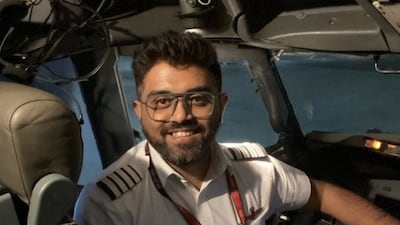
Indian pilot Smit Machchhar has been hailed as a hero for saving passengers despite being stabbed. Reuters -
A second flydubai plane was sent to Saudi Arabia to retrieve the stranded passengers and return them to Israel. Getty Images -

Assaf Regavim, who filmed a video from inside the cabin and helped to overpower the attacker, talks to reporters at Ben Gurion Airport. Getty Images -

A relieved passenger from Flight FZ1073 after landing in Israel. Getty Images -
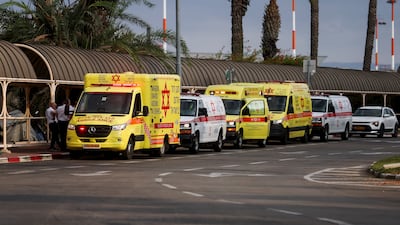
Ambulances are kept at the ready as passengers arrive in Israel on the second flydubai aircraft. Reuters -
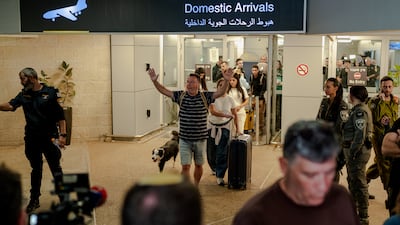
A passenger exits through the domestic arrivals doors with his dog and his luggage at Ben Gurion Airport. Getty Images -

Israeli Prime Minister Benjamin Netanyahu meets Yaniv Hayun, a passenger on the diverted flydubai plane. Reuters


Keep talking to passengers
Capt Machchhar also shared lessons he has picked up about keeping his nerve when handling angry passengers who are upset about delays.
“I’m lucky to have grown with people who helped me be the pilot I am today,” he said, recalling how, as a young first officer, he followed a senior captain into a SpiceJet cabin to calm restless passengers.
“You needed to reach one person and then the mood started changing, people sat down, there was no shouting.”
Experience has taught him to engage with passengers. “My style of handling things now is to keep talking to passengers,” Capt Machchhar said.
“Over the years, I sometimes go to the cabin, talk to them, keep them engaged. Even if you tell them about a half-hour delay, when it comes from cockpit it makes a difference. The crew are qualified, but maybe it’s the [captain’s] voice of authority that makes a difference.”
Responsibility of flying
Capt Machchhar was always acutely aware that it was his job to protect hundreds of passengers right from his first commercial flight as a pilot – a short-haul journey from the southern Indian city of Bengaluru to Delhi in the north.
“It was a familiarisation flight as part of training,” he said. “While it was an enjoyable experience, the first 30 minutes were scary because of the responsibility not because of the flying.”
A career as a pilot was not his initial plan, as he intended to join his family-run textile business. “Unlike other aviators, aviation was not my childhood dream. It came along later. I had joined a textile engineering course so I could join the business after school,” he said.
He decided to do a management course to grow the family business, and that’s when he stumbled upon an aviation seminar at the age of 19. “That’s when the aviation bug bit me,” he said.
He partnered with three pilot friends in 2017 to start a school for aspiring pilots in Mumbai. Capt Machchhar served as a mentor at Flyby Aviation Academy and enjoyed sharing his passion and experience with young aviators. “I mean who gets to fly an aircraft and still get paid? I always tell that to my first officers.”
Finally, when asked for one word to describe being a pilot, Capt Machchhar simply said: “Blessed.” It's a sentiment passengers of flydubai flight FZ1073 likely share.

