


The EU, US and Ukraine criticised Hungarian leader Viktor Orban for visiting Russia on Friday and holding talks with President Vladimir Putin.
Mr Putin hosted Mr Orban for talks at the Kremlin, which were described by the Russian President as a “really useful, frank conversation” on the conflict in Ukraine.
Hungary has adopted the friendliest posture in the EU towards Moscow amid the war.
The surprise trip was blasted by a string of EU officials, who said it threatened to undermine the 27-member bloc's stance on the conflict. They stressed that Mr Orban did not represent Brussels.
The pair “talked about the possible ways of resolving” the Ukraine conflict, Mr Putin said in remarks after a bilateral meeting.
The Russian leader repeated his demand that Ukraine withdraw all its troops from regions that Moscow has annexed and said Kyiv was “not ready to drop the idea of waging war until a victorious end”.
Mr Putin said at the start of the talks that he wanted to “discuss the nuances that have developed” over the conflict in Ukraine with Mr Orban, who also visited Kyiv earlier this week.
Mr Orban in turn said he had realised “positions are far apart” between the two sides.
“The number of steps needed to end the war and bring about peace is many,” he said.
Ukraine-Russia conflict latest – in pictures
-
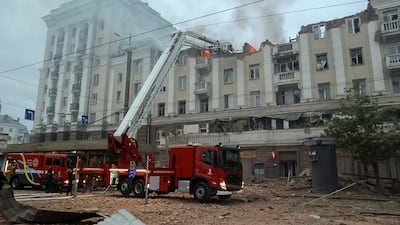
Ukrainian rescuers at the site of a rocket attack on a residential building in Dnipro, south-eastern Ukraine. EPA -
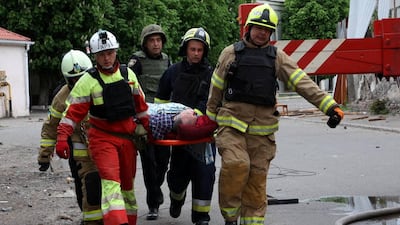
Rescues carry a person wounded by a Russian missile strike in Dnipro. Reuters -
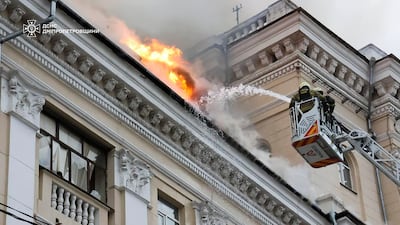
Rescuers tackle a blaze at a building struck by Russian bombs, in Dnipro. AP -
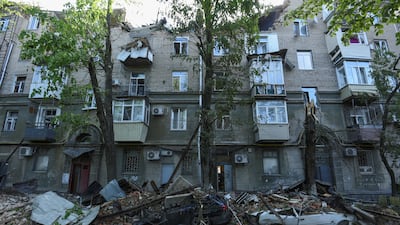
An apartment building hit by a Russian missile strike in Dnipro. Reuters -
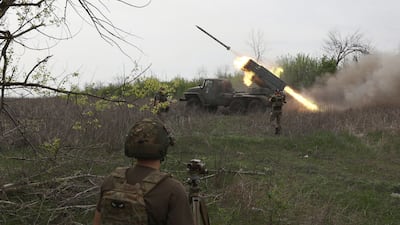
Ukrainian soldiers fire at Russian positions near the town of Kupyansk, Kharkiv Region. AFP -
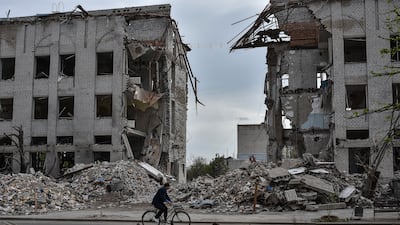
A building destroyed by a Russian air strike in the front-line town of Orikhiv. AP -
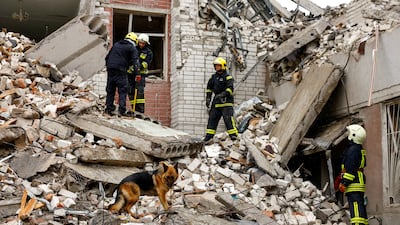
A dog stands on the rubble as rescuers work at the site of a destroyed building during a Russian missile strike in Chernihiv. Reuters -
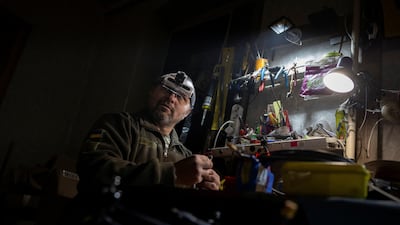
A Ukrainian serviceman works on an FPV drone in a workshop in the Donetsk region. Reuters -
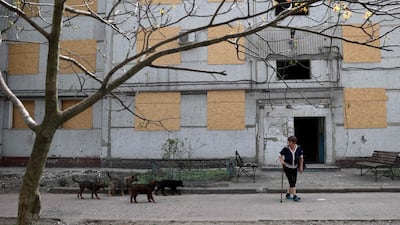
Local resident Kateryna, 77-years-old, walks with a litter of puppies, which she feeds in the yard of her bomb-damaged apartment block in the town of Kurakhove. AFP -
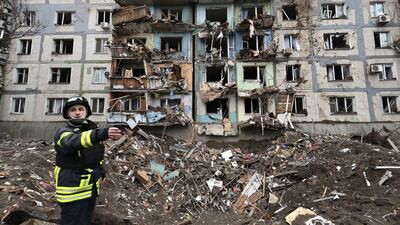
Ukrainian rescuers at the scene of a missile strike near a residential building, in Zaporizhzhia. EPA -
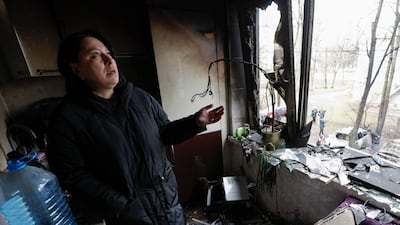
A woman looks at the damage in her flat after debris from a missile strike hit nearby, in Kyiv. EPA -

Ukrainian firefighters at the scene of a missile strike in Kyiv. EPA -
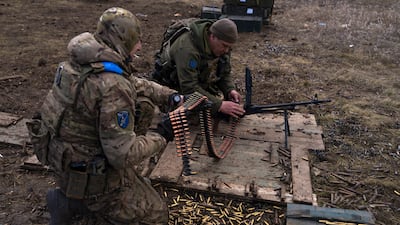
Ukrainian servicemen take part in military training at an undisclosed location near the frontline. EPA -
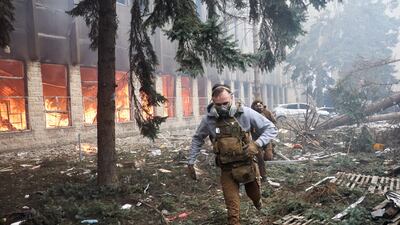
Ukrainian troops run near the site of a rocket attack on an industrial building, in Kharkiv. EPA -
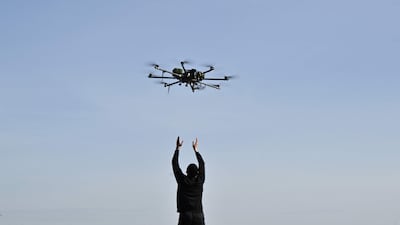
A pilot operates a drone at a training ground in the Kyiv region. AFP -

Ukrainian and Russian soldiers are depicted in a tug-of-war on a memorial in Izium, Kharkiv region. AP -
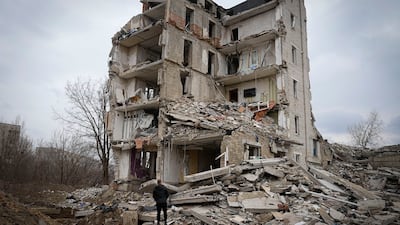
A man looks at his home in a damaged apartment building in Izium, Kharkiv. AP -
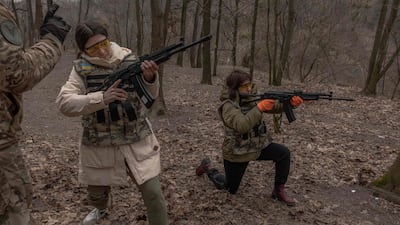
Ukrainian civilian women are trained to use weapons, in Kyiv. AFP -
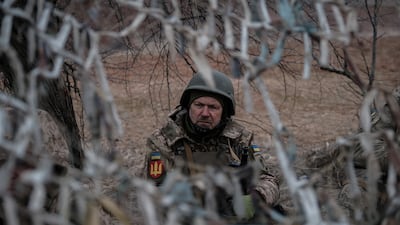
A Ukrainian soldier mans a position as new recruits receive training at an undisclosed location in the Donetsk region. EPA -
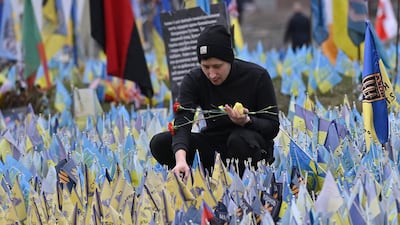
A man pays tribute at a makeshift memorial for fallen Ukrainian soldiers, at the Independence Square in Kyiv. AFP -
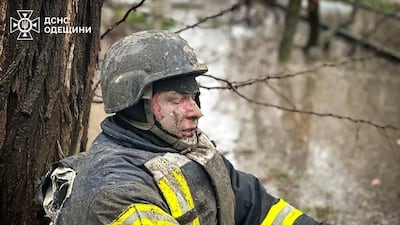
An emergency worker at the scene of a Russian attack in Odesa. AP -
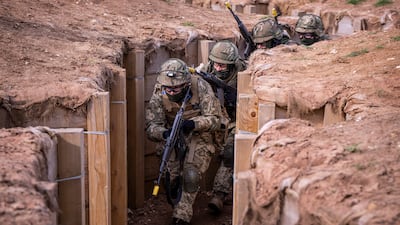
Ukrainian recruits are trained by members of the Danish military, in the east of England. AP -
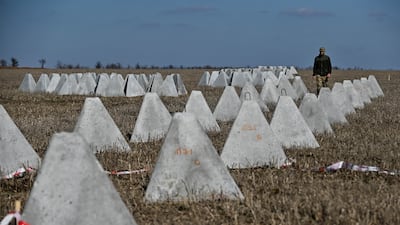
Danylo, commander of an engineering and sapper company of the Ukrainian Armed Forces, inspects pyramidal anti-tank obstacles known as 'dragon's teeth' before installing them into a new fortification line in Zaporizhzhia region. Reuters


The visit came days after Hungary took over the EU's rotating presidency. Mr Putin told Mr Orban he expected him to outline “the position of European partners” on Ukraine.
The Ukrainian government slammed the meeting, stressing it had no hand in its planning.
“The decision to make this trip was made by the Hungarian side without any agreement or co-ordination with Ukraine,” the Foreign Ministry said in a statement.
EU leaders lashed out at Mr Orban over the trip.
“Appeasement will not stop Putin,” European Commission head Ursula von der Leyen wrote on X.
“Only unity and determination will pave the path to a comprehensive, just and lasting peace in Ukraine.”
EU foreign policy chief Josep Borrell said in a statement that Mr Orban's “visit to Moscow takes place, exclusively, in the framework of the bilateral relations between Hungary and Russia”.
“Orban has not received any mandate from the EU Council to visit Moscow,” he added.
The EU has firmly opposed Russia's military offensive in Ukraine, imposing 14 rounds of unprecedented sanctions on Moscow.
“That position excludes official contacts between the EU and President Putin. The Hungarian Prime Minister is thus not representing the EU in any form,” Mr Borrell said.
“It is worth recalling that President Putin has been indicted by the International Criminal Court and an arrest warrant released for his role in relation to the forced deportation of children from Ukraine to Russia.”
EU Council chief Charles Michel had earlier reiterated the common stance that “no discussions about Ukraine can take place without Ukraine”.
The US also criticised the trip as “counterproductive”, while Nato, of which Hungary is a member, distanced itself.
Mr Orban's visit “will not advance the cause of peace and is counterproductive to promoting Ukraine's sovereignty, territorial integrity and independence”, White House press secretary Karine Jean-Pierre said.
Nato head Jens Stoltenberg said Mr Orban had informed the alliance of his trip but stressed the Hungarian leader was “not representing Nato at these meetings. He's representing his own country”.
Kremlin spokesman Dmitry Peskov told Russian state TV the visit had been Mr Orban's idea and Russian officials only heard about the trip on Wednesday – a day after the Hungarian leader had visited Kyiv.
Weapons wanted by Ukraine – in pictures
-
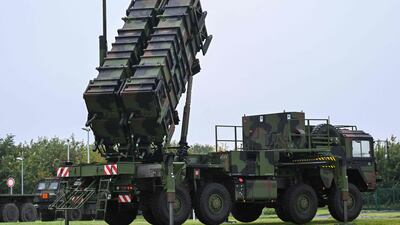
Air defence: Ukraine’s air defence largely depends on the Patriot system. AFP -
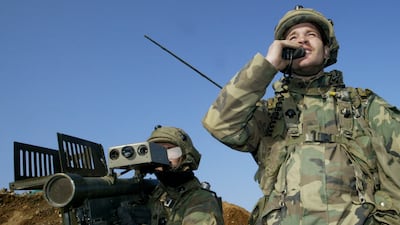
Air: Stinger short-range surface-to-air missile. Reuters -
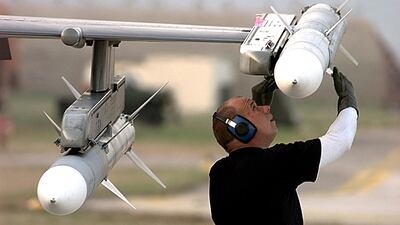
Air: Aim-120 air-to-air missiles. More than 14,000 of the missiles, that have a range exceeding 120km, have been produced with their accuracy so good that they have been nicknamed “Slammer”. Getty Images -
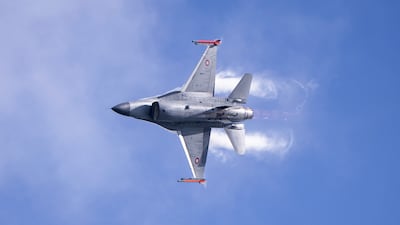
Air: F-16s will provide greater surveillance and the ability to attack high-value targets behind Russian lines in occupied Ukraine. EPA -
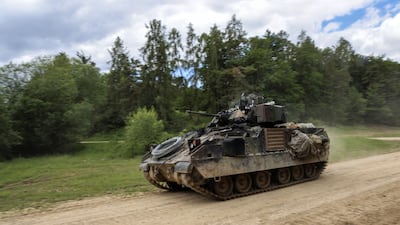
Armour: Bradley IFV. The Ukrainians have found the Bradley infantry fighting vehicle, with its 25mm cannon, very useful in protecting troops and providing decent firepower. Bloomberg -
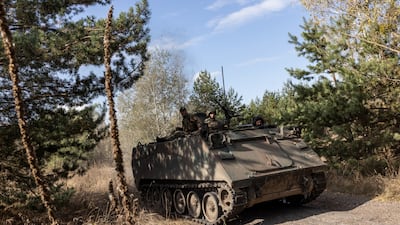
Armour: M113. The 1960s-designed versatile M113 armoured personnel carrier has proven effective in protecting troops against minefields. Getty Images -
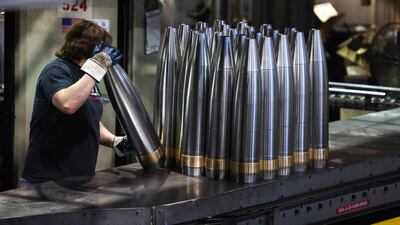
Artillery: 155mm artillery rounds. A massive delivery of 155mm rounds could prove crucial in preventing further Russian advances, particularly in its expected summer offensive. AFP -
Artillery: ATACMs long-range precision missiles. The ATACMS have a range of 300km with the ability to land within a few metres of a target. Getty Images -
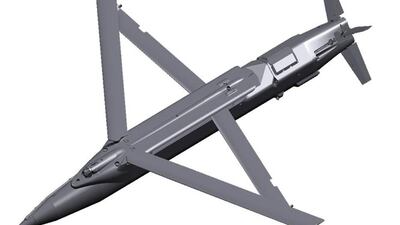
Artillery: Ground-Launched Small Diameter Bomb (GLSDB). It can be fired from the HIMARS system. Photo: Wikimedia Commons -

Artillery: M777 guns and replacement barrels. The Ukrainians need many M777 howitzer barrels to replace those worn down by extensive use. Getty Images


Hungary's six-month EU presidency gives the central European country sway over the bloc's agenda and priorities for the next six months.
Mr Orban on Friday insisted that peace in Ukraine cannot be achieved without dialogue.
“If we just sit in Brussels, we won't be able to get any closer to peace. Action must be taken,” Mr Orban said during an interview on Hungarian state radio, when asked about his visit to Ukraine.
Polish Prime Minister Donald Tusk expressed disbelief at Mr Orban's Moscow trip, while Finnish Prime Minister Petteri Orpo called it “disturbing news”.
The visit is the first to Moscow by a European leader since a trip by Austrian Chancellor Karl Nehammer in April 2022.
Mr Orban and Mr Putin last met in October 2023 in Beijing, where they discussed energy co-operation.

