Taoiseach Simon Harris, Spanish Prime Minister Pedro Sanchez and Norway's Prime Minister Jonas Gahr Store have revealed their nations will recognise a Palestinian state. PA / Reuters

Norway, Spain and Ireland recognise Palestine. What happens next?


Sunniva Rose
  • English
  • Arabic

LATEST: Live updates as Norway, Spain and Ireland recognise state of Palestine

In a co-ordinated move, Norway, Spain and Ireland on Wednesday announced their intention to officially recognise Palestine next week.

The announcement was spearheaded by Spanish Prime Minister Pedro Sanchez, who has been lobbying a number of other countries to recognise Palestine as a state in the hope of relaunching peace talks and end the Israel-Gaza war.

The US and the EU support a two-state solution to the conflict but only nine EU countries have recognised Palestine so far. Many did so in 1988 under communist rule and have since shifted alliances closer to Israel.

Sweden was the last EU country to make a move in 2014, triggering a diplomatic spat similar to Israel's decision on Wednesday to withdraw its ambassadors from Ireland and Norway.

Moving forward, what is the likely impact of the triple announcement?

What is the view among other western countries?

Erwin van Veen, senior research fellow at Dutch think tank Clingendael, said for much of western Europe, the legacy of the Holocaust, Christian affiliation with the Jews in the context of the Holy Land and a "good dose of Orientalism" represent major incentives to support Israel.

The US, the UK, Germany and France are unlikely to recognise a Palestinian state soon for reasons that are historical, religious and interest-based, Mr van Veen told The National.

The UK's position is closely related to its colonial legacy and the 1917 Balfour Declaration, which paved the way for a Jewish state.

"For the US, it's more complicated. Christian evangelicals consider Israel to be the Holy Land where the last judgment will be rendered," said Mr van Veen. "But there is also the shared notion that both countries are frontier nations, as well as realpolitik-style interests with Israel serving as US military outpost in the Middle East."

In a recent UN General Assembly vote, Washington was among nine states to reject recognition.

The UK has sent more mixed signals by choosing to abstain, as did France and Germany.

In a statement, Germany's Foreign Ministry said while it believed in a two-state solution, it abstained because the vote would not achieve peace.

France's President Emmanuel Macron has said recognition was "not taboo" but has not signalled an intention to move forward with it any time soon.

A representative for Foreign Minister Stephane Sejourne on Tuesday said "conditions were not met" to bring about a two-state solution.

Speaking to French daily Le Monde, French diplomatic sources said it may weaken negotiations with Israel. "We are depriving ourselves of a [pressure] tool at a time when Israel is least sensitive to external pressures," they said.

This recognition is part of a broader puzzle that's starting to come together
Hugh Lovatt,
senior policy fellow at the European Council on Foreign Relations

Such arguments fall flat after decades of failed negotiations and increased illegal Israeli settlements, said Mr van Veen. "They confuse cause and effect," he said.

Why is it important?

The recognition of Palestinian statehood by three western countries is an important symbol that comes two days after the International Criminal Court said it would request arrests warrants for Israeli Prime Minister Benjamin Netanyahu and Hamas leaders.

Roughly three quarters of the world recognises a Palestinian state but most of those holding out are in Europe and the Americas.

"The Rubicon has been crossed," said Mr van Veen.

"It will set a precedent to increase pressure on others to follow suit, if only because civil society organisations, political parties and protesters can use it in their own home countries."

Hugh Lovatt, senior policy fellow at the European Council on Foreign Relations think tank, said: "This is not just three European countries recognising Palestine in a vacuum.

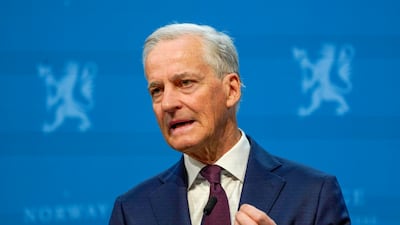
  • Norway's Prime Minister Jonas Gahr Store announces in Marmorhallen in Oslo, that the Norwegian Government will recognise Palestine as an independent state from 28 May. EPA
    Norway's Prime Minister Jonas Gahr Store announces in Marmorhallen in Oslo, that the Norwegian Government will recognise Palestine as an independent state from 28 May. EPA
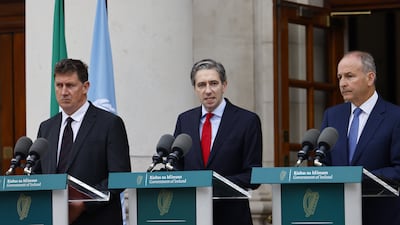
  • Irish Taoiseach Simon Harris, centre, Foreign Minister Micheal Marti, right, and Environment Minister Eamon Ryan announce that the Republic of Ireland has recognised the state of Palestine. EPA
    Irish Taoiseach Simon Harris, centre, Foreign Minister Micheal Marti, right, and Environment Minister Eamon Ryan announce that the Republic of Ireland has recognised the state of Palestine. EPA
  • Spanish Prime Minister Pedro Sanchez announces that Spain will recognise the state of Palestine. EPA
    Spanish Prime Minister Pedro Sanchez announces that Spain will recognise the state of Palestine. EPA
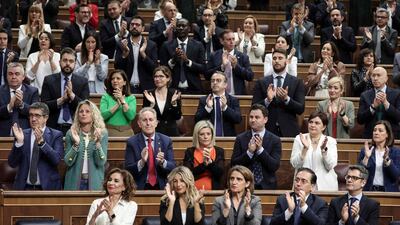
  • Members of the government applaud in Madrid as Mr Sanchez delivers his speech. AFP
    Members of the government applaud in Madrid as Mr Sanchez delivers his speech. AFP
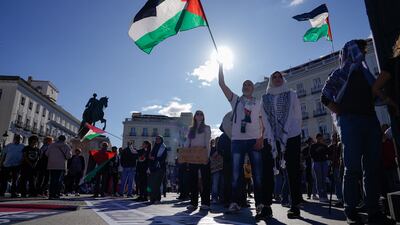
  • People hold flags as they attend a protest in solidarity with Palestinians in Gaza, in Madrid, Spain. Reuters
    People hold flags as they attend a protest in solidarity with Palestinians in Gaza, in Madrid, Spain. Reuters
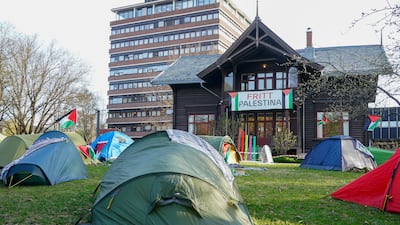
  • A tent camp at the University of Oslo in solidarity with the Palestinian people, in Oslo, Norway. EPA
    A tent camp at the University of Oslo in solidarity with the Palestinian people, in Oslo, Norway. EPA
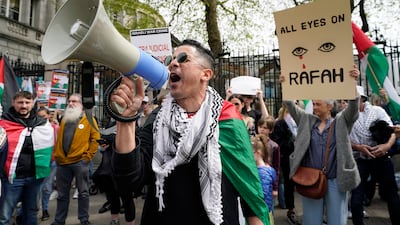
  • Protesters from the Ireland-Palestine Solidarity Campaign demonstrate outside Leinster House in Dublin. PA
    Protesters from the Ireland-Palestine Solidarity Campaign demonstrate outside Leinster House in Dublin. PA

"It's happening in close co-ordination with other European countries and in co-operation with Arab countries, including Saudi Arabia, which has been leading Arab efforts to develop a political plan to revive Israel-Palestine negotiations in support of a two-state solution."

Steps previously viewed as taboo have taken place, such as imposing sanctions on extremist Israeli settlers, announced by the US in February and followed by the EU in April.

"This recognition is part of a broader puzzle that's starting to come together," said Mr Lovatt.

Spain's lead on the matter looks to be linked to strong public opinion in support of recognition, a full decade after the Spanish Parliament voted emphatically in favour.

"Spain is saying 'someone needs to do something'," said Haizam Amirah-Fernandez, professor of international relations at IE University in Madrid.

"Making no attempt to change a decade-old formula is not an option. It creates a major risk for Europe itself," he told The National.

What other countries may follow?

Belgium, Slovenia, and Malta have said they might be interested in recognising Palestinian statehood alongside Spain but have so far not made any announcements.

Like his Spanish counterpart, Alexander De Croo, Prime Minister of Belgium, has been the target of Israeli criticism for drawing attention to the suffering of civilians in Gaza as early as November.

But Belgium is unlikely to recognise Palestinian statehood due to divisions within the government, imminent elections and because it currently holds the rotating presidency of the EU Council, said Koert Debeuf, distinguished adjunct professor at the Brussels School of Governance.

"There has been more public debate on the matter in Belgium, unlike the Netherlands, for example,” he said.

Support for Israel in the Netherlands is linked to a mixture of a shared Christian biblical tradition, identification with Israel as a liberal western democracy and a view of Palestinians as "the other" in the context of decades of anti-Muslim political speech acts, Mr van Veen said.

Dutch MP Raymond de Roon, from far-right party PVV, recently described Palestinians as a "fake people". Mr de Roon is chairman of Parliament's foreign affairs committee.

The Netherlands also abstained at the UNGA vote on Palestinian statehood.

Slovenia remained silent on Wednesday but its Foreign Minister Tanja Fajon previously told The National that recognising Palestinian statehood could not wait any longer.

A final decision on recognition requires a parliamentary vote.

What territory is being recognised?

No Palestinian state exists on the ground today despite a 1948 UN decision to divide the UK's mandate over Palestine into two states, one for Jews and another for Arabs.

The Gaza Strip has been ruled since 2007 by Hamas, a militant group that is viewed as a terror organisation by the West. The occupied West Bank is in part overseen by the Palestinian Authority. But the illegal presence of 700,000 Israeli settlers is widely viewed as hindering prospects of a future Palestinian state. Israel seized East Jerusalem and the West Bank in a 1967 war.

The flag of Spain in a shop window in the city centre of Hebron in the occupied West Bank. AFP

A Palestinian state should be based on pre-1967 borders with Jerusalem as the capital of both states as set out by the 1949 armistice agreement, the Norwegian government said in a statement.

"In the longer term, we hope that the recognition of Palestine as a state will encourage the parties to restart peace talks with a goal of finding solutions to the outstanding final status issues. A Palestinian state will also enhance security for the Israelis,’ said Norway's Foreign Minister Espen Barth Eide.

Both the PA and Hamas welcomed Wednesday's triple announcement.

Mr Eide said the PA needed to be strengthened and govern Gaza after a ceasefire. "The goal is to achieve a Palestinian state that is politically cohesive, and that derives from the Palestinian Authority," he said.

What happens for Palestinians now?

A lot of work is needed to change Israeli public opinion from support for occupation and to revive the Palestinian national movement, Mr Lovatt told The National.

Mounting pressure on the current far-right Israeli government has caused it to lash out against the PA in a move that analysts warned may backfire. Finance Minister Bezalel Smotrich called on Mr Netanyahu to take punitive steps that include freezing tax transfers held by Norway on behalf of the PA.

"This is opportunism," said Mr Lovatt. "Israel is punishing the PA at a moment when it is extremely vulnerable financially because it is the weaker party that Israel can most harm. It doesn't change in any fundamental way the situation as it existed yesterday. Europe and the US cannot allow themselves to be blackmailed."

Human rights organisations say Palestinians living in Israel are the target of discriminatory laws, while Palestinians in occupied territories including the West Bank are the subject of harassment, forced displacement and murder at the hands of settlers, with the support of the Israeli army. Some have described this situation as apartheid, a claim rejected by Israel.

Speaking on the second day of an Israeli raid in Jenin during which eight people were killed, Israeli Defence Minister Yoav Gallant on Wednesday said he would repeal a 2005 disengagement law, a move approved by the Knesset last summer. This would allow Israeli settlers, evicted by the law, to return legally to settlements in the West Bank.

Mr van Veen warned a "bigger train crash" is to come if Israel continues to refuse Palestinians' right to self-determination.

"Israel may say it doesn't care about the opinion of countries like Spain, but this kind of pressure will accumulate with time and produce effects that are difficult to foresee," he said.

Two hundred days of Israel-Gaza war - in pictures

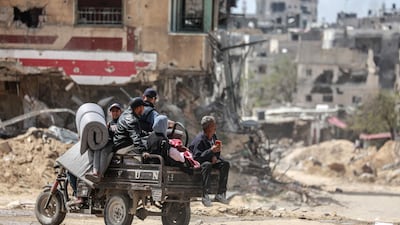
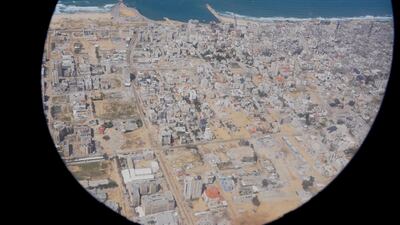
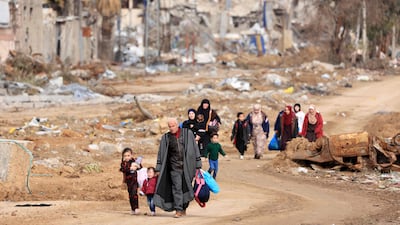
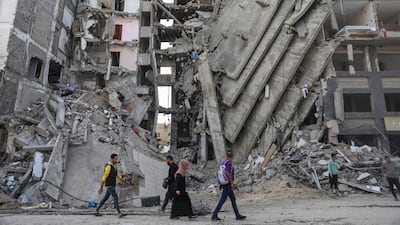
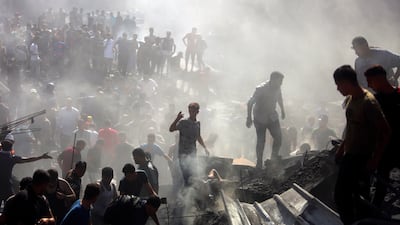
  • Palestinians move with their belongings on a road lined with destroyed buildings, in Khan Younis, in the south of the Gaza Strip, on April 22. AFP
    Palestinians move with their belongings on a road lined with destroyed buildings, in Khan Younis, in the south of the Gaza Strip, on April 22. AFP
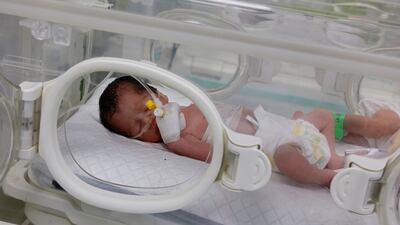
  • An infant saved from the womb of her mother Sabreen Al Sheikh, who was killed in an Israeli strike along with her husband Shokri and her daughter Malak, lies in an incubator at Al Emirati hospital in Rafah, on April 21. Reuters
    An infant saved from the womb of her mother Sabreen Al Sheikh, who was killed in an Israeli strike along with her husband Shokri and her daughter Malak, lies in an incubator at Al Emirati hospital in Rafah, on April 21. Reuters
  • A man rides a bicycle, on April 2, past a damaged vehicle where employees from the World Central Kitchen non-profit, including foreigners, were killed in an Israeli air strike. Reuters
    A man rides a bicycle, on April 2, past a damaged vehicle where employees from the World Central Kitchen non-profit, including foreigners, were killed in an Israeli air strike. Reuters
  • A woman at the damaged Al Shifa Hospital, on April 1, after Israeli forces withdrew from the medical complex following a two-week siege. Reuters
    A woman at the damaged Al Shifa Hospital, on April 1, after Israeli forces withdrew from the medical complex following a two-week siege. Reuters
  • The view from a Jordanian flight dropping vital aid by parachute into Gaza, in March. Matthew Kynaston / The National
    The view from a Jordanian flight dropping vital aid by parachute into Gaza, in March. Matthew Kynaston / The National
  • Nozha Awad flees Al Shifa hospital with her triplet children, after an Israeli raid siege began at the medical complex, in March. Reuters
    Nozha Awad flees Al Shifa hospital with her triplet children, after an Israeli raid siege began at the medical complex, in March. Reuters
  • Palestinians gather to receive aid outside a UNRWA warehouse, in March. Reuters
    Palestinians gather to receive aid outside a UNRWA warehouse, in March. Reuters
  • A family end their fast amid the rubble of their destroyed home, during Ramadan in Rafah, in March. Reuters
    A family end their fast amid the rubble of their destroyed home, during Ramadan in Rafah, in March. Reuters
  • Wafaa Tabasi with her twin malnourished daughters, at Al Awda health centre in Rafah, in March. Reuters
    Wafaa Tabasi with her twin malnourished daughters, at Al Awda health centre in Rafah, in March. Reuters
  • Palestinians carry bags of flour taken from an aid lorry near an Israeli checkpoint in Gaza City, in February. Reuters
    Palestinians carry bags of flour taken from an aid lorry near an Israeli checkpoint in Gaza City, in February. Reuters
  • Fernando Simon Marman and Louis Hare, two Israeli hostages who, according to the Israeli military, were freed in a special forces operation in Rafah, reunite with loved ones at Sheba Medical Centre, in Ramat Gan, Israel, in February. Reuters
    Fernando Simon Marman and Louis Hare, two Israeli hostages who, according to the Israeli military, were freed in a special forces operation in Rafah, reunite with loved ones at Sheba Medical Centre, in Ramat Gan, Israel, in February. Reuters
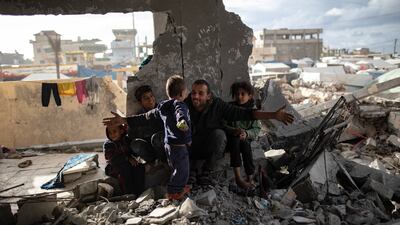
  • Palestinian Muhammad Al Durra with his children in the ruins of a house in Rafah where they sheltered on January 11, 2024. EPA
    Palestinian Muhammad Al Durra with his children in the ruins of a house in Rafah where they sheltered on January 11, 2024. EPA
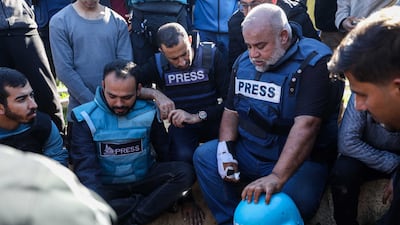
  • Family and friends at the funerals of journalists Hamza Al Dahdouh and Mustafa Thuraya on January 7, 2024 in Rafah, Gaza. Getty Images
    Family and friends at the funerals of journalists Hamza Al Dahdouh and Mustafa Thuraya on January 7, 2024 in Rafah, Gaza. Getty Images
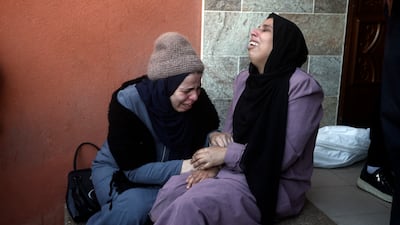
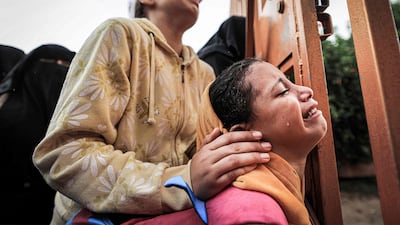
  • Palestinians mourn relatives killed by Israeli bombardment of the Gaza Strip outside a mortuary in Khan Younis January 4, 2024. AP Photo
    Palestinians mourn relatives killed by Israeli bombardment of the Gaza Strip outside a mortuary in Khan Younis January 4, 2024. AP Photo
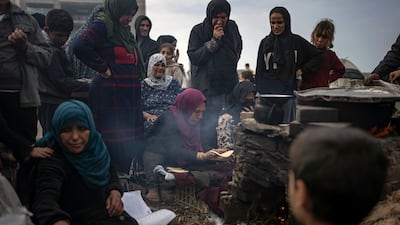
  • Displaced Palestinians queue to bake bread at a camp in the Muwasi area of Rafah, Gaza Strip, on December 23, 2023. AP Photo
    Displaced Palestinians queue to bake bread at a camp in the Muwasi area of Rafah, Gaza Strip, on December 23, 2023. AP Photo
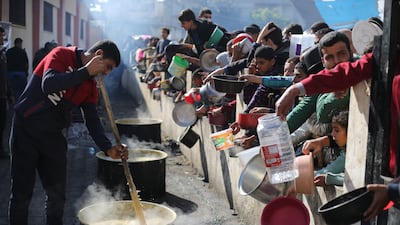
  • Palestinians queue for food in Rafah, the Gaza Strip, on December 20, 2023. AP Photo
    Palestinians queue for food in Rafah, the Gaza Strip, on December 20, 2023. AP Photo
  • The ruins of Rafah on December 14, 2023. AFP
    The ruins of Rafah on December 14, 2023. AFP
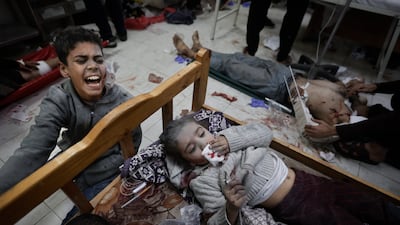
  • Palestinians wounded in the Israeli bombardment of the Gaza Strip arrive at a hospital in Khan Younis on December 8, 2023. AP Photo
    Palestinians wounded in the Israeli bombardment of the Gaza Strip arrive at a hospital in Khan Younis on December 8, 2023. AP Photo
  • Palestinians flee Israeli bombing along the Salaheddine Road in the Zeitoun district of Gaza city on November 28, 2023. AFP
    Palestinians flee Israeli bombing along the Salaheddine Road in the Zeitoun district of Gaza city on November 28, 2023. AFP
  • A Red Cross vehicle takes Israeli hostages from the Gaza Strip into Egypt in Rafah on November 25, 2023. AP
    A Red Cross vehicle takes Israeli hostages from the Gaza Strip into Egypt in Rafah on November 25, 2023. AP
  • The ruins of buildings in Gaza city on November 24, 2023, as a temporary truce between Israel and Hamas took effect. AP Photo
    The ruins of buildings in Gaza city on November 24, 2023, as a temporary truce between Israel and Hamas took effect. AP Photo
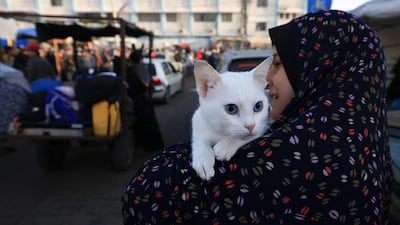
  • A woman and her cat return home to eastern Khan Younis in the southern Gaza Strip during the first hours of a four-day truce between Israel and Hamas forces on November 24, 2023. AFP
    A woman and her cat return home to eastern Khan Younis in the southern Gaza Strip during the first hours of a four-day truce between Israel and Hamas forces on November 24, 2023. AFP
  • Mourning the dead of Israeli bombardment outside the mortuary at Nasser Hospital in Khan Younis on November 14, 2023. AFP
    Mourning the dead of Israeli bombardment outside the mortuary at Nasser Hospital in Khan Younis on November 14, 2023. AFP
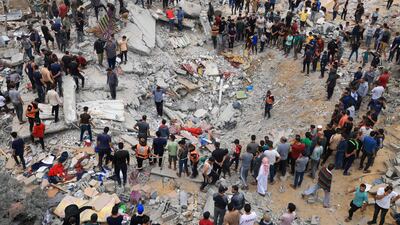
  • Civilians and rescuers look for survivors in the rubble of a building after Israeli bombing of Khan Younis in the southern Gaza Strip on November 12, 2023. AFP
    Civilians and rescuers look for survivors in the rubble of a building after Israeli bombing of Khan Younis in the southern Gaza Strip on November 12, 2023. AFP
  • November 7, 2023, a month to the day after Hamas attacked Israel, a victim of an Israeli bombardment in Rafah is moved from the rubble. AFP
    November 7, 2023, a month to the day after Hamas attacked Israel, a victim of an Israeli bombardment in Rafah is moved from the rubble. AFP
  • Searching the rubble after Israeli air strikes on the town of Khan Younis, southern Gaza Strip, on October 26, 2023. AP Photo
    Searching the rubble after Israeli air strikes on the town of Khan Younis, southern Gaza Strip, on October 26, 2023. AP Photo
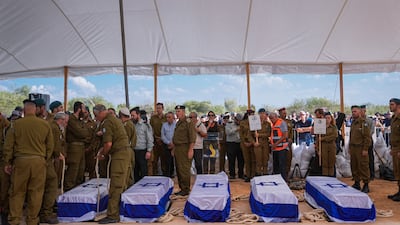
  • Mourning the Kotz family at their funeral in Gan Yavne, Israel, on October 17, 2023. AP Photo
    Mourning the Kotz family at their funeral in Gan Yavne, Israel, on October 17, 2023. AP Photo
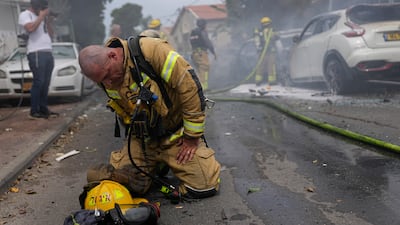
  • An Israeli firefighter composes himself after he and his colleagues extinguished cars set on fire by a rocket fired from the Gaza Strip in Ashkelon, Israel, on October 9, 2023. AP Photo
    An Israeli firefighter composes himself after he and his colleagues extinguished cars set on fire by a rocket fired from the Gaza Strip in Ashkelon, Israel, on October 9, 2023. AP Photo
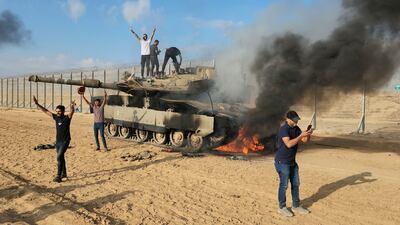
  • Palestinians with the wreckage of an Israeli tank at the Gaza Strip fence east of the city of Khan Younis on October 7, 2023, the day Hamas forces swept unopposed into Israel. AP Photo
    Palestinians with the wreckage of an Israeli tank at the Gaza Strip fence east of the city of Khan Younis on October 7, 2023, the day Hamas forces swept unopposed into Israel. AP Photo
  • Israeli police officers evacuate a woman and a child from a site hit by a rocket fired from the Gaza Strip, in Ashkelon, southern Israel, on October 7, 2023. AP Photo
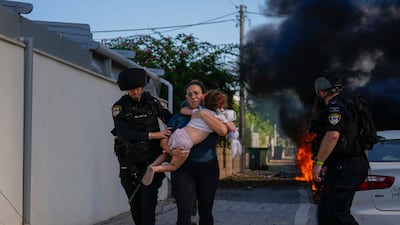
    Israeli police officers evacuate a woman and a child from a site hit by a rocket fired from the Gaza Strip, in Ashkelon, southern Israel, on October 7, 2023. AP Photo
Ten tax points to be aware of in 2026

1. Domestic VAT refund amendments: request your refund within five years

If a business does not apply for the refund on time, they lose their credit.

2. E-invoicing in the UAE

Businesses should continue preparing for the implementation of e-invoicing in the UAE, with 2026 a preparation and transition period ahead of phased mandatory adoption. 

3. More tax audits

Tax authorities are increasingly using data already available across multiple filings to identify audit risks. 

4. More beneficial VAT and excise tax penalty regime

Tax disputes are expected to become more frequent and more structured, with clearer administrative objection and appeal processes. The UAE has adopted a new penalty regime for VAT and excise disputes, which now mirrors the penalty regime for corporate tax.

5. Greater emphasis on statutory audit

There is a greater need for the accuracy of financial statements. The International Financial Reporting Standards standards need to be strictly adhered to and, as a result, the quality of the audits will need to increase.

6. Further transfer pricing enforcement

Transfer pricing enforcement, which refers to the practice of establishing prices for internal transactions between related entities, is expected to broaden in scope. The UAE will shortly open the possibility to negotiate advance pricing agreements, or essentially rulings for transfer pricing purposes. 

7. Limited time periods for audits

Recent amendments also introduce a default five-year limitation period for tax audits and assessments, subject to specific statutory exceptions. While the standard audit and assessment period is five years, this may be extended to up to 15 years in cases involving fraud or tax evasion. 

8. Pillar 2 implementation 

Many multinational groups will begin to feel the practical effect of the Domestic Minimum Top-Up Tax (DMTT), the UAE's implementation of the OECD’s global minimum tax under Pillar 2. While the rules apply for financial years starting on or after January 1, 2025, it is 2026 that marks the transition to an operational phase.

9. Reduced compliance obligations for imported goods and services

Businesses that apply the reverse-charge mechanism for VAT purposes in the UAE may benefit from reduced compliance obligations. 

10. Substance and CbC reporting focus

Tax authorities are expected to continue strengthening the enforcement of economic substance and Country-by-Country (CbC) reporting frameworks. In the UAE, these regimes are increasingly being used as risk-assessment tools, providing tax authorities with a comprehensive view of multinational groups’ global footprints and enabling them to assess whether profits are aligned with real economic activity. 

Contributed by Thomas Vanhee and Hend Rashwan, Aurifer

GAC GS8 Specs

Engine: 2.0-litre 4cyl turbo

Power: 248hp at 5,200rpm

Torque: 400Nm at 1,750-4,000rpm

Transmission: 8-speed auto

Fuel consumption: 9.1L/100km

On sale: Now

Price: From Dh149,900

Mercer, the investment consulting arm of US services company Marsh & McLennan, expects its wealth division to at least double its assets under management (AUM) in the Middle East as wealth in the region continues to grow despite economic headwinds, a company official said.

Mercer Wealth, which globally has $160 billion in AUM, plans to boost its AUM in the region to $2-$3bn in the next 2-3 years from the present $1bn, said Yasir AbuShaban, a Dubai-based principal with Mercer Wealth.

Within the next two to three years, we are looking at reaching $2 to $3 billion as a conservative estimate and we do see an opportunity to do so,” said Mr AbuShaban.

Mercer does not directly make investments, but allocates clients’ money they have discretion to, to professional asset managers. They also provide advice to clients.

“We have buying power. We can negotiate on their (client’s) behalf with asset managers to provide them lower fees than they otherwise would have to get on their own,” he added.

Mercer Wealth’s clients include sovereign wealth funds, family offices, and insurance companies among others.

From its office in Dubai, Mercer also looks after Africa, India and Turkey, where they also see opportunity for growth.

Wealth creation in Middle East and Africa (MEA) grew 8.5 per cent to $8.1 trillion last year from $7.5tn in 2015, higher than last year’s global average of 6 per cent and the second-highest growth in a region after Asia-Pacific which grew 9.9 per cent, according to consultancy Boston Consulting Group (BCG). In the region, where wealth grew just 1.9 per cent in 2015 compared with 2014, a pickup in oil prices has helped in wealth generation.

BCG is forecasting MEA wealth will rise to $12tn by 2021, growing at an annual average of 8 per cent.

Drivers of wealth generation in the region will be split evenly between new wealth creation and growth of performance of existing assets, according to BCG.

Another general trend in the region is clients’ looking for a comprehensive approach to investing, according to Mr AbuShaban.

“Institutional investors or some of the families are seeing a slowdown in the available capital they have to invest and in that sense they are looking at optimizing the way they manage their portfolios and making sure they are not investing haphazardly and different parts of their investment are working together,” said Mr AbuShaban.

Some clients also have a higher appetite for risk, given the low interest-rate environment that does not provide enough yield for some institutional investors. These clients are keen to invest in illiquid assets, such as private equity and infrastructure.

“What we have seen is a desire for higher returns in what has been a low-return environment specifically in various fixed income or bonds,” he said.

“In this environment, we have seen a de facto increase in the risk that clients are taking in things like illiquid investments, private equity investments, infrastructure and private debt, those kind of investments were higher illiquidity results in incrementally higher returns.”

The Abu Dhabi Investment Authority, one of the largest sovereign wealth funds, said in its 2016 report that has gradually increased its exposure in direct private equity and private credit transactions, mainly in Asian markets and especially in China and India. The authority’s private equity department focused on structured equities owing to “their defensive characteristics.”

Company profile

Company: Eighty6 

Date started: October 2021 

Founders: Abdul Kader Saadi and Anwar Nusseibeh 

Based: Dubai, UAE 

Sector: Hospitality 

Size: 25 employees 

Funding stage: Pre-series A 

Investment: $1 million 

Investors: Seed funding, angel investors  

GCC-UK%20Growth
%3Cp%3EAn%20FTA%20with%20the%20GCC%20would%20be%20very%20significant%20for%20the%20UK.%20%20%20%20%20%20%20%20%20%20%20%20%20%20%20%20%20%20%20%20%20%20%20%20%20%20%20%20%20%20%20%20%20%20%20%20%20%20%20%20%20%20%20%20%20%20%20%20%20%20%20%20%20%20%20%20%20%20%20%20%20%20%20%20%20%20%20%20%20%20%20%20%20%20%20%20%20%20%20My%20Department%20has%20forecast%20that%20it%20could%20generate%20an%20additional%20%C2%A31.6%20billion%20a%20year%20for%20our%20economy.%3Cbr%3EWith%20consumer%20demand%20across%20the%20GCC%20predicted%20to%20increase%20to%20%C2%A3800%20billion%20by%202035%20this%20deal%20could%20act%20as%20a%20launchpad%20from%20which%20our%20firms%20can%20boost%20their%20market%20share.%3C%2Fp%3E%0A
Company%20profile
%3Cp%3E%3Cstrong%3EName%3A%3C%2Fstrong%3E%20JustClean%3Cbr%3E%3Cbr%3E%3Cstrong%3EBased%3A%20%3C%2Fstrong%3EDubai%20with%20offices%20in%20other%20GCC%20countries%3Cbr%3E%3Cbr%3E%3Cstrong%3ELaunch%20year%3A%3C%2Fstrong%3E%202016%3Cbr%3E%3Cbr%3E%3Cstrong%3ENumber%20of%20employees%3A%3C%2Fstrong%3E%20160%2B%20with%2021%20nationalities%20in%20eight%20cities%3Cbr%3E%3Cstrong%3E%3Cbr%3ESector%3A%3C%2Fstrong%3E%20online%20laundry%20and%20cleaning%20services%3Cbr%3E%3Cbr%3E%3Cstrong%3EFunding%3A%20%3C%2Fstrong%3E%2430m%20from%20Kuwait-based%20Faith%20Capital%20Holding%20and%20Gulf%20Investment%20Corporation%3C%2Fp%3E%0A
In-demand jobs and monthly salaries
  • Technology expert in robotics and automation: Dh20,000 to Dh40,000 
  • Energy engineer: Dh25,000 to Dh30,000 
  • Production engineer: Dh30,000 to Dh40,000 
  • Data-driven supply chain management professional: Dh30,000 to Dh50,000 
  • HR leader: Dh40,000 to Dh60,000 
  • Engineering leader: Dh30,000 to Dh55,000 
  • Project manager: Dh55,000 to Dh65,000 
  • Senior reservoir engineer: Dh40,000 to Dh55,000 
  • Senior drilling engineer: Dh38,000 to Dh46,000 
  • Senior process engineer: Dh28,000 to Dh38,000 
  • Senior maintenance engineer: Dh22,000 to Dh34,000 
  • Field engineer: Dh6,500 to Dh7,500
  • Field supervisor: Dh9,000 to Dh12,000
  • Field operator: Dh5,000 to Dh7,000
Company%20profile
%3Cp%3E%3Cbr%3E%3Cstrong%3EName%3A%3C%2Fstrong%3E%20Khodar%3Cbr%3E%3Cstrong%3EBased%3A%3C%2Fstrong%3E%20Cairo%20and%20Alexandria%2C%20in%20Egypt%3Cbr%3E%3Cstrong%3EFounders%3A%3C%2Fstrong%3E%20Ayman%20Hamza%2C%20Yasser%20Eidrous%20and%20Amr%20El%20Sheikh%3Cbr%3E%3Cstrong%3ESector%3A%3C%2Fstrong%3E%20agriculture%20technology%3Cbr%3E%3Cstrong%3EFunding%3A%3C%2Fstrong%3E%20%24500%2C000%3Cbr%3E%3Cstrong%3EInvestors%3A%3C%2Fstrong%3E%20Saudi%20Arabia%E2%80%99s%20Revival%20Lab%20and%20others%3Cbr%3E%3Cstrong%3EEmployees%3A%3C%2Fstrong%3E%2035%3C%2Fp%3E%0A
SPECS
%3Cp%3E%3Cstrong%3EEngine%3A%3C%2Fstrong%3E%206-cylinder%203-litre%2C%20with%20petrol%20and%20diesel%20variants%3Cbr%3E%3Cstrong%3ETransmission%3A%20%3C%2Fstrong%3E8-speed%20automatic%3Cbr%3E%3Cstrong%3EPower%3A%3C%2Fstrong%3E%20286hp%20(petrol)%2C%20249hp%20(diesel)%3Cbr%3E%3Cstrong%3ETorque%3A%20%3C%2Fstrong%3E450Nm%20(petrol)%2C%20550Nm%20(diesel)%3Cbr%3E%3Cstrong%3EPrice%3A%20%3C%2Fstrong%3EStarting%20at%20%2469%2C800%3Cbr%3E%3Cstrong%3EOn%20sale%3A%20%3C%2Fstrong%3ENow%3C%2Fp%3E%0A
The President's Cake

Director: Hasan Hadi

Starring: Baneen Ahmad Nayyef, Waheed Thabet Khreibat, Sajad Mohamad Qasem 

Rating: 4/5

The bio

Date of Birth: April 25, 1993
Place of Birth: Dubai, UAE
Marital Status: Single
School: Al Sufouh in Jumeirah, Dubai
University: Emirates Airline National Cadet Programme and Hamdan University
Job Title: Pilot, First Officer
Number of hours flying in a Boeing 777: 1,200
Number of flights: Approximately 300
Hobbies: Exercising
Nicest destination: Milan, New Zealand, Seattle for shopping
Least nice destination: Kabul, but someone has to do it. It’s not scary but at least you can tick the box that you’ve been
Favourite place to visit: Dubai, there’s no place like home

Director: Jon Favreau

Starring: Donald Glover, Seth Rogen, John Oliver

Rating: 2 out of 5 stars

Living in...

This article is part of a guide on where to live in the UAE. Our reporters will profile some of the country’s most desirable districts, provide an estimate of rental prices and introduce you to some of the residents who call each area home.

Updated: May 23, 2024, 9:08 AM