


International donors pledged more than €2 billion ($2.1 billion) at a Paris conference to support Sudan, one year into a devastating war that has pushed millions on the brink of famine, French President Emmanuel Macron said on Monday.
“This support … will make it possible to respond to the most urgent needs in the sector of food and nutritional security, water health, sanitation, education and protection of the most vulnerable populations,” said Mr Macron.
“Our duty is not to forget what is happening in Sudan,” said Mr Macron.
The French leader spoke at the end of a day-long conference on Sudan that included representatives of about 60 states as well as dozens of international humanitarian organisations and the UN. It was co-hosted by France, Germany and the EU.
“Our collective efforts to ensure that Sudan does not become a forgotten crisis will not waver and we urge all our partners to step up their efforts to bring it to an end,” said the three co-hosts in a joint statement. About €900 million has been pledged by the EU and member states.
The Sudanese civil war has led to the largest displacement crisis in the world, with more than nine million people forced to flee. About 18 million people are also at risk of starvation.
A meeting to discuss political solutions to the war, including participants from European, Arab and East African countries, took place ahead of the pledging conference.
War in Sudan one year on - in pictures
-

Rapid Support Forces commander Gen Mohamed Dagalo, then deputy head of Sudan's sovereign council, gives a media briefing in Khartoum in February last year. Reuters -
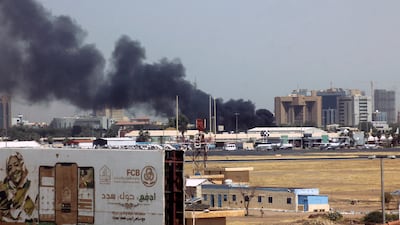
Smoke rises after blasts in Khartoum amid clashes between the Sudanese Army and the Rapid Support Forces paramilitary on April 15 last year. AFP -
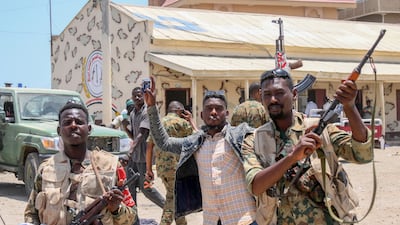
Sudanese Army soldiers at the Rapid Support Forces base in Port Sudan on April 16 last year. AFP -

Black smoke covers the sky over Khartoum as clashes continued on April 19. AFP -
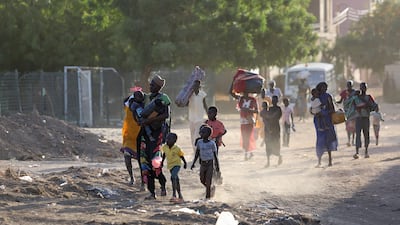
Displaced Khartoum residents flee the city after a 24-hour truce collapsed on April 19. AFP -
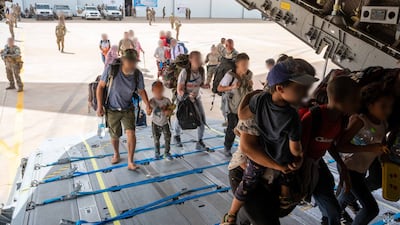
Foreign citizens board a plane at a French military air base in Khartoum to leave Sudan on April 23. AFP -
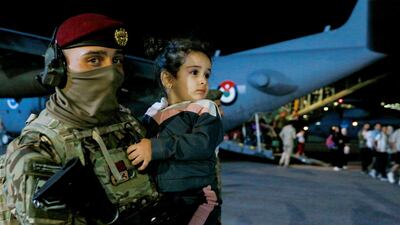
A soldier carries a child as people evacuated from Sudan disembark from a plain at a military airport in Amman on April 24. AFP -

Evacuees from Sudan sit in a military plane as they wait to be processed by Kenyan troops in Nairobi on April 24. Reuters -

Sudanese refugees gather to receive humanitarian aid in Koufroun, Chad, on April 30. AFP -
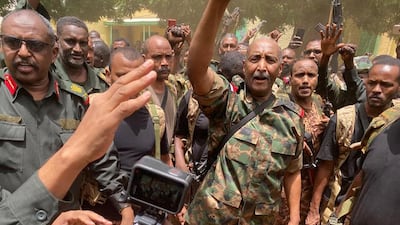
Sudanese Army chief Gen Abdel Fattah Al Burhan visits troop positions in Khartoum on May 30. AFP -
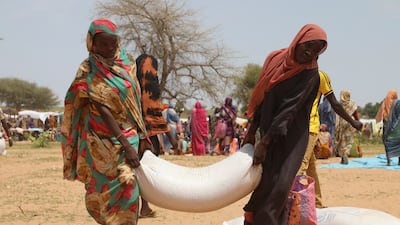
Sudanese refugees at the Zabout camp in Goz Beida, Chad, on July 1. AP -

Smoke rises from a fire at a lumber warehouse in southern Khartoum on June 7. AFP -
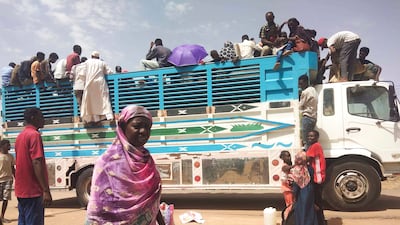
People prepare to leave Khartoum during a ceasefire on June 19. AP -

People sit on top of a lorry carrying furniture on the road between Khartoum and Wad Madani, Al Gezirah state, on July 18. AFP -
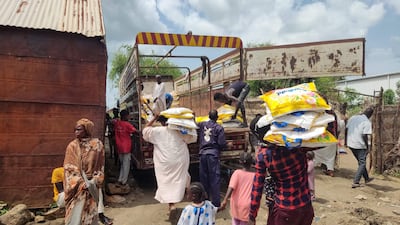
Men load goods from Ethiopia on to a lorry in the border town of Gallabat on August 2. AFP -
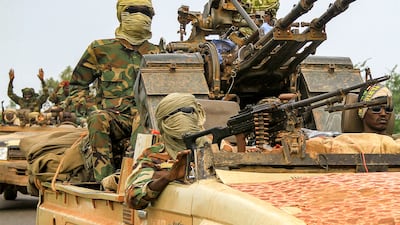
Sudanese Army troops ride in a military convoy accompanying the governor of Darfur State in the eastern city of Gedaref on August 30. AFP -
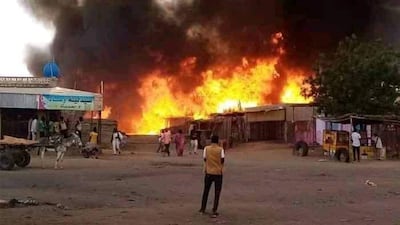
A fire rages at a livestock market after RSF bombardment in Al Fasher, the capital of North Darfur state, on September 1. AFP -

People cook on a campfire at a school that has been turned into a shelter for displaced Sudanese in the northern border town of Wadi Halfa, near Egypt, on September 11. AFP -
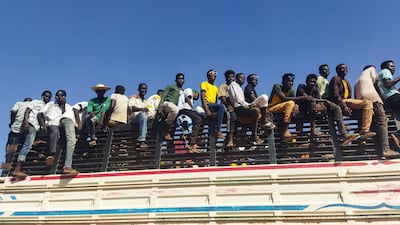
Displaced Sudanese ride on top of a lorry in Wad Madani on December 16. AFP -
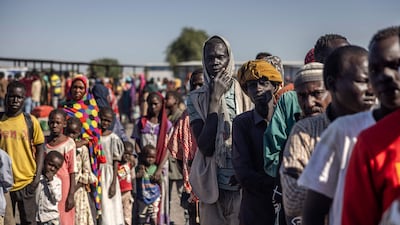
Sudanese refugees queue to board a lorry to go to a transit centre after crossing the border into South Sudan on February 14. AFP -
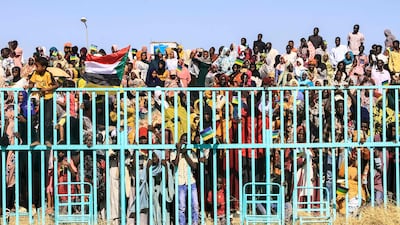
People watch as fighters from the army-aligned Sudan Liberation Movement attend a graduation ceremony in the south-eastern Gedaref state on March 28. AFP -

Fighters from the SLM attend a graduation ceremony in Gedaref state on March 28. AFP


In a declaration of principles, those who attended the political meeting “expressed grave concern over the violations of international humanitarian law and international human rights law in Sudan”.
“We call on the warring parties and all actors to facilitate unhindered access to civilian populations in need of humanitarian aid in a manner consistent with previous commitments and international obligations,” said the co-hosts.
Participants urged the UN secretary general's personal envoy for Sudan, Algerian diplomat Ramtane Lamamra, to “use his good offices for consistent and unified diplomatic engagement from all key actors within a coherent mediation and pressure strategy and an inclusive consultative forum”.
Humanitarians said they were happy with the pledge but that more was needed. Before the conference, only 6 per cent of the UN's February $4.1 billion appeal for Sudan and neighbouring countries had been met.
Displaced in Sudan - in pictures
-

Children who fled Sudan's Khartoum and Jazira states to escape the civil war are living in a camp for the internally displaced in Gadaref state. All photos: AFP -
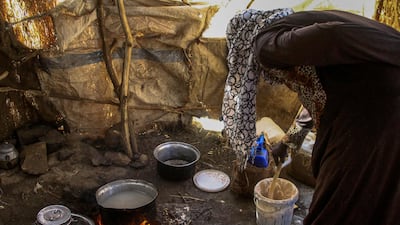
After nearly a year of war, Sudan is suffering one of the worst humanitarian crises in recent history, the UN has warned -

There has barely been any let up in the fighting between the Sudanese army and the paramilitary Rapid Support Forces (RSF) -
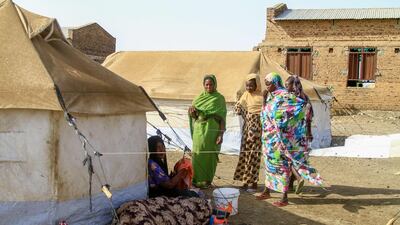
The UN said about 730,000 children in Sudan, including more than 240,000 in Darfur, are believed to be suffering from severe acute malnutrition -
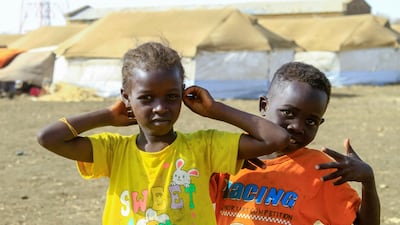
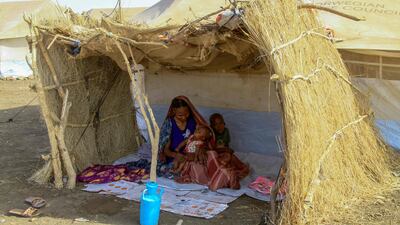
About eight million people have been displaced by the war, which has destroyed the nation’s infrastructure -
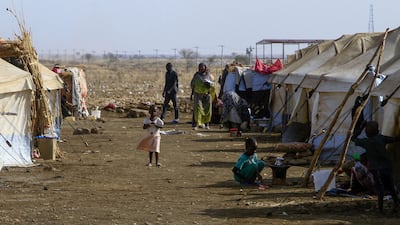
Many are stuck in tented camps like this one in Gadaref. The UN said 18 million of Sudan's 48 million people are acutely food insecure, five million of whom have reached the last level before famine -
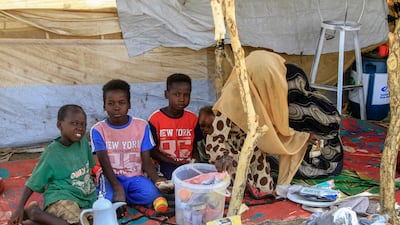
The Security Council this month called for an immediate ceasefire during Ramadan and better access to humanitarian aid -
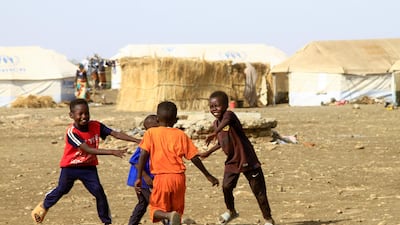
'Since then, I regret to report that there has not been major progress on the ground,' said Edem Wosornu, a UN director of humanitarian operations -
Meanwhile, heavy fighting continues in what has become a war of attrition -
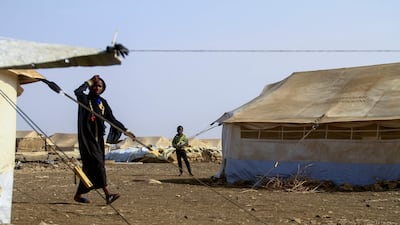
But much suffering prevails among the internally displaced -
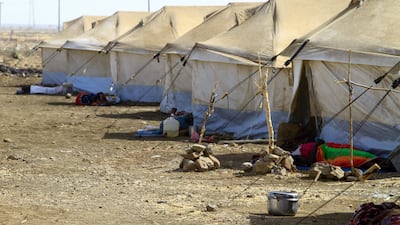
Relief operations are 'severely hampered' by a lack of access and resources, the UN said -
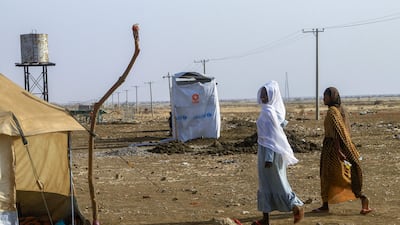
The UN also called on regional powers to stop supplying arms to the warring parties in Sudan immediately, but there is no end in sight to the brutal civil war


Monday's conference brought that figure to close to half of what the UN has requested – but experts said to be careful with figures.
“It’s unclear from that 2 billion what is new money and what has been pledged before,” said Anthony Neal, coordinator of the Sudan forum for international NGOs, which represents 64 organisations.
Speaking to reporters on the sideline of the conference, Mr Neal warned that the funds needed to be disbursed within two months.
“We saw last year with the pledging conference that pledges took a long time to be disbursed to humanitarian actors,” said Mr Neal. “We’re in a different situation now with famine on the doorstep and there’s more of an urgent imperative to get the funding where it needs to go.”
Humanitarians face difficulties in obtaining permits from the two warring parties – the Sudanese Armed Forces and the Rapid Support Forces – to move across the country.
UN agency WFP has said that its lorries recently took three weeks to reach Darfur. “That's unacceptable,” WFP executive director Cindy McCain told reporters.
Some NGOs, such as Mercy Corps, have called for additional cash transfers to allow those in need to purchase goods directly from the local market.
“Prices are increasing but markets are still functioning,” said Mr Neal. “There is still food availability. The challenge is more that people don’t have cash in their pocket to buy what they need.”

