


As competitors taking part in the Paris Olympics triathlon event prepare to dive into the River Seine, the superhuman athletes would be forgiven for being a little anxious about the water in front of them.
Pollution meant swimming was banned in the river for more than 100 years and to prepare for its use during the Games, a $1.5 billion clean-up has been taking place for the past decade.
Judging by the news that has emerged this week, it looks as if there will be a race to make sure the triathletes standing on the pontoon in front of the Pont Alexandre III will emerge from the event healthy, if not absolutely exhausted.
The Surfrider Foundation Europe warned that water samples taken from the Seine have shown dangerous levels of E-coli and enterococci, including those taken from the Pont Alexandre III. Added to the threat of strikes and security fears around the opening ceremony, it has become a potential blot on France's showpiece event.
The presence of the bacteria came after heavy rain in Paris, which traditionally overloads the capital’s sewer system and leads to waste being discharged into the Seine.
The deluge swelled the river, requiring the clock counting down to the Games to be rescued from its bank and raising fears a repeat in summer could scupper the use of the Seine for the triathlon and the 10km swimming event.
Understandably, organisers of Paris 2024 have decided to place the Seine at the heart of the games and, in a break with tradition, the opening ceremony will be centred on the river. After all, it is cemented in our imagination of Paris as much as the Eiffel Tower.
The previous swimming ban was brushed aside by Pierre Rabadan, Paris’s deputy mayor in charge of sport, who said using the river was “not madness” but an “ambitious goal”.
-
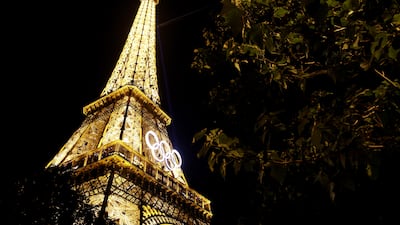
The Olympic rings are illuminated on the Eiffel Tower before the start of the 2024 Olympic Games in Paris. Getty Images -
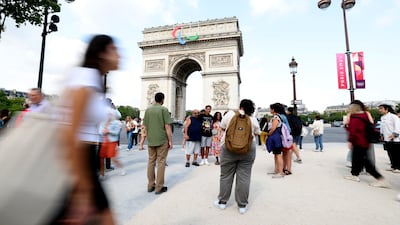
The Arc de Triomphe adorned with the Paralympic logo. Getty Images -
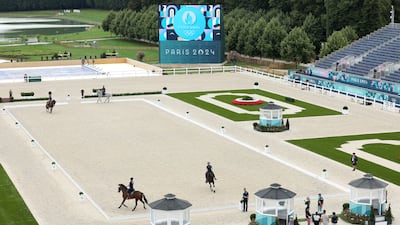
Riders and horses from Team Ireland practise dressage during an equestrian eventing training session at Chateau de Versailles. Getty Images -
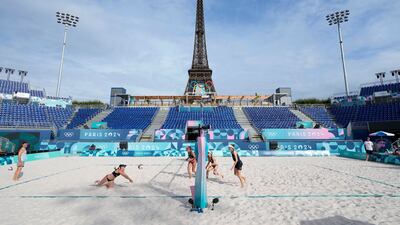
A beach volleyball practice match at the Eiffel Tower Stadium. AP -
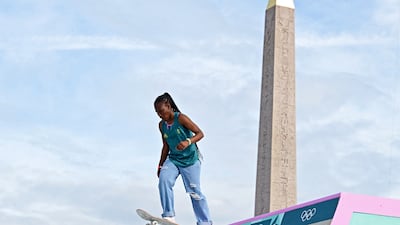
Boipelo Awuah of South Africa during skateboard training at La Concorde. Reuters -
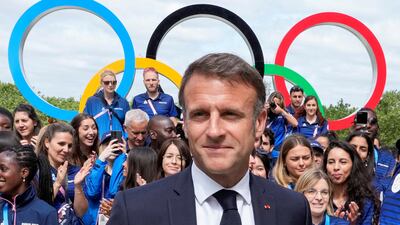
French President Emmanuel Macron with athletes during a visit to the Olympic village. Reuters -

A view of the beach volleyball venue in Paris. AP -
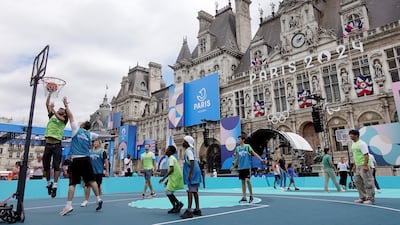
People play basketball in front of the Hotel de Ville. Getty Images -
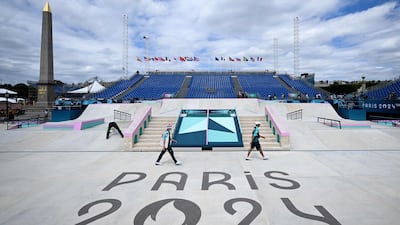
The skateboarding venue at La Concorde. AFP -
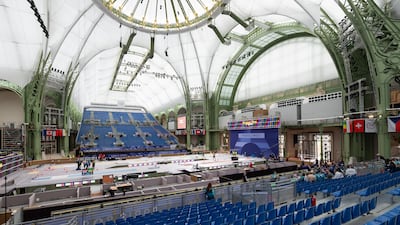
The interior of the Grand Palais, where fencing and taekwondo competitions will take place. Getty Images -
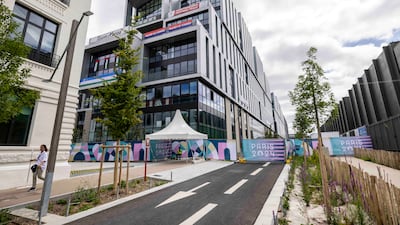
The Olympic village, as seen from the Village plaza in Saint-Denis. Getty Images -

French judoka Clarisse Agbegnenou holds the Olympic Torch next to Tony Estanguet, president of the organising committee of the 2024 Games, at the Eiffel Tower. AFP -
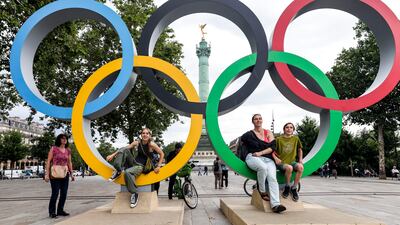
The Olympic Games logo at Bastille Square in Paris. EPA -
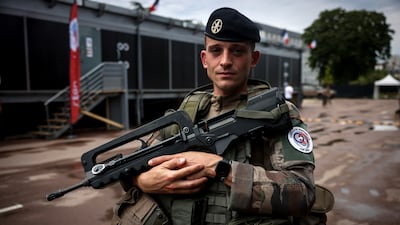
A soldier at a military camp in the Vincennes forest, on the outskirts of Paris. The camp will house 4,500 soldiers who will provide additional security during the Games. AP -

Torchbearers pose with the Olympic flame and dancers outside The Moulin Rouge. Reuters -
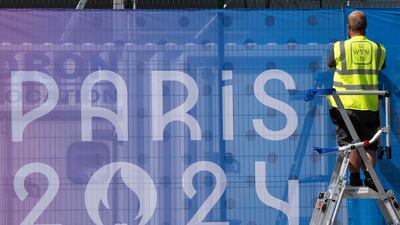
A banner bearing the Paris 2024 Olympic Games logo, at the Trocadero in Paris. AFP -
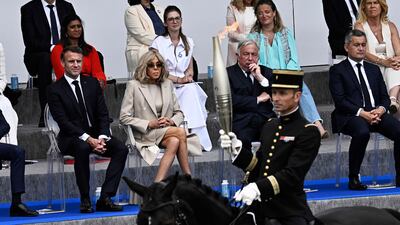
Lt Gen Christophe Abad, the Military Governor of Paris, holds the Olympic torch as he rides past officials including President Emmanuel Macron and his wife Brigitte during the Bastille Day military parade. AFP -

The Eiffel Tower Stadium as workers prepare the venue that will host beach volleyball events. Getty Images -
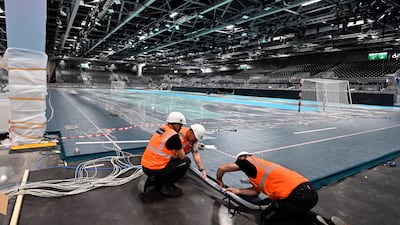
Workers set up internet cables inside the handball arena in Paris. Getty Images -
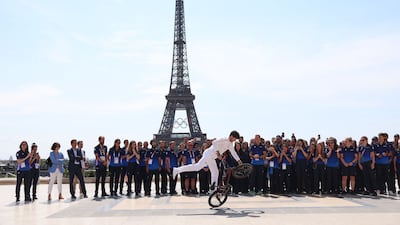
Torch bearer and French BMX world champion Matthias Dandois performs after holding the Olympic flame at the Trocadero in front of the Eiffel Tower. AFP -
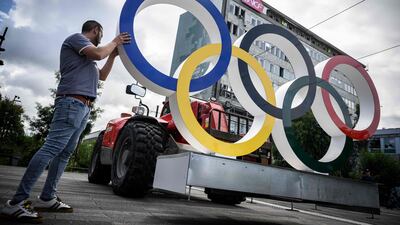
Olympic rings are installed in front of the Nantes train station. AFP -
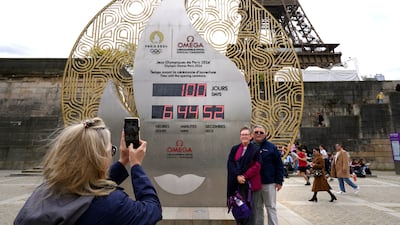
Members of the public take photos in front of the countdown clock for the Games at Port de la Bourfonnais, near the Eiffel Tower, in Paris. PA -

Stands are constructed at Place de la Concorde ahead of the Games. PA -
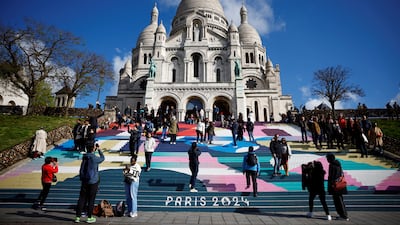
Tourists stand on the Sacre-Coeur Basilica stairs painted with the Paris 2024 Olympic and Paralympic Games colours. Reuters -
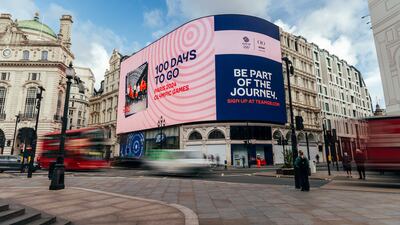
The big screens at Piccadilly Circus in London marking 100 days to go before the Games begin. PA -
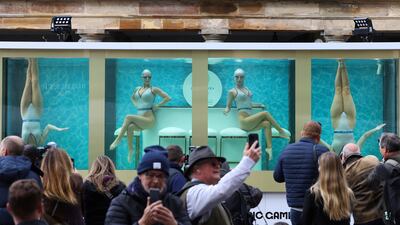
People watch as former British Olympic artistic swimmers Asha George, Katie Clark, Sisy Wang and Emily Kuhl perform in a water tank in London to mark 100 days before the Games. Reuters -
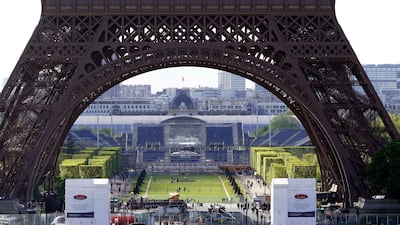
Stands are constructed on the Champ-de-Mars, near the Eiffel Tower. PA -
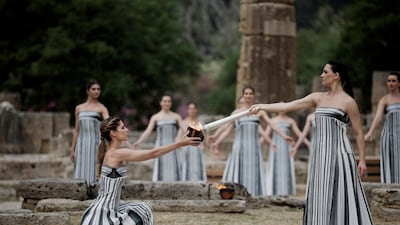
Greek actress Mary Mina, playing the role of High Priestess, lights the flame during the Olympic Flame lighting ceremony in Greece for the Paris 2024 Olympics. Reuters -
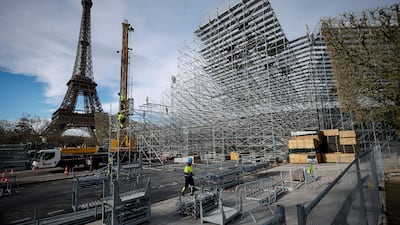
Workers build stands for this summer's Olympic Games on the Champ-de-Mars, beside the Eiffel Tower in Paris. AP -
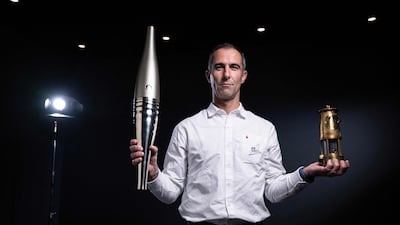
French skipper Armel Le Cleac'h poses with the Olympic torch and the Olympic lantern, in Paris. Navigator Mr Le Cleac'h will carry the Olympic flame from Brest to the Antilles next June in the ocean torch relay, which will visit six French overseas territories. AFP -

Workers construct banks of seating in front of the obelisk at the La Concorde Urban Park site in central Paris. AFP -
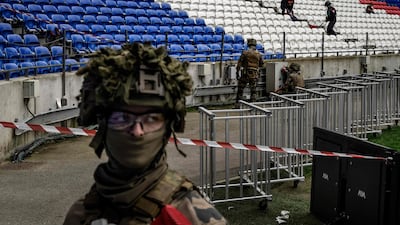
Police officers, military personnel, rescue workers and firefighters take part in an exercise simulating a terrorist attack at the Groupama Stadium in Decines-Charpieu, eastern France. AFP -
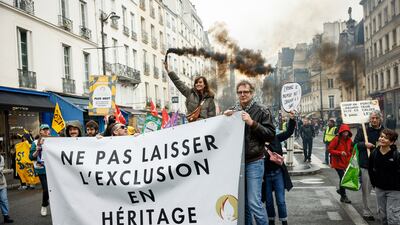
Activists hold a banner that translates to: 'Do not leave exclusion as a legacy', during a protest to raise awareness of the social impact of the Olympics in Paris. AP -
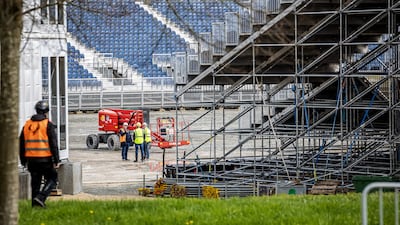
Grandstands are set up in the gardens of Chateau de Versailles, where equestrian events and the modern pentathlon will be held. EPA -
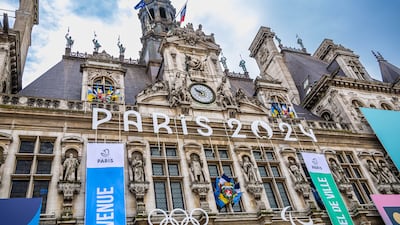
The facade of Paris City Hall is decorated with the Olympic rings. EPA -

Some of the French capital's Metro stations have changed their name for Olympic year. EPA -

Maintenance work is carried out at the swimming pools in the Aquatics Centre, built for the Olympics in Saint Denis. AFP -
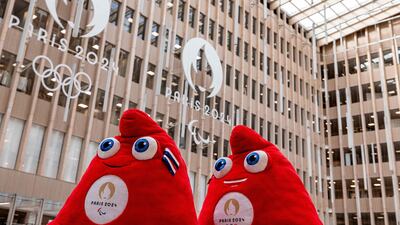
Two official Olympic 'Phryges' mascots on parade at the headquarters of the Paris 2024 Olympic and Paralympic Organising Committee. AFP -
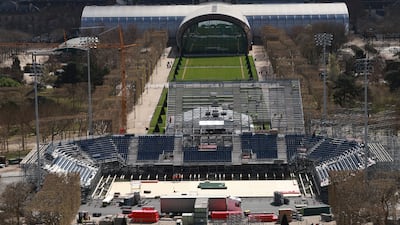
The Champ-de-Mars Arena is taking shape. It will host judo, para judo, wrestling and wheelchair rugby, with beach volleyball held nearby. AP -
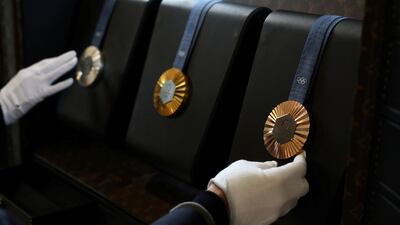
Olympic gold, silver and bronze medals in a Louis Vuitton medals trunk, which will transport and protect the gongs. Reuters -
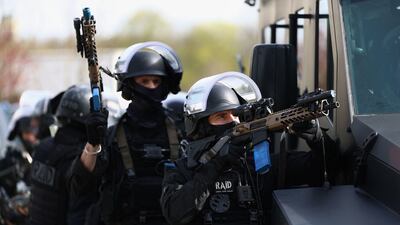
Members of the French National Police elite unit take part in an exercise drill in the Paris suburb of Draveil. AFP -
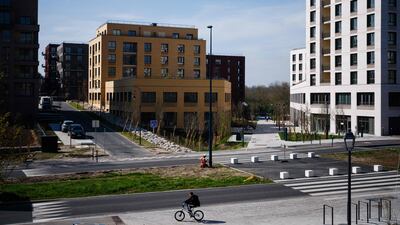
The Media Village that will host journalists from around the world, in Le Bourget. AFP -

Activists pose with Olympic rings outside the Orsay Museum in Paris, during a demonstration to draw attention to social inequality they say will be exacerbated by the coming event. AFP -
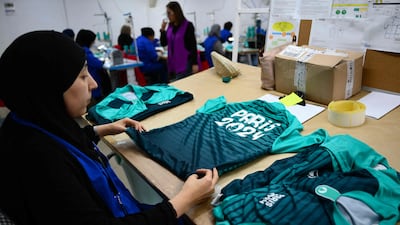
Employees work on outfits for volunteers at a manufacturing workshop in Marseille. AFP -
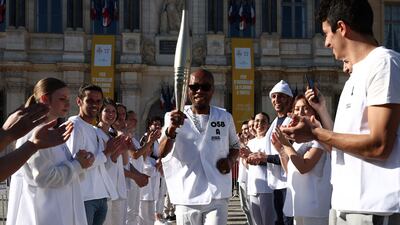
A test for the Olympic torch relay in Troyes. Reuters -
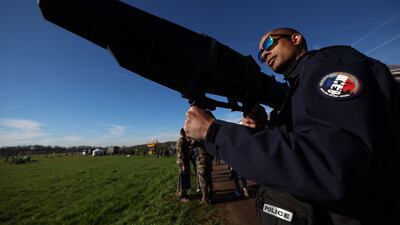
A French police officer demonstrates how an anti-drone gun works during a media presentation of security systems at a military base in Velizy-Vallacoublay, south-west of Paris. AFP


But things began badly in August when a triathlon event in Paris was cancelled after organisers said high pollution found in the Seine meant they could not risk the health and safety of athletes. The Open Water Swimming World Cup had been cancelled the month before for the same reason.
Health hazard
The organisers' hopes they might have put the problems behind them were dashed this week, when Surfrider said bacteria levels were double and in some places three times higher than the maximum amount permitted by international triathlon and open-water swimming federations.
“It is therefore clear that the athletes who will be taking part in the Olympic and Paralympic events planned for the Seine will be swimming in polluted water and taking significant risks to their health,” said Surfrider.
President of the Games Tony Estanguet has admitted the triathlon could be delayed or moved if the quality of water is affected by thunderstorms, which are not uncommon over the summer months.
Responding to the Surfrider findings, he acknowledged that holding the event in the Seine was “a big challenge” but was “still confident that the triathlon will be based in the Seine because we have contingency plans”.
“We can postpone for rainy conditions. Because it's programmed at the beginning of the Games, we can wait for better conditions. So we are confident that it will be possible to use the Seine,” he said.

The biggest hurdle to making the Seine swimmable could be the city’s sewerage system, which has to cope with the two million cubic metres of wastewater generated by the more than nine million people who live in the greater Paris region.
It combines stormwater with sewage before they reach wastewater treatment plants.
When heavy rain hits, the system can be overwhelmed, discharging contaminated water back into the river, which measured nearly 2 million cubic metres in 2022.
The problem stems from the first half of the 19th century, when Paris barely had any sewers and waste was picked up, then dumped on farms that surrounded the city.
“At that time every house had a kind of tank in the basement where they collected faecal matter, which was collected every month or every week by people who worked during the night,” said Prof Jean-Marie Mouchel, a hydrologist at Sorbonne University.
The river has since acquired a filthy reputation as a dumping ground for all sorts of rubbish, with 350 tonnes of waste hauled out of the water every year including plastic, cigarette butts and even electric scooters and bicycles.
Pipe dream
As Paris expanded at the end of the century, there were moves to build a drainage system under the city to deal with the ever-growing amounts of human and horse waste.
The waste was still dumped where it had been before but with the city still growing, the area where the waste matter could spread was reduced.
“If you have too much water, you can’t send it to the wastewater treatment plant because if you put too much water into the plant it will not work at all,” Prof Mouchel said.
“So when the tanks are filled up, the water has to go somewhere and the only place it can go is the Seine.”
Efforts to improve the sewerage system in Paris ran in tandem with the creation of the city’s famous expansive boulevards from 1855.

A huge sewerage plant was built at Acheres in 1935 in a bid to further protect the Seine and it remains the second largest in the world. By the 1960s, the river was beginning to revitalise after a ban on untreated sewage discharge.
With the Olympics looming, in 2020 a consortium led by the mayor of Paris and the head of the Ile-de-France region put in place a €1.4 billion ($1.5 billion) plan to clean up the river.
The central plank of the strategy has been to build a huge 700-metre underground tunnel and a large storage tank, near Austerlitz train station, to contain excess rainwater in the city itself.
Cleaning up its act
Rainwater flowing from the roofs of homes in villages upstream from Paris has also been disconnected from the sewerage system.
Water will flow by gravity and reach the storage tank, which measures 50 metres in diameter and 30 metres in depth. It can hold a volume of water equivalent to 20 Olympic-sized pools.
Samuel Colin-Canivez, Paris’s chief engineer for sanitation works, said the wastewater will get “intercepted by a pipeline”.
“This water tank will provide relief to the sewage system, storing rainwater during storms,” he said.
But Prof Mouchel warned “you cannot always limit run-off … so it’s clear that bathing in the river Seine will not be possible” all the time. “You must always have periods when there will be red flags to say the water quality is not OK,” he added.
Cleaning up the Seine is intended to be one of the key legacies of the Paris Olympics, with mayor Anne Hidalgo promising to create three public bathing areas in the river next year.
She and President Emmanuel Macron have promised to take a dip in the Seine before the start of the Games to demonstrate it is safe for athletes and the public.
While Mr Macron may be confident he’ll be able to don his Speedos for a swim, Surfrider is less sure it will be clean enough to play its part in the Games.
“Unfortunately, to date, there has been no indication from the parties involved in the plan to rehabilitate the Seine, the partners or the competent authorities as to whether these actions will be properly implemented,” it said.
“With just a few weeks to go to the trials, we are becoming increasingly concerned about meeting the deadlines for commissioning the works and bringing them into compliance.”

