Australian Prime Minister Anthony Albanese has proposed tightening gun laws in the country, after the deadly mass shooting at Sydney’s Bondi Beach on Sunday.
Fifteen people were killed when two gunmen, a father and son, fired into a crowd that had gathered to observe the start of the Hanukkah. Police said one of the suspects, a 50-year-old man, was killed, taking the death toll to 16. His son, 24, was arrested and is in hospital, where remains under guard, they added.
Mr Albanese said stricter gun laws were needed, including a limit on the number of firearms that one person can own. His proposals were announced after the authorities revealed the 50-year-old suspect held a gun licence for a decade and amassed six guns legally. Officials believe those weapons were used in the attack.

“The government is prepared to take whatever action is necessary. Included in that is the need for tougher gun laws,” he said on Monday.
Mr Albanese said he would take the reforms to a national cabinet meeting with state premiers in the afternoon. “People's circumstances can change,” he said. “People can be radicalised over a period of time. Licences should not be in perpetuity.”
His office also said authorities had agreed to look into ways to improve background checks for weapons owners, bar non-citizens from obtaining gun licences and limit the types of weapons that can be owned legally.
The attack at Australia’s most popular beach was the deadliest shooting for almost three decades in a country with strict gun control laws primarily aimed at removing rapid-fire rifles from circulation.
-
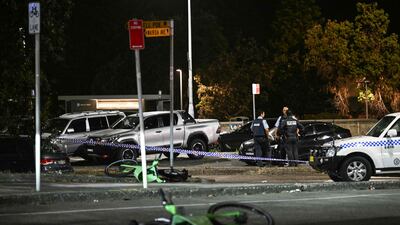
Police work at the scene after a shooting at Bondi Beach in Sydney, where 15 people were killed and 40 others injured. AFP -
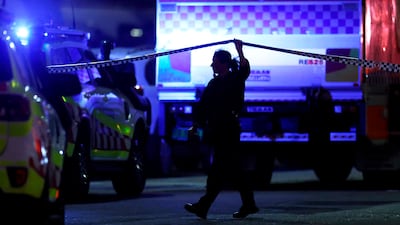
A police officer walks along cordon tape at the scene. The shooting took place at a gathering for the Jewish festival of Hanukkah. Getty Images -
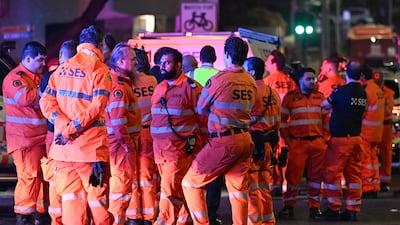
Emergency services workers gather at the scene. AFP -
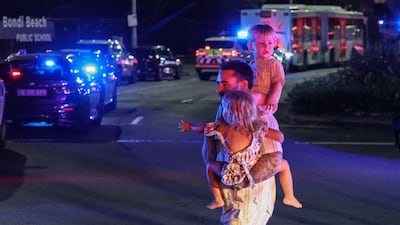
People cross a street after what police declared was a terrorist incident. AFP -
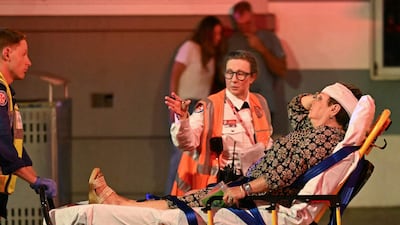
Health workers move a woman on to a stretcher. AFP -
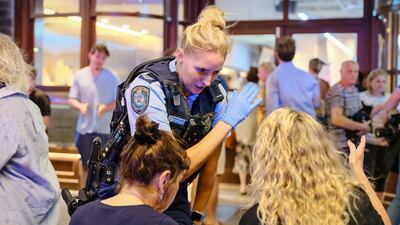
Police first responders speak to members of the public at the scene of the shooting. Getty Images -
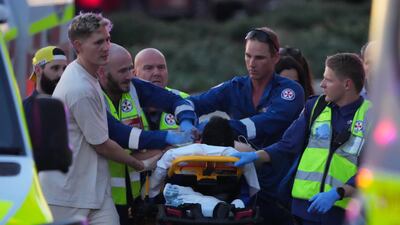
Emergency workers transport a person on a stretcher after the shooting. AP -
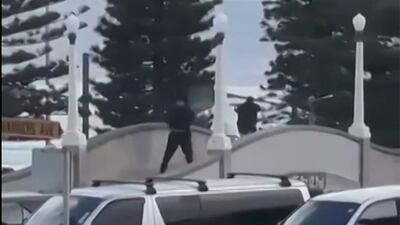
The two suspects, dressed in black, firing from a bridge. AFP -
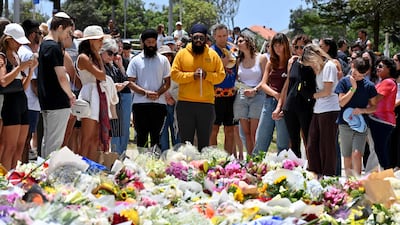
Mourners gather by floral tributes to the victims, one of whom was a 10-year-old girl. AFP -

Ahmed al Ahmed, 43, was declared a hero after wrestling a gun off one of the suspects. Photo: Instagram -
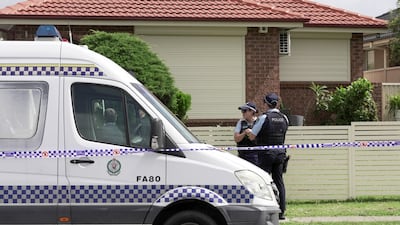
Police officers stand guard outside the house of a suspect. Reuters -
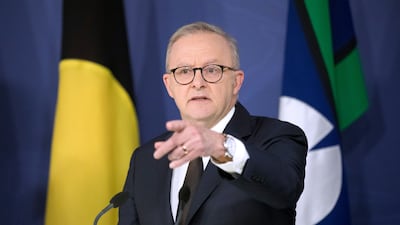
Australian Prime Minister Anthony Albanese said he would consider toughening gun laws in response to the incident. Bloomberg -
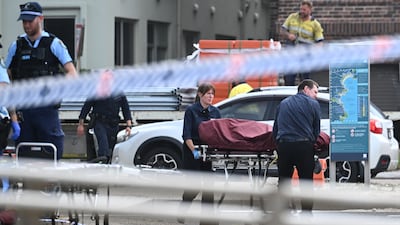
Police and forensics staff begin the task of retrieving bodies from the scene. EPA -
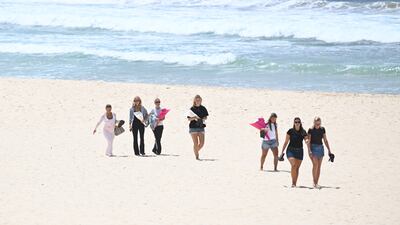
Mourners carrying flowers walk along Bondi Beach. EPA -
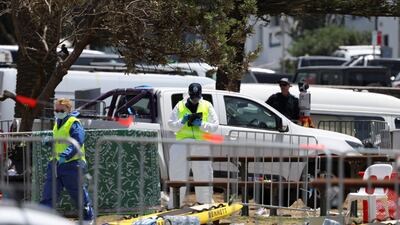
Members of the forensic team carry out an investigation at the scene. Reuters -
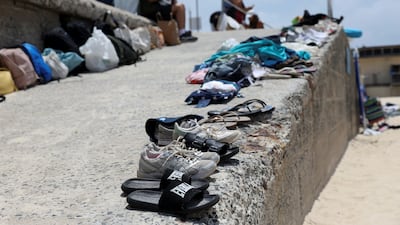
Belongings left behind are lined up at a ramp near the scene of the shooting. Reuters


Mass shootings have been rare in Australia since a lone gunman killed 35 people in the tourist town of Port Arthur in 1996. It led to sweeping reforms that were long seen as a gold standard worldwide. These included a gun buyback scheme, a national firearms register, and a crackdown on the ownership of semi-automatic weapons.
The number of guns held legally has risen steadily for more than two decades and now stands at four million – more than the number before the 1996 crackdown, according to the Australia Institute think tank.
Sunday's attack came almost exactly 11 years after a lone gunman took 18 people hostage at the Lindt Cafe in Sydney. Two hostages and the gunman were killed in a 16-hour stand-off.
Mr Albanese said it was time to consider whether the country's gun laws needed to be tightened up again. “I'm certainly up for it,” he said.
New South Wales Premier Chris Minns, whose jurisdiction includes Sydney, agreed with Mr Albanese that gun licences should not be granted in perpetuity. Mr Minns said he would consider recalling the state parliament to fast-track new gun legislation.
“It's time we have a change to the law in relation to the firearms legislation … but I am not ready to announce it today. You can expect action soon,” he said.
Mr Minns pledged that his state's gun laws would change. “It means introducing a bill to Parliament to – I mean, to be really blunt – make it more difficult to get these horrifying weapons that have no practical use in our community,” he added. “If you’re not a farmer, you’re not involved in agriculture, why do you need these massive weapons that put the public in danger and make life dangerous and difficult for New South Wales Police?”
Although Australia's gun numbers have risen, gun-related crime remains low by global standards. In the year to June 2024, 33 Australians died in gun homicides, according to the latest published data from the Australian Institute of Criminology.
That compares with 49 gun homicides a day in the US in 2023, according to the US Centres for Disease Control and Prevention.

