
Two men have been arrested in connection with the theft of jewellery from the Louvre Museum in Paris.
The pair, who are in their 30s and originally from the French capital's Seine-Saint-Denis suburb, were detained on Saturday evening, according to Le Parisien newspaper, which broke the story.
They were known to French police and one of the suspects was arrested as he was about to fly to Algeria from Charles de Gaulle Airport at about 10pm, the newspaper said. The second man was arrested in Seine-Saint-Denis.
Eight items from the French Crown Jewels collection were stolen from the world's most-visited museum last Sunday, when four thieves using power tools broke into the building shortly after it opened to visitors. The stolen jewellery was valued at €88 million ($102 million). The items were not insured because the premiums would be so high they would outweigh any benefit.
The heist was carried out by a gang of four thieves who arrived with a vehicle-mounted mechanical lift to gain access to the Galerie d'Apollon through a balcony close to the Seine. They made off with their haul in just seven minutes.
The two men arrested, already known by police for burglaries, are thought to be experienced criminals who may have been acting on orders, Le Parisien reported. They can be held in custody for up to 96 hours.
-
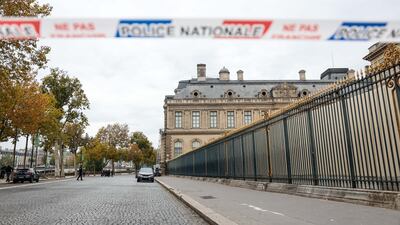
The Louvre in Paris has been robbed by several criminals who smashed windows and stole jewellery. EPA -
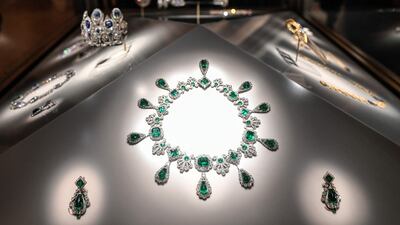
This emerald-and-diamond necklace that Napoleon gave to his wife, Empress Marie Louise, was taken. AFP -

An extendable ladder used by the thieves to access one of the upper floors of the museum. EPA -
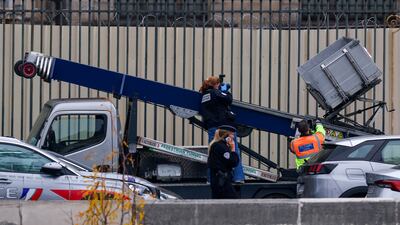
Police officers work by the crane believed to have been used in the robbery. Reuters -
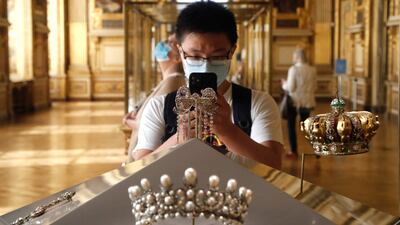
Empress Eugenie's crown being pictured. It was recovered after the thieves dropped it as they made their escape. AFP -

Police officers seal off the entrance to the museum. Getty Images -

The Louvre is sealed off after the robbery. Getty Images -
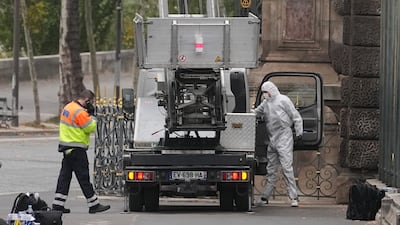
Police officers look for clues by a basket lift used by the thieves. AP -
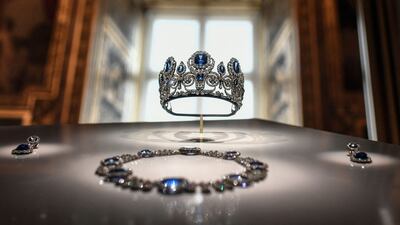
A tiara, necklace and single earring from the sapphire set that belonged to Queen Marie-Amelie and Queen Hortense was among the items stolen. AFP -

Police at the scene. Getty Images


Pictures from the scene last Sunday showed an extendable ladder leading to a first-floor window. Two of the thieves entered the building by cutting through the window frame with power tools. They then threatened guards, who evacuated the premises, and cut through the glass of two display cases containing the jewels.
They dropped a diamond and emerald-studded crown as they fled down the ladder and on to scooters but made off with eight other pieces, including an emerald-and-diamond necklace that Napoleon Bonaparte gave to his second wife, Marie-Louise.
A preliminary report has revealed that one in three rooms in the area of the museum raided had no CCTV cameras. The theft made headlines across the world and sparked a debate in France about the security of cultural institutions, which has since been tightened.

