


The UN’s top official in Afghanistan on Wednesday warned that the Taliban’s new morality laws are jeopardising efforts to re-engage with the international community.
The Taliban last month codified Afghanistan's new morality laws, including requirements for women to completely veil themselves in public and a ban on them talking loudly outside the home.
“Whether intentional or not, by codifying some of the most severe restrictions previously condemned by the international community, this law sends a negative political signal concerning genuine engagement – a signal we cannot ignore,” Roza Otunbayeva told the UN Security Council, adding that she had “clearly” passed this message on.
The Taliban seized power in 2021 as US and coalition forces withdrew after two decades of war. Almost immediately, the de facto authorities imposed strict restrictions on women and girls under their interpretation of Islamic law.
The group has barred girls from education beyond the age of 11 and banned women from public spaces, in addition to excluding them from many jobs. No country officially recognises the Taliban as the head of Afghanistan’s government.
Ms Otunbayeva, a former president and foreign minister of Kyrgyzstan, said the UN had invited representatives of the Taliban to a third meeting under the Doha format in July, offering member states and international organisations a chance to address various concerns directly.
The meetings are aimed at formulating a united approach to international engagement on Afghanistan.
“All major issues, including human rights, were raised during the meeting,” she said. Ms Otunbayeva said the delegation from Kabul “heard loud and clear” the concerns of the international community and was given a chance to respond.
Naseer Faiq, the charge d'affaires of Afghanistan to the UN, expressed concern over the continuing special envoy meetings in Doha, warning that the process is being undermined by the Taliban’s conditions, which he said ignore human rights issues and silence Afghan women's voices.
Mr Faiq cautioned that the talks could lead to normalisation without achieving concrete progress.
Ms Otunbayeva also noted that “like many of the special envoys in Doha, I was encouraged by their constructive participation”.
“But the adoption of the moral oversight law shortly after the Doha meeting has undermined this process,” she said.
In addition to restrictions on education and public spaces, on August 21, the Taliban issued a 114-page, 35-article law detailing what was mandatory or banned for men and women.
Women are prohibited from singing or reading poetry aloud. Unrelated men and women are forbidden from looking at each other, and women must cover themselves fully in the presence of non-Muslims.
-
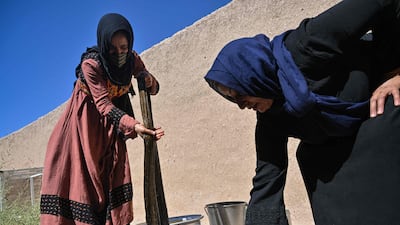
Women wash freshly dyed silk in a factory in Herat province. Whether Afghan girls receive an education under the Taliban is turning into an issue of wealth, young women living under the regime say. AFP -
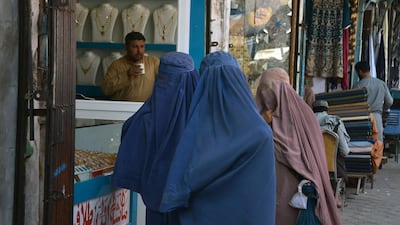
Afghan women walk in a Kandahar market. Even if Afghan girls can receive an education, the likelihood they will be able to put it to any use is low. AFP -
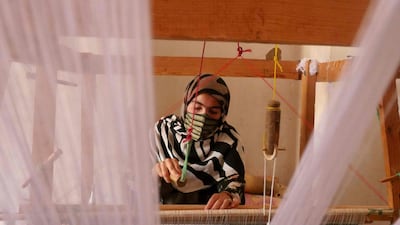
An Afghan women weaves silk to make scarfs and other products inside a workshop in the Zandajan district of Herat province. Many Afghan girls fear the longer they stay away from school, the more pressure will build to conform to patriarchal standards and marry. AFP -
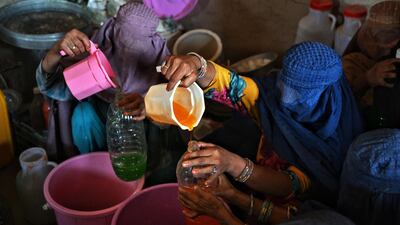
Burqa-clad women work in a shampoo factory in Kandahar. AFP -
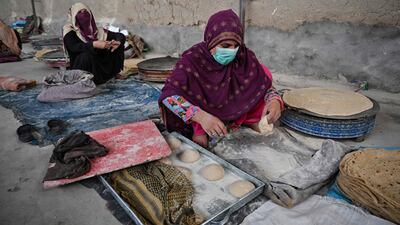
Women make flatbread in a factory in Kandahar. AFP -
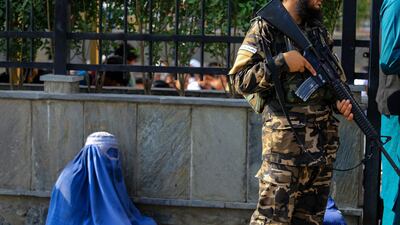
An Afghan woman begs as Taliban fighters stand guard in Kabul. Amnesty International says the Taliban have breached women's and girls' rights to education, work and free movement since they took control of the government. EPA -
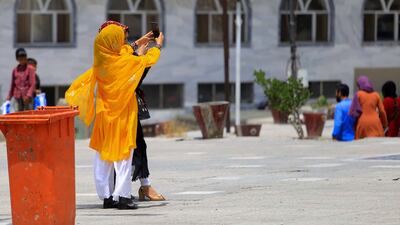
Afghan women take a selfie at a park in Kabul. The rates of child, early and forced marriage in Afghanistan are increasing under Taliban rule, Amnesty International has said. EPA -
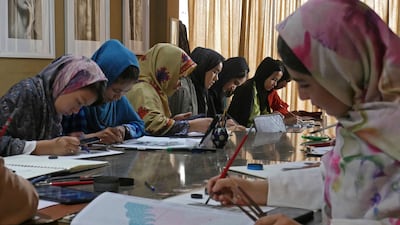
Afghan girls paint at a workshop class in Herat. The World Bank estimates that for each year of secondary education, the likelihood of marrying before the age of 18 decreases by five percentage points or more. AFP -
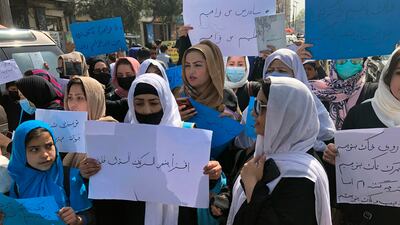
Afghan women protest in Kabul. The lives of Afghan women and girls are being destroyed by the Taliban’s crackdown on their human rights, Amnesty has said. AP -
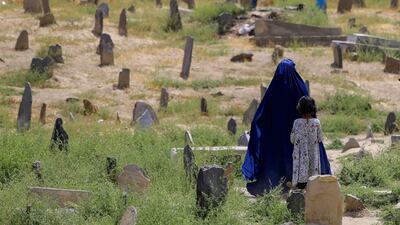
An Afghan woman walks in a graveyard in Kabul. EPA -

Shgofe, an Afghan newscaster, presents a programme on private channel 1TV in Kabul. Female TV presenters and reporters in Afghanistan continue to appear with their faces covered to comply with a mandate issued by the Taliban. EPA -
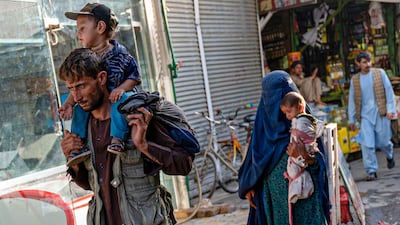
An Afghan family walk past a market near the Pul-e Khishti Mosque in Kabul. AFP -
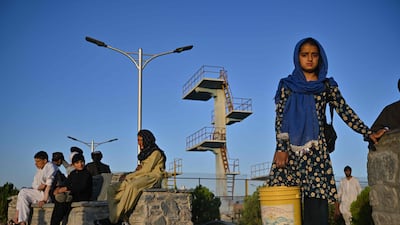
People at Wazir Akbar Khan Hill in Kabul. Whether Afghan girls receive an education under the Taliban is turning into an issue of wealth, young women living under the regime say. AFP -
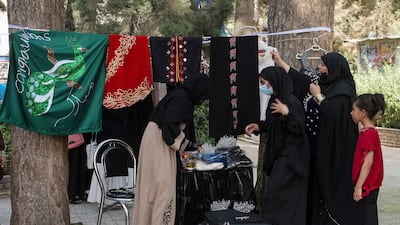
Women browse through garments and fabrics for sale in a stall at a women's handicraft market in Herat. AFP -
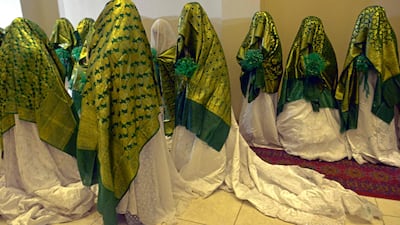
Brides wait for the start of a mass wedding in Kabul. Dozens of Afghan women, concealed in thick green shawls, were married off in an austere ceremony attended by hundreds of guests and gun-toting Taliban fighters. AFP


Men are required to grow beards longer than a fist, wear loose-fitting clothing, and avoid exposing their bodies between the navel and knee. Disobedience to parents is also outlawed.
The morality police, under the Ministry for the Propagation of Virtue and the Prevention of Vice, are responsible for enforcing these rules.
Sima Bahous, head of UN Women, warned that the new morality law enforces segregation between men and women and “isolates them from other women”.
Quoting a recent UN survey, Ms Bahous revealed that only 22 per cent of Afghan women report meeting women outside their immediate family on a daily or weekly basis, while 18 per cent never do.
Ninety per cent of Afghan women and girls describe their mental health as poor or very poor, with most reporting a decline every quarter. Eight per cent know at least one woman or girl who has attempted suicide.
Ms Bahous said the morality law has led to a new wave of protests online, where Afghan women have posted videos showing themselves singing, with their faces uncovered and their hair loose.
She said there were growing safety concerns for women in the country, noting that 64 per cent of women feel “completely unsafe” leaving their house alone, a figure that has increased in recent months and is expected to rise further under the new law.
“When asking why they felt unsafe, 70 per cent attributed it to harassment by the de facto authorities,” said Ms Bahous.

