• An Iraqi worker clears rubble during the reconstruction of the Great Mosque of Al-Nuri in Mosul. AFP
    An Iraqi worker clears rubble during the reconstruction of the Great Mosque of Al-Nuri in Mosul. AFP
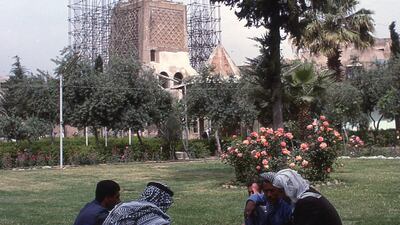
  • Iraqi workers build scaffolding during the reconstruction of "Al-Hadba" leaning minaret in Mosul. AFP
    Iraqi workers build scaffolding during the reconstruction of "Al-Hadba" leaning minaret in Mosul. AFP
  • An Iraqi worker clears rubble during the reconstruction of the Great Mosque of Al-Nuri in Mosul’s war-ravaged old town. AFP
    An Iraqi worker clears rubble during the reconstruction of the Great Mosque of Al-Nuri in Mosul’s war-ravaged old town. AFP
  • An Iraqi worker carries wood logs during the reconstruction of the "Al-Hadba" leaning minaret in Mosul’s war-ravaged old town. AFP
    An Iraqi worker carries wood logs during the reconstruction of the "Al-Hadba" leaning minaret in Mosul’s war-ravaged old town. AFP
  • Iraqi workers prepare scaffolds during the reconstruction of the Great Mosque of Al-Nuri in Mosul’s war-ravaged old town. AFP
    Iraqi workers prepare scaffolds during the reconstruction of the Great Mosque of Al-Nuri in Mosul’s war-ravaged old town. AFP
  • Fragments of rubble collected to be re-used are seen during the reconstruction of Iraq's the Great Mosque of Al-Nuri and its adjoining "Al-Hadba" leaning minaret in Mosul. AFP.
    Fragments of rubble collected to be re-used are seen during the reconstruction of Iraq's the Great Mosque of Al-Nuri and its adjoining "Al-Hadba" leaning minaret in Mosul. AFP.
  • Iraqi workers are seen under the dome of the Great Mosque of Al-Nuri during the complex's reconstruction in Mosul. AFP
    Iraqi workers are seen under the dome of the Great Mosque of Al-Nuri during the complex's reconstruction in Mosul. AFP
  • Iraqi workers build wooden supporting structures during the reconstruction of "Al-Hadba" leaning minaret in Mosul rebuilding. AFP
    Iraqi workers build wooden supporting structures during the reconstruction of "Al-Hadba" leaning minaret in Mosul rebuilding. AFP
  • An Iraqi worker enters the Great Mosque of Al-Nuri during the complex's reconstruction in Mosul. AFP
    An Iraqi worker enters the Great Mosque of Al-Nuri during the complex's reconstruction in Mosul. AFP

Four years after ISIS, reconstruction of Mosul sites remains a priority


Mina Aldroubi
  • English
  • Arabic

Four years after Mosul's Al Nuri Mosque was blown up by ISIS, the Iraqi government, the UN, the UAE and the EU remain committed to efforts to restore the city's identity and cultural heritage.

The 12th century mosque and its famous leaning minaret were destroyed by ISIS in 2017 as government forces closed in on the last fighters from the terrorist group that once controlled the city and much of north-west Iraq.

"Four years after the destruction of Mosul, Unesco, the UAE and the European Union are working to safeguard the city's heritage through the construction of landmark monuments," said Unesco, the UN's cultural agency.

“The heritage of Mosul is a history of the entire world.

"We are restoring Al Hadba Minaret, which once defined the city's skyline, and rebuilding Al Nuri Mosque complex as a haven of peace and reconciliation."

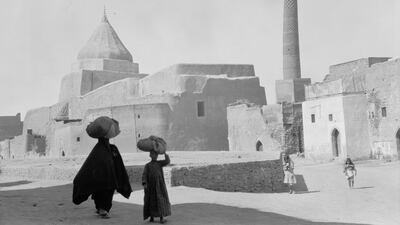
  • Ancient Mosul, a Yezidi shrine to the left and the Al Nouri Mosque to the right. Alamy
    Ancient Mosul, a Yezidi shrine to the left and the Al Nouri Mosque to the right. Alamy
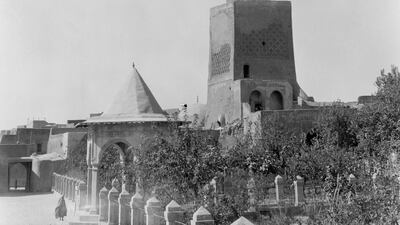
  • The leaning minaret at the Al Nouri Mosque in Mosul, Iraq, in 1932. Shutterstock
    The leaning minaret at the Al Nouri Mosque in Mosul, Iraq, in 1932. Shutterstock
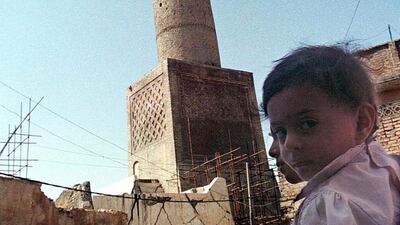
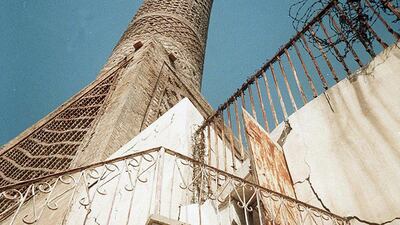
  • Known by locals as Al Hadba, or the hunchback, the minaret of the Al Nouri Mosque is 64 metres high, and leans at a greater angle than Italy's leaning tower at Pisa. Getty Images
    Known by locals as Al Hadba, or the hunchback, the minaret of the Al Nouri Mosque is 64 metres high, and leans at a greater angle than Italy's leaning tower at Pisa. Getty Images
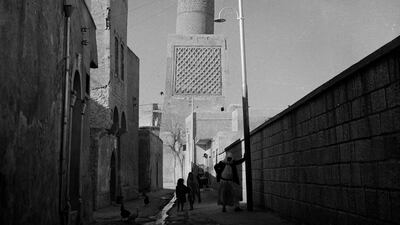
  • The leaning minaret in Mosul, 1978. Alamy
    The leaning minaret in Mosul, 1978. Alamy
  • Heavy traffic on a street in downtown Mosul, the largest city in northern Iraq, with the leaning minaret of the Al Nouri Mosque in the background, in 1978. Getty Images
    Heavy traffic on a street in downtown Mosul, the largest city in northern Iraq, with the leaning minaret of the Al Nouri Mosque in the background, in 1978. Getty Images
  • The leaning Al Hadba minaret in Mosul, Iraq in 1998. AP Photo
    The leaning Al Hadba minaret in Mosul, Iraq in 1998. AP Photo
  • This picture taken in March 1998 shows the leaning minaret of the Great Mosque in Mosul, north of Baghdad. AFP
    This picture taken in March 1998 shows the leaning minaret of the Great Mosque in Mosul, north of Baghdad. AFP
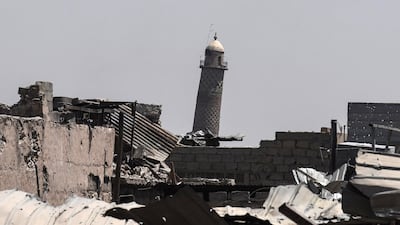
  • A general view of the city shows the Al Nouri mosque in Mosul, on March 10, 2017. AFP
    A general view of the city shows the Al Nouri mosque in Mosul, on March 10, 2017. AFP
  • The leaning Al Hadba minaret on the day Iraqi forces advanced towards the Old City on June 19, 2017. AFP
    The leaning Al Hadba minaret on the day Iraqi forces advanced towards the Old City on June 19, 2017. AFP

Unesco launched the project in 2018 to "revive the spirit of Mosul'' by focusing on restoring its religious heritage.

Plans included rebuilding Al Nuri Mosque, the 800-year-old Al Tahera Church and Al Saa'a Monastery.

The Emirates donated $50.4 million to fund the project, which will also create employment and training opportunities for local residents.

It is the first country to restore Christian churches in Iraq that were destroyed by ISIS.

Pope Francis visited Mosul in March and brought further attention to the need to restore Iraq's damaged landmarks.

The pontiff stood amid the rubble left behind by ISIS and declared hope to be "more powerful than hatred and peace more powerful than war".

He visited the northern city to encourage the healing of sectarian wounds and to pray for those killed by the extremists.

ISIS captured Mosul in 2014 and the group's leader at the time, Abu Bakr Al Baghdadi, was standing in the mosque when he announced he had established a caliphate in Iraq and Syria.

While the extremists occupied large areas of the country, many people say the city's residents faced the full extent of the group's tyrannical rule.

By the end of 2017, Mosul had been devastated as government forces battled to regain control of the city from the terrorists.

The fighting in western Mosul was particularly fierce.

It took US-backed Iraqi fighters and anti-ISIS coalition forces nine months to kill or capture the last ISIS fighters making a stand in the neighbourhood.

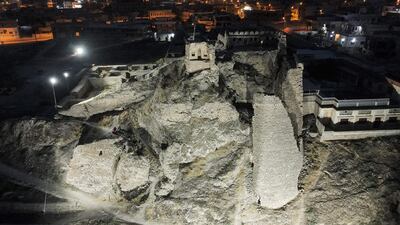
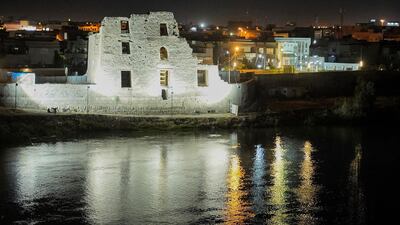
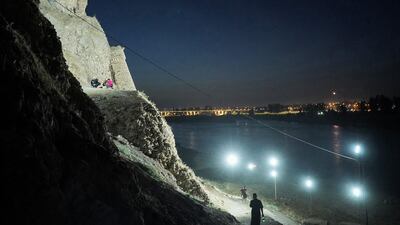
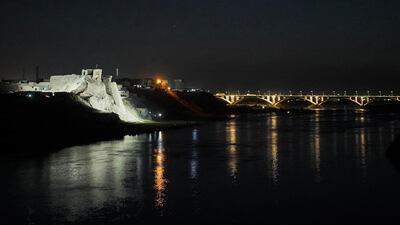
  • The illuminated ruins of the 13th century palace Qara Serai – the Black Palace – of the Zengid Turkoman Sultan Badr Al Din Lu'lu', in Iraq's northern city of Mosul, on the seventh anniversary of the city's fall to ISIS. AFP
    The illuminated ruins of the 13th century palace Qara Serai – the Black Palace – of the Zengid Turkoman Sultan Badr Al Din Lu'lu', in Iraq's northern city of Mosul, on the seventh anniversary of the city's fall to ISIS. AFP
  • Brightly lit roads criss-cross Mosul at night. ISIS extremists occupied the city on June 10, 2014, AFP
    Brightly lit roads criss-cross Mosul at night. ISIS extremists occupied the city on June 10, 2014, AFP
  • The ruins of the 13th century Qara Serai palace reflect in the Tigris. During its occupation of Mosul, ISIS introduced a brutal regime, persecuted minorities and destroyed religious sites. AFP
    The ruins of the 13th century Qara Serai palace reflect in the Tigris. During its occupation of Mosul, ISIS introduced a brutal regime, persecuted minorities and destroyed religious sites. AFP
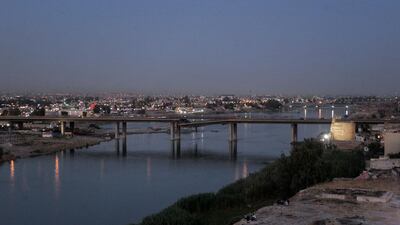
  • The damaged Fifth Bridge across the Tigris, connecting eastern and western Mosul. In October 2016, Iraqi, Kurdish, US and French forces launched a joint offensive to recapture Mosul. AFP
    The damaged Fifth Bridge across the Tigris, connecting eastern and western Mosul. In October 2016, Iraqi, Kurdish, US and French forces launched a joint offensive to recapture Mosul. AFP
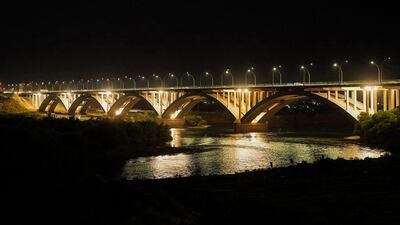
  • A view of Third Bridge across the Tigris in Mosul illuminated at night. AFP
    A view of Third Bridge across the Tigris in Mosul illuminated at night. AFP
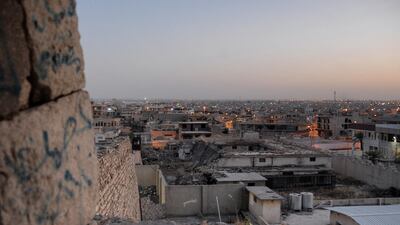
  • Derelict houses in the Shifaa district of Mosul. Fighting to retake the city was fierce, during which Iraq deployed its largest force since the 2003 invasion by US and coalition forces. AFP
    Derelict houses in the Shifaa district of Mosul. Fighting to retake the city was fierce, during which Iraq deployed its largest force since the 2003 invasion by US and coalition forces. AFP
  • Pedestrians walk past the illuminated ruins of Qara Serai on the bank of the Tigris. AFP
    Pedestrians walk past the illuminated ruins of Qara Serai on the bank of the Tigris. AFP
  • Qara Serai and the recently repaired Third Bridge across the Tigris in Mosul. The city was liberated on July 9, 2017, though pockets of fighting continued through until July 21. AFP
    Qara Serai and the recently repaired Third Bridge across the Tigris in Mosul. The city was liberated on July 9, 2017, though pockets of fighting continued through until July 21. AFP