


Live updates: Follow the latest news on Israel-Gaza
UK Foreign Secretary David Cameron outlined a tougher stance on Israel on Thursday, announcing travel sanctions against “extremist settlers” in the West Bank.
Mr Cameron accused them of “undermining security and stability for both Israelis and Palestinians” by “targeting and killing Palestinian civilians”.
“Israel must take stronger action to stop settler violence and hold the perpetrators accountable," he said on X, formerly Twitter.
“We are banning those responsible for settler violence from entering the UK to make sure our country cannot be a home for people who commit these intimidating acts.”
Iran to face stricter UK sanctions
Mr Cameron also announced a tougher UK sanctions framework for Iran.
The first set of designations under this new regime are aimed at Iran’s support for Hamas and Palestinian Islamic Jihad.
The first set of sanctions includes Esmail Qaani, who leads Iran’s Islamic Republic Guard Corps' Quds Force, which is responsible for Iran's operations outside the country and provides support to regional partners and proxy groups.
Another seven people and one entity, all with links to Hamas and Palestinian Islamic Jihad, have also been hit by sanctions.
They were involved in hostile activity by an armed group, backed by the government of Iran, consisting of activity being threatening, planning or conducting intent to cause the destabilisation of Israel, a statement said.
“The UK’s new Iran sanctions regime gives us extensive new powers to tackle this appalling behaviour,” Mr Cameron said.
“Today’s designations send a clear message to the regime [that] we will hold you to account for your actions.”
After the sanctions announcement, Mr Cameron said on X: "The behaviour of the Iranian regime poses an unacceptable threat to the UK and our partners.
"It continues to threaten people on UK soil and uses its influence to destabilise the Middle East.
"The UK’s new sanctions regime gives us extensive new powers to deter and disrupt this behaviour."
Meanwhile, Israeli ambassador to the UK, Tzipi Hotovely said that her country “absolutely” would not accept a two-state solution when the war ends.
Asked in an interview published on Wednesday whether Palestinians would have their own state in any peace deal, Ms Hotovely replied: “The answer is absolutely no.
“Israel knows today, and the world should know now, the reason the Oslo Accord failed is because the Palestinians never wanted to have a state next to Israel.
“They want to have a state from the river to the sea.”
She questioned why the West was “so obsessed with a formula that never worked, that created this radical people on the other side”.
Latest from the Israel-Gaza war - in pictures
-
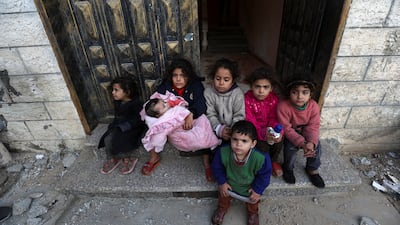
Palestinian children look at the site of an Israeli strike on a house. Reuters -
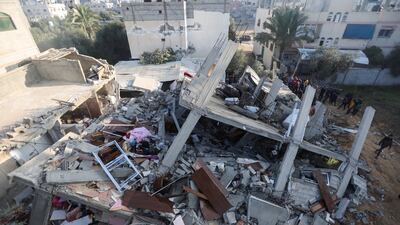
Palestinians inspect the site after an Israeli strike on a house. Reuters -
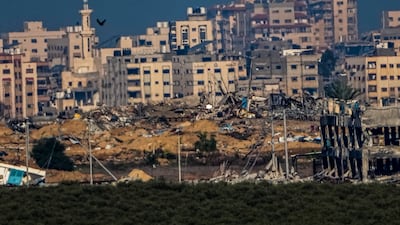
Israeli military vehicles as seen from southern Israel, operate inside Gaza Strip on Sunday. AP Photo -
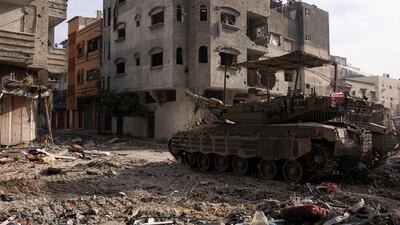
An Israeli Merkava tank in the Gaza Strip amid the continued war between Israel and Gaza. Reuters -
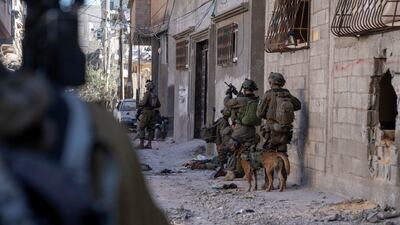
Israeli soldiers in the Gaza Strip. Reuters -
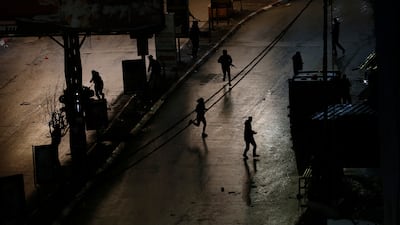
Palestinian militants clash with the Israelis at Jenin refugee camp in the occupied the West Bank. EPA -
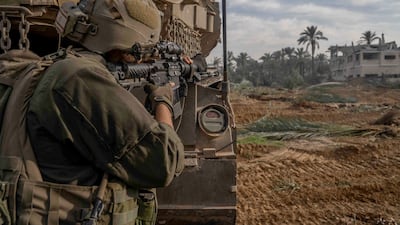
An Israeli soldier in the Gaza Strip. Reuters -
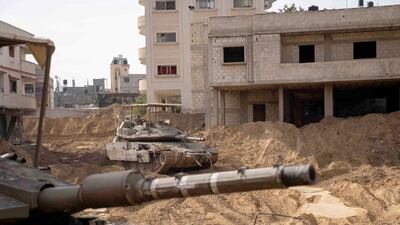
Israeli military vehicles. Reuters -
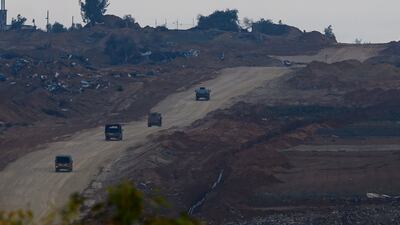
Israeli vehicles drive into Gaza from Israel. Getty Images -
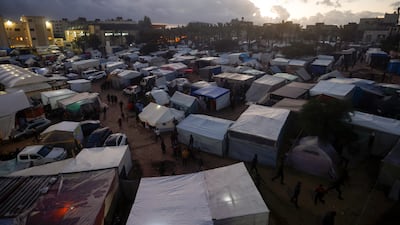
Displaced Palestinians in tents in Khan Younis. AP -
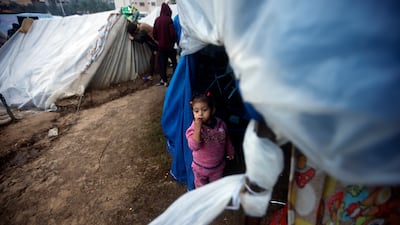
A Palestinian child in Khan Younis. AP -
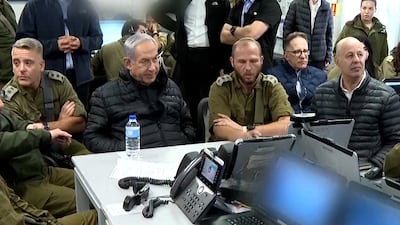
Benjamin Netanyahu vows to fight on in Gaza. 'Nothing will stop us,' he said. AP -

A Palestinian girl wounded in the Israeli bombardment arrives at a hospital in Rafah. AP -
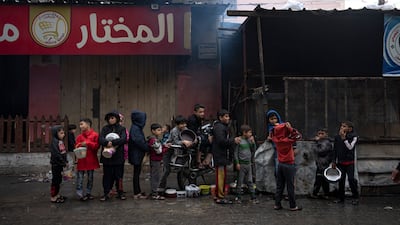
Palestinian children wait in line for food in Rafah. AP -
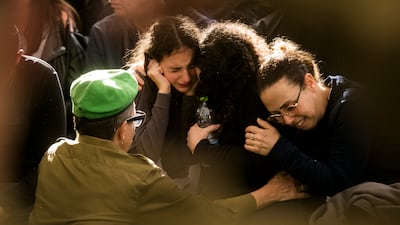
Family and friends mourn during a funeral for Maj Roy Meldasi in Afula, Israel. Getty Images -
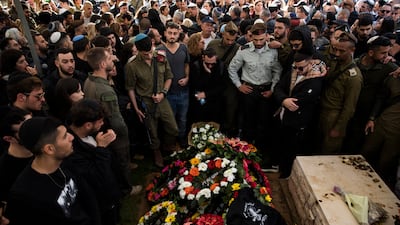
Maj Meldasi's funeral. Getty Images -

An Israeli military helicopter fires a missile. EPA -
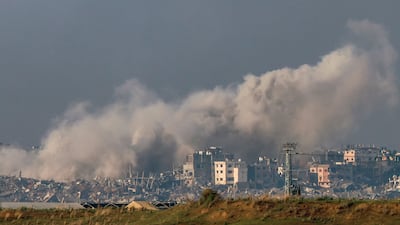
Smoke billowing during Israeli bombardment on northern Gaza. AFP -
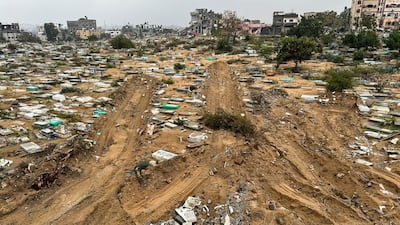
Graves damaged during the Israeli ground offensive in the Fallujah neighbourhood, in Jabalia. Reuters -
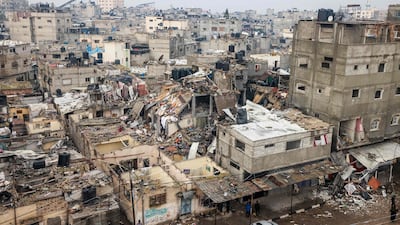
Damage in Rafah. AFP -
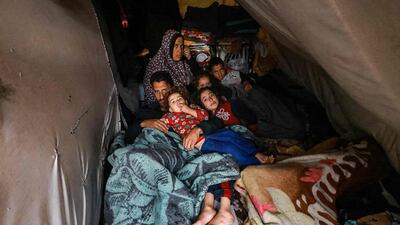
Palestinians rest in their makeshift tent at a camp set up at a school in Rafah. AFP -

Palestinian boys in their tent. AFP -
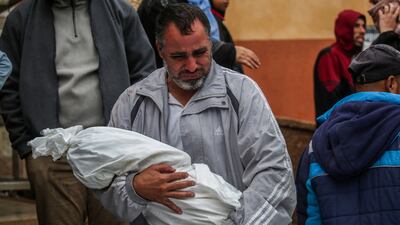
Mourners collect the bodies of Palestinians killed in an air strike in Khan Younis. Getty Images -

The results of a draft resolution vote calling for a ceasefire at the UN General Assembly. Getty Images -
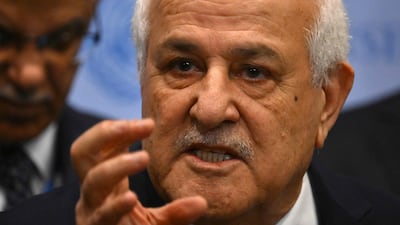
Palestinian ambassador to the UN Riyad Mansour speaks after the vote in New York. AFP -

Humanitarian aid lorries wait to be inspected at the Kerem Shalom crossing. Reuters -
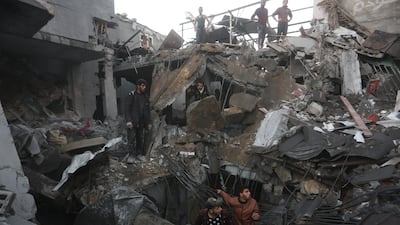
Palestinians look for survivors in Rafah. AP -
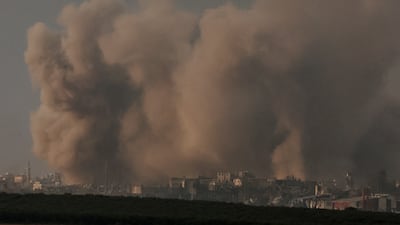
Smoke rises over Gaza, seen from southern Israel. Reuters -

A child reacts following an Israeli air strike on Palestinian houses in Rafah. Reuters


Mr Cameron described her opposition to a two-state solution in the Middle East as “disappointing”.
He said he believes such an outcome remains possible but “very, very difficult” and suggested Ms Hotovely's comments should not have “too much weight” attached to them.
“I think it is still possible but I think the pathway from where we are today to getting there is very, very difficult,” the former prime minister told the the Lords European affairs committee on Thursday .
Mr Cameron said the process would involve have to involve a “sustainable” ceasefire, where Hamas was not capable of attacks such as that it launched in southern Israel on October 7.
It would also include ensuring security and stability for Gaza and revitalising the Palestinian Authority.
Asked about what should be done after Ms Hotovely’s comments, Mr Cameron said: “I don’t know, is the answer.
“I read the transcript and it is disappointing, but ultimately true security and stability for Israel, which is something I care deeply about.
"I believe in Israel as a homeland for Jewish people, I believe in its right to exist, to thrive, to defend itself and all the rest of it.
"Long-term security, I think, requires there to be a state for Palestine as well.
“So I don’t think we should put too much weight on one interview. We have to get on and think about how to help make this happen.”
British Prime Minister Rishi Sunak said of Ms Hotovely's comments: “We don’t agree with that.
“Our longstanding position remains that the two-state solution is the right outcome here.”
“We will continue to support calls for a sustainable ceasefire where hostages are released, more aid can get in, and the rockets, crucially, stop being fired from Hamas into Israel as well."
The announcement on visa curbs for Israelis involved in extremist violence comes after a letter backed by British MPs, the Council for Arab-British Understanding and the Balfour Project, which advocates for equal rights for Palestinians and Israelis.
The letter, addressed to Mr Cameron and Home Secretary James Cleverly, said a ban should apply to "Israeli settlers who commit or incite crimes of violence and intimidation against Palestinians in the West Bank".
It highlights the Israeli authorities' actions, mentioning the arrest of more than 3,000 West Bank Palestinians since the Hamas attack and calls for more UK support for the West Bank Protection Consortium.
It also advocates a “robust, public ministerial support for its work – quiet diplomacy having proved ineffective”.

