

Live updates: Follow the latest news on Israel-Gaza
Afnan Barda has been living in excruciating pain since an Israeli air strike on October 23 left her with a fractured hip and dislocated knee.
Lying in an ambulance outside the Nasser Hospital in southern Gaza, the 20 year old is reminded by paramedics that she needs to stay as still as possible throughout her imminent journey – first to the Rafah border crossing into Egypt, then onwards to Turkey for treatment.
“She has already gone through too much,” said Afnan’s sister Mariam, one of the few family members who survived the attack and who is accompanying her on her trip.
“Leaving Gaza is Afnan’s only chance of ever having a normal life again. She initially survived a bombing in her house in Beit Hanoun, after which she was displaced to our sister’s house in Shati camp, only to be struck again with a bomb and experience this immense pain,” Mariam told The National, while comforting her sister.

Since Israel launched its assault on the Gaza Strip on October 7 in response to a Hamas attack that killed about 1,200 people, fewer than 500 injured Palestinians have been evacuated through the Rafah border crossing, according to UN humanitarian agency Ocha.
Israel initially prevented any movement of people or goods through the border point as part of a complete blockade of Gaza imposed at the start of the war. Under global pressure, it then allowed a first batch of wounded Gazans to leave the enclave on November 1.
The patients shortlisted for evacuation are selected by a committee of doctors, consultants and heads of department. Most of them have been women and children, and include the serious injured as well as those with life-threatening illness.
They have been admitted to hospitals in Egypt as well as in Turkey, the UAE, Tunisia and other countries.
Only 463 injured Palestinians have been allowed to leave through the crossing, despite an estimated 50,000 Palestinians being wounded in the war, Ocha reported. None passed through on Wednesday, the agency said in its latest war update on Thursday.
-
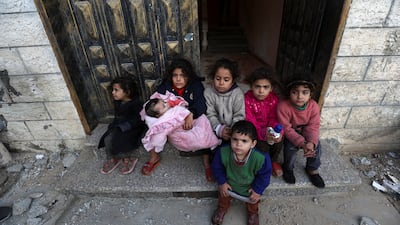
Palestinian children look at the site of an Israeli strike on a house. Reuters -
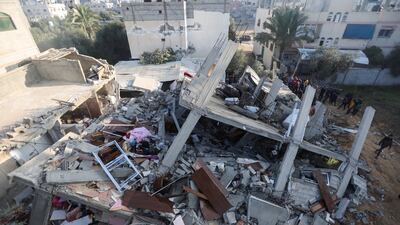
Palestinians inspect the site after an Israeli strike on a house. Reuters -
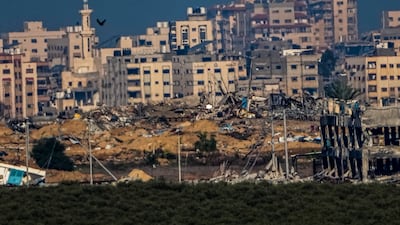
Israeli military vehicles as seen from southern Israel, operate inside Gaza Strip on Sunday. AP Photo -
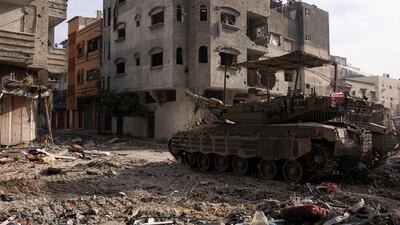
An Israeli Merkava tank in the Gaza Strip amid the continued war between Israel and Gaza. Reuters -
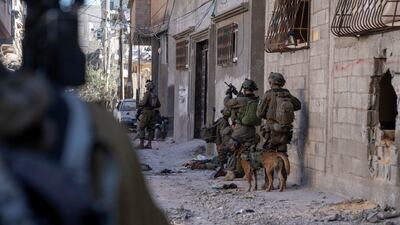
Israeli soldiers in the Gaza Strip. Reuters -
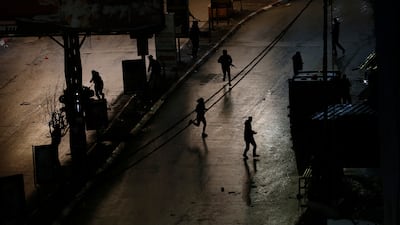
Palestinian militants clash with the Israelis at Jenin refugee camp in the occupied the West Bank. EPA -
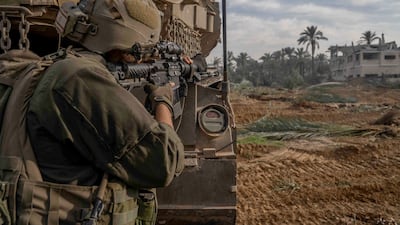
An Israeli soldier in the Gaza Strip. Reuters -
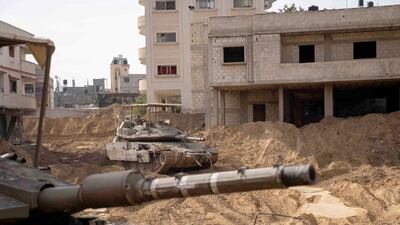
Israeli military vehicles. Reuters -
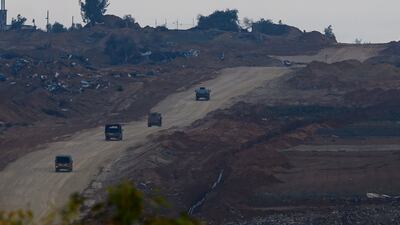
Israeli vehicles drive into Gaza from Israel. Getty Images -
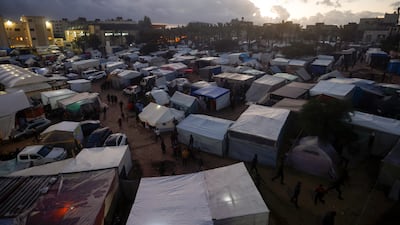
Displaced Palestinians in tents in Khan Younis. AP -
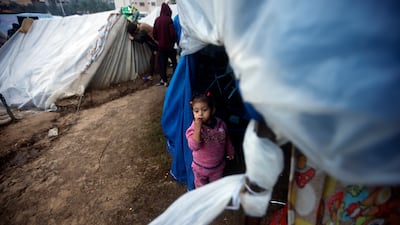
A Palestinian child in Khan Younis. AP -
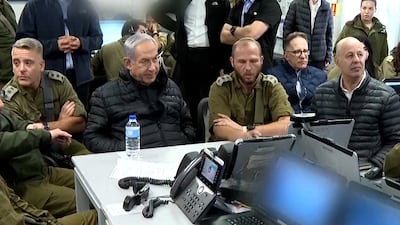
Benjamin Netanyahu vows to fight on in Gaza. 'Nothing will stop us,' he said. AP -

A Palestinian girl wounded in the Israeli bombardment arrives at a hospital in Rafah. AP -
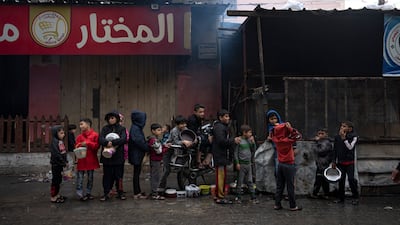
Palestinian children wait in line for food in Rafah. AP -
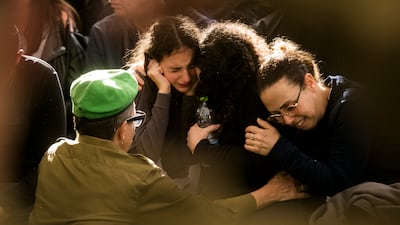
Family and friends mourn during a funeral for Maj Roy Meldasi in Afula, Israel. Getty Images -
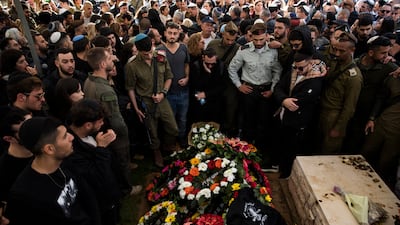
Maj Meldasi's funeral. Getty Images -
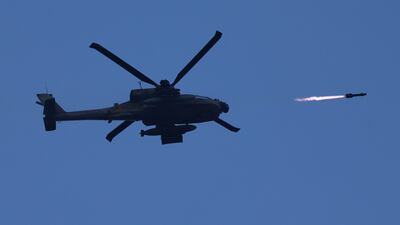
An Israeli military helicopter fires a missile. EPA -
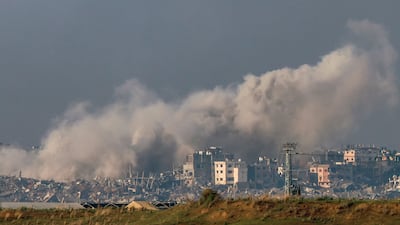
Smoke billowing during Israeli bombardment on northern Gaza. AFP -
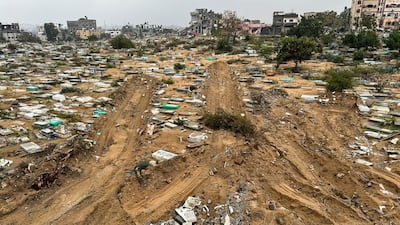
Graves damaged during the Israeli ground offensive in the Fallujah neighbourhood, in Jabalia. Reuters -
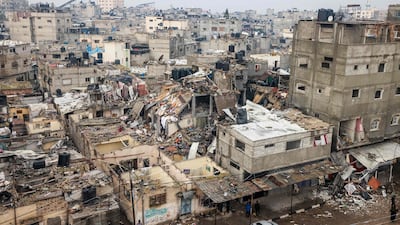
Damage in Rafah. AFP -
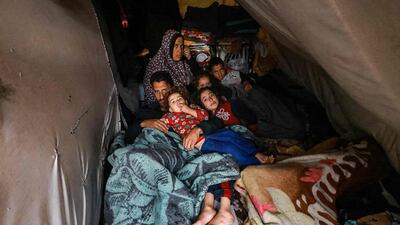
Palestinians rest in their makeshift tent at a camp set up at a school in Rafah. AFP -

Palestinian boys in their tent. AFP -
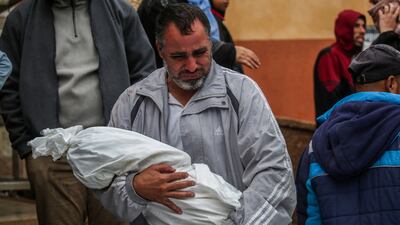
Mourners collect the bodies of Palestinians killed in an air strike in Khan Younis. Getty Images -

The results of a draft resolution vote calling for a ceasefire at the UN General Assembly. Getty Images -
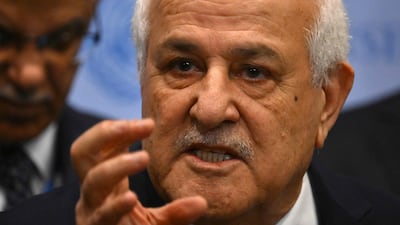
Palestinian ambassador to the UN Riyad Mansour speaks after the vote in New York. AFP -
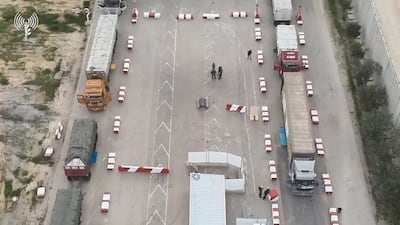
Humanitarian aid lorries wait to be inspected at the Kerem Shalom crossing. Reuters -
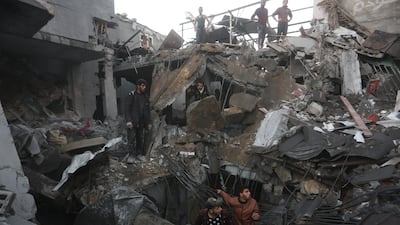
Palestinians look for survivors in Rafah. AP -
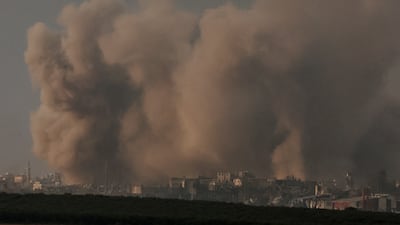
Smoke rises over Gaza, seen from southern Israel. Reuters -

A child reacts following an Israeli air strike on Palestinian houses in Rafah. Reuters


Gaza’s healthcare system, already suffering from a blockade imposed by Israel and Egypt after Hamas took control of Gaza in 2007, has struggled to cope with the flood of casualties. Israel's latest total blockade has prevented them from receiving medical supplies and the fuel needed to run their generators.
Afnan was first taken to Al Shifa Hospital in Gaza city, the largest in the enclave, where doctors were too overwhelmed to operate on her.
Israeli troops eventually stormed Al Shifa, which they said was hosting a Hamas command centre, a claim the militant group denies.
Afnan and hundreds of other casualties were eventually taken from Al Shifa to Al Khair Hospital in the southern Gazan city of Khan Younis, which does not handle critical cases such as hers.
injured Gazan
“They were very long and difficult days,” she said, speaking in short sentences interrupted by moans of pain and winces with every unintended, slight movement of her body.
“I have no break from the pain. At first, I took painkillers but eventually they lost effectiveness. Then the hospital collapsed. We were left with no food and drink. Doctors were so overwhelmed with the sheer number of wounded. I could barely speak to one."
She was in the same ambulance as Rahma Abu Herbeid, 28, who was also taken to Al Shifa Hospital after being injured in an Israeli bombing in late October.
With a shattered right leg in a cast held in place with metal pins and several burns across her body, Rahma said her hopes of being able to walk again rest on being able to receive treatment outside Gaza.
"My chance of recovery lies in the ability to leave here,” she said.

‘Futile and slow’ exit procedure
According to director of the surgery unit at Nasser, Dr Nahed Abu Teima, the process by which the injured are allowed to leave Gaza is “futile and slow”.
“Ten or fewer wounded Gazans are allowed to travel out each day, which is a very small number compared to over 40,000 people who were wounded in the war, in addition to the patients with serious illnesses whose treatments were suspended because of the war,” he said.
Dr Abu Teima said there were about 8,000 injured Palestinians in urgent need of immediate medical intervention and 15,000 less serious cases, waiting to leave Gaza.
“Only 625 medical cases have been allowed to leave Gaza since the war began,” he said.
“Several wounded people were subjected to amputations of limbs as a result of poisoning or decay in tissues, and many may die waiting for treatment."
Leaving Gaza is also the only hope of survival for patients such as Yazan Abu Moustafa, 13, who was diagnosed with cancer eight months ago.
Yazan used to travel to Nablus Hospital in the occupied West Bank for treatment. After the war began he was being treated at the Turkish-Palestinian Friendship Hospital, which specialises in oncology, until Israeli forces invaded the south of Gaza city’s, where the hospital is located.
At the ambulance centre outside Nasser Hospital, Yazan’s mother Asmahan rejoiced at her son’s inclusion on the list of patients allowed to leave Gaza.
“I am so very grateful that my son will be receiving treatment abroad," said Asmahan, who will be accompanying her son to Turkey. "I prayed for this and came here every day to check the possibility of putting him on that list.
"I feel my son’s chances of surviving are now significant. Treatment abroad is a chance to live for Yazan."
This article was published in collaboration with Egab.

