

Live updates: Follow the latest news on Israel-Gaza
Hezbollah leader Hassan Nasrallah is scheduled to give a speech on Friday that will break weeks of silence since the start of the war between Israel and Hamas.
Nasrallah's speech is set to come after the heaviest night of cross-border fighting between Israeli forces and Hezbollah, the Iran-backed militant group based in south Lebanon.
Four people were killed on Thursday as the Israeli military pummelled southern Lebanon after a volley of Hamas and Hezbollah rockets were fired from across the border.
Rockets hit the Israeli border town of Kiryat Shmona in a barrage claimed by the Lebanese section of Hamas's armed wing.
Israel and Lebanese militants have exchanged fire across the border since the Israel-Gaza war began in early October, but last night was the most significant clash so far.
Hamas militants launched an attack on Israel from the Gaza Strip on October 7, and Lebanon's southern border has seen escalating retaliatory exchanges, mainly between Israel and Hezbollah, an ally of the Palestinian group, stoking fears of escalation into a wider war.
On Thursday, Iran's Foreign Minister Hossein Amirabdollahian warned that the region was “like a powder keg” and that “anything is possible” if Israel did not stop attacking Gaza. Iran is Hezbollah's principal backer and also supports Hamas.
US President Joe Biden has sent two aircraft carrier groups to the eastern Mediterranean and warned Hezbollah and others to stay out of the conflict.
“We've got significant national security interests at play here,” US National Security Council spokesman John Kirby told reporters.
“I don't believe we've seen any indication yet specifically that Hezbollah is ready to go in full force. So, we'll see what he has to say.”
Nasrallah's speech will be broadcast as part of an event in Beirut's southern suburbs, a Hezbollah stronghold, at 3pm local time on Friday. It has been framed as commemorating Hezbollah fighters killed by Israeli strikes.
-

Women attend the funeral of a Hezbollah militant killed during clashes against Israeli forces in the southern border of Lebanon. Getty Images -
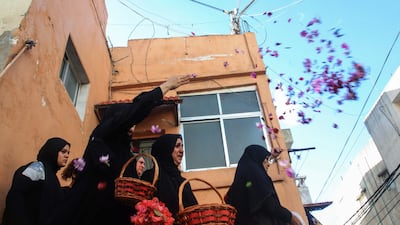
Women at the funeral of Hezbollah fighter Kamal Al Masri in Burj Al Shemali, southern Lebanon. AFP -
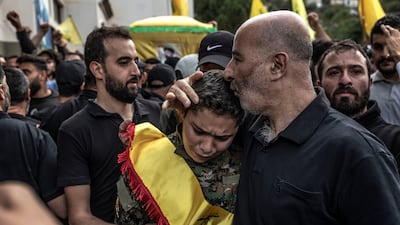
A man comforts the son of a Hezbollah militant killed during clashes against Israeli forces in the southern border of Lebanon. Getty Images -
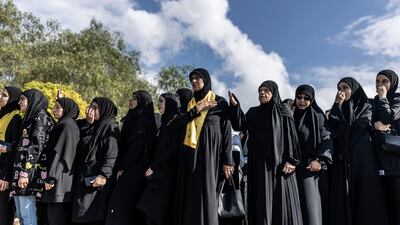
Hezbollah supporters attend the funeral of a Hezbollah militant killed in Lebanon. Getty Images -
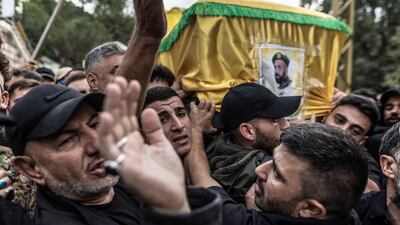
Hezbollah supporters carry the coffin of a Hezbollah militant. Getty Images -
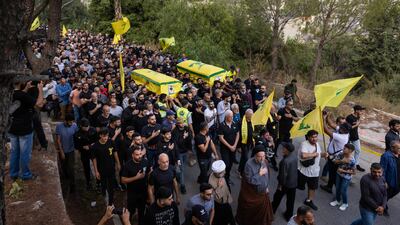
Men carrying the coffins at a funeral for two Hezbollah soldiers killed in south Lebanon. Getty Images -

Members and supporters of Hezbollah take part in the funeral of Kamal Al Masri, one of the group's fighters, in southern Lebanon. AFP -
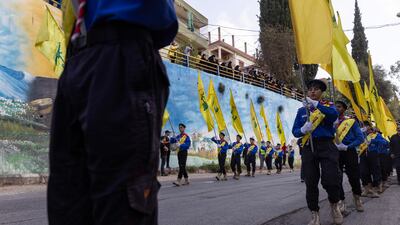
Scouts carry Hezbollah flags at a funeral for two Hezbollah soldiers killed in South Lebanon. Getty Images -

Hezbollah fighters attend the funeral procession of two comrades in Kherbet Selem, south Lebanon. AP Photo -
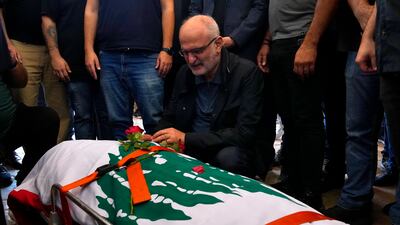
Member of Lebanese parliament Ali Hassan Khalil mourns the body of Reuters videographer Issam Abdallah, who was killed by Israeli shelling, during his funeral in Khiam, southern Lebanon. AP Photo -
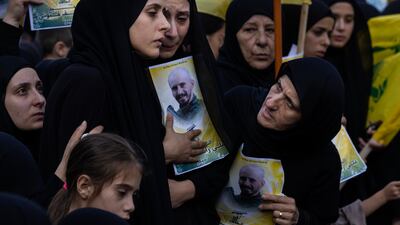
Women at a funeral for two Hezbollah soldiers killed in south Lebanon. Getty Images -
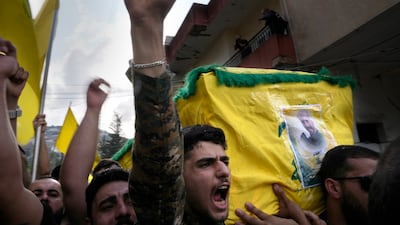
A Hezbollah fighter carries the coffin of his comrade who was killed by Israeli shelling in Kherbet Selem, south Lebanon. AP Photo -

Hezbollah fighters at the funeral of their two comrades in Kherbet Selem. AP Photo -
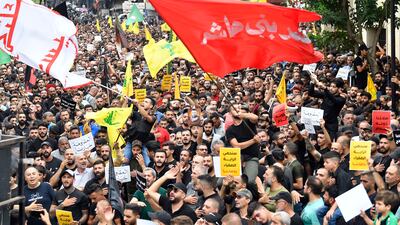
Hezbollah supporters shout religious slogans during the funeral of Hezbollah fighter Ahmed Qassas in a southern suburb of Beirut. EPA


Over in the Gaza Strip, health authorities said more than 9,000 people have been killed since the fighting began.
Amid heavy explosions in Gaza, Israeli "troops completed the encirclement of Gaza City, which is the focal point of the Hamas terror organization", military spokesperson Rear Admiral Daniel Hagari told reporters.
Troops were encountering mines and booby traps, said Brigadier General Iddo Mizrahi, the chief of Israel's military engineers.
"Hamas has learned and prepared itself well," he said.
Israel's death toll in Gaza was far higher than the military had announced, Abu Ubaida, spokesperson for the armed wing of Hamas, said in a televised speech on Thursday.
"Your soldiers will return in black bags," he said.
Israel has said it has lost 18 soldiers and killed dozens of militants since ground operations expanded on Friday.
Hamas and allied Islamic Jihad fighters were emerging from tunnels to fire at tanks, then disappearing back into the network, residents said and videos from both groups showed.

