

Marching through the Lebanese capital in the scorching heat with pictures of their deceased loved ones, there may have been a sense of deja vu for the families of the victims of the deadly 2020 Beirut port blast.
They hold such vigils on each anniversary, carrying placards demanding justice, and many smaller protests throughout the year, with little result.
Three years after the August 4 explosion, which killed more than 200 people, injured thousands and destroyed large parts of Beirut, no officials have been held accountable – a symbol of a deeply politicised and dysfunctional justice system.
“This makes me feel angry and sad. They are not numbers, they are lives,” said Rima Misto, whose sister Rawan was killed in the explosion.
“My sister was very friendly, very kind. She loved animals, she was vegan. She always wanted to create an organisation for sexually assaulted kids … and shelters for animals."
The explosion is regarded as a symptom of decades of corruption and mismanagement by Lebanon's ruling elite which also let to the devastating economic collapse in 2019 that pushed most of the population into poverty.
“The Beirut blast and what happened is not the cause of my daughter, the victims,” said Paul Naggear, whose daughter Alexandra, three, was one of the youngest to be killed in the explosion.
“This is a national cause,” he told The National.
The explosion occurred after a huge stock of ammonium nitrate – stored at the port for years with the knowledge of senior officials – caught fire, creating one of the largest non-nuclear blasts in history.
It led to apocalyptic scenes, the scars of which can still be seen across the city and its people.
And yet, at least in Lebanon, there has been no justice for the victims or their families. An investigation by judge Tarek Bitar has been obstructed repeatedly by legal challenges, including by some of the country’s most senior officials whom he has sought to question.
When he tried to resume the inquiry at the start of the year, Mr Bitar was charged by Lebanon’s top prosecutor – himself wanted for questioning – and told that the case remained on hold.
-
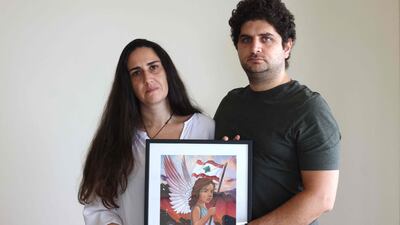
Paul and Tracy Naggear have been grieving since the explosion that tore through the Lebanese capital in 2020 killed their three-year-old daughter. All photos: AFP -

The August 4 blast, blamed on a fire that ignited tonnes of ammonium nitrate fertiliser haphazardly stored for years at Beirut harbour, was one of the largest non-nuclear detonations ever recorded. -
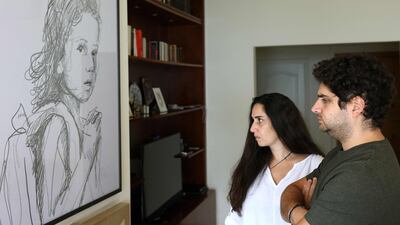
Paul and Tracy moved out of Beirut and settled in the mountain town of Beit Mery, 10 kilometres away following the blast. The walls and shelves of their home are adorned with pictures of Alexandra. -
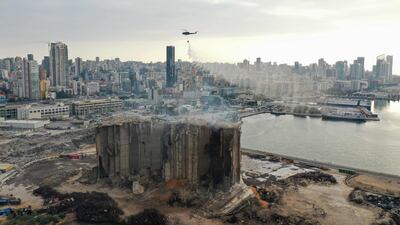
After the disaster, Lebanon's ruling elite drew even more public ire by interfering in an investigation that aimed to pinpoint culpability. The lead investigator, Tarek Bitar, has been barred from proceeding by a series of lawsuits filed by political leaders since last year. -
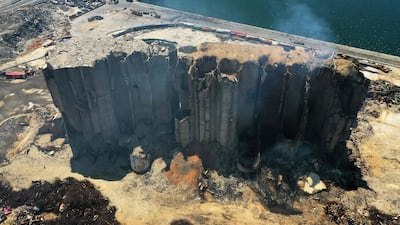
Parliament member Melhem Khalaf, a former Beirut bar association head, has tried to fight the official impunity, but both domestic and external factors have hampered investigations.


Ms Misto said she had mixed emotions of “anger, sadness and betrayal”.
“I still can’t describe them, which is sad because I want the people to know how it feels. But sometimes I can’t even cry about it.”
The Lebanese judiciary is deeply politicised, with some judges considered close to the country’s political elite.
“It’s a challenge that we find in all our judicial cases, that they don’t allow judges to work in a case which involves politicians or the government,” said Nizar Sagieh, a lawyer and founder of human rights group Legal Agenda.
“We had a civil war, a [economic] collapse due to 30 years of corruption and nobody was ever sentenced.”
Mr Bitar "has been threatened and even bullied in the media”, he said.
However, “the lawyers are resisting and, most importantly, the victims are resisting” in their search for justice, he said.
In the absence of domestic justice, families, individuals and organisations are calling for international support.
“There are 47 countries that are member states of the [UN] Human Rights Council, we are working and lobbying for the establishment of a fact-finding mission,” said Mr Naggear.
“We need this to complement the work that judge Tarek Bitar is doing. He needs pressure to unlock the state it is in today, and it’s been two years. He’s been blocked for two years.
“It is a cry to the international community to hear our call for justice.”
Lama Fakih, director of the Middle East and North Africa section of Human Rights Watch, described the domestic investigation as “paralysed”.
“For any hope of justice, for the truth to come out over who is really responsible for the explosion, we need the international community to step up.”
Outside of Lebanon, however, there have been hints of progress, with lawsuits launched in other countries.
This year, Savaro Ltd, the UK-registered company found liable for the blast, was told to pay a total of $1 million to a victim who was severely injured and the families of three who were killed – including Mr Naggear and his wife Tracy.
“Yes, absolutely, we think that there has been progress. Over the past few years, we didn’t have anything to show to our daughter," Mr Naggear said.
“It also gave us hope, and hope to others, to keep on pursuing such cases.”
For Mr Sagieh, the lawyer, the long-term goal is to “reform our institutions” if Lebanon is to progress. “There is no other solution,” he said.
Ms Misto added: “I just want [the world] to know we didn’t get justice – even a bit of justice – for the people who passed away, in Lebanon.
“And we don’t feel like we are getting any. And we’re just trying so hard.”

