


Lebanon has submitted a handful of modifications to a US proposal that could end a long-running maritime border dispute with Israel.
Elias Bou Saab, Lebanon’s deputy speaker of parliament and lead envoy to the US-mediated indirect negotiations, suggested the proposed changes would not be serious enough to derail the planned deal.
Prime Minister Najib Mikati said on Tuesday the proposal was "on the right track to assert Lebanon's rights over all its waters".
A Lebanese source close to the negotiations told The National some of the amendments were "essential, and others are not" but they could not officially be disclosed until Israel had responded.
But the source did say that the amendments were all related the Qana field and how Lebanon could reap the benefits from it.
After meeting Mr Bou Saab on Tuesday, US ambassador Dorothy Shea said Washington wanted a deal to be agreed “as soon as possible”.
Lebanon and Israel have technically been at war for decades, while Israeli forces have often fought with Hezbollah, the powerful Lebanese armed group and political party backed by Iran.
Under the proposed agreement, all of the disputed Qana gasfield would go to Lebanon, a Lebanese source close to the negotiations previously told The National.
A company operating under Lebanese licence would produce the gas at Qana, with Israeli officials saying their country would then get a share of the revenues.
Although not confirmed, Lebanese officials have suggested French company Total could play that role and a senior Israeli envoy was meeting company representatives in Paris on Monday.
In pictures - Lebanese flotilla's maritime protest against Israel
-
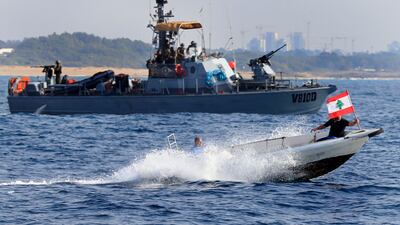
Lebanese protesters on a motorboat sail in front of an Israeli navy vessel during a demonstration on September 4. AP Photo -
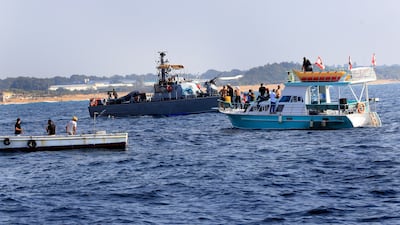
They are asserting Lebanon's right to its maritime oil and gas fields. AP Photo -
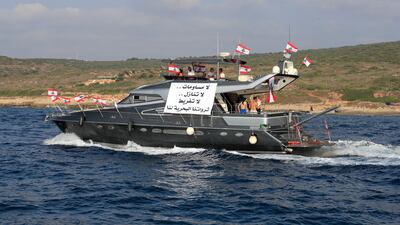
The banner on the Lebanese protesters' yacht reads: 'No compromises. No waivers. No negligence. Our maritime resources belong to us.' AP Photo -
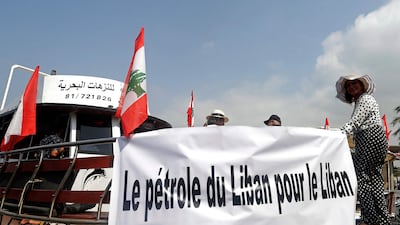
The maritime border dispute flared up in early June after Israel moved a production vessel to the Karish offshore field. AFP -
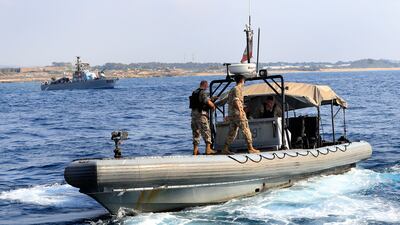
Lebanese soldiers patrol near an Israeli navy vessel during the demonstration. AP Photo -
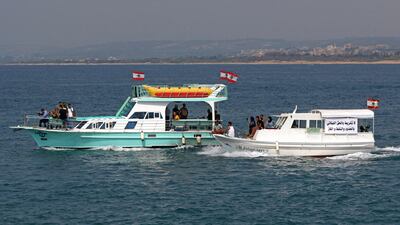
Protesters with slogans on their boats asserting Lebanon's right to its offshore gas wealth. AFP -
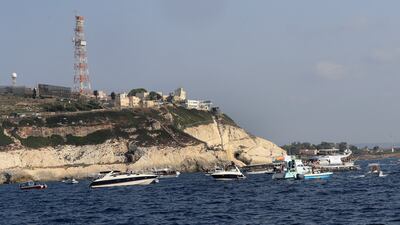
The flotilla off the Lebanese town of Naqoura. AP Photo -
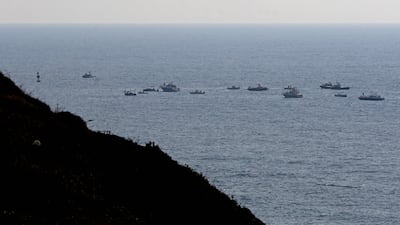
The protest boats approach a buoy marking the sea border between Israel and Lebanon. AFP


The Lebanese source said there would be no partnership between Lebanon and Israel “whatsoever”. The source said any agreement between Total and Israel rested with the two parties and had nothing to do with Lebanon.
Mr Bou Saab said Lebanon would not pay one cent from its share of Qana to Israel.
Israeli Prime Minister Yair Lapid has given an upbeat appraisal of the initial draft agreement — and even Hezbollah has offered cautious optimism that a deal could be reached.

