• An electoral worker sits next to ballot boxes, at the Justice Palace, in Jdeideh. Reuters
    An electoral worker sits next to ballot boxes, at the Justice Palace, in Jdeideh. Reuters
  • A soldier stands guard as ballots are counted at the Justice Palace. Reuters
    A soldier stands guard as ballots are counted at the Justice Palace. Reuters
  • Jad Ghosn, an opposition candidate, gestures as people wait for the announcement of official election results, in Jdeideh. Reuters
    Jad Ghosn, an opposition candidate, gestures as people wait for the announcement of official election results, in Jdeideh. Reuters
  • Lebanese Interior Minister Bassam Mawlawi announces the final results for some districts. EPA
    Lebanese Interior Minister Bassam Mawlawi announces the final results for some districts. EPA
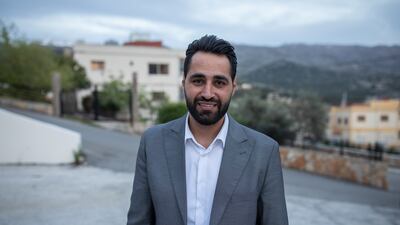
  • Opposition candidate Yassin Yassin gestures as he is greeted by supporters in Jeb Jennin, West Bekaa. Reuters
    Opposition candidate Yassin Yassin gestures as he is greeted by supporters in Jeb Jennin, West Bekaa. Reuters
  • Supporters of the Lebanese Forces take to the streets during parliamentary elections in the Ashrafieh district of Beirut. Bloomberg
    Supporters of the Lebanese Forces take to the streets during parliamentary elections in the Ashrafieh district of Beirut. Bloomberg
  • Lebanon headed to the polls with its economy in the grip of hyperinflation. Bloomberg
    Lebanon headed to the polls with its economy in the grip of hyperinflation. Bloomberg
  • Lebanese youths supporting Hezbollah and Amal movement wave their party flags after parliamentary elections in a suburb of Beirut. EPA
    Lebanese youths supporting Hezbollah and Amal movement wave their party flags after parliamentary elections in a suburb of Beirut. EPA
  • Supporters of Lebanon's Shiite groups Hezbollah and Amal lift their flags during a motorbike rally after voting. AFP
    Supporters of Lebanon's Shiite groups Hezbollah and Amal lift their flags during a motorbike rally after voting. AFP
  • Children swim in an inflatable pool that supporters of former prime minister Saad Hariri installed to illustrate their intention to boycott parliamentary elections in Beirut, Lebanon. AP Photo
    Children swim in an inflatable pool that supporters of former prime minister Saad Hariri installed to illustrate their intention to boycott parliamentary elections in Beirut, Lebanon. AP Photo
  • Voters queue to place their vote in parliamentary elections in Beirut, Lebanon. EPA
    Voters queue to place their vote in parliamentary elections in Beirut, Lebanon. EPA
  • Nabih Berri, Speaker of the Lebanese Parliament, stands in a polling booth to vote in Tebnin. Reuters
    Nabih Berri, Speaker of the Lebanese Parliament, stands in a polling booth to vote in Tebnin. Reuters
  • Voters register at a polling station in Beirut. Bloomberg
    Voters register at a polling station in Beirut. Bloomberg
  • Lebanese President Michel Aoun follows the parliamentary elections on screens from the Presidential Palace in Beirut. AP
    Lebanese President Michel Aoun follows the parliamentary elections on screens from the Presidential Palace in Beirut. AP
  • A Lebanese woman shows her inked finger after she cast her vote at a polling station in Beirut. AP
    A Lebanese woman shows her inked finger after she cast her vote at a polling station in Beirut. AP
  • Voters look at a list of candidates at a polling station in Beirut. Bloomberg
    Voters look at a list of candidates at a polling station in Beirut. Bloomberg
  • Lebanese policemen help a voter into a polling station in Beirut. AP
    Lebanese policemen help a voter into a polling station in Beirut. AP
  • A Lebanese voter casts her ballot paper in Beirut. EPA
    A Lebanese voter casts her ballot paper in Beirut. EPA
  • Gyorgy Holvenyi (R), chief observer of the European Union election observation mission, visits a polling station in Beirut. EPA
    Gyorgy Holvenyi (R), chief observer of the European Union election observation mission, visits a polling station in Beirut. EPA
  • Lebanese people wait to vote during parliamentary elections in the capital city. EPA
    Lebanese people wait to vote during parliamentary elections in the capital city. EPA
  • Sheikh Abdul Latif Derian, Grand Mufti of Lebanon, casts his ballot paper during parliamentary elections in Beirut. EPA
    Sheikh Abdul Latif Derian, Grand Mufti of Lebanon, casts his ballot paper during parliamentary elections in Beirut. EPA
  • People queue to cast their votes in the Lebanese capital. AP
    People queue to cast their votes in the Lebanese capital. AP
  • Posters in Al Tariq Al Jadida, Beirut, depict Lebanon’s former prime minister Saad Hariri. Reuters
    Posters in Al Tariq Al Jadida, Beirut, depict Lebanon’s former prime minister Saad Hariri. Reuters
  • A woman prepares her ballot at a polling station in a southern suburb of Beirut. AFP
    A woman prepares her ballot at a polling station in a southern suburb of Beirut. AFP
  • Former prime minister Hassan Diab, who succeeded Saad Hariri, casts his ballot in Beirut. AFP
    Former prime minister Hassan Diab, who succeeded Saad Hariri, casts his ballot in Beirut. AFP
  • A voter checks lists for the parliamentary election at a polling station in the Lebanese capital Beirut. AFP
    A voter checks lists for the parliamentary election at a polling station in the Lebanese capital Beirut. AFP
  • A woman waits to vote in Beirut. EPA
    A woman waits to vote in Beirut. EPA
  • Security forces stand guard at Nur Square on the southern entrance of the northern Lebanese port city Tripoli. AFP
    Security forces stand guard at Nur Square on the southern entrance of the northern Lebanese port city Tripoli. AFP
  • Former Lebanese prime minister Fouad Siniora casts his vote at a polling station during the parliamentary election, in Sidon, southern Lebanon. Reuters
    Former Lebanese prime minister Fouad Siniora casts his vote at a polling station during the parliamentary election, in Sidon, southern Lebanon. Reuters
  • A man check voters' lists in the capital Beirut. AP
    A man check voters' lists in the capital Beirut. AP
  • A woman votes in Lebanon's parliamentary elections in Beirut. AP
    A woman votes in Lebanon's parliamentary elections in Beirut. AP
  • Police check the ID of voters outside a polling station near the Lebanese coastal city of Byblos (Jbeil), north of Beirut. AFP
    Police check the ID of voters outside a polling station near the Lebanese coastal city of Byblos (Jbeil), north of Beirut. AFP
  • A voter dips her finger in ink after casting her ballot in the parliamentary election at a polling station near Byblos. AFP
    A voter dips her finger in ink after casting her ballot in the parliamentary election at a polling station near Byblos. AFP
  • A Lebanese woman shows her ink-marked thumb after voting in Shmustar, Bekaa valley. EPA
    A Lebanese woman shows her ink-marked thumb after voting in Shmustar, Bekaa valley. EPA
  • People queueing to vote at Ras El Nabeh Public School for Girls. Fatima Al Mahmoud/ The National
    People queueing to vote at Ras El Nabeh Public School for Girls. Fatima Al Mahmoud/ The National

Lebanon elections 2022: polls close after decisive vote


Fatima Al Mahmoud
  • English
  • Arabic

Live updates: follow the latest news on the Lebanese election 2022

Polls closed on Sunday in Lebanon's parliamentary election after months of uncertainty about whether it would go ahead.

Voting began just after 7am in the country’s 15 electoral districts and by mid-evening, Lebanon's Ministry of Interior said turnout had reached 37.52 per cent.

Prime Minister Najib Mikati held a press conference after the vote, where he denied the turnout would be as low as feared and praised security forces for ensuring the vote was held safely.

In a turnaround from high expatriate voting before Sunday's poll, the national election was on track to have one of the lowest participation rates since elections resumed in 1992 following the civil war.

At a press conference following the vote, Mr Mikati highlighted a high showing in some districts that bucked the national trend. He called the election a "victory for Lebanon."

The vote, only the second in 14 years, could be important in deciding what direction the country takes, amid the worst economic crisis in its history.

While the powerful political parties that have run the country in successive power-sharing governments since the end of the civil war in 1990 are expected to retain the majority of the 128 seats, independent and opposition groups have fielded dozens of candidates in the hope of offering a real chance for change.

After mass protests in 2019 brought down the government, there is hope among many voters that they can get a new crop of MPs into parliament and break the hold of the parties they blame for the current crisis.

“I voted for change, I was forced to leave Lebanon and I came back before the elections so I could get a chance to cast my vote here,” first-time voter Abdul Rahman Samad, 21, told The National from a polling station in Beirut.

The voting process itself, he says, was very straightforward and simple.

Voters arriving at the polling centre must present a valid ID or Lebanese passport to verify their identity. Security forces then check the registration lists to confirm they are eligible to vote at the designated polling station.

Mr Samad’s sentiment was echoed by others.

“I’m in my 50s and this is my first-time voting. I had to do something for change, maybe this will be the end of the mafias in power,” said Suzy Majzoub.

Latifa, a Lebanese homemaker, blamed the current politicians for the crisis that has pushed thousands of young people overseas to find work to support families back home.

“I have voted several times but never saw results. We want change this time. Our kids are abroad. We want change, we want jobs, we want stability. They took our kids away, they denied us of their warmth and presence, I want them to come back to me, so I had to try,” she told The National as she walked out of the polling station with an ink-stained thumb.

Dipping one's finger in a jar of dark blue ink is the last part of the voting process and comes after voters cast their ballot and sign next to their name at the polling station.

While the wait outside the room with the ballot boxes can be long, a young Lebanese woman says it is worth it.

Dana, 23, told The National she voted for the first time on Sunday and did it out of a deep desire for change.

“I hope people who are voting this year don’t repeat the same mistakes of the past years and don’t vote for the people who are behind the crisis. We really want to see change. We’re still traumatised from the Beirut port blast, why would we give them power again?” she said.

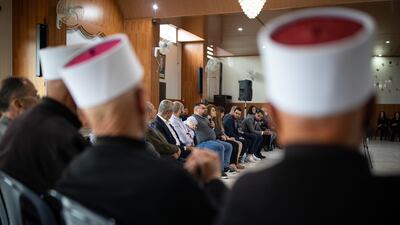
  • Druze opposition candidate Firas Hamdan greets members of the sect in a hall in the village of Kfeir in South Lebanon. All Photos: Oliver Marsden for The National
    Druze opposition candidate Firas Hamdan greets members of the sect in a hall in the village of Kfeir in South Lebanon. All Photos: Oliver Marsden for The National
  • Mr Hamdan is running for the first time in parliamentary elections scheduled for next month.
    Mr Hamdan is running for the first time in parliamentary elections scheduled for next month.
  • Hweida Al Halabi, who works in a medical laboratory, stands outside the hall in Kfeir after a meeting with Mr Hamdan.
    Hweida Al Halabi, who works in a medical laboratory, stands outside the hall in Kfeir after a meeting with Mr Hamdan.
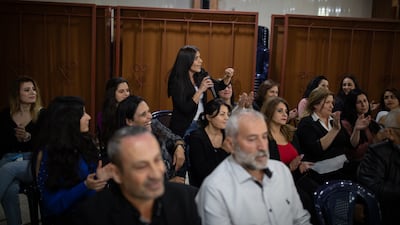
  • Ms Al Halabi is applauded as she poses a question to Mr Hamdan.
    Ms Al Halabi is applauded as she poses a question to Mr Hamdan.
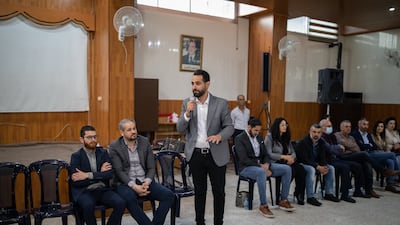
  • Mr Hamdan answers questions from the audience.
    Mr Hamdan answers questions from the audience.
  • This is the first year that such a meeting has taken place in the area before an election.
    This is the first year that such a meeting has taken place in the area before an election.
  • Men of the Druze sect gather at the hall in the village of Kfeir.
    Men of the Druze sect gather at the hall in the village of Kfeir.
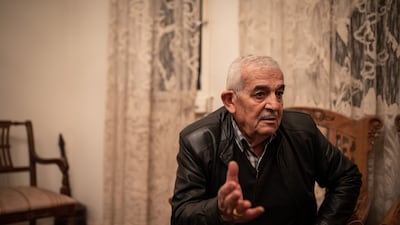
  • Retired teacher and member of the Druze Progressive Socialist Party Faysal Naoufal explains why he will be voting for the opposition in this year’s elections.
    Retired teacher and member of the Druze Progressive Socialist Party Faysal Naoufal explains why he will be voting for the opposition in this year’s elections.

She was not the only voter to accuse Lebanon's traditional parties of causing the country's crisis.

"We can’t take this any longer. The situation is unbearable," said Layla, 60. "If we don’t vote to make a change then who will?

President Michel Aoun, Prime Minister Najib Mikati and several other key officials were also seen casting their ballots at polling stations. A man was reportedly arrested for verbally abusing the president when he came to vote in south Beirut.

On Saturday evening, President Michel Aoun addressed the nation and urged people to cast their ballot, saying it was a national duty.

“This is your chance, do not waste it, especially in light of the facts that have been unveiled in the past two years, and the lies that have been exposed, and now that corruption and embezzlement have faces and names,” he said.

The World Bank has described Lebanon's crisis, the result of decades of corruption and mismanagement, as one of the worst in modern times.

The value of the Lebanese pound has decreased by more than 90 per cent against the dollar.

Well over half the population has plunged beneath the poverty line, jobs have evaporated and food, medicine and other essentials have become scarce.

The next parliament is expected to vote on long-delayed reforms required by the International Monetary Fund to unlock financial support to ease the crisis.

It is also due to elect a head of state to replace Mr Aoun, whose term ends on October 31.

Whatever the outcome, analysts say Lebanon could face a period of paralysis as factions barter over portfolios in a new power-sharing cabinet, a process that usually takes months.


Updated: May 15, 2022, 5:44 PM