• An electoral worker sits next to ballot boxes, at the Justice Palace, in Jdeideh. Reuters
    An electoral worker sits next to ballot boxes, at the Justice Palace, in Jdeideh. Reuters
  • A soldier stands guard as ballots are counted at the Justice Palace. Reuters
    A soldier stands guard as ballots are counted at the Justice Palace. Reuters
  • Jad Ghosn, an opposition candidate, gestures as people wait for the announcement of official election results, in Jdeideh. Reuters
    Jad Ghosn, an opposition candidate, gestures as people wait for the announcement of official election results, in Jdeideh. Reuters
  • Lebanese Interior Minister Bassam Mawlawi announces the final results for some districts. EPA
    Lebanese Interior Minister Bassam Mawlawi announces the final results for some districts. EPA
  • Opposition candidate Yassin Yassin gestures as he is greeted by supporters in Jeb Jennin, West Bekaa. Reuters
    Opposition candidate Yassin Yassin gestures as he is greeted by supporters in Jeb Jennin, West Bekaa. Reuters
  • Supporters of the Lebanese Forces take to the streets during parliamentary elections in the Ashrafieh district of Beirut. Bloomberg
    Supporters of the Lebanese Forces take to the streets during parliamentary elections in the Ashrafieh district of Beirut. Bloomberg
  • Lebanon headed to the polls with its economy in the grip of hyperinflation. Bloomberg
    Lebanon headed to the polls with its economy in the grip of hyperinflation. Bloomberg
  • Lebanese youths supporting Hezbollah and Amal movement wave their party flags after parliamentary elections in a suburb of Beirut. EPA
    Lebanese youths supporting Hezbollah and Amal movement wave their party flags after parliamentary elections in a suburb of Beirut. EPA
  • Supporters of Lebanon's Shiite groups Hezbollah and Amal lift their flags during a motorbike rally after voting. AFP
    Supporters of Lebanon's Shiite groups Hezbollah and Amal lift their flags during a motorbike rally after voting. AFP
  • Children swim in an inflatable pool that supporters of former prime minister Saad Hariri installed to illustrate their intention to boycott parliamentary elections in Beirut, Lebanon. AP Photo
    Children swim in an inflatable pool that supporters of former prime minister Saad Hariri installed to illustrate their intention to boycott parliamentary elections in Beirut, Lebanon. AP Photo
  • Voters queue to place their vote in parliamentary elections in Beirut, Lebanon. EPA
    Voters queue to place their vote in parliamentary elections in Beirut, Lebanon. EPA
  • Nabih Berri, Speaker of the Lebanese Parliament, stands in a polling booth to vote in Tebnin. Reuters
    Nabih Berri, Speaker of the Lebanese Parliament, stands in a polling booth to vote in Tebnin. Reuters
  • Voters register at a polling station in Beirut. Bloomberg
    Voters register at a polling station in Beirut. Bloomberg
  • Lebanese President Michel Aoun follows the parliamentary elections on screens from the Presidential Palace in Beirut. AP
    Lebanese President Michel Aoun follows the parliamentary elections on screens from the Presidential Palace in Beirut. AP
  • A Lebanese woman shows her inked finger after she cast her vote at a polling station in Beirut. AP
    A Lebanese woman shows her inked finger after she cast her vote at a polling station in Beirut. AP
  • Voters look at a list of candidates at a polling station in Beirut. Bloomberg
    Voters look at a list of candidates at a polling station in Beirut. Bloomberg
  • Lebanese policemen help a voter into a polling station in Beirut. AP
    Lebanese policemen help a voter into a polling station in Beirut. AP
  • A Lebanese voter casts her ballot paper in Beirut. EPA
    A Lebanese voter casts her ballot paper in Beirut. EPA
  • Gyorgy Holvenyi (R), chief observer of the European Union election observation mission, visits a polling station in Beirut. EPA
    Gyorgy Holvenyi (R), chief observer of the European Union election observation mission, visits a polling station in Beirut. EPA
  • Lebanese people wait to vote during parliamentary elections in the capital city. EPA
    Lebanese people wait to vote during parliamentary elections in the capital city. EPA
  • Sheikh Abdul Latif Derian, Grand Mufti of Lebanon, casts his ballot paper during parliamentary elections in Beirut. EPA
    Sheikh Abdul Latif Derian, Grand Mufti of Lebanon, casts his ballot paper during parliamentary elections in Beirut. EPA
  • People queue to cast their votes in the Lebanese capital. AP
    People queue to cast their votes in the Lebanese capital. AP
  • Posters in Al Tariq Al Jadida, Beirut, depict Lebanon’s former prime minister Saad Hariri. Reuters
    Posters in Al Tariq Al Jadida, Beirut, depict Lebanon’s former prime minister Saad Hariri. Reuters
  • A woman prepares her ballot at a polling station in a southern suburb of Beirut. AFP
    A woman prepares her ballot at a polling station in a southern suburb of Beirut. AFP
  • Former prime minister Hassan Diab, who succeeded Saad Hariri, casts his ballot in Beirut. AFP
    Former prime minister Hassan Diab, who succeeded Saad Hariri, casts his ballot in Beirut. AFP
  • A voter checks lists for the parliamentary election at a polling station in the Lebanese capital Beirut. AFP
    A voter checks lists for the parliamentary election at a polling station in the Lebanese capital Beirut. AFP
  • A woman waits to vote in Beirut. EPA
    A woman waits to vote in Beirut. EPA
  • Security forces stand guard at Nur Square on the southern entrance of the northern Lebanese port city Tripoli. AFP
    Security forces stand guard at Nur Square on the southern entrance of the northern Lebanese port city Tripoli. AFP
  • Former Lebanese prime minister Fouad Siniora casts his vote at a polling station during the parliamentary election, in Sidon, southern Lebanon. Reuters
    Former Lebanese prime minister Fouad Siniora casts his vote at a polling station during the parliamentary election, in Sidon, southern Lebanon. Reuters
  • A man check voters' lists in the capital Beirut. AP
    A man check voters' lists in the capital Beirut. AP
  • A woman votes in Lebanon's parliamentary elections in Beirut. AP
    A woman votes in Lebanon's parliamentary elections in Beirut. AP
  • Police check the ID of voters outside a polling station near the Lebanese coastal city of Byblos (Jbeil), north of Beirut. AFP
    Police check the ID of voters outside a polling station near the Lebanese coastal city of Byblos (Jbeil), north of Beirut. AFP
  • A voter dips her finger in ink after casting her ballot in the parliamentary election at a polling station near Byblos. AFP
    A voter dips her finger in ink after casting her ballot in the parliamentary election at a polling station near Byblos. AFP
  • A Lebanese woman shows her ink-marked thumb after voting in Shmustar, Bekaa valley. EPA
    A Lebanese woman shows her ink-marked thumb after voting in Shmustar, Bekaa valley. EPA
  • People queueing to vote at Ras El Nabeh Public School for Girls. Fatima Al Mahmoud/ The National
    People queueing to vote at Ras El Nabeh Public School for Girls. Fatima Al Mahmoud/ The National

Hezbollah dominates election campaign in southern Lebanon but opposition holds out hope


Sunniva Rose
  • English
  • Arabic

Live updates: follow the latest news on the Lebanon elections 2022

In the Lebanese town of Bint Jbeil, cars blaring songs praising Hezbollah and its ally Amal paraded in through the streets at dusk on Sunday evening.

The display of power and support as polling stations closed across the country reflected the parties’ confidence that they would keep a tight grip in their southern stronghold.

Throughout the day, Hezbollah supporters waved the Shiite movement’s yellow and green flags outside car windows as they drove to vote in the country’s parliamentary election. Women tied party flags on their backs. Men wrapped them around their wrists.

“Our chance of success is more than 100 per cent,” Hezbollah delegate Mohammad Saeed El Arab said at a polling station in Saksakiyeh, a village near the coastal town of Saida.

Out of 24 observers representing political parties, the vast majority belonged to Amal and Hezbollah.

Representatives of the opposition, which has high hopes of winning a handful of seats and capitalising on public anger at the national leadership’s perceived corruption, were barely visible. Unlike Mr El Arab, who sported a yellow jacket and hat, the independent list’s only two representatives wore no distinctive clothing.

In 2019, Lebanon was pushed into its worst economic crisis after decades of financial mismanagement by the ruling elite.

All voters The National spoke to in Saksakiyeh said they hoped for a change in the country, but they disagreed on what this would look like.

Nader, a first-time voter, said he’d cast her ballot for the district’s opposition list, which includes independent figures from civil society.

“It can only get better or worse,” he told The National.

He had come to vote with two friends, one of whom wore an Amal wristband. “We disagree politically but at least we can discuss our views, unlike the older generation,” said Nader, 24.

Another first-time voter, Nancy Wehbeh, 25, said she did not know much about the local opposition list.

“We only have trust in Hezbollah and Amal because they fight corruption in Lebanon,” she said.

Hezbollah is labelled a terrorist organisation by several western countries. The Iran-backed group has had representatives in the Lebanese government since 2005.

The election’s low turnout, at just above 37 per cent nationally as of 6.30pm on Sunday, has left opposition figures in south Lebanon unsure of whether they will see a candidate in Parliament. If they do, it will be a first.

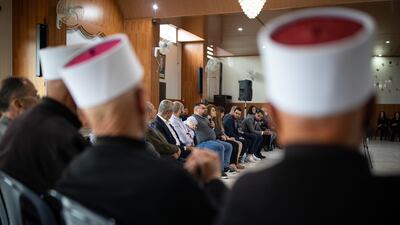
  • Druze opposition candidate Firas Hamdan greets members of the sect in a hall in the village of Kfeir in South Lebanon. All Photos: Oliver Marsden for The National
    Druze opposition candidate Firas Hamdan greets members of the sect in a hall in the village of Kfeir in South Lebanon. All Photos: Oliver Marsden for The National
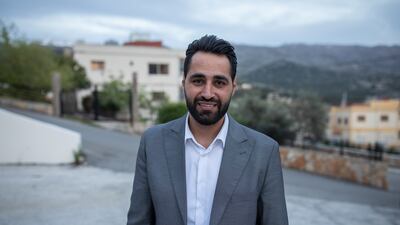
  • Mr Hamdan is running for the first time in parliamentary elections scheduled for next month.
    Mr Hamdan is running for the first time in parliamentary elections scheduled for next month.
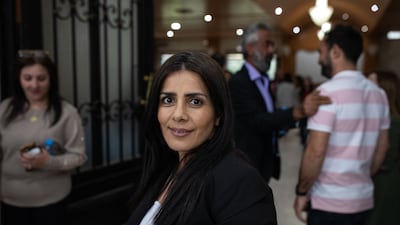
  • Hweida Al Halabi, who works in a medical laboratory, stands outside the hall in Kfeir after a meeting with Mr Hamdan.
    Hweida Al Halabi, who works in a medical laboratory, stands outside the hall in Kfeir after a meeting with Mr Hamdan.
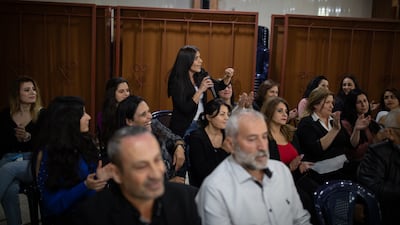
  • Ms Al Halabi is applauded as she poses a question to Mr Hamdan.
    Ms Al Halabi is applauded as she poses a question to Mr Hamdan.
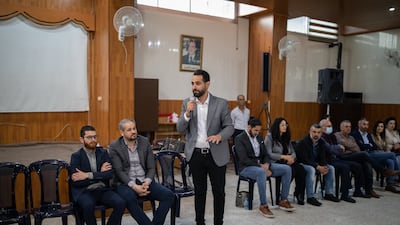
  • Mr Hamdan answers questions from the audience.
    Mr Hamdan answers questions from the audience.
  • This is the first year that such a meeting has taken place in the area before an election.
    This is the first year that such a meeting has taken place in the area before an election.
  • Men of the Druze sect gather at the hall in the village of Kfeir.
    Men of the Druze sect gather at the hall in the village of Kfeir.
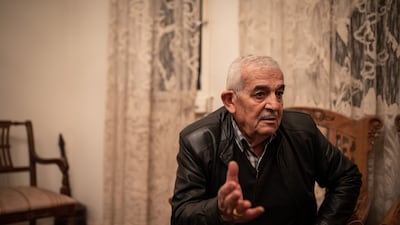
  • Retired teacher and member of the Druze Progressive Socialist Party Faysal Naoufal explains why he will be voting for the opposition in this year’s elections.
    Retired teacher and member of the Druze Progressive Socialist Party Faysal Naoufal explains why he will be voting for the opposition in this year’s elections.

“We don’t know whether it is traditional party supporters who boycotted the vote or if people from all sides have abstained,” candidate Ali Mourad, from the southern village of Aitaroun, told The National.

“It’s clear that Hezbollah and Amal have the ability to assert themselves in public. That’s a pressure tactic.”

In Bint Jbeil’s government building, where vote counting was taking place on Sunday evening, judicial sources said they did not expect to finish the count before early the next day.

Counting in the town started at about 8.30pm, when officials received ballot boxes containing votes from expatriates. They were cast last Friday and Sunday and had been stored at the central bank in Beirut.

Local ballot boxes were carried by hand, under tight security, towards a large government building, where they will also be counted overnight. Several military jeeps circled the building, where dozens of policemen and special forces patrolled.

All the ballot boxes are expected to be transferred to a higher registration committee, which verifies previous reports and sends the final results to the Interior Ministry.

The Interior Minister is expected to give the official results on Monday or Tuesday.

Inside the building, the mood was quiet and studious.

“Voting in this region has been one of the calmest in Lebanon,” said the head of the sub-district, Charbel Al Alem. Many civil servants counting ballots were from the Justice Ministry. They said they had been paid $100 for the job.

The Lebanese Association for Democratic Elections documented hundreds of offences throughout the day across the country, but not specifically in Bint Jbeil.

Mr Mourad, who attended the count in the town, said he feared more breaches would come to light in the hours to come.

“We are at the mercy of ruling parties in areas where we have no delegates,” he said. “We are not on neutral ground.”


Ten tax points to be aware of in 2026

1. Domestic VAT refund amendments: request your refund within five years

If a business does not apply for the refund on time, they lose their credit.

2. E-invoicing in the UAE

Businesses should continue preparing for the implementation of e-invoicing in the UAE, with 2026 a preparation and transition period ahead of phased mandatory adoption. 

3. More tax audits

Tax authorities are increasingly using data already available across multiple filings to identify audit risks. 

4. More beneficial VAT and excise tax penalty regime

Tax disputes are expected to become more frequent and more structured, with clearer administrative objection and appeal processes. The UAE has adopted a new penalty regime for VAT and excise disputes, which now mirrors the penalty regime for corporate tax.

5. Greater emphasis on statutory audit

There is a greater need for the accuracy of financial statements. The International Financial Reporting Standards standards need to be strictly adhered to and, as a result, the quality of the audits will need to increase.

6. Further transfer pricing enforcement

Transfer pricing enforcement, which refers to the practice of establishing prices for internal transactions between related entities, is expected to broaden in scope. The UAE will shortly open the possibility to negotiate advance pricing agreements, or essentially rulings for transfer pricing purposes. 

7. Limited time periods for audits

Recent amendments also introduce a default five-year limitation period for tax audits and assessments, subject to specific statutory exceptions. While the standard audit and assessment period is five years, this may be extended to up to 15 years in cases involving fraud or tax evasion. 

8. Pillar 2 implementation 

Many multinational groups will begin to feel the practical effect of the Domestic Minimum Top-Up Tax (DMTT), the UAE's implementation of the OECD’s global minimum tax under Pillar 2. While the rules apply for financial years starting on or after January 1, 2025, it is 2026 that marks the transition to an operational phase.

9. Reduced compliance obligations for imported goods and services

Businesses that apply the reverse-charge mechanism for VAT purposes in the UAE may benefit from reduced compliance obligations. 

10. Substance and CbC reporting focus

Tax authorities are expected to continue strengthening the enforcement of economic substance and Country-by-Country (CbC) reporting frameworks. In the UAE, these regimes are increasingly being used as risk-assessment tools, providing tax authorities with a comprehensive view of multinational groups’ global footprints and enabling them to assess whether profits are aligned with real economic activity. 

Contributed by Thomas Vanhee and Hend Rashwan, Aurifer

COMPANY%20PROFILE
%3Cp%3E%3Cstrong%3ECompany%20name%3A%3C%2Fstrong%3E%20Switch%20Foods%3Cbr%3E%3Cstrong%3EStarted%3A%3C%2Fstrong%3E%202022%3Cbr%3E%3Cstrong%3EFounder%3A%3C%2Fstrong%3E%20Edward%20Hamod%3Cbr%3E%3Cstrong%3EBased%3A%3C%2Fstrong%3E%20Abu%20Dhabi%2C%20UAE%3Cbr%3E%3Cstrong%3EIndustry%3A%3C%2Fstrong%3E%20Plant-based%20meat%20production%3Cbr%3E%3Cstrong%3ENumber%20of%20employees%3A%3C%2Fstrong%3E%2034%3Cbr%3E%3Cstrong%3EFunding%3A%3C%2Fstrong%3E%20%246.5%20million%3Cbr%3E%3Cstrong%3EFunding%20round%3A%3C%2Fstrong%3E%20Seed%3Cbr%3E%3Cstrong%3EInvestors%3A%3C%2Fstrong%3E%20Based%20in%20US%20and%20across%20Middle%20East%3C%2Fp%3E%0A
Honeymoonish
%3Cp%3E%3Cstrong%3EDirector%3A%3C%2Fstrong%3E%20Elie%20El%20Samaan%3C%2Fp%3E%0A%3Cp%3E%3Cstrong%3EStarring%3A%20%3C%2Fstrong%3ENour%20Al%20Ghandour%2C%20Mahmoud%20Boushahri%3C%2Fp%3E%0A%3Cp%3E%3Cstrong%3ERating%3A%3C%2Fstrong%3E%203%2F5%3C%2Fp%3E%0A
%20Ramez%20Gab%20Min%20El%20Akher
%3Cp%3E%3Cstrong%3ECreator%3A%3C%2Fstrong%3E%20Ramez%20Galal%3C%2Fp%3E%0A%3Cp%3E%3Cstrong%3EStarring%3A%3C%2Fstrong%3E%20Ramez%20Galal%3C%2Fp%3E%0A%3Cp%3E%3Cstrong%3EStreaming%20on%3A%20%3C%2Fstrong%3EMBC%20Shahid%3C%2Fp%3E%0A%3Cp%3E%3Cstrong%3ERating%3A%20%3C%2Fstrong%3E2.5%2F5%3C%2Fp%3E%0A
CONFIRMED%20LINE-UP
%3Cp%3EElena%20Rybakina%20(Kazakhstan)%3Cbr%3EOns%20Jabeur%20(Tunisia)%3Cbr%3EMaria%20Sakkari%20(Greece)%3Cbr%3EBarbora%20Krej%C4%8D%C3%ADkov%C3%A1%20(Czech%20Republic)%3Cbr%3EBeatriz%20Haddad%20Maia%20(Brazil)%3Cbr%3EJe%C4%BCena%20Ostapenko%20(Latvia)%3Cbr%3ELiudmila%20Samsonova%3Cbr%3EDaria%20Kasatkina%3Cbr%3EVeronika%20Kudermetova%3Cbr%3ECaroline%20Garcia%20(France)%3Cbr%3EMagda%20Linette%20(Poland)%3Cbr%3ESorana%20C%C3%AErstea%20(Romania)%3Cbr%3EAnastasia%20Potapova%3Cbr%3EAnhelina%20Kalinina%20(Ukraine)%3Cbr%3EJasmine%20Paolini%20(Italy)%3Cbr%3EEmma%20Navarro%20(USA)%3Cbr%3ELesia%20Tsurenko%20(Ukraine)%3Cbr%3EEmma%20Raducanu%20(Great%20Britain)%20%E2%80%93%20wildcard%3C%2Fp%3E%0A
Marathon results

Men:

 1. Titus Ekiru(KEN) 2:06:13 

2. Alphonce Simbu(TAN) 2:07:50 

3. Reuben Kipyego(KEN) 2:08:25 

4. Abel Kirui(KEN) 2:08:46 

5. Felix Kemutai(KEN) 2:10:48  

Women:

1. Judith Korir(KEN) 2:22:30 

2. Eunice Chumba(BHR) 2:26:01 

3. Immaculate Chemutai(UGA) 2:28:30 

4. Abebech Bekele(ETH) 2:29:43 

5. Aleksandra Morozova(RUS) 2:33:01  

While you're here
Squid Game season two

Director: Hwang Dong-hyuk 

Stars:  Lee Jung-jae, Wi Ha-joon and Lee Byung-hun

Rating: 4.5/5

The story in numbers

18

This is how many recognised sects Lebanon is home to, along with about four million citizens

450,000

More than this many Palestinian refugees are registered with UNRWA in Lebanon, with about 45 per cent of them living in the country’s 12 refugee camps

1.5 million

There are just under 1 million Syrian refugees registered with the UN, although the government puts the figure upwards of 1.5m

73

The percentage of stateless people in Lebanon, who are not of Palestinian origin, born to a Lebanese mother, according to a 2012-2013 study by human rights organisation Frontiers Ruwad Association

18,000

The number of marriages recorded between Lebanese women and foreigners between the years 1995 and 2008, according to a 2009 study backed by the UN Development Programme

77,400

The number of people believed to be affected by the current nationality law, according to the 2009 UN study

4,926

This is how many Lebanese-Palestinian households there were in Lebanon in 2016, according to a census by the Lebanese-Palestinian dialogue committee

Porsche Macan T: The Specs

Engine: 2.0-litre 4-cyl turbo 

Power: 265hp from 5,000-6,500rpm 

Torque: 400Nm from 1,800-4,500rpm 

Transmission: 7-speed dual-clutch auto 

Speed: 0-100kph in 6.2sec 

Top speed: 232kph 

Fuel consumption: 10.7L/100km 

On sale: May or June 

Price: From Dh259,900  

The specs
Engine: 2.0-litre 4-cyl turbo

Power: 201hp at 5,200rpm

Torque: 320Nm at 1,750-4,000rpm

Transmission: 6-speed auto

Fuel consumption: 8.7L/100km

Price: Dh133,900

On sale: now 

Updated: May 17, 2022, 3:57 AM