Syrian children play outside their tents at a refugee camp in the city of Arsal in Lebanon's Bekaa valley. Many families in Lebanon can no longer afford to travel to health facilities for basic immunisation services, Unicef said. AFP
Syrian children play outside their tents at a refugee camp in the city of Arsal in Lebanon's Bekaa valley. Many families in Lebanon can no longer afford to travel to health facilities for basic immuni

Hundreds of thousands of Lebanese children could miss life-saving vaccines: Unicef


Jamie Prentis
  • English
  • Arabic

Children in Lebanon are unable to receive essential, potentially life-saving vaccinations because parents cannot afford the transport to healthcare facilities amid the economic collapse and other crises in the country, Unicef has warned.

And the situation looks set to worsen, with 80 per cent of the country in poverty and high inflation — meaning parents have “to make further painful decisions”.

In a new report, Unicef said falling vaccination rates have left “hundreds of thousands” of young people at risk of preventable but deadly diseases, including diphtheria, measles and pneumonia.

“With Lebanon’s health system being stretched to breaking point by so many crises, many families can no longer afford to even travel to health facilities for basic immunisation services, medication and treatment,” said Ettie Higgins, Unicef’s acting representative in Lebanon.

“Repeatedly, anguished parents and families are unable to access basic health care for their children, as many dedicated health workers struggle to keep operations running during the crisis.”

From April to October 2021, the amount of young people who could not access health care when required rose from 28 per cent to 34 per cent, Unicef said, while 50 per cent of families could not secure the medicines they needed.

“I have prioritised my children’s routine immunisation and regular health check-ups at the expense of my own health. My conditions will have to wait,” Salwa, mother of Mustafa, told Unicef.

Unicef also spoke to a primary healthcare centre nurse called Eman, who said: “Many children aren’t receiving their essential routine immunisation because, even though we give the vaccines for free, their parents don’t have enough money to pay for the transport to bring them.”

From the first quarter of 2020 to the third quarter of the year, in four provinces that were assessed, the number of babies in refugee populations who died within the first four weeks of their life rose from 65 to 137.

“Lebanon had achieved remarkable success in reducing maternal deaths, but numbers rose again between 2019 and 2021, from 13.7 to 37 deaths per 1,000 live births,” Unicef said.

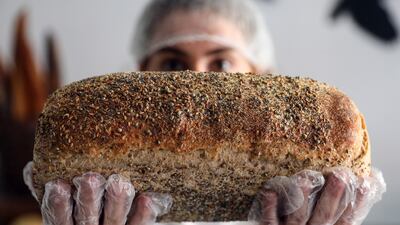
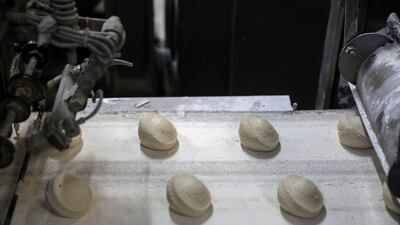
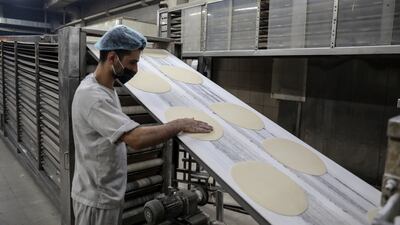
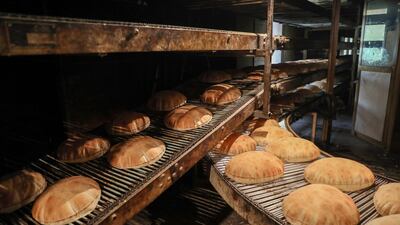
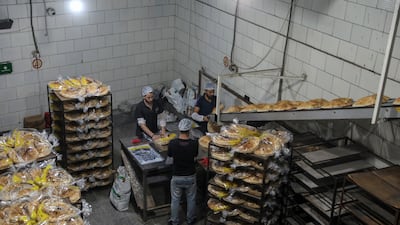
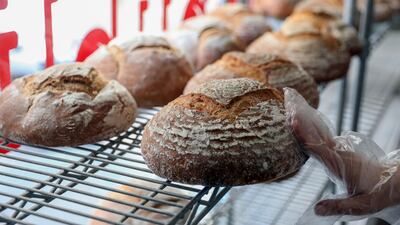
  • A baker holds up a seeded white loaf of bread at a bakery in Beirut, Lebanon, which faces a food crisis because of war in Europe. All photos: Bloomberg
    A baker holds up a seeded white loaf of bread at a bakery in Beirut, Lebanon, which faces a food crisis because of war in Europe. All photos: Bloomberg
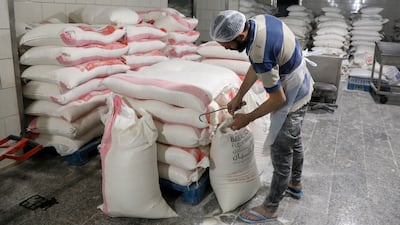
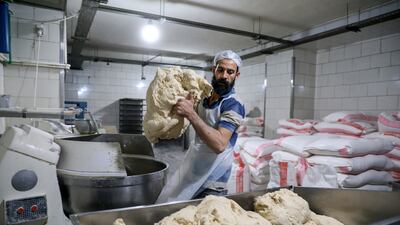
  • A worker opens a sack of flour to prepare bread dough in Beirut. Lebanon's wheat importers are already rationing flour sales to counter panic buying.
    A worker opens a sack of flour to prepare bread dough in Beirut. Lebanon's wheat importers are already rationing flour sales to counter panic buying.
  • Lebanon, already suffering from years of financial crisis, has faced new problems since Russia invaded Ukraine in February.
    Lebanon, already suffering from years of financial crisis, has faced new problems since Russia invaded Ukraine in February.
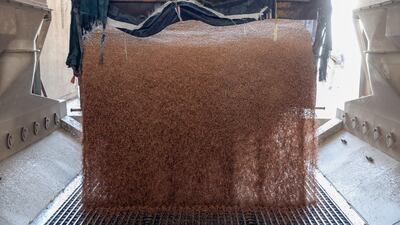
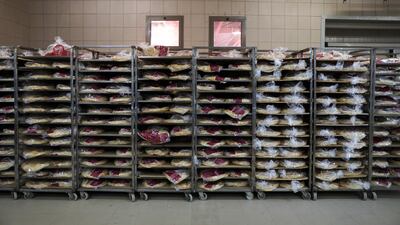
  • Lebanon normally buys 96 per cent of its wheat from Russia and Ukraine.
    Lebanon normally buys 96 per cent of its wheat from Russia and Ukraine.
  • The war between two of the world's biggest wheat exporters has sparked fears of a food crisis in many Middle Eastern countries.
    The war between two of the world's biggest wheat exporters has sparked fears of a food crisis in many Middle Eastern countries.
  • Lebanese importers are struggling to get dollars from a subsidy programme to buy wheat from new suppliers.
    Lebanese importers are struggling to get dollars from a subsidy programme to buy wheat from new suppliers.
  • As countries try to secure new sources of wheat, cash-strapped Lebanon's small market of 6 million people could go without.
    As countries try to secure new sources of wheat, cash-strapped Lebanon's small market of 6 million people could go without.
  • Lebanon lacks grain storage after silos were destroyed in the 2020 Beirut Port blast.
    Lebanon lacks grain storage after silos were destroyed in the 2020 Beirut Port blast.
  • The country needs 50,000 tonnes of wheat to feed its people for a month.
    The country needs 50,000 tonnes of wheat to feed its people for a month.
  • Subsidies keep the price of bread in Lebanon artificially low.
    Subsidies keep the price of bread in Lebanon artificially low.
  • But a loaf now costs on average 10,000 Lebanese pounds, or $0.45, more than six times the price in 2019.
    But a loaf now costs on average 10,000 Lebanese pounds, or $0.45, more than six times the price in 2019.
  • Millers estimate that without subsidies, prices could more than double.
    Millers estimate that without subsidies, prices could more than double.
  • Analysts fear that could cause social unrest in a country where three quarters of the population now live in poverty.
    Analysts fear that could cause social unrest in a country where three quarters of the population now live in poverty.

Unicef also reported an average drop of 27.3 per cent in the availability of paediatric beds across Lebanon, according to a rapid assessment conducted in March 2022.

Fuel, water and electricity shortages have left the public health sector struggling to keep safe operations running, while a lack of foreign currency has damaged efforts to import basic medicines and supplies.

“This has had a major impact on delivery of life-saving health services to children. The removal of subsidies on basic supplies, including food, fuel and some pharmaceuticals, has made matters worse,” Unicef said.

Some 58 per cent of hospitals have recorded drug shortages.

Food insecurity has also led to malnutrition, with seven per cent of children in Lebanon found to be stunted in 2021. In Palestinian and Syrian refugee populations, the rates were higher, with 10 per cent and 26 per cent, respectively.

Some 53 per cent of children had to skip a meal in October 2021, compared with 37 per cent six months earlier. The survey was conducted months before Russia invaded Ukraine, severely limiting Lebanon’s grain imports.

“More than 90 per cent per cent of children do not meet the standards for minimum meal frequency, dietary diversity or acceptable diet during the crucial period for growth and development up to the age of two,” Unicef said.


Listen to Extra Time

Mercer, the investment consulting arm of US services company Marsh & McLennan, expects its wealth division to at least double its assets under management (AUM) in the Middle East as wealth in the region continues to grow despite economic headwinds, a company official said.

Mercer Wealth, which globally has $160 billion in AUM, plans to boost its AUM in the region to $2-$3bn in the next 2-3 years from the present $1bn, said Yasir AbuShaban, a Dubai-based principal with Mercer Wealth.

Within the next two to three years, we are looking at reaching $2 to $3 billion as a conservative estimate and we do see an opportunity to do so,” said Mr AbuShaban.

Mercer does not directly make investments, but allocates clients’ money they have discretion to, to professional asset managers. They also provide advice to clients.

“We have buying power. We can negotiate on their (client’s) behalf with asset managers to provide them lower fees than they otherwise would have to get on their own,” he added.

Mercer Wealth’s clients include sovereign wealth funds, family offices, and insurance companies among others.

From its office in Dubai, Mercer also looks after Africa, India and Turkey, where they also see opportunity for growth.

Wealth creation in Middle East and Africa (MEA) grew 8.5 per cent to $8.1 trillion last year from $7.5tn in 2015, higher than last year’s global average of 6 per cent and the second-highest growth in a region after Asia-Pacific which grew 9.9 per cent, according to consultancy Boston Consulting Group (BCG). In the region, where wealth grew just 1.9 per cent in 2015 compared with 2014, a pickup in oil prices has helped in wealth generation.

BCG is forecasting MEA wealth will rise to $12tn by 2021, growing at an annual average of 8 per cent.

Drivers of wealth generation in the region will be split evenly between new wealth creation and growth of performance of existing assets, according to BCG.

Another general trend in the region is clients’ looking for a comprehensive approach to investing, according to Mr AbuShaban.

“Institutional investors or some of the families are seeing a slowdown in the available capital they have to invest and in that sense they are looking at optimizing the way they manage their portfolios and making sure they are not investing haphazardly and different parts of their investment are working together,” said Mr AbuShaban.

Some clients also have a higher appetite for risk, given the low interest-rate environment that does not provide enough yield for some institutional investors. These clients are keen to invest in illiquid assets, such as private equity and infrastructure.

“What we have seen is a desire for higher returns in what has been a low-return environment specifically in various fixed income or bonds,” he said.

“In this environment, we have seen a de facto increase in the risk that clients are taking in things like illiquid investments, private equity investments, infrastructure and private debt, those kind of investments were higher illiquidity results in incrementally higher returns.”

The Abu Dhabi Investment Authority, one of the largest sovereign wealth funds, said in its 2016 report that has gradually increased its exposure in direct private equity and private credit transactions, mainly in Asian markets and especially in China and India. The authority’s private equity department focused on structured equities owing to “their defensive characteristics.”

Lexus LX700h specs

Engine: 3.4-litre twin-turbo V6 plus supplementary electric motor

Power: 464hp at 5,200rpm

Torque: 790Nm from 2,000-3,600rpm

Transmission: 10-speed auto

Fuel consumption: 11.7L/100km

On sale: Now

Price: From Dh590,000

THE%20FLASH
%3Cp%3E%3Cstrong%3EDirector%3A%3C%2Fstrong%3E%20Andy%20Muschietti%3Cbr%3E%3Cstrong%3EStars%3A%3C%2Fstrong%3E%20Sasha%20Calle%2C%20Ben%20Affleck%2C%20Ezra%20Miller%3Cbr%3E%3Cstrong%3ERating%3A%20%3C%2Fstrong%3E3%2F5%3C%2Fp%3E%0A
The White Lotus: Season three

Creator: Mike White

Starring: Walton Goggins, Jason Isaacs, Natasha Rothwell

Rating: 4.5/5

Meatless Days
Sara Suleri, with an introduction by Kamila Shamsie
​​​​​​​Penguin 

RACE CARD

5pm: Maiden (PA) Dh80,000 1,400m
5.30pm: Maiden (PA) Dh80,000 1,200m
6pm: Arabian Triple Crown Round-1 (PA) Listed Dh230,000 1,600m
6.30pm: HH The President’s Cup (PA) Group 1 Dh2.5million 2,200m
7pm: HH The President’s Cup (TB) Listed Dh380,000 1,400m
7.30pm: Wathba Stallions Cup (PA) Handicap Dh70,000 1,200m.

Updated: April 20, 2022, 11:31 AM