


French President Emmanuel Macron has called on Lebanon to change its political leadership standing in the way of reforms vital to save its stricken economy.
Mr Macron, who was speaking on his flight home from a regional summit on Iraq in Jordan on Friday, said he would work to organise a conference with a “similar format” for Lebanon in the coming weeks.
He said he was “convinced” that problems in the Middle East can only be resolved “if we find a framework for discussion that includes Iran, given its influence in the region”.
“The problem with Lebanon is that we must solve people's problems and get rid of those who cannot do it,” Mr Macron said, referring to the country's entrenched political class — widely blamed for the country's financial collapse in late 2019.
“Lebanon must change its leadership,” he said in an interview with three media outlets including Lebanon's An-Nahar newspaper.
Last week, Lebanon’s polarised parliament failed for the 10th time to elect a new president, leaving the country with a political void in the middle of its unprecedented economic meltdown.
The country has been without a president since Michel Aoun's six-year mandate ended in October, while prime minister-designate Najib Mikati heads a caretaker government because political divisions have prevented the creation of a new cabinet since a general election in May.
The parliament is divided between the powerful Iran-backed Hezbollah movement and its allies and their opponents, which has prevented agreement on a consensus presidential candidate.
Mr Macron has taken the lead in international efforts to bail out the Lebanese economy after a collapse in the value of the Lebanese pound plunged most of the population into poverty.
-
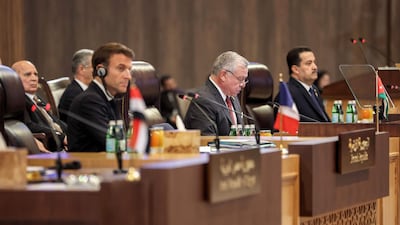
Jordan's King Abdullah II addresses delegates as he is flanked by French President Emmanuel Macron, left, and Iraqi Prime Minister Mohammed Shia Al Sudani during the Baghdad Conference for Co-operation and Partnership in Sweimeh, Jordan. AFP -
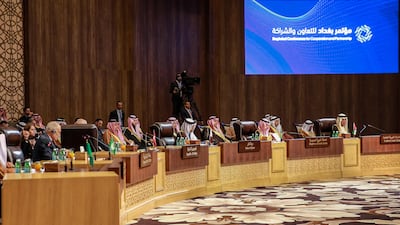
Ras Al Khaimah Ruler Sheikh Saud bin Saqr Al Qasimi, Saudi Foreign Minister Prince Faisal bin Farhan, Arab League Secretary-General Ahmed Aboul-Gheit and the representatives of Qatar and Turkey follow proceedings at the conference. AFP -
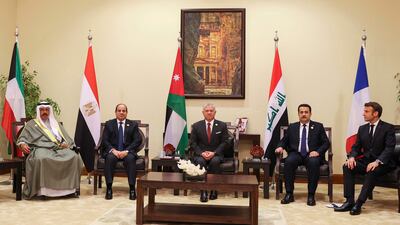
King Adbullah with Kuwaiti Prime Minister Sheikh Ahmed Nawaf Al Sabah, Mr El Sisi, Mr Shia Al Sudani and Mr Macron on the sidelines of the summit. AFP -
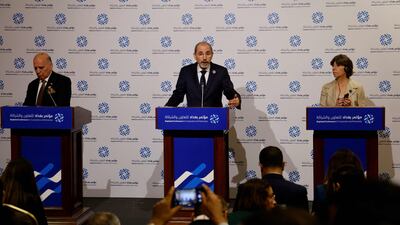
Jordanian Foreign Affairs Minister Ayman Safadi, centre, and his Iraqi and French counterparts, Fouad Hussein and Catherine Colonna, field questions during a press conference at the conference. AFP -
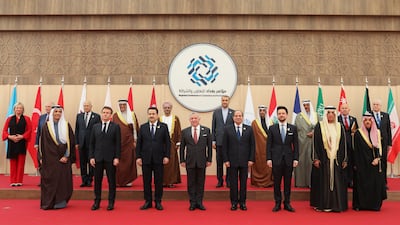
Sheikh Saud, King Abdullah, Jordan's Crown Prince Hussein bin Abdullah, Mr El Sisi, Mr Shia Al Sudani and Mr Macron pose for a family picture after the conference. Reuters -
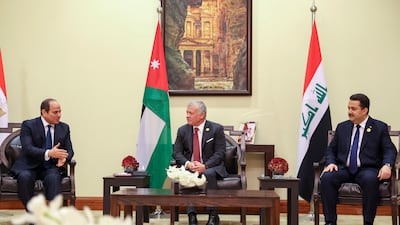
King Abdullah meets Mr Shia Al Sudani, right, and Mr El Sisi on the sidelines of the conference. AFP -
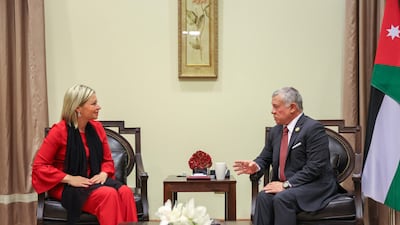
King Abdullah with the head of the UN Iraq mission Jeanine Hennis-Plasschaert. AFP -
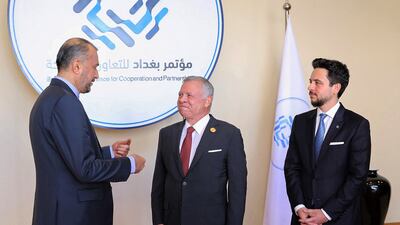
Iran's Foreign Minister Hossein Amirabdollahian (L) speaking to King Abdullah (C) as Crown Prince Hussein bin Abdullah looks on in Sweimeh. AFP -
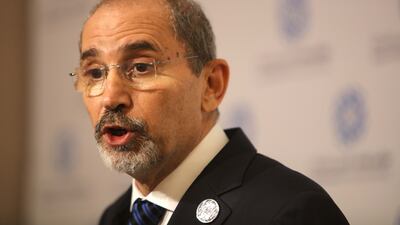
Jordanian Foreign Minister Ayman Safadi. EPA -
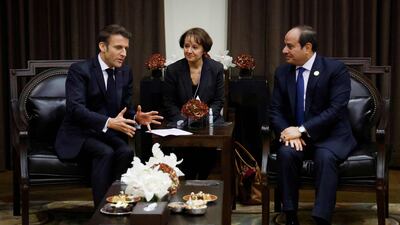
Mr Macron with Mr El Sisi on the sidelines of the conference. AFP -
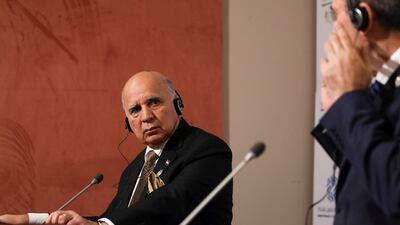
Iraqi Foreign Minister Fuad Hussein, left, and Jordanian counterpart Mr Safadi take part in a news conference. Reuters -
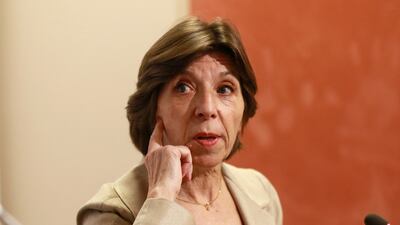
Ms Colonna addresses a press conference at the closing of the gathering in Jordan on Tuesday. AFP -
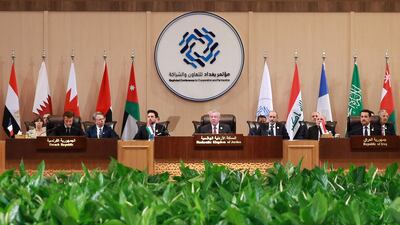
Mr Macron, Prince Hussein, King Abdullah and Mr Al Sudani at the conference in Sweimeh, near the Dead Sea. AFP -
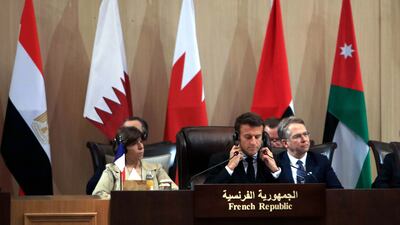
Mr Macron takes part in discussions. EPA -
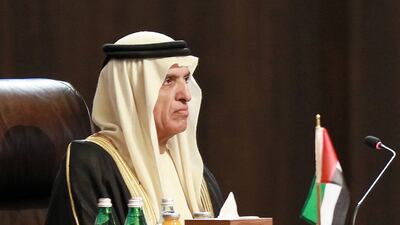
Sheikh Saud bin Saqr al Qasimi, Ruler of Ras Al Khaimah, at the conference. AFP -
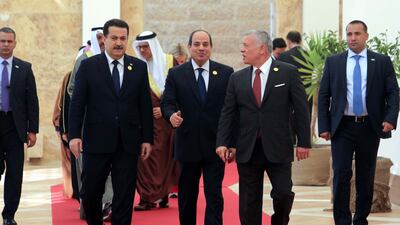
Mr Al Sudani, Mr El Sisi and King Abdullah on the red carpet. EPA -

Sheikh Saud and Prince Hussein in Amman ahead of the conference. AFP -
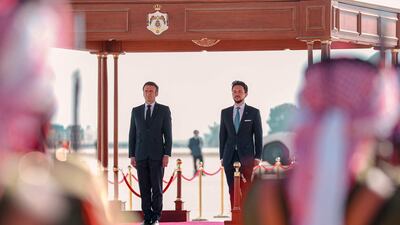
The Crown Prince with French President Emmanuel Macron. AFP -
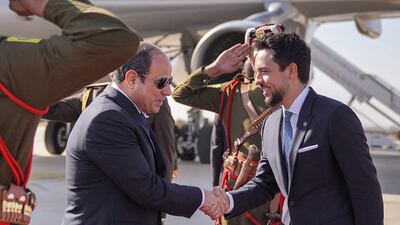
Prince Hussein and Mr El Sisi. AFP -

Prince Hussein and Mr El Sisi. AFP -

Mr AmirAbdollahian, second right, speaks to the EU’s foreign policy chief Josep Borrell. AFP -
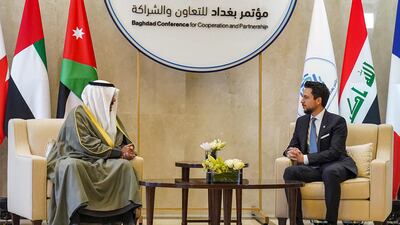
Prince Hussein and Kuwait's Prime Minister Sheikh Ahmed Nawaf Al Sabah. AFP -
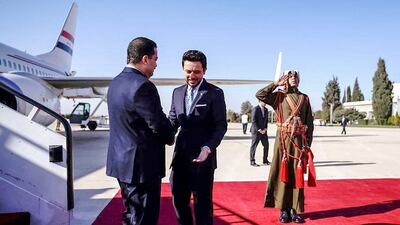
Prince Hussein welcomes Mr Shia Al Sudani. AFP -

Mr Al Sudani is in Jordan for the second Baghdad Conference for Co-operation and Partnership at the Dead Sea conference centre, about 50km west of Amman. AFP -
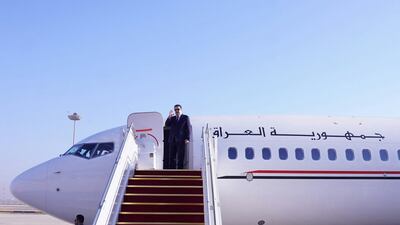
The conference will discuss measures to enhance co-operation to provide Iraq with support to deal with various challenges. Reuters -
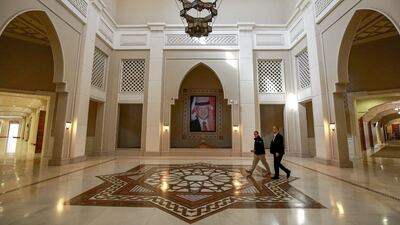
The main hall of the King Hussein convention centre near the town of Sweimeh, which will host the conference. AFP -
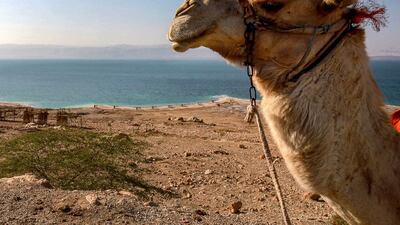
Sweimeh lies near the Dead Sea, in the background. AFP -
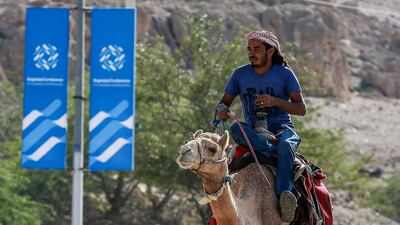
A man rides a camel along a road past signs bearing the name and logo of the conference in Sweimeh. AFP -
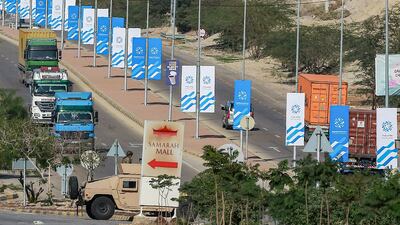
The conference will also review food security, energy and healthcare challenges in the region and around the world. AFP -

Sheikh Saud is leading the UAE delegation. AFP -
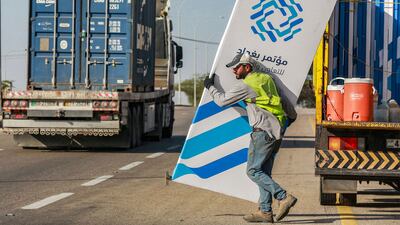
Leaders attending include Mr Macron, the French President. AFP


International lenders have demanded that Lebanon adopt a programme of painful economic reforms in return for releasing billions of dollars in bailout loans.
But deadlock between opposing alliances that have dominated Lebanon since the 1975 to 1990 civil war have left the country with only a caretaker government since an inconclusive May election and a vacant presidency since last month.
“The question is: this caste that lives off Lebanon, does it have the courage to change?” Mr Macron asked.
He said he was dismayed to see the mass emigration of young Lebanese who had taken to the streets at the start of the crisis in late 2019 to demand political and economic reform.
“My answer is to try to help bring a political alternative to life … and to be intractable with political forces.
“I care about Lebanese men and women, not those living off their backs,” he said.
Mr Macron said the priority now was to have “honest” people as president and as prime minster capable of moving swiftly to restructure Lebanon's failed financial system.
The French leader would not be drawn on whether he supported army chief Joseph Aoun as a consensus choice for president.
“I don't want to discuss names. If there isn't a plan and a strategy behind the name, they won't succeed,” he said.


