Israeli far-right mob beats man senseless on live TV in night of communal violence


  • English
  • Arabic

Footage of a far-right Israeli mob attacking a man near Tel Aviv they believed to be an Arab was broadcast live on television on Wednesday night, as the Israel-Palestinian conflict raged on.

The shocking images show a man, later identified by local media as an Israeli Arab, being forcibly removed from his car and beaten by a crowd of dozens until he lost consciousness.

The attack, broadcast by public service Kan, took place on the seafront promenade of Bat Yam, south of Israel's commercial capital Tel Aviv.

Police and emergency services did not arrive on the scene until 15 minutes later, while the victim lay motionless on his back in the middle of the street.

We cannot allow ourselves to be drawn into provocations and aggressions

Those in the crowd justified the attack by saying the man was an Arab who had tried to ram the far-right nationalists, but the footage shows a motorist trying to avoid the protest.

"The victim of the lynching is seriously injured but stable," Tel Aviv's Ichilov hospital said.

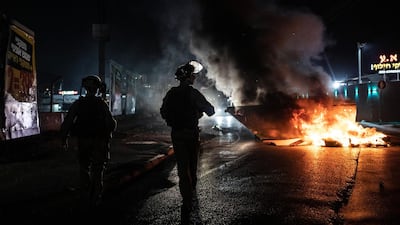
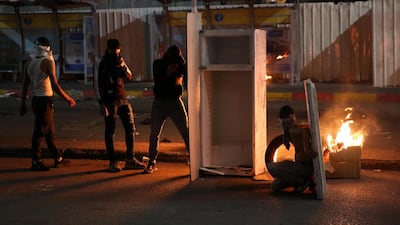
The violent incident in Bat Yam is one of many Jewish-Arab confrontations in Israeli cities in recent nights during intense cross-border fire between Israel and militant groups in the Gaza Strip that began on Monday.

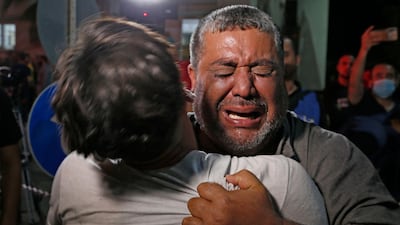
At least 67 people in Gaza, including 16 children and five women, and seven in Israel have been killed.

Clashes also occurred in the cities of Lod, Haifa and Acre.

Far-right politician Betzalel Smotrich, leader of the Religious Zionism party, said he was ashamed of the "atrocious cruelty" of the attack.

"Jewish brothers, stop! We cannot under any circumstances allow ourselves to take part in violent acts," he said.

Israel's chief rabbi Yitzhak Yossef called for an end to attacks by Jews.

"Innocent citizens are being attacked by terrorist organisations, the heart is heavy  ... but we cannot allow ourselves to be drawn into provocations and aggressions," he said.

Issawi Fredj, an Arab deputy from the left-wing Meretz party, said the images were a sign that the country was heading towards civil war.

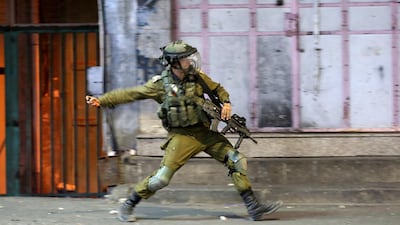
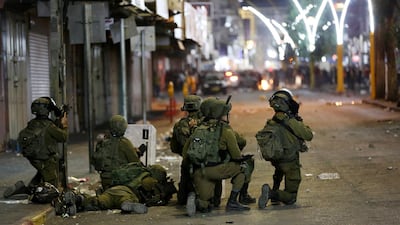
Demonstrations by far-right activists broke out on Wednesday night in several cities, leading to clashes with police and sometimes Arab Israelis.

In Acre, a mixed Arab-Jewish town in north-west Israel, a Jew was seriously injured by stone throwers, police said.

"The rioters in Lod and Acre do not represent Israeli Arabs, the rioters in Bat Yam … do not represent Israeli Jews, violence will not dictate our lives," said opposition leader Yair Lapid, who has the task of forming a government after March elections.

Prime Minister Benjamin Netanyahu said "what has been happening in the last few days in the cities of Israel is unacceptable".

"Nothing justifies the lynching of Arabs by Jews and nothing justifies the lynching of Jews by Arabs."

Israel's Arab minority – Palestinian by heritage, Israeli by citizenship – is mostly descended from the Palestinians who lived under Ottoman and then British colonial rule before staying in Israel after the country was created in 1948.

Most are bilingual, speaking Arabic and Hebrew, and feel a sense of kinship with their fellow Palestinians in the occupied West Bank and Gaza.

They often complain of systemic discrimination and unfair access to housing, healthcare and education services.

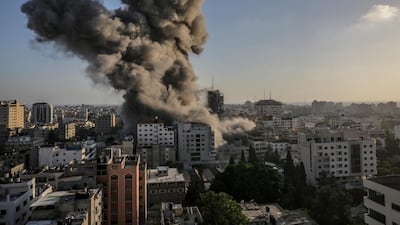
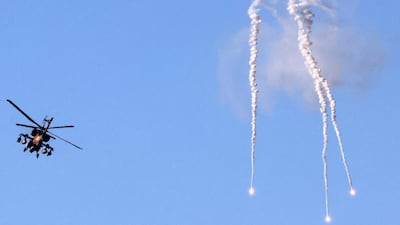
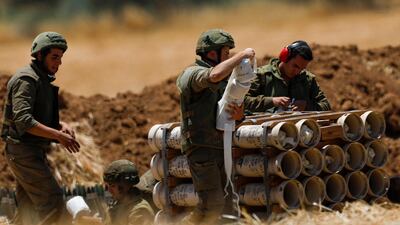
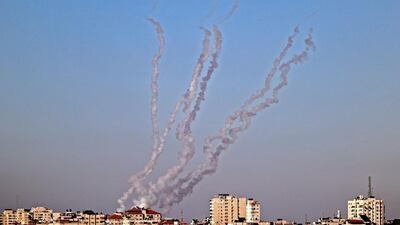
Since Monday, Palestinian militants in Gaza launched hundreds of rockets at Israel, which has carried out air strikes on the crowded coastal enclave.

The most intense hostilities in seven years between Israel and Gaza's armed groups were triggered by weekend unrest at Jerusalem's Al Aqsa Mosque compound.


Engine: 80 kWh four-wheel-drive

Transmission: eight-speed automatic

Power: 402bhp

Torque: 760Nm

Price: From Dh280,000

MEDIEVIL%20(1998)
%3Cp%3E%3Cstrong%3EDeveloper%3A%3C%2Fstrong%3E%20SCE%20Studio%20Cambridge%3Cbr%3E%3Cstrong%3EPublisher%3A%3C%2Fstrong%3E%20Sony%20Computer%20Entertainment%3Cbr%3E%3Cstrong%3EConsole%3A%3C%2Fstrong%3E%20PlayStation%2C%20PlayStation%204%20and%205%3Cbr%3E%3Cstrong%3ERating%3A%3C%2Fstrong%3E%203.5%2F5%3C%2Fp%3E%0A
What vitamins do we know are beneficial for living in the UAE

Vitamin D: Highly relevant in the UAE due to limited sun exposure; supports bone health, immunity and mood.Vitamin B12: Important for nerve health and energy production, especially for vegetarians, vegans and individuals with absorption issues.Iron: Useful only when deficiency or anaemia is confirmed; helps reduce fatigue and support immunity.Omega-3 (EPA/DHA): Supports heart health and reduces inflammation, especially for those who consume little fish.

Profile

Co-founders of the company: Vilhelm Hedberg and Ravi Bhusari

Launch year: In 2016 ekar launched and signed an agreement with Etihad Airways in Abu Dhabi. In January 2017 ekar launched in Dubai in a partnership with the RTA.

Number of employees: Over 50

Financing stage: Series B currently being finalised

Investors: Series A - Audacia Capital 

Sector of operation: Transport

What is dialysis?

Dialysis is a way of cleaning your blood when your kidneys fail and can no longer do the job.

It gets rid of your body's wastes, extra salt and water, and helps to control your blood pressure. The main cause of kidney failure is diabetes and hypertension.

There are two kinds of dialysis — haemodialysis and peritoneal.

In haemodialysis, blood is pumped out of your body to an artificial kidney machine that filter your blood and returns it to your body by tubes.

In peritoneal dialysis, the inside lining of your own belly acts as a natural filter. Wastes are taken out by means of a cleansing fluid which is washed in and out of your belly in cycles.

It isn’t an option for everyone but if eligible, can be done at home by the patient or caregiver. This, as opposed to home haemodialysis, is covered by insurance in the UAE.

ABU%20DHABI'S%20KEY%20TOURISM%20GOALS%3A%20BY%20THE%20NUMBERS
%3Cp%3EBy%202030%2C%20Abu%20Dhabi%20aims%20to%20achieve%3A%3C%2Fp%3E%0A%3Cp%3E%3Cstrong%3E%E2%80%A2%2039.3%20million%20visitors%2C%3C%2Fstrong%3E%20nearly%2064%25%20up%20from%202023%3C%2Fp%3E%0A%3Cp%3E%3Cstrong%3E%E2%80%A2%20Dh90%20billion%20contribution%20to%20GDP%2C%3C%2Fstrong%3E%20about%2084%25%20more%20than%20Dh49%20billion%20in%202023%3C%2Fp%3E%0A%3Cp%3E%3Cstrong%3E%E2%80%A2%20178%2C000%20new%20jobs%2C%3C%2Fstrong%3E%20bringing%20the%20total%20to%20about%20366%2C000%3C%2Fp%3E%0A%3Cp%3E%3Cstrong%3E%E2%80%A2%2052%2C000%20hotel%20rooms%2C%3C%2Fstrong%3E%20up%2053%25%20from%2034%2C000%20in%202023%3C%2Fp%3E%0A%3Cp%3E%3Cstrong%3E%E2%80%A2%207.2%20million%20international%20visitors%2C%3C%2Fstrong%3E%20almost%2090%25%20higher%20compared%20to%202023's%203.8%20million%3C%2Fp%3E%0A%3Cp%3E%3Cstrong%3E%E2%80%A2%203.9%20international%20overnight%20hotel%20stays%2C%3C%2Fstrong%3E%2022%25%20more%20from%203.2%20nights%20in%202023%3C%2Fp%3E%0A
Ticket prices
  • Golden circle - Dh995
  • Floor Standing - Dh495
  • Lower Bowl Platinum - Dh95
  • Lower Bowl premium - Dh795
  • Lower Bowl Plus - Dh695
  • Lower Bowl Standard- Dh595
  • Upper Bowl Premium - Dh395
  • Upper Bowl standard - Dh295
The five pillars of Islam

1. Fasting 

2. Prayer 

3. Hajj 

4. Shahada 

5. Zakat 

UAE currency: the story behind the money in your pockets

Mercer, the investment consulting arm of US services company Marsh & McLennan, expects its wealth division to at least double its assets under management (AUM) in the Middle East as wealth in the region continues to grow despite economic headwinds, a company official said.

Mercer Wealth, which globally has $160 billion in AUM, plans to boost its AUM in the region to $2-$3bn in the next 2-3 years from the present $1bn, said Yasir AbuShaban, a Dubai-based principal with Mercer Wealth.

Within the next two to three years, we are looking at reaching $2 to $3 billion as a conservative estimate and we do see an opportunity to do so,” said Mr AbuShaban.

Mercer does not directly make investments, but allocates clients’ money they have discretion to, to professional asset managers. They also provide advice to clients.

“We have buying power. We can negotiate on their (client’s) behalf with asset managers to provide them lower fees than they otherwise would have to get on their own,” he added.

Mercer Wealth’s clients include sovereign wealth funds, family offices, and insurance companies among others.

From its office in Dubai, Mercer also looks after Africa, India and Turkey, where they also see opportunity for growth.

Wealth creation in Middle East and Africa (MEA) grew 8.5 per cent to $8.1 trillion last year from $7.5tn in 2015, higher than last year’s global average of 6 per cent and the second-highest growth in a region after Asia-Pacific which grew 9.9 per cent, according to consultancy Boston Consulting Group (BCG). In the region, where wealth grew just 1.9 per cent in 2015 compared with 2014, a pickup in oil prices has helped in wealth generation.

BCG is forecasting MEA wealth will rise to $12tn by 2021, growing at an annual average of 8 per cent.

Drivers of wealth generation in the region will be split evenly between new wealth creation and growth of performance of existing assets, according to BCG.

Another general trend in the region is clients’ looking for a comprehensive approach to investing, according to Mr AbuShaban.

“Institutional investors or some of the families are seeing a slowdown in the available capital they have to invest and in that sense they are looking at optimizing the way they manage their portfolios and making sure they are not investing haphazardly and different parts of their investment are working together,” said Mr AbuShaban.

Some clients also have a higher appetite for risk, given the low interest-rate environment that does not provide enough yield for some institutional investors. These clients are keen to invest in illiquid assets, such as private equity and infrastructure.

“What we have seen is a desire for higher returns in what has been a low-return environment specifically in various fixed income or bonds,” he said.

“In this environment, we have seen a de facto increase in the risk that clients are taking in things like illiquid investments, private equity investments, infrastructure and private debt, those kind of investments were higher illiquidity results in incrementally higher returns.”

The Abu Dhabi Investment Authority, one of the largest sovereign wealth funds, said in its 2016 report that has gradually increased its exposure in direct private equity and private credit transactions, mainly in Asian markets and especially in China and India. The authority’s private equity department focused on structured equities owing to “their defensive characteristics.”