• Israeli Prime Minister Benjamin Netanyahu and his wife Sara cast their ballots at a polling station in Jerusalem. EPA
    Israeli Prime Minister Benjamin Netanyahu and his wife Sara cast their ballots at a polling station in Jerusalem. EPA
  • Chairman of Israel's New Hope party Gideon Saar and his wife Geula vote with their children at a polling station in the coastal city of Tel Avivi. EPA
    Chairman of Israel's New Hope party Gideon Saar and his wife Geula vote with their children at a polling station in the coastal city of Tel Avivi. EPA
  • Officials instruct a man as he votes from a car at a special mobile polling station for Israelis in quarantine or infected with Covid-19. Israelis were voting on Tuesday, March 23 in the country's fourth general election in less than two years. Reuters
    Officials instruct a man as he votes from a car at a special mobile polling station for Israelis in quarantine or infected with Covid-19. Israelis were voting on Tuesday, March 23 in the country's fourth general election in less than two years. Reuters
  • Covid-19 patient Rahamim Havura votes in Israel's parliamentary election inside an intensive care ward for coronavirus patients at Ichilov Hospital in Tel Aviv. AP
    Covid-19 patient Rahamim Havura votes in Israel's parliamentary election inside an intensive care ward for coronavirus patients at Ichilov Hospital in Tel Aviv. AP
  • Israeli centrist former television anchor Yair Lapid, the prime minister's main challenger, and his wife Lihi cast their votes at a polling station in Tel Aviv. AFP
    Israeli centrist former television anchor Yair Lapid, the prime minister's main challenger, and his wife Lihi cast their votes at a polling station in Tel Aviv. AFP
  • Naftali Bennett, leader of the right wing 'New Right' Yamina party, waves as he walks with his wife Gilat at a polling station where they voted in the city of Raanana. AFP
    Naftali Bennett, leader of the right wing 'New Right' Yamina party, waves as he walks with his wife Gilat at a polling station where they voted in the city of Raanana. AFP
  • Ayman Odeh, leader of Israel's predominantly Arab Joint List and the Hadash party, casts his ballot in Haifa. AFP
    Ayman Odeh, leader of Israel's predominantly Arab Joint List and the Hadash party, casts his ballot in Haifa. AFP
  • An Israeli Arab woman casts her ballot in the Bedouin town of Rahat. AFP
    An Israeli Arab woman casts her ballot in the Bedouin town of Rahat. AFP
  • A man prepares to cast his ballot at a special mobile polling station near a beach in Ashdod. Reuters
    A man prepares to cast his ballot at a special mobile polling station near a beach in Ashdod. Reuters
  • A voter wearing casts his ballot inside a special temporary polling station tent, set up for people quarantined for potential exposure to coronavirus, in Tel Aviv. Bloomberg
    A voter wearing casts his ballot inside a special temporary polling station tent, set up for people quarantined for potential exposure to coronavirus, in Tel Aviv. Bloomberg
  • An ultra-Orthodox Jewish man arrives to vote in Israel's parliamentary election, at a polling station in Bnei Brak. AP
    An ultra-Orthodox Jewish man arrives to vote in Israel's parliamentary election, at a polling station in Bnei Brak. AP
  • A mobile voting booth is seen at a special polling station for Israelis in quarantine or infected with the coronavirus disease. Reuters
    A mobile voting booth is seen at a special polling station for Israelis in quarantine or infected with the coronavirus disease. Reuters
  • A man votes with his children in Tel Aviv on the fourth national election in two years. AFP
    A man votes with his children in Tel Aviv on the fourth national election in two years. AFP
  • Sara Netanyahu, wife of Israeli Prime Minister Benjamin Netanyahu, prays at the Western Wall, ahead of national elections in the Old City of Jerusalem. AP
    Sara Netanyahu, wife of Israeli Prime Minister Benjamin Netanyahu, prays at the Western Wall, ahead of national elections in the Old City of Jerusalem. AP
  • A boy looks up at a Blue and White party election campaign banner depicting its leader, Israeli Defence Minister Benny Gantz, alongside Israeli Prime Minister Benjamin Netanyahu, in Bnei Brak. Reuters
    A boy looks up at a Blue and White party election campaign banner depicting its leader, Israeli Defence Minister Benny Gantz, alongside Israeli Prime Minister Benjamin Netanyahu, in Bnei Brak. Reuters
  • Israeli Prime Minister Benjamin Netanyahu greets supporters as he tours the Mahane Yehuda market in Jerusalem. AFP
    Israeli Prime Minister Benjamin Netanyahu greets supporters as he tours the Mahane Yehuda market in Jerusalem. AFP
  • Israeli Prime Minister Benjamin Netanyahu eats dessert from a stall as he tours the Mahane Yehuda market in Jerusalem. AFP
    Israeli Prime Minister Benjamin Netanyahu eats dessert from a stall as he tours the Mahane Yehuda market in Jerusalem. AFP
  • Gideon Saar, head of Israel's New Hope party, works at the party's headquarters in the Israeli coastal city of Tel Aviv. AFP
    Gideon Saar, head of Israel's New Hope party, works at the party's headquarters in the Israeli coastal city of Tel Aviv. AFP

Israel election 2021: Netanyahu woos Arab-Israeli vote amid Joint List split


Rosie Scammell
  • English
  • Arabic

“We are all with you,” reads an Arabic billboard bearing Israeli Prime Minister Benjamin Netanyahu’s picture, outside the city of Umm Al Fahm, signalling the intense campaign for votes following a split among Arab parties ahead of Tuesday’s election.

The right-wing premier's unusual push for Arab supporters seeks to profit from divisions among the Joint List, which has been weakened in the polls after the Ra'am party broke away from the Arab-led alliance.

“Our campaign is really challenging, to convince people about the importance of supporting us and of voting,” said Yousef Jabareen, a Joint List legislator.

After soaring to win 15 seats in the election last March, the Joint List is slated to pick up just eight places in the 120-seat parliament on Tuesday. It is Israel's fourth election in two years.

The decline follows the decision by Mansour Abbas, leader of the Islamist party Ra’am, to run alone after suggesting he would be open to co-operating with Mr Netanyahu. The move proved deeply controversial for the Joint List, which vows it can best serve its constituents by being active in parliament from the opposition.

But some Arab voters, who make up 20 per cent of the population, believe ties to the government will provide funds to tackle poverty and a rise in violent crime within their community.

“They want to see something really changing their lives for the better, and they say maybe his (Mr Abbas’) way will make the difference, so more and more people are going to vote for him,” said lawyer Tawfiq Jabareen, an Umm Al Fahm resident who is not closely related to the politician of the same name.

Israel’s third-largest Arab city, Umm Al Fahm has been the site of weekly protests against gun violence and the perceived inaction of authorities. So far this year 22 Arab-Israelis have been shot dead, according to the Abraham Initiatives organisation which promotes equality.

Samah Salaime, a Palestinian feminist activist in Israel, said the Arab community is grappling with how to “survive this wave of crime”.

With community concerns focusing on violence, poverty and housing, she said the rights of Palestinians in the West Bank and Gaza are not being discussed in this electoral campaign.

“All the priorities now that force themselves onto the agenda - we are in survival mode - we are talking about the basics,” said Mrs Salaime, who heads the communications and development office of Wahat El Salam/Neve Shalom, a co-operative village founded by Arab and Jewish Israelis.

While voters like Mr Jabareen remain committed to the Joint List, the lawyer said some of his siblings are backing Ra’am and he hopes the party will win parliamentary seats.

“I want him to succeed,” he said of Mr Abbas. “I also want to see this experience, what he will do. Maybe he will change our lives, I don’t know.”

Ra’am is forecast to pass the electoral threshold and pick up four seats, according to final television polls published Friday, which could prove decisive in determining the next government.

While Mr Netanyahu's Likud is set to emerge as the largest party, polling at 30 to 32 seats, he needs the support of smaller parties to form a governing majority of 61 seats.

It's time for the Israeli audience to see that the Palestinians inside Israel have differences. They are not the same.

It is doubtful that Ra’am would be welcomed into a Likud-led government, given no Arab party has joined a coalition before and Mr Netanyahu relies on right-wing and ultra-Orthodox alliances which are unlikely to govern alongside Mr Abbas.

The Ra’am leader could, however, prop up a minority government led by the incumbent, or alternatively support a coalition seeking to oust Mr Netanyahu.

One path to victory for Israel’s longest-serving leader would be for Likud to snatch seats away from Arab-led parties, hence the premier’s unprecedented campaign among the Arab community.

The overture could lead to Likud gaining two more seats, according to the Abraham Initiatives, though Joint List politician Mr Jabareen remained hopeful his constituents would not be drawn in by Mr Netanyahu.

“His appeal in this way is kind of like an insult to the Arab community and to the Arab voters, because we know that he’s personally been in power for 12 years,” he said. “So he cannot come today as if he’s a new candidate and ask for our votes.”

While the Joint List is expected to emerge from the election as a weakened alliance, Mrs Salaime noted its internal split has exposed the diversity among the Arab community to the broader public.

“It’s time for the Israeli audience to see that the Palestinians inside Israel have differences,” she said. “They are not the same.”

Art installation encourages Israelis to vote

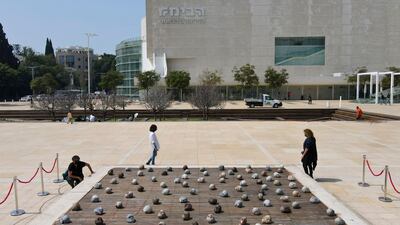
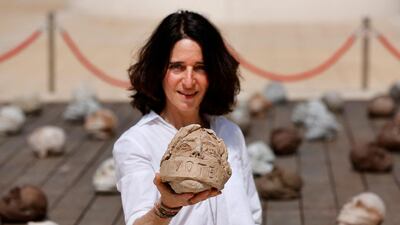
  • Artist Sophie Halbreich unveiled the installation 'Speak Out!' at Habima Square in the Israeli coastal city of Tel Aviv. AFP
    Artist Sophie Halbreich unveiled the installation 'Speak Out!' at Habima Square in the Israeli coastal city of Tel Aviv. AFP
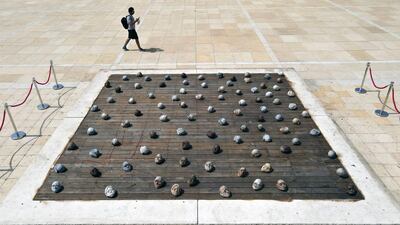
  • 'Speak Out!' consists of 90 sculpted heads and is designed to encourage people to vote. AFP
    'Speak Out!' consists of 90 sculpted heads and is designed to encourage people to vote. AFP
  • Artist Sophie Halbreich posing next to her installation. AFP
    Artist Sophie Halbreich posing next to her installation. AFP
  • Israelis are voting in their fourth election in two years, with polls showing no clear end to the political chaos as Prime Minister Benjamin Netanyahu seeks to hold on to power. AFP
    Israelis are voting in their fourth election in two years, with polls showing no clear end to the political chaos as Prime Minister Benjamin Netanyahu seeks to hold on to power. AFP
  • A person walks past the installation 'Speak Out!' AFP
    A person walks past the installation 'Speak Out!' AFP

Mercer, the investment consulting arm of US services company Marsh & McLennan, expects its wealth division to at least double its assets under management (AUM) in the Middle East as wealth in the region continues to grow despite economic headwinds, a company official said.

Mercer Wealth, which globally has $160 billion in AUM, plans to boost its AUM in the region to $2-$3bn in the next 2-3 years from the present $1bn, said Yasir AbuShaban, a Dubai-based principal with Mercer Wealth.

Within the next two to three years, we are looking at reaching $2 to $3 billion as a conservative estimate and we do see an opportunity to do so,” said Mr AbuShaban.

Mercer does not directly make investments, but allocates clients’ money they have discretion to, to professional asset managers. They also provide advice to clients.

“We have buying power. We can negotiate on their (client’s) behalf with asset managers to provide them lower fees than they otherwise would have to get on their own,” he added.

Mercer Wealth’s clients include sovereign wealth funds, family offices, and insurance companies among others.

From its office in Dubai, Mercer also looks after Africa, India and Turkey, where they also see opportunity for growth.

Wealth creation in Middle East and Africa (MEA) grew 8.5 per cent to $8.1 trillion last year from $7.5tn in 2015, higher than last year’s global average of 6 per cent and the second-highest growth in a region after Asia-Pacific which grew 9.9 per cent, according to consultancy Boston Consulting Group (BCG). In the region, where wealth grew just 1.9 per cent in 2015 compared with 2014, a pickup in oil prices has helped in wealth generation.

BCG is forecasting MEA wealth will rise to $12tn by 2021, growing at an annual average of 8 per cent.

Drivers of wealth generation in the region will be split evenly between new wealth creation and growth of performance of existing assets, according to BCG.

Another general trend in the region is clients’ looking for a comprehensive approach to investing, according to Mr AbuShaban.

“Institutional investors or some of the families are seeing a slowdown in the available capital they have to invest and in that sense they are looking at optimizing the way they manage their portfolios and making sure they are not investing haphazardly and different parts of their investment are working together,” said Mr AbuShaban.

Some clients also have a higher appetite for risk, given the low interest-rate environment that does not provide enough yield for some institutional investors. These clients are keen to invest in illiquid assets, such as private equity and infrastructure.

“What we have seen is a desire for higher returns in what has been a low-return environment specifically in various fixed income or bonds,” he said.

“In this environment, we have seen a de facto increase in the risk that clients are taking in things like illiquid investments, private equity investments, infrastructure and private debt, those kind of investments were higher illiquidity results in incrementally higher returns.”

The Abu Dhabi Investment Authority, one of the largest sovereign wealth funds, said in its 2016 report that has gradually increased its exposure in direct private equity and private credit transactions, mainly in Asian markets and especially in China and India. The authority’s private equity department focused on structured equities owing to “their defensive characteristics.”

The%20Roundup
%3Cp%3EDirector%3A%20Lee%20Sang-yong%3Cbr%3EStars%3A%20Ma%20Dong-seok%2C%20Sukku%20Son%2C%20Choi%20Gwi-hwa%3Cbr%3ERating%3A%204%2F5%3C%2Fp%3E%0A
Gulf Under 19s final

Dubai College A 50-12 Dubai College B

The%20specs%3A%202024%20Mercedes%20E200
%3Cp%3E%3Cstrong%3EEngine%3A%20%3C%2Fstrong%3E2.0-litre%20four-cyl%20turbo%20%2B%20mild%20hybrid%0D%3Cbr%3E%3Cstrong%3EPower%3A%20%3C%2Fstrong%3E204hp%20at%205%2C800rpm%20%2B23hp%20hybrid%20boost%0D%3Cbr%3E%3Cstrong%3ETorque%3A%20%3C%2Fstrong%3E320Nm%20at%201%2C800rpm%20%2B205Nm%20hybrid%20boost%0D%3Cbr%3E%3Cstrong%3ETransmission%3A%20%3C%2Fstrong%3E9-speed%20auto%0D%3Cbr%3E%3Cstrong%3EFuel%20consumption%3A%20%3C%2Fstrong%3E7.3L%2F100km%0D%3Cbr%3E%3Cstrong%3EOn%20sale%3A%20%3C%2Fstrong%3ENovember%2FDecember%0D%3Cbr%3E%3Cstrong%3EPrice%3A%20%3C%2Fstrong%3EFrom%20Dh205%2C000%20(estimate)%3C%2Fp%3E%0A
Jetour T1 specs

Engine: 2-litre turbocharged

Power: 254hp

Torque: 390Nm

Price: From Dh126,000

Available: Now

Masters%20of%20the%20Air
%3Cp%3E%3Cstrong%3EDirectors%3A%3C%2Fstrong%3E%20Cary%20Joji%20Fukunaga%2C%20Dee%20Rees%2C%20Anna%20Boden%2C%20Ryan%20Fleck%2C%20Tim%20Van%20Patten%3C%2Fp%3E%0A%3Cp%3E%3Cstrong%3EStarring%3A%3C%2Fstrong%3E%20Austin%20Butler%2C%20Callum%20Turner%2C%20Anthony%20Boyle%2C%20Barry%20Keoghan%2C%20Sawyer%20Spielberg%3C%2Fp%3E%0A%3Cp%3E%3Cstrong%3ERating%3A%3C%2Fstrong%3E%202%2F5%3C%2Fp%3E%0A
COMPANY%20PROFILE%20
%3Cp%3EName%3A%20DarDoc%3Cbr%3EBased%3A%20Abu%20Dhabi%3Cbr%3EFounders%3A%20Samer%20Masri%2C%20Keswin%20Suresh%3Cbr%3ESector%3A%20HealthTech%3Cbr%3ETotal%20funding%3A%20%24800%2C000%3Cbr%3EInvestors%3A%20Flat6Labs%2C%20angel%20investors%20%2B%20Incubated%20by%20Hub71%2C%20Abu%20Dhabi's%20Department%20of%20Health%3Cbr%3ENumber%20of%20employees%3A%2010%3C%2Fp%3E%0A
While you're here
Libya's Gold

UN Panel of Experts found regime secretly sold a fifth of the country's gold reserves. 

The panel’s 2017 report followed a trail to West Africa where large sums of cash and gold were hidden by Abdullah Al Senussi, Qaddafi’s former intelligence chief, in 2011.

Cases filled with cash that was said to amount to $560m in 100 dollar notes, that was kept by a group of Libyans in Ouagadougou, Burkina Faso.

A second stash was said to have been held in Accra, Ghana, inside boxes at the local offices of an international human rights organisation based in France.

Winners

Ballon d’Or (Men’s)
Ousmane Dembélé (Paris Saint-Germain / France)

Ballon d’Or Féminin (Women’s)
Aitana Bonmatí (Barcelona / Spain)

Kopa Trophy (Best player under 21 – Men’s)
Lamine Yamal (Barcelona / Spain)

Best Young Women’s Player
Vicky López (Barcelona / Spain)

Yashin Trophy (Best Goalkeeper – Men’s)
Gianluigi Donnarumma (Paris Saint-Germain and Manchester City / Italy)

Best Women’s Goalkeeper
Hannah Hampton (England / Aston Villa and Chelsea)

Men’s Coach of the Year
Luis Enrique (Paris Saint-Germain)

Women’s Coach of the Year
Sarina Wiegman (England)

BMW M5 specs

Engine: 4.4-litre twin-turbo V-8 petrol enging with additional electric motor

Power: 727hp

Torque: 1,000Nm

Transmission: 8-speed auto

Fuel consumption: 10.6L/100km

On sale: Now

Price: From Dh650,000

Profile box

Company name: baraka
Started: July 2020
Founders: Feras Jalbout and Kunal Taneja
Based: Dubai and Bahrain
Sector: FinTech
Initial investment: $150,000
Current staff: 12
Stage: Pre-seed capital raising of $1 million
Investors: Class 5 Global, FJ Labs, IMO Ventures, The Community Fund, VentureSouq, Fox Ventures, Dr Abdulla Elyas (private investment)