Protesters try to storm Baghdad's Green Zone over burning of Quran in Denmark


  • English
  • Arabic

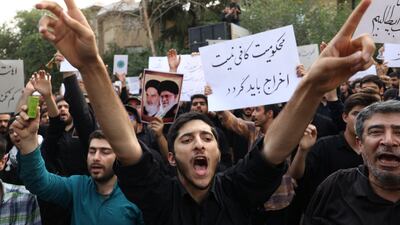
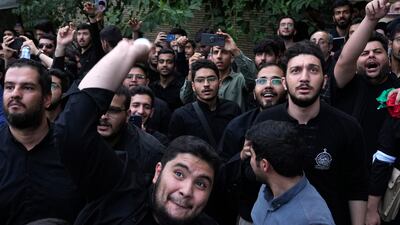
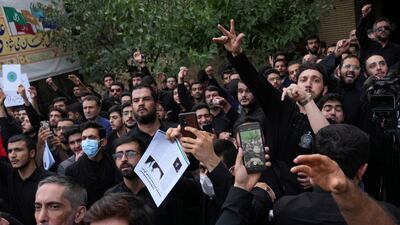
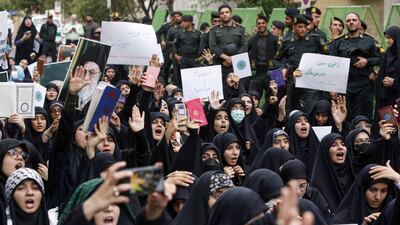
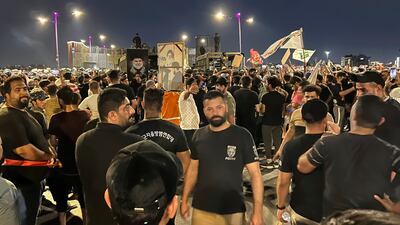
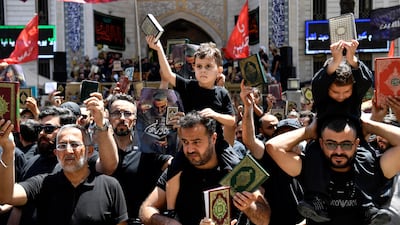
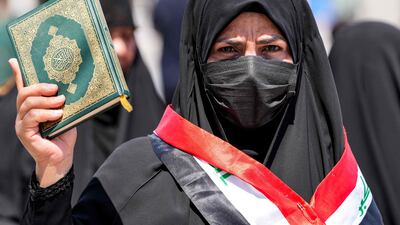
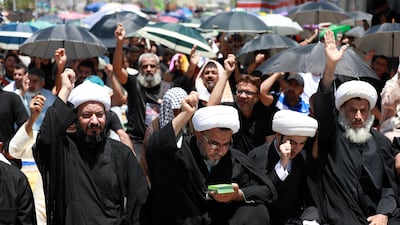
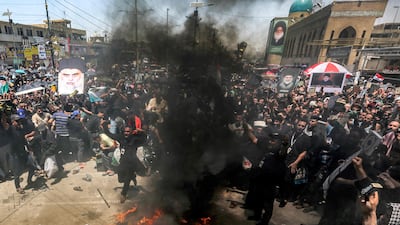
Iraqi security forces on Saturday dispersed about 1,000 protesters, after they tried to march to Baghdad's Green Zone, following reports a copy of the Quran had been desecrated in Denmark.

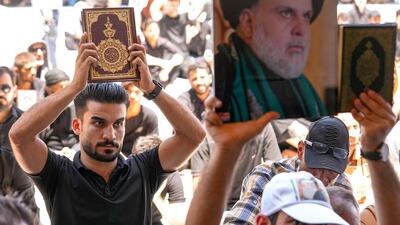
Supporters of Shiite Muslim cleric Moqtada Sadr attempted to storm the area that is home to foreign embassies and Iraqi government offices, early on Saturday.

They were pushed back by security forces, who blocked the Jumhuriya bridge leading to the heavily fortified zone and prevented them from reaching the Danish Embassy.

“The security forces and a number of members of the Popular Mobilisation were able to thwart an armed attempt carried out by the Al Salam Brigade at dawn on Saturday,” Iraq's foreign ministry said.

Elsewhere in Iraq, protesters burned three caravans belonging to a demining project run by the Danish Refugee Council, or DRC, in the city of Basra in the south, local police said.

The fire was extinguished by civil defence responders, and there were “no human casualties, only material losses,” the police said.

The DRC confirmed to the Associated Press that its premises in Basra “came under armed attack” early on Saturday.

“We deplore this attack – aid workers should never be a target of violence,” said Lilu Thapa, the DRC’s executive director for the Middle East.

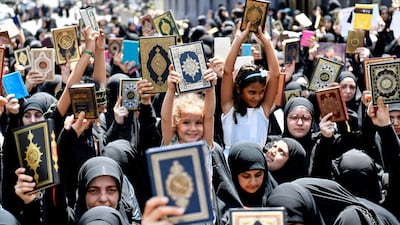
On Friday members of ultranationalist group Danske Patrioter burnt a copy of the Quran and an Iraqi flag in front of the Iraqi embassy in Copenhagen and live-streamed the action on Facebook, according to Danish media reports.

The Danish government on Saturday condemned the demonstration. Foreign Minister Lars Lokke Rasmussen called the action a “stupidity that a small handful of individuals did."

This followed the desecration of the Quran by an activist in Stockholm, which led to hundreds of protesters storming and setting fire to the Swedish embassy in the Iraqi capital in the early hours of Thursday.

Iraq on Saturday reassured diplomatic missions in the country of their security, saying the government would not allow a recurrence of the storming of the Swedish embassy.

Protesters had occupied the diplomatic post for several hours, waving flags and banners showing the influential Mr Al Sadr. The embassy's staff had been evacuated a day earlier.

Hours later, Iraq cut diplomatic ties with Sweden in protest over the desecration of the Quran.

An Iraqi asylum seeker who burnt a copy of the holy book during a demonstration last month in Stockholm had threatened to do the same thing again on Thursday but ultimately stopped short of setting fire to the book.

He did, however, kick and step on it, and did the same with an Iraqi flag and a photo of Mr Al Sadr and of Iran’s supreme leader Ayatollah Ali Khamenei.

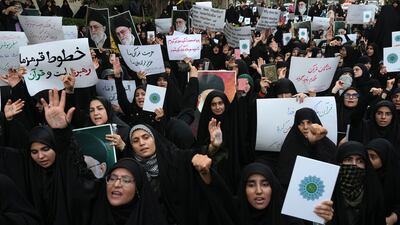
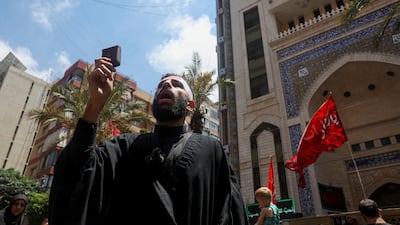
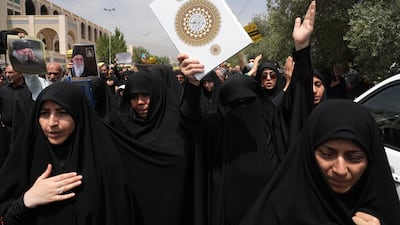
On Friday afternoon, thousands protested peacefully in Iraq and other Muslim-majority countries.

However, on Friday night hundreds of protesters chanting in support of Sadr and carrying images of the prominent leader and the flag associated with his movement, along with the Iraqi flag, attempted to enter the Green Zone and clashed with security forces before dispersing.

In a statement on Saturday, the Iraqi presidency called on international organisations and western governments “to stop incitement and hate practices, whatever their pretexts”.

It also warned Iraqis against being drawn into what it described as a “plot of sedition” which it said aimed to show Iraq was unsafe for foreign missions.

Also, the Iraqi Ministry of Foreign Affairs on Saturday condemned “in strong and repeated terms, the incident of abuse against the Holy Quran and the flag of the Republic of Iraq in front of the Iraqi Embassy in Denmark.”

It called the international community “to stand urgently and responsibly towards these atrocities that violate social peace and coexistence around the world.”

Another protest is scheduled to take place in Baghdad at 6pm.

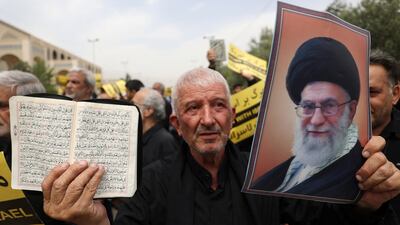
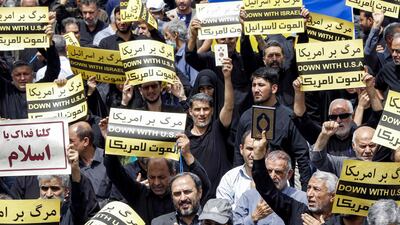
Iran’s foreign ministry spokesman Nasser Kanaani criticised the desecration of the Quran in Denmark and said the Danish government should be held responsible for failing to prevent such acts and should pursue and punish those behind them, the ministry’s website said.

The ministry also summoned the Danish ambassador to Tehran, Jesper Vahr, the state-run IRNA news agency reported.

Commander-in-chief of Iran's Islamic Revolution Guards Corps Hossein Salami said on Saturday that "those who insult the Holy Quran will not be safe."

"We do not allow those who insult the Quran to have security. If anyone wants to play with our religion and our Quran, we will play with their entire world," he warned.


Sweet%20Tooth
%3Cp%3E%3Cstrong%3ECreator%3A%20%3C%2Fstrong%3EJim%20Mickle%3Cbr%3E%3Cstrong%3EStarring%3A%20%3C%2Fstrong%3EChristian%20Convery%2C%20Nonso%20Anozie%2C%20Adeel%20Akhtar%2C%20Stefania%20LaVie%20Owen%3Cbr%3E%3Cstrong%3ERating%3A%20%3C%2Fstrong%3E2.5%2F5%3C%2Fp%3E%0A
Company profile

Name: Tratok Portal

Founded: 2017

Based: UAE

Sector: Travel & tourism

Size: 36 employees

Funding: Privately funded

In the Restaurant: Society in Four Courses
Christoph Ribbat
Translated by Jamie Searle Romanelli
Pushkin Press 

The%20specs
%3Cp%3E%3Cstrong%3EEngine%3A%20%3C%2Fstrong%3E2.9-litre%20twin-turbo%20V6%0D%3Cbr%3E%3Cstrong%3ETransmission%3A%20%3C%2Fstrong%3E8-speed%20auto%0D%3Cbr%3E%3Cstrong%3EPower%3A%20%3C%2Fstrong%3E536hp%20(including%20138hp%20e-motor)%0D%3Cbr%3E%3Cstrong%3ETorque%3A%20%3C%2Fstrong%3E750Nm%20(including%20400Nm%20e-motor)%0D%3Cbr%3E%3Cstrong%3EPrice%3A%20%3C%2Fstrong%3EFrom%20Dh1%2C380%2C000%0D%3Cbr%3E%3Cstrong%3EOn%20sale%3A%20%3C%2Fstrong%3Enow%3C%2Fp%3E%0A
GAC GS8 Specs

Engine: 2.0-litre 4cyl turbo

Power: 248hp at 5,200rpm

Torque: 400Nm at 1,750-4,000rpm

Transmission: 8-speed auto

Fuel consumption: 9.1L/100km

On sale: Now

Price: From Dh149,900

Who's who in Yemen conflict

Houthis: Iran-backed rebels who occupy Sanaa and run unrecognised government

Yemeni government: Exiled government in Aden led by eight-member Presidential Leadership Council

Southern Transitional Council: Faction in Yemeni government that seeks autonomy for the south

Habrish 'rebels': Tribal-backed forces feuding with STC over control of oil in government territory

Intercontinental Cup

Namibia v UAE Saturday Sep 16-Tuesday Sep 19

Table 1 Ireland, 89 points; 2 Afghanistan, 81; 3 Netherlands, 52; 4 Papua New Guinea, 40; 5 Hong Kong, 39; 6 Scotland, 37; 7 UAE, 27; 8 Namibia, 27

The major Hashd factions linked to Iran:

Badr Organisation: Seen as the most militarily capable faction in the Hashd. Iraqi Shiite exiles opposed to Saddam Hussein set up the group in Tehran in the early 1980s as the Badr Corps under the supervision of the Iran Revolutionary Guards Corps (IRGC). The militia exalts Iran’s Supreme Leader Ali Khamenei but intermittently cooperated with the US military.

Saraya Al Salam (Peace Brigade): Comprised of former members of the officially defunct Mahdi Army, a militia that was commanded by Iraqi cleric Moqtada Al Sadr and fought US and Iraqi government and other forces between 2004 and 2008. As part of a political overhaul aimed as casting Mr Al Sadr as a more nationalist and less sectarian figure, the cleric formed Saraya Al Salam in 2014. The group’s relations with Iran has been volatile.

Kataeb Hezbollah: The group, which is fighting on behalf of the Bashar Al Assad government in Syria, traces its origins to attacks on US forces in Iraq in 2004 and adopts a tough stance against Washington, calling the United States “the enemy of humanity”.

Asaeb Ahl Al Haq: An offshoot of the Mahdi Army active in Syria. Asaeb Ahl Al Haq’s leader Qais al Khazali was a student of Mr Al Moqtada’s late father Mohammed Sadeq Al Sadr, a prominent Shiite cleric who was killed during Saddam Hussein’s rule.

Harakat Hezbollah Al Nujaba: Formed in 2013 to fight alongside Mr Al Assad’s loyalists in Syria before joining the Hashd. The group is seen as among the most ideological and sectarian-driven Hashd militias in Syria and is the major recruiter of foreign fighters to Syria.

Saraya Al Khorasani:  The ICRG formed Saraya Al Khorasani in the mid-1990s and the group is seen as the most ideologically attached to Iran among Tehran’s satellites in Iraq.

(Source: The Wilson Centre, the International Centre for the Study of Radicalisation)

Dubai Bling season three

Cast: Loujain Adada, Zeina Khoury, Farhana Bodi, Ebraheem Al Samadi, Mona Kattan, and couples Safa & Fahad Siddiqui and DJ Bliss & Danya Mohammed 

Rating: 1/5

THE%20SPECS
%3Cp%3EEngine%3A%204.4-litre%20twin-turbo%20V8%20hybrid%0D%3Cbr%3EPower%3A%20653hp%20at%205%2C400rpm%0D%3Cbr%3ETorque%3A%20800Nm%20at%201%2C600-5%2C000rpm%0D%3Cbr%3ETransmission%3A%208-speed%20auto%0D%3Cbr%3E0-100kph%20in%204.3sec%0D%3Cbr%3ETop%20speed%20250kph%0D%3Cbr%3EFuel%20consumption%3A%20NA%0D%3Cbr%3EOn%20sale%3A%20Q2%202023%0D%3Cbr%3EPrice%3A%20From%20Dh750%2C000%0D%3Cbr%3E%3C%2Fp%3E%0A

Mercer, the investment consulting arm of US services company Marsh & McLennan, expects its wealth division to at least double its assets under management (AUM) in the Middle East as wealth in the region continues to grow despite economic headwinds, a company official said.

Mercer Wealth, which globally has $160 billion in AUM, plans to boost its AUM in the region to $2-$3bn in the next 2-3 years from the present $1bn, said Yasir AbuShaban, a Dubai-based principal with Mercer Wealth.

Within the next two to three years, we are looking at reaching $2 to $3 billion as a conservative estimate and we do see an opportunity to do so,” said Mr AbuShaban.

Mercer does not directly make investments, but allocates clients’ money they have discretion to, to professional asset managers. They also provide advice to clients.

“We have buying power. We can negotiate on their (client’s) behalf with asset managers to provide them lower fees than they otherwise would have to get on their own,” he added.

Mercer Wealth’s clients include sovereign wealth funds, family offices, and insurance companies among others.

From its office in Dubai, Mercer also looks after Africa, India and Turkey, where they also see opportunity for growth.

Wealth creation in Middle East and Africa (MEA) grew 8.5 per cent to $8.1 trillion last year from $7.5tn in 2015, higher than last year’s global average of 6 per cent and the second-highest growth in a region after Asia-Pacific which grew 9.9 per cent, according to consultancy Boston Consulting Group (BCG). In the region, where wealth grew just 1.9 per cent in 2015 compared with 2014, a pickup in oil prices has helped in wealth generation.

BCG is forecasting MEA wealth will rise to $12tn by 2021, growing at an annual average of 8 per cent.

Drivers of wealth generation in the region will be split evenly between new wealth creation and growth of performance of existing assets, according to BCG.

Another general trend in the region is clients’ looking for a comprehensive approach to investing, according to Mr AbuShaban.

“Institutional investors or some of the families are seeing a slowdown in the available capital they have to invest and in that sense they are looking at optimizing the way they manage their portfolios and making sure they are not investing haphazardly and different parts of their investment are working together,” said Mr AbuShaban.

Some clients also have a higher appetite for risk, given the low interest-rate environment that does not provide enough yield for some institutional investors. These clients are keen to invest in illiquid assets, such as private equity and infrastructure.

“What we have seen is a desire for higher returns in what has been a low-return environment specifically in various fixed income or bonds,” he said.

“In this environment, we have seen a de facto increase in the risk that clients are taking in things like illiquid investments, private equity investments, infrastructure and private debt, those kind of investments were higher illiquidity results in incrementally higher returns.”

The Abu Dhabi Investment Authority, one of the largest sovereign wealth funds, said in its 2016 report that has gradually increased its exposure in direct private equity and private credit transactions, mainly in Asian markets and especially in China and India. The authority’s private equity department focused on structured equities owing to “their defensive characteristics.”

Boston%20Strangler
%3Cp%3E%3Cstrong%3EDirector%3A%3C%2Fstrong%3E%20Matt%20Ruskin%3Cbr%3E%3Cstrong%3EStarring%3A%20%3C%2Fstrong%3EKeira%20Knightley%2C%20Carrie%20Coon%2C%20Alessandro%20Nivola%3Cbr%3E%3Cstrong%3ERating%3A%3C%2Fstrong%3E%203%2F5%3Cbr%3E%3C%2Fp%3E%0A
What sanctions would be reimposed?

Under ‘snapback’, measures imposed on Iran by the UN Security Council in six resolutions would be restored, including:

  • An arms embargo
  • A ban on uranium enrichment and reprocessing
  • A ban on launches and other activities with ballistic missiles capable of delivering nuclear weapons, as well as ballistic missile technology transfer and technical assistance
  • A targeted global asset freeze and travel ban on Iranian individuals and entities
  • Authorisation for countries to inspect Iran Air Cargo and Islamic Republic of Iran Shipping Lines cargoes for banned goods
Paatal Lok season two

Directors: Avinash Arun, Prosit Roy 

Stars: Jaideep Ahlawat, Ishwak Singh, Lc Sekhose, Merenla Imsong

Rating: 4.5/5

COMPANY PROFILE

Company name: Blah

Started: 2018

Founder: Aliyah Al Abbar and Hend Al Marri

Based: Dubai

Industry: Technology and talent management

Initial investment: Dh20,000

Investors: Self-funded

Total customers: 40

'Nope'
%3Cp%3E%3Cstrong%3EDirector%3A%3C%2Fstrong%3E%20Jordan%20Peele%0D%3Cbr%3E%3Cstrong%3EStars%3A%3C%2Fstrong%3E%20Daniel%20Kaluuya%2C%20Keke%20Palmer%2C%20Brandon%20Perea%2C%20Steven%20Yeun%0D%3Cbr%3E%3Cstrong%3ERating%3A%3C%2Fstrong%3E%203.5%2F5%3C%2Fp%3E%0A
Updated: July 22, 2023, 5:21 PM