


US President Joe Biden on Friday welcomed an initiative to provide Iraq with electricity from GCC countries.
Agreements to connect the electricity networks of GCC states to Iraq's grid are to be signed on the sidelines of the Jeddah Security and Development Summit on Saturday, according to a US statement released after Mr Biden's meetings with Saudi Arabia's King Salman and Crown Prince Mohammed bin Salman in Jeddah.
The agreements are expected to advance plans to supply Iraq through the GCC Interconnection Authority (GCCIA), an idea first raised in late 2018 and that began to take shape the following year.
What is the GCCIA?
The GCC, comprising Bahrain, the UAE, Kuwait, Saudi Arabia, Qatar and Oman, commissioned a study in 1986 on the idea of connecting electricity grids across the Middle East.
Subsequent studies laid out a road map for this reality and in 2001, the GCCIA was formed. By 2011, all GCC countries were connected, with the exception of Oman. It was connected the following year.
The idea that countries can share electricity is not new, especially in a trading and co-operation bloc such as the GCC or the EU.
-
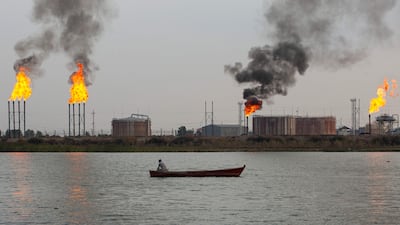
Flare stacks above Umm Qasr port near Iraq's southern city of Basra. In the oilfields of southern Iraq, billions of cubic feet of gas literally go up in smoke, burnt off on flare stacks for want of the infrastructure to capture and process it. All photos: AFP -
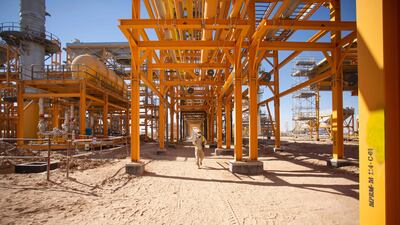
A gas separation plant under construction near Iraq's southern port city of Basra. -

The Nahr bin Omar oil field and facility near Basra. The flares produce vast amounts of carbon dioxide and other greenhouse gases, contributing to global warming without any economic or social benefit. -
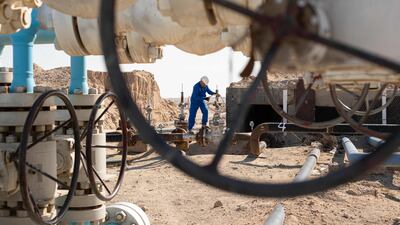
A processing facility in Artawi, near Basra. -
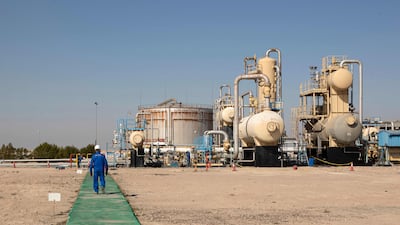
Part of the processing facility in Artawi. -
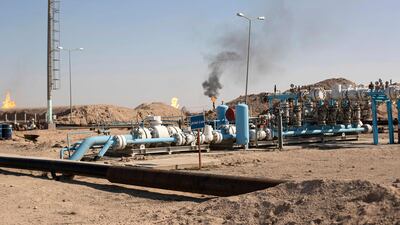
Flare stacks burn off excess gas at the facility in Artawi. -
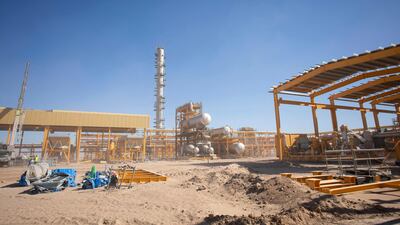
A gas separation plant under construction near Basra. -
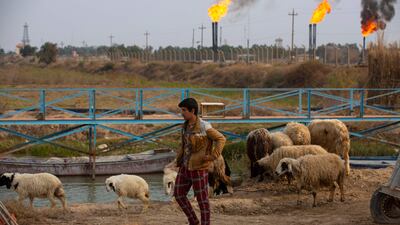
Flare stacks at the Nahr bin Omar oil field near Basra. -
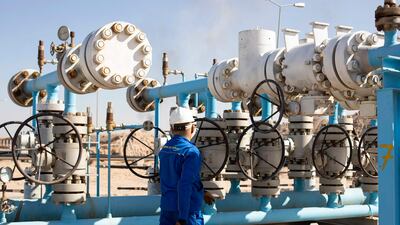
A technician at the processing facility in Artawi. -
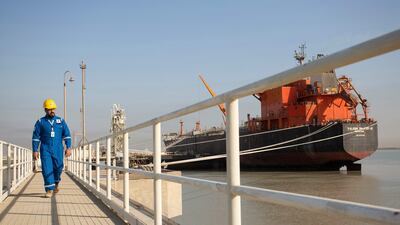
Umm Qasr port near Basra, in southern Iraq.


The EU, for example, has a target of 15 per cent interconnection by 2030 ― in other words, 15 per cent of power generated by member states can be exported to other members, if need be.
According to the EU, this can reduce the risk of blackouts in any connected country and reduces the need for new power stations.
It has also led to an electricity market within the bloc. Germany, for example, exports electricity to Poland, which is trying to reduce reliance on more polluting thermal power. France has become an exporter due to its high installed capacity of nuclear power, which produces a surplus.
That is where energy powerhouses such as Saudi Arabia enter the picture — the kingdom has an installed capacity of over 80 gigawatts, almost four times the power currently available to Iraq.
Speaking at a regional business forum last month, GCCIA chief executive Ahmed Ali Al Ebrahim said the authority's ambition goes much further afield.
“We are connecting GCC with Egypt, Jordan and Iraq to have a pan-Arab market. The sector needs grids, interconnectivity, and technology,” he said.
Why does Iraq need to be part of the GCCIA?
Unlike the GCC countries, Iraq’s economy — including its capacity to produce electricity — has been devastated by decades of sanctions, dictatorship, the US-led invasion and its aftermath.
The country has also experienced complications related to the functioning of its energy institutions, especially corruption. Electricity theft — illegal connections by the poorest communities — and non-payment of heavily subsidised bills, mean that the Ministry of Electricity has bled money, cutting into investment for new power supplies.
Investment needed to repair the country’s vast and ageing grid, which is so inefficient up to half of generated power can be lost before reaching communities, has also been slow in coming, as successive governments have prioritised security spending and government salaries rather than investing in infrastructure.
Iraq has had some modest success bringing power online. Electricity generation in 2003, the year of the US-led invasion, was barely seven gigawatts, which soon fell to around 4.2 gigawatts as the country collapsed into sectarian violence. Power generation is now 21 gigawatts.
But demand has soared over that period — growing at more than seven per cent a year — and peak summer demand is now close to 30 gigawatts. When these demand peaks happen, Iraq suffers blackouts, often in searing temperatures.
Iraq’s demand may even be rising faster than previously thought, with Electricity Minister Adil Karim recently warning that year-on-year rises could be 20 per cent.
How can Iraq benefit from the GCCIA?
Iraq’s Ministry of Electricity signed a framework agreement with the GCCIA in September 2019, for the supply of 0.5 gigawatts through Kuwait to Basra, with the possibility of raising it to 1.8 gigawatts.
The operation of the first 0.5 gigawatts supply is nearly online, delayed by Covid-19 and negotiations on the tariff Iraq will pay.
Even considering so called “technical losses” within Basra due to the condition of the grid, the maximum export of 1.8 gigawatts would be a substantial amount of power for the crisis hit city, which has an electricity demand of around three to four gigawatts.
“We knew very well upfront, that any megawatts that will reach Iraq are not going to exceed more than 500MW, maximum 1,000MW, but we planned for a higher ceiling of 1.8 gigawatts,” says Luay Al Khatteeb, Iraq’s former minister of electricity.
Furthermore, Iraq has in the past been partially dependent on unstable electricity and gas imports from Iran — Iranian gas alone accounts for up to 30 per cent of Iraq’s power generation.
But Iran’s own domestic supplies are unstable and it has struggled to supply enough gas during its own peak summer and winter demand, in part due to a lack of investment in gas production and infrastructure.
This means greater connectivity with the rest of the Middle East could help Iraq in an emergency — either during summer demand spikes or when faced with technical problems, such as in August 2019 when a gas pipeline feeding Hartha power station in Basra exploded, putting electricity production at risk until it was fixed.
Iraq's former minister for electricity
“The whole exercise of interconnectivity has three purposes,” Mr Al Khatteeb says.
“Number one is to have a more stable national grid by developing interconnection with a regional grid. So, it's good to have a more stable national grid on our side, in case we need further supply.
“Number two is to create a utility market to 'wheel' electricity from one country to another in times of surplus capacity.
“And number three is to diversify the energy supply and not rely on one country.”
“Wheeling” is the process of moving power across national boundaries.
To that end, successive Iraqi governments have pursued grid interconnection plans, recently with Jordan and Turkey. In the latter case, Turkey is to supply 0.5 gigawatts which is intended to benefit Iraq’s northern governorates, while Jordan and Iraq signed a deal in September 2020 for 0.15 gigawatts of exports.
How can Iraq boost its electricity supply?
One of the most important things Iraq can do is reform tariffs to recoup losses in the sector — essentially removing subsidies — and creating a predictable and stable environment for power companies to invest.
“Iraq needs to open the energy market to foreign investors and sort out the losses issue. A complete refurbishment of the sector could resolve the electricity problem, otherwise it will continue for another 10 to 20 years,” says Harry Istepanian, an energy consultant who has worked extensively in Iraq and Kuwait.
Additionally, Iraq needs to allocate more capital expenditure to the sector using its record oil revenue that are topping $10 billion per month, instead of prioritising salaries across government ministries.
While tariff reform has fallen by the wayside — it is considered a politically unpopular move, Iraq has managed to attract foreign investment to build power stations, with long-term players in Iraq’s energy sector including US company GE and Germany’s Siemens.
More recently, contracts to build power stations have been signed with the UAE’s Masdar and Saudi Arabia’s ACWA Power.

