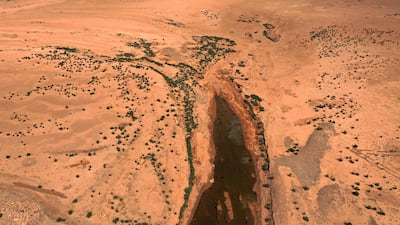
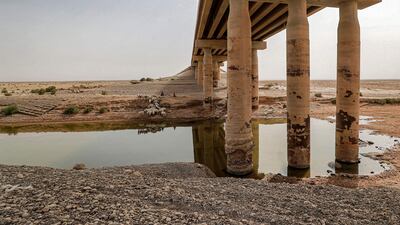
An Iraqi-German archaeological team raced against time to excavate and document a Bronze Age city in northern Iraq before it disappeared underwater.
As drought caused water levels to recede in the Mosul Dam's reservoir last winter, the remains of a 3,400-year-old Mittani Empire-era city once located on the Tigris emerged, an Iraqi official told The National on Tuesday.
The Mittani Empire was a kingdom that ruled parts of Syria and northern Mesopotamia, modern day Iraq, from the 15th century to the 14th century BC. The city, known as Zakhiku, is at Kemune in the northern Kurdistan Region of Iraq.
The team started excavating the city in 2018, when they revealed what was probably a palace with large walls, Dr Hasan Qasim, chairman of the Kurdistan Archaeology Organisation, said.
Fifteen clay tablets with cuneiform writing were also unearthed at the time, Dr Qasim said.
In 2019, the team discovered the walls were seven metres high and inside were chambers that had once been decorated with painted murals.
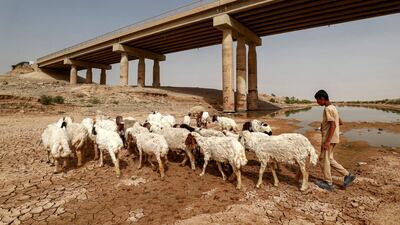
To cope with extreme drought in southern Iraq and in order to secure enough water for crops, authorities released more water from Mosul Reservoir in December, allowing the ruins to re-emerge.
“This unforeseen event put archaeologists under sudden pressure to excavate and document at least parts of this large, important city as quickly as possible before it was resubmerged,” said the University of Tubingen.
A team was put together within days and received funding from the Fritz Thyssen Foundation through the University of Freiburg.
Throughout January and February, the team managed to map the city and a massive fortification with wall and towers, a multistorey storage building and an industrial complex, Dr Qasim said. More than 200 clay tablets were found.
“The excavation results show that the site was an important centre in the Mittani Empire,” Dr Qasim said.
“The huge magazine building is of particular importance because enormous quantities of goods must have been stored in it, probably brought from all over the region,” Prof Ivana Puljiz of the University of Freiburg said.
“The research team was stunned by the well-preserved state of the walls — sometimes to a height of several metres — despite the fact that the walls are made of sun-dried mud bricks and were underwater for more than 40 years.”
The city was destroyed in an earthquake in about 1350BC, the archaeological team said, during which the collapsing upper parts of the walls buried the buildings, preserving what remained.
Five ceramic vessels that contained an archive of over 100 cuneiform tablets from the Middle Assyrian period, shortly after the earthquake disaster struck the city, are an important find.
“It is close to a miracle that cuneiform tablets made of unfired clay survived so many decades under water,” Peter Pfalzner of the University of Tubingen said.
The site is now submerged with water again but the excavated buildings were completely covered with tightly fitting plastic sheeting and with gravel fill to protect them.
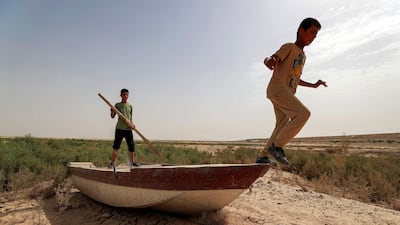
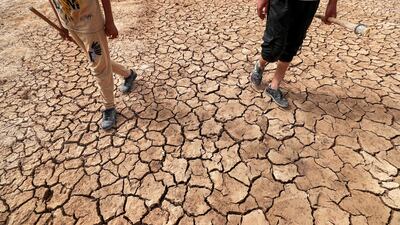
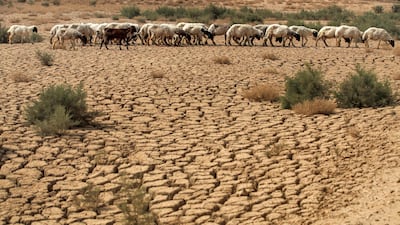
The fluctuating reservoir levels highlight water shortages in Iraq. The war-ravaged country is ranked by the UN as the fifth most vulnerable country in the world to the effects of climate change.
Dr Qasim told The National that more than 500 archaeological sites emerged from underwater as a result of the drought and receding levels on the eastern bank of the Tigris within the borders of Kurdistan region. They are still unexcavated.
Iraq faces a wide range of challenges made worse by water insecurity, mismanagement and man-made problems such as the illegal clearing of agricultural areas to build houses.
More frequent and intense droughts, sandstorms, heatwaves and rising sea levels are wreaking havoc on people's livelihoods and communities.

Key findings of Jenkins report
- Founder of the Muslim Brotherhood, Hassan al Banna, "accepted the political utility of violence"
- Views of key Muslim Brotherhood ideologue, Sayyid Qutb, have “consistently been understood” as permitting “the use of extreme violence in the pursuit of the perfect Islamic society” and “never been institutionally disowned” by the movement.
- Muslim Brotherhood at all levels has repeatedly defended Hamas attacks against Israel, including the use of suicide bombers and the killing of civilians.
- Laying out the report in the House of Commons, David Cameron told MPs: "The main findings of the review support the conclusion that membership of, association with, or influence by the Muslim Brotherhood should be considered as a possible indicator of extremism."
'HIJRAH%3A%20IN%20THE%20FOOTSTEPS%20OF%20THE%20PROPHET'
%3Cp%3E%3Cstrong%3EEdited%20by%3A%3C%2Fstrong%3E%20Idries%20Trevathan%3Cbr%3E%3Cstrong%3EPages%3A%3C%2Fstrong%3E%20240%3Cbr%3E%3Cstrong%3EPublisher%3A%3C%2Fstrong%3E%20Hirmer%20Publishers%3Cbr%3E%3Cstrong%3EAvailable%3A%3C%2Fstrong%3E%20Now%3C%2Fp%3E%0A
More from Neighbourhood Watch:
SPECS
%3Cp%3E%3Cstrong%3EEngine%3A%3C%2Fstrong%3E%201.5-litre%204-cylinder%3Cbr%3E%3Cstrong%3EPower%3A%3C%2Fstrong%3E%20101hp%3Cbr%3E%3Cstrong%3ETorque%3A%3C%2Fstrong%3E%20135Nm%3Cbr%3E%3Cstrong%3ETransmission%3C%2Fstrong%3E%3A%20Six-speed%20auto%3Cbr%3E%3Cstrong%3EPrice%3A%3C%2Fstrong%3E%20From%20Dh79%2C900%3Cbr%3E%3Cstrong%3EOn%20sale%3A%3C%2Fstrong%3E%20Now%3C%2Fp%3E%0A
LA LIGA FIXTURES
Thursday (All UAE kick-off times)
Sevilla v Real Betis (midnight)
Friday
Granada v Real Betis (9.30pm)
Valencia v Levante (midnight)
Saturday
Espanyol v Alaves (4pm)
Celta Vigo v Villarreal (7pm)
Leganes v Real Valladolid (9.30pm)
Mallorca v Barcelona (midnight)
Sunday
Atletic Bilbao v Atletico Madrid (4pm)
Real Madrid v Eibar (9.30pm)
Real Sociedad v Osasuna (midnight)
Benefits of first-time home buyers' scheme
- Priority access to new homes from participating developers
- Discounts on sales price of off-plan units
- Flexible payment plans from developers
- Mortgages with better interest rates, faster approval times and reduced fees
- DLD registration fee can be paid through banks or credit cards at zero interest rates
Sri Lanka squad
Dinesh Chandimal, Dimuth Karunaratne, Kaushal Silva, Kusal Mendis, Angelo Mathews, Lahiru Thirimanne, Niroshan Dickwella, Sadeera Samarawickrama, Rangana Herath, Suranga Lakmal, Nuwan Pradeep, Lakshan Sandakan, Vishwa Fernando, Lahiru Kumara, Jeffrey Vandersay, Milinda Siriwardana, Roshen Silva, Akila Dananjaya, Charith Asalanka, Shaminda Eranga and Dhammika Prasad.
Zodi%20%26%20Tehu%3A%20Princes%20Of%20The%20Desert
%3Cp%3E%3Cstrong%3EDirector%3A%20%3C%2Fstrong%3EEric%20Barbier%26nbsp%3B%3C%2Fp%3E%0A%3Cp%3E%3Cstrong%3EStarring%3A%20%3C%2Fstrong%3EYoussef%20Hajdi%2C%20Nadia%20Benzakour%2C%20Yasser%20Drief%3C%2Fp%3E%0A%3Cp%3E%3Cstrong%3ERating%3A%3C%2Fstrong%3E%204%2F5%3C%2Fp%3E%0A
TECH%20SPECS%3A%20APPLE%20WATCH%20SERIES%209
%3Cp%3E%3Cstrong%3EDisplay%3A%3C%2Fstrong%3E%2041mm%20%E2%80%93%20352%20x%20430%3B%2045mm%20%E2%80%93%20396%20x%20484%3B%20always-on%20Retina%20LTPO%20OLED%2C%202000%20nits%20max%3B%20Ion-X%20glass%20(aluminium%20cases)%2C%20sapphire%20crystal%20(stainless%20steel%20cases)%3C%2Fp%3E%0A%3Cp%3E%3Cstrong%3EProcessor%3A%3C%2Fstrong%3E%20Apple%20S9%2064-bit%2C%20W3%20wireless%2C%202nd-gen%20Ultra%20Wideband%3C%2Fp%3E%0A%3Cp%3E%3Cstrong%3ECapacity%3A%3C%2Fstrong%3E%2064GB%3C%2Fp%3E%0A%3Cp%3E%3Cstrong%3EMemory%3A%3C%2Fstrong%3E%201GB%3C%2Fp%3E%0A%3Cp%3E%3Cstrong%3EPlatform%3A%3C%2Fstrong%3E%20watchOS%2010%3C%2Fp%3E%0A%3Cp%3E%3Cstrong%3EHealth%20metrics%3A%3C%2Fstrong%3E%20Blood%20oxygen%20sensor%2C%20electrical%20heart%20sensor%20and%20ECG%2C%203rd-gen%20optical%20heart%20sensor%2C%20high%20and%20low%20heart%20rate%20notifications%2C%20irregular%20rhythm%20notifications%2C%20sleep%20stages%2C%20temperature%20sensing%3C%2Fp%3E%0A%3Cp%3E%3Cstrong%3EEmergency%20services%3A%3C%2Fstrong%3E%20Emergency%20SOS%2C%20international%20emergency%20calling%2C%20crash%20detection%2C%20fall%20detection%3C%2Fp%3E%0A%3Cp%3E%3Cstrong%3EConnectivity%3A%3C%2Fstrong%3E%20GPS%2FGPS%20%2B%20cellular%3B%20Wi-Fi%2C%20LTE%2C%20Bluetooth%205.3%2C%20NFC%20(Apple%20Pay)%3C%2Fp%3E%0A%3Cp%3E%3Cstrong%3EDurability%3A%3C%2Fstrong%3E%20IP6X%2C%20water%20resistant%20up%20to%2050m%2C%20dust%20resistant%3C%2Fp%3E%0A%3Cp%3E%3Cstrong%3EBattery%3A%3C%2Fstrong%3E%20308mAh%20Li-ion%2C%20up%20to%2018h%20regular%2F36h%20low%20power%3B%20wireless%20charging%3C%2Fp%3E%0A%3Cp%3E%3Cstrong%3ECards%3A%3C%2Fstrong%3E%20eSIM%3C%2Fp%3E%0A%3Cp%3E%3Cstrong%3EFinishes%3A%3C%2Fstrong%3E%20Aluminium%20%E2%80%93%20midnight%2C%20pink%2C%20Product%20Red%2C%20silver%2C%20starlight%3B%20stainless%20steel%20%E2%80%93%20gold%2C%20graphite%2C%20silver%3C%2Fp%3E%0A%3Cp%3E%3Cstrong%3EIn%20the%20box%3A%3C%2Fstrong%3E%20Watch%20Series%209%2C%20woven%20magnetic-to-USB-C%20charging%20cable%2C%20band%2Floop%3C%2Fp%3E%0A%3Cp%3E%3Cstrong%3EPrice%3A%3C%2Fstrong%3E%20Starts%20at%20Dh1%2C599%20(41mm)%20%2F%20Dh1%2C719%20(45mm)%3C%2Fp%3E%0A
What is blockchain?
Blockchain is a form of distributed ledger technology, a digital system in which data is recorded across multiple places at the same time. Unlike traditional databases, DLTs have no central administrator or centralised data storage. They are transparent because the data is visible and, because they are automatically replicated and impossible to be tampered with, they are secure.
The main difference between blockchain and other forms of DLT is the way data is stored as ‘blocks’ – new transactions are added to the existing ‘chain’ of past transactions, hence the name ‘blockchain’. It is impossible to delete or modify information on the chain due to the replication of blocks across various locations.
Blockchain is mostly associated with cryptocurrency Bitcoin. Due to the inability to tamper with transactions, advocates say this makes the currency more secure and safer than traditional systems. It is maintained by a network of people referred to as ‘miners’, who receive rewards for solving complex mathematical equations that enable transactions to go through.
However, one of the major problems that has come to light has been the presence of illicit material buried in the Bitcoin blockchain, linking it to the dark web.
Other blockchain platforms can offer things like smart contracts, which are automatically implemented when specific conditions from all interested parties are reached, cutting the time involved and the risk of mistakes. Another use could be storing medical records, as patients can be confident their information cannot be changed. The technology can also be used in supply chains, voting and has the potential to used for storing property records.
Company Profile
Founder: Omar Onsi
Launched: 2018
Employees: 35
Financing stage: Seed round ($12 million)
Investors: B&Y, Phoenician Funds, M1 Group, Shorooq Partners
COMPANY PROFILE
Founders: Alhaan Ahmed, Alyina Ahmed and Maximo Tettamanzi
Total funding: Self funded