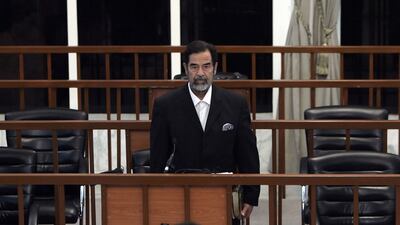
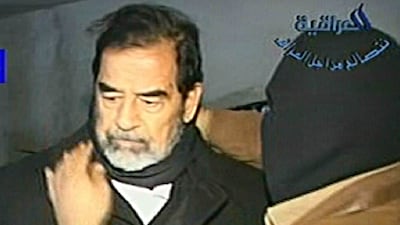
A video grab shows ousted Iraq president Saddam Hussein moments before being hanged in Baghdad in December 2006. Iraqi state television showed a brief film of Saddam being placed in a noose by masked hangmen, cutting away just before his execution. AFP
A video grab shows ousted Iraq president Saddam Hussein moments before being hanged in Baghdad in December 2006. Iraqi state television showed a brief film of Saddam being placed in a noose by masked

Iraqis remember Saddam Hussein 15 years after his execution


Sinan Mahmoud
  • English
  • Arabic

Fifteen years after the execution of Iraq’s former dictator Saddam Hussein, Iraqis are still divided about his rule and legacy.

“Saddam’s era saw big achievements and setbacks in all fields,” Baghdad resident Riyadh Ahmed Salih told The National.

“But after him Iraq is literally collapsed and we have been seeing one setback after another,” said Mr Salih, 68, a retired teacher.

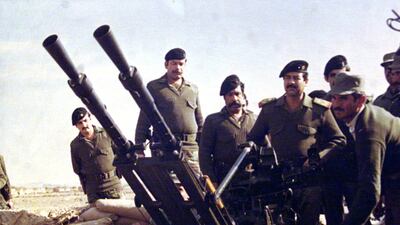
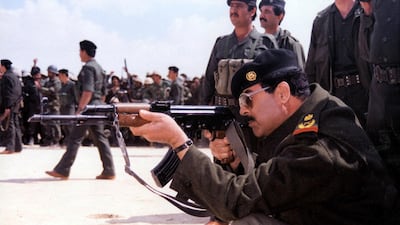
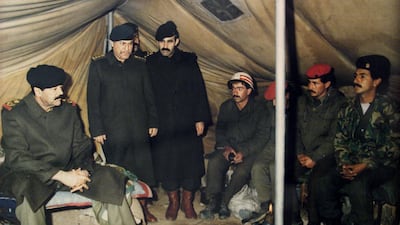
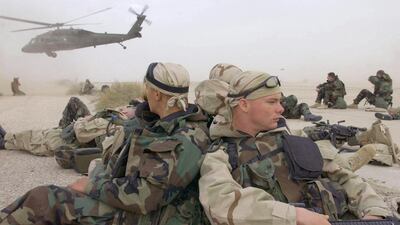
After nearly 35 years in power, Saddam Hussein was toppled by a US-led invasion in 2003, ending the reign of a brutal Sunni-led regime that carried out atrocities against Iraqis and neighbouring countries.

Nine months after the invasion, Saddam was found by US troops in an underground hideout near his hometown of Tikrit, north of Baghdad.

Between October 2005 and late 2006, following initial interrogations, the former dictator and his henchmen were put on trial before Iraq’s high tribunal, set up by the Americans to try major crimes committed by regime figures.

Saddam was executed by hanging in Baghdad on the morning of December 30, 2006, the first day of Eid Al Adha. The timing was seen by many as a deliberate provocation to his supporters.

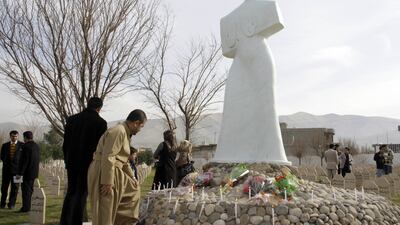
He was convicted of crimes against humanity for the murder of nearly 150 Shiite villagers who were executed after a failed assassination attempt against him in 1982.

“Saddam is the one who caused all the sufferings we are living today,” said Zainab Mohammed, 55, a housewife in Baghdad.

“He was a reckless leader who took us from one war to another, leaving behind an army of widows and tonnes of social problems in society," Ms Mohammed said.

"In each house there is a scar caused by Saddam."

A man from Saddam’s hometown Tikrit disagreed.

“President Saddam Hussein was faithful to Iraq and its people. He served them and maintained their dignity,” said the man, who, concerned for his safety, identified himself only as Abu Omar.

“During his reign and even during the UN-imposed economic sanctions, we had hospitals, schools and public services work and serve the people better than today,” he said.

“What do we have now? Only blood, corruption, politicians who can’t fix a light in a school or pave a street. They only know how to funnel the government resources to their pockets.”

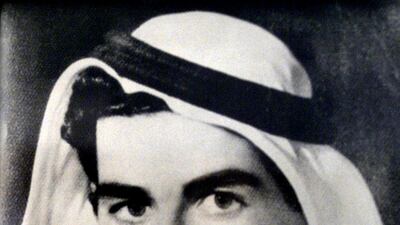
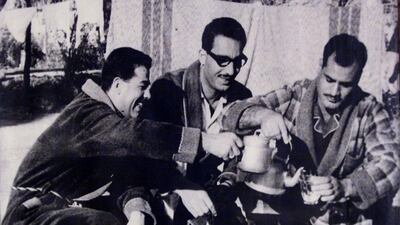
Born in 1937, Saddam joined the ranks of the now outlawed Baath Party's Iraq branch in the early 1950s. The Baath Party was founded in 1947 in Damascus, Syria and established branches in Arab countries including Iraq.

In 1959, he led a failed operation to kill president Abdul Karim Qassim who took power when the monarchy was overthrown in 1958. Qassim was overthrown in 1963.

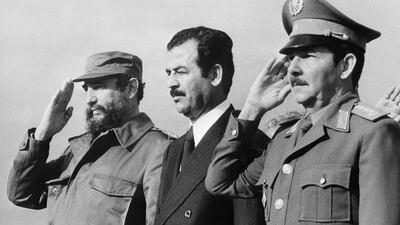
After the 1968 coup in which Saddam played a key role, he was chosen by the president, Ahmed Hassan Al Bakr, to be vice president and deputy chairman of the Revolutionary Command Council and was responsible for Iraq's security services.

He became Iraqi president in 1979.

Some Iraqis commemorated his death anniversary on social media.

One Twitter user under the name of Abu Ali Al Najafi posted a video of a Christmas tree decorated with Saddam’s picture. On the ground next to the tree, pictures of Shiite politicians who assumed power after 2003 are arranged, as well as Shiite religious leaders who have played leading roles in post-Saddam Iraq, with shoes on them – a grave insult in Arab culture.

The accompanying message read: “Here’s the hero Saddam, may God have mercy on your soul.

“And you are the criminals and killers," it said.

Others celebrated the anniversary of Saddam's death as a "great day" and praised former prime minister Nouri Al Maliki for signing the execution order.

"It is a great day that marks the fall of Hadam the tyrant," a man identified as Abu Liwa said on Twitter, playing with the words by using "Hadam", which means "The Destroyer" in Arabic, instead of "Saddam".

"May God bless your right hand Nouri Al Maliki," Yassin Al Soudani tweeted along with a picture of Mr Al Maliki signing his name as Saddam hanged.

"The history will remember your honourable signature," he wrote.

Who's who in Yemen conflict

Houthis: Iran-backed rebels who occupy Sanaa and run unrecognised government

Yemeni government: Exiled government in Aden led by eight-member Presidential Leadership Council

Southern Transitional Council: Faction in Yemeni government that seeks autonomy for the south

Habrish 'rebels': Tribal-backed forces feuding with STC over control of oil in government territory

The White Lotus: Season three

Creator: Mike White

Starring: Walton Goggins, Jason Isaacs, Natasha Rothwell

Rating: 4.5/5

Key facilities
  • Olympic-size swimming pool with a split bulkhead for multi-use configurations, including water polo and 50m/25m training lanes
  • Premier League-standard football pitch
  • 400m Olympic running track
  • NBA-spec basketball court with auditorium
  • 600-seat auditorium
  • Spaces for historical and cultural exploration
  • An elevated football field that doubles as a helipad
  • Specialist robotics and science laboratories
  • AR and VR-enabled learning centres
  • Disruption Lab and Research Centre for developing entrepreneurial skills
Fixtures and results:

Wed, Aug 29:

  • Malaysia bt Hong Kong by 3 wickets
  • Oman bt Nepal by 7 wickets
  • UAE bt Singapore by 215 runs

Thu, Aug 30: 

  • UAE bt Nepal by 78 runs
  • Hong Kong bt Singapore by 5 wickets
  • Oman bt Malaysia by 2 wickets

Sat, Sep 1: UAE v Hong Kong; Oman v Singapore; Malaysia v Nepal

Sun, Sep 2: Hong Kong v Oman; Malaysia v UAE; Nepal v Singapore

Tue, Sep 4: Malaysia v Singapore; UAE v Oman; Nepal v Hong Kong

Thu, Sep 6: Final

Cheeseburger%20ingredients
%3Cp%3EPrice%20for%20a%20single%20burger%20%C2%A30.44%3Cbr%3EPrice%20for%20a%20single%20bun%20%C2%A30.17%3Cbr%3EPrice%20for%20a%20single%20cheese%20slice%20%C2%A30.04%3Cbr%3EPrice%20for%2010g%20Gherkins%20is%20less%20than%20%C2%A30.01%3Cbr%3EPrice%20for%2010g%20ketchup%20is%20less%20than%20%C2%A30.01%20%3Cbr%3EPrice%20for%2010g%20mustard%20is%20less%20than%20%C2%A30.01%3Cbr%3EPrice%20for%2010g%20onions%20is%20less%20than%20%C2%A30.01%3C%2Fp%3E%0A%3Cp%3ETotal%2068p%3C%2Fp%3E%0A%3Cp%3ECredit%3A%20Meal%20Delivery%20Experts%3C%2Fp%3E%0A
Tax authority targets shisha levy evasion

The Federal Tax Authority will track shisha imports with electronic markers to protect customers and ensure levies have been paid.

Khalid Ali Al Bustani, director of the tax authority, on Sunday said the move is to "prevent tax evasion and support the authority’s tax collection efforts".

The scheme’s first phase, which came into effect on 1st January, 2019, covers all types of imported and domestically produced and distributed cigarettes. As of May 1, importing any type of cigarettes without the digital marks will be prohibited.

He said the latest phase will see imported and locally produced shisha tobacco tracked by the final quarter of this year.

"The FTA also maintains ongoing communication with concerned companies, to help them adapt their systems to meet our requirements and coordinate between all parties involved," he said.

As with cigarettes, shisha was hit with a 100 per cent tax in October 2017, though manufacturers and cafes absorbed some of the costs to prevent prices doubling.

Full Party in the Park line-up

2pm – Andreah

3pm – Supernovas

4.30pm – The Boxtones

5.30pm – Lighthouse Family

7pm – Step On DJs

8pm – Richard Ashcroft

9.30pm – Chris Wright

10pm – Fatboy Slim

11pm – Hollaphonic


Mercer, the investment consulting arm of US services company Marsh & McLennan, expects its wealth division to at least double its assets under management (AUM) in the Middle East as wealth in the region continues to grow despite economic headwinds, a company official said.

Mercer Wealth, which globally has $160 billion in AUM, plans to boost its AUM in the region to $2-$3bn in the next 2-3 years from the present $1bn, said Yasir AbuShaban, a Dubai-based principal with Mercer Wealth.

Within the next two to three years, we are looking at reaching $2 to $3 billion as a conservative estimate and we do see an opportunity to do so,” said Mr AbuShaban.

Mercer does not directly make investments, but allocates clients’ money they have discretion to, to professional asset managers. They also provide advice to clients.

“We have buying power. We can negotiate on their (client’s) behalf with asset managers to provide them lower fees than they otherwise would have to get on their own,” he added.

Mercer Wealth’s clients include sovereign wealth funds, family offices, and insurance companies among others.

From its office in Dubai, Mercer also looks after Africa, India and Turkey, where they also see opportunity for growth.

Wealth creation in Middle East and Africa (MEA) grew 8.5 per cent to $8.1 trillion last year from $7.5tn in 2015, higher than last year’s global average of 6 per cent and the second-highest growth in a region after Asia-Pacific which grew 9.9 per cent, according to consultancy Boston Consulting Group (BCG). In the region, where wealth grew just 1.9 per cent in 2015 compared with 2014, a pickup in oil prices has helped in wealth generation.

BCG is forecasting MEA wealth will rise to $12tn by 2021, growing at an annual average of 8 per cent.

Drivers of wealth generation in the region will be split evenly between new wealth creation and growth of performance of existing assets, according to BCG.

Another general trend in the region is clients’ looking for a comprehensive approach to investing, according to Mr AbuShaban.

“Institutional investors or some of the families are seeing a slowdown in the available capital they have to invest and in that sense they are looking at optimizing the way they manage their portfolios and making sure they are not investing haphazardly and different parts of their investment are working together,” said Mr AbuShaban.

Some clients also have a higher appetite for risk, given the low interest-rate environment that does not provide enough yield for some institutional investors. These clients are keen to invest in illiquid assets, such as private equity and infrastructure.

“What we have seen is a desire for higher returns in what has been a low-return environment specifically in various fixed income or bonds,” he said.

“In this environment, we have seen a de facto increase in the risk that clients are taking in things like illiquid investments, private equity investments, infrastructure and private debt, those kind of investments were higher illiquidity results in incrementally higher returns.”

The Abu Dhabi Investment Authority, one of the largest sovereign wealth funds, said in its 2016 report that has gradually increased its exposure in direct private equity and private credit transactions, mainly in Asian markets and especially in China and India. The authority’s private equity department focused on structured equities owing to “their defensive characteristics.”

Dust and sand storms compared

Sand storm

  • Particle size: Larger, heavier sand grains
  • Visibility: Often dramatic with thick "walls" of sand
  • Duration: Short-lived, typically localised
  • Travel distance: Limited 
  • Source: Open desert areas with strong winds

Dust storm

  • Particle size: Much finer, lightweight particles
  • Visibility: Hazy skies but less intense
  • Duration: Can linger for days
  • Travel distance: Long-range, up to thousands of kilometres
  • Source: Can be carried from distant regions
Key findings of Jenkins report
  • Founder of the Muslim Brotherhood, Hassan al Banna, "accepted the political utility of violence"
  • Views of key Muslim Brotherhood ideologue, Sayyid Qutb, have “consistently been understood” as permitting “the use of extreme violence in the pursuit of the perfect Islamic society” and “never been institutionally disowned” by the movement.
  • Muslim Brotherhood at all levels has repeatedly defended Hamas attacks against Israel, including the use of suicide bombers and the killing of civilians.
  • Laying out the report in the House of Commons, David Cameron told MPs: "The main findings of the review support the conclusion that membership of, association with, or influence by the Muslim Brotherhood should be considered as a possible indicator of extremism."
Updated: December 30, 2021, 10:34 AM