Iraqi forces and Kurdish Peshmerga fighters are working together against ISIS. AFP

Iraqi army and Kurdish fighters team up to oust ISIS


  • English
  • Arabic

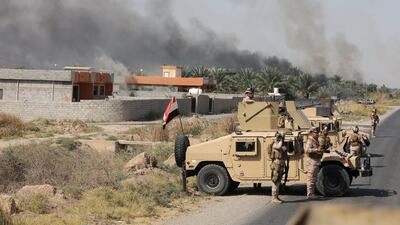
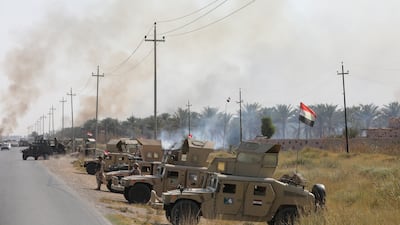
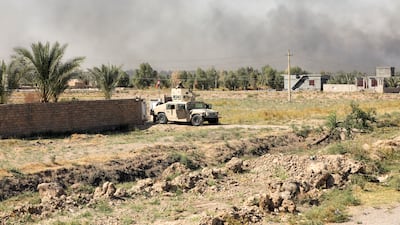
As a backhoe dug up the ground to build trenches, Iraqi soldiers scanned the vast farming tracts for militants; not far away, their Kurdish counterparts did the same.

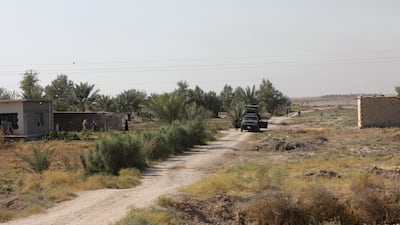
The scene earlier this month in the small northern Iraqi farming village of Lheiban was a rare instance of co-ordination between the federal government and the semi-autonomous Kurdish region. The two sides were fortifying a joint position aimed at defending the village against attacks by ISIS.

Despite a long-standing territorial dispute, Baghdad and Iraq’s Kurds are taking steps to work together to prevent a resurgence of the Islamic State group.

Whether the fragile security partnership can hold is the big test in the next chapter of Iraq’s war with ISIS. Both sides say they need the Americans to help keep it together – and they say that is one reason why the US military presence in Iraq is not going away, even as its combat mission officially ends on December 31.

Iraq declared ISIS was defeated four years ago this month. But the rivalry between Baghdad and the Kurds opened up cracks through which the group crept back: a long, disputed zone snaking through four provinces, Nineveh, Kirkuk, Salaheddin and Diyala, where the forces of either side did not enter. In some places, the zone was up to 40 kilometres wide.

Lheiban lies in one part of the zone, and a recent flurry of ISIS attacks threatened to empty the area of its residents, mostly Kurds. So for the first time since 2014, Iraqi troops and peshmerga are setting up joint co-ordination centres around the zone to better police the gaps.

“Daesh took advantage,” said Capt Nakib Hajar, head of Kurdish peshmerga operations in the area, using the Arabic acronym for ISIS. Now, he said, “we are co-ordinating … It begins here, in this village”.

Night visions

Like all residents of Lheiban, Helmet Zahir is tired. In past months, the cement factory worker would spend all night on the roof of his humble home, his wife and children sleeping inside, holding his rifle and waiting.

Security personnel guarding a nearby oil company, the only ones in the area equipped with thermal night vision, would send the signal when they spotted ISIS militants making their way down the Qarachok Mountain range toward Lheiban.

It was up to Mr Zahir and other armed residents to fend them off.

“We were abandoned. The peshmerga was on one side, the Iraqi army on another and neither was intervening,” he said.

A recent uptick in attacks on the village, with three in the first week of December alone, prompted many of the village’s residents, who are mainly Kurds, to leave. Zahir moved his family to Debaga in the relative safety of the Kurdish-run north.

Once numbering 65 families, Lheiban now has only 12 left, said village mukhtar Yadgar Karim.

On December 7, peshmerga and Iraqi forces moved into the village with plans to replicate co-ordination elsewhere across the disputed territories. Kurdish officials hoped this would prompt villagers to return. Maintaining a Kurdish population in the area is key to their territorial claims.

Mr Zahir is not convinced. “I came to check on the situation only, I am too afraid to return,” he said.

The peshmerga have positions all along the ridge of the Qarachok mountains. But they don’t have orders to stop ISIS militants as they cross on attacks or to raid the group's positions because of wariness over entering disputed territory, explained Col Kahar Jawhar.

Moreover, the militants move at night, using tunnels and hiding in caves, and the peshmerga lack key equipment, including night vision.

“That is why IS are able to terrorise the residents, because we can’t see them,” Col Jawhar said.

Disputed land

  • Iraqi security forces are deployed after an attack by ISIS extremists, near Muqdadiya, in Iraq. Reuters
    Iraqi security forces are deployed after an attack by ISIS extremists, near Muqdadiya, in Iraq. Reuters
  • The extremists attacked Al Rashad village outside the city of Muqdadiya in Diyala, officials said.
    The extremists attacked Al Rashad village outside the city of Muqdadiya in Diyala, officials said.
  • At least 11 civilians were killed and at least 25 civilians were wounded. The number of deaths is expected to rise.
    At least 11 civilians were killed and at least 25 civilians were wounded. The number of deaths is expected to rise.
  • Security forces and government-sanctioned paramilitary troops were sent to the area. Iraqi President Barham Salih denounced the 'cowardly terrorist' attack and called for increasing efforts to chase down ISIS cells.
    Security forces and government-sanctioned paramilitary troops were sent to the area. Iraqi President Barham Salih denounced the 'cowardly terrorist' attack and called for increasing efforts to chase down ISIS cells.

The talks to re-establish joint co-ordination centres between the Iraqi army and peshmerga began over two years ago, but fell apart because of deep mistrust and differences over how to carve out lines of control.

Under current Prime Minister Mustafa Al Kadhimi, talks were rekindled, paving the way for an agreement to set up six joint co-ordination centres in Baghdad, Irbil, and across the disputed zone.

Mr Al Kadhimi also agreed to establish two joint brigades to conduct anti-ISIS operations. But this is awaiting budget approval from Baghdad’s Finance Ministry, said Hajar Ismail, peshmerga head of relations with the coalition.

Between 2009-2014, Iraqi and Kurdish forces conducted joint security in the northern provinces of Ninevah, Kirkuk and Diyala. But the collapse of the Iraqi army during the ISIS onslaught of 2014 ended the arrangement.

Kurdish authorities managed to solidify control over Kirkuk and other disputed areas during this time, even developing oil fields and conducting an independent export policy, to the ire of the federal government.

After Iraq declared victory over ISIS in 2017, Baghdad turned its sights to these areas, launching a military operation in October 2017 to retake them. Relations soured, with Baghdad cutting off budget allocations to the Kurdish region, rendering it unable to pay public sector workers and debts to oil companies.

Baghdad was long reluctant to resume security talks partly due to political optics in the capital, with many dominant Shiite parties deeply mistrustful of Kurdish intentions, according to federal officials.

The Popular Mobilisation Forces, made up largely of Shiite militia groups close to Iran, has opposed joint patrols with the peshmerga. The PMF also has a powerful presence in many areas in the disputed zone.

So far, the PMF has been surprisingly quiet about the new joint arrangement, as it copes with a devastating loss in federal elections earlier this year.

But “at some point they will speak out against it,” Zmkan Ali, a senior researcher at the Institute of Regional and International Studies, a research centre in Sulaymaniyah.

Common friend

US soldiers are seen during a handover ceremony of Taji military base from US-led coalition troops to Iraqi security forces, in August. Reuters

The road to better co-ordination has often involved a common friend: The US.

Iraqi and Kurdish officials said the US-led coalition’s mediation and support were key in bringing parties to the table.

“They played an important role, coordinating with us and the Iraqi side,” said Col Jawhar, the peshmerga based in Qarachok. “Without them we wouldn’t speak — they wouldn’t come here, and we wouldn’t go there.”

Both sides say they still need the Americans to play that role.

US troops quietly stopped direct involvement in combat against ISIS months ago and have since been advising and training troops. That role will continue when the combat mission formally ends on December 31.

The US presence is also crucial in other ways. The Americans pay the salaries of many peshmerga fighters, amid ongoing budget disputes with Baghdad. Some $240 million in US funding covers the salaries of around 45,000 peshmerga personnel, according to Mr Ismail.

“Thankfully, this will continue in 2022,” he said.

AGL AWARDS

Golden Ball - best Emirati player: Khalfan Mubarak (Al Jazira)
Golden Ball - best foreign player: Igor Coronado (Sharjah)
Golden Glove - best goalkeeper: Adel Al Hosani (Sharjah)
Best Coach - the leader: Abdulaziz Al Anbari (Sharjah)
Fans' Player of the Year: Driss Fetouhi (Dibba)
Golden Boy - best young player: Ali Saleh (Al Wasl)
Best Fans of the Year: Sharjah
Goal of the Year: Michael Ortega (Baniyas)

Four tips to secure IoT networks

Mohammed Abukhater, vice president at FireEye in the Middle East, said:

- Keep device software up-to-date. Most come with basic operating system, so users should ensure that they always have the latest version

- Besides a strong password, use two-step authentication. There should be a second log-in step like adding a code sent to your mobile number

- Usually smart devices come with many unnecessary features. Users should lock those features that are not required or used frequently

- Always create a different guest network for visitors

Other workplace saving schemes
  • The UAE government announced a retirement savings plan for private and free zone sector employees in 2023.
  • Dubai’s savings retirement scheme for foreign employees working in the emirate’s government and public sector came into effect in 2022.
  • National Bonds unveiled a Golden Pension Scheme in 2022 to help private-sector foreign employees with their financial planning.
  • In April 2021, Hayah Insurance unveiled a workplace savings plan to help UAE employees save for their retirement.
  • Lunate, an Abu Dhabi-based investment manager, has launched a fund that will allow UAE private companies to offer employees investment returns on end-of-service benefits.
Company%20profile
%3Cp%3E%3Cstrong%3EName%3A%3C%2Fstrong%3E%20WallyGPT%3Cbr%3E%3Cstrong%3EStarted%3A%20%3C%2Fstrong%3E2014%3Cbr%3E%3Cstrong%3EFounders%3A%20%3C%2Fstrong%3ESaeid%20and%20Sami%20Hejazi%3Cbr%3E%3Cstrong%3EBased%3A%3C%2Fstrong%3E%20Dubai%3Cbr%3E%3Cstrong%3ESector%3A%20%3C%2Fstrong%3EFinTech%3Cbr%3E%3Cstrong%3EInvestment%20raised%3A%20%3C%2Fstrong%3E%247.1%20million%3Cbr%3E%3Cstrong%3ENumber%20of%20staff%3A%3C%2Fstrong%3E%2020%3Cbr%3E%3Cstrong%3EInvestment%20stage%3A%20%3C%2Fstrong%3EPre-seed%20round%3C%2Fp%3E%0A
MATCH INFO

Uefa Champions League semi-final, second leg

Roma 4
Milner (15' OG), Dzeko (52'), Nainggolan (86', 90 4')

Liverpool 2
Mane (9'), Wijnaldum (25')

The specs

Engine: 2.0-litre 4-cyl turbo

Power: 247hp at 6,500rpm

Torque: 370Nm from 1,500-3,500rpm

Transmission: 10-speed auto

Fuel consumption: 7.8L/100km

Price: from Dh94,900

On sale: now

Jetour T1 specs

Engine: 2-litre turbocharged

Power: 254hp

Torque: 390Nm

Price: From Dh126,000

Available: Now

Avatar: Fire and Ash

Director: James Cameron

Starring: Sam Worthington, Sigourney Weaver, Zoe Saldana

Rating: 4.5/5

DUBAI%20BLING%3A%20EPISODE%201
%3Cp%3E%3Cstrong%3ECreator%3A%20%3C%2Fstrong%3ENetflix%3C%2Fp%3E%0A%3Cp%3E%3Cstrong%3EStars%3A%20%3C%2Fstrong%3EKris%20Fade%2C%20Ebraheem%20Al%20Samadi%2C%20Zeina%20Khoury%3C%2Fp%3E%0A%3Cp%3E%3Cstrong%3ERating%3A%3C%2Fstrong%3E%202%2F5%3C%2Fp%3E%0A
UAE v IRELAND

All matches start at 10am, and will be played in Abu Dhabi

1st ODI, Friday, January 8

2nd ODI, Sunday, January 10

3rd ODI, Tuesday, January 12

4th ODI, Thursday, January 14

The specs: 2018 Ford F-150

Price, base / as tested: Dh173,250 / Dh178,500

Engine: 5.0-litre V8

Power: 395hp @ 5,000rpm

Torque: 555Nm @ 2,750rpm

Transmission: 10-speed automatic

Fuel consumption, combined: 12.4L / 100km

Heavily-sugared soft drinks slip through the tax net

Some popular drinks with high levels of sugar and caffeine have slipped through the fizz drink tax loophole, as they are not carbonated or classed as an energy drink.

Arizona Iced Tea with lemon is one of those beverages, with one 240 millilitre serving offering up 23 grams of sugar - about six teaspoons.

A 680ml can of Arizona Iced Tea costs just Dh6.

Most sports drinks sold in supermarkets were found to contain, on average, five teaspoons of sugar in a 500ml bottle.

'Doctor Strange in the Multiverse Of Madness' 


Director: Sam Raimi


Cast: Benedict Cumberbatch, Elizabeth Olsen, Chiwetel Ejiofor, Benedict Wong, Xochitl Gomez, Michael Stuhlbarg and Rachel McAdams


Rating: 3/5

 
'Worse than a prison sentence'

Marie Byrne, a counsellor who volunteers at the UAE government's mental health crisis helpline, said the ordeal the crew had been through would take time to overcome.

“It was worse than a prison sentence, where at least someone can deal with a set amount of time incarcerated," she said.

“They were living in perpetual mystery as to how their futures would pan out, and what that would be.

“Because of coronavirus, the world is very different now to the one they left, that will also have an impact.

“It will not fully register until they are on dry land. Some have not seen their young children grow up while others will have to rebuild relationships.

“It will be a challenge mentally, and to find other work to support their families as they have been out of circulation for so long. Hopefully they will get the care they need when they get home.”

One in four Americans don't plan to retire

Nearly a quarter of Americans say they never plan to retire, according to a poll that suggests a disconnection between individuals' retirement plans and the realities of ageing in the workforce.

Experts say illness, injury, layoffs and caregiving responsibilities often force older workers to leave their jobs sooner than they'd like.

According to the poll from The Associated Press-NORC Centre for Public Affairs Research, 23 per cent of workers, including nearly two in 10 of those over 50, don't expect to stop working. Roughly another quarter of Americans say they will continue working beyond their 65th birthday.

According to government data, about one in five people 65 and older was working or actively looking for a job in June. The study surveyed 1,423 adults in February this year.

For many, money has a lot to do with the decision to keep working.

"The average retirement age that we see in the data has gone up a little bit, but it hasn't gone up that much," says Anqi Chen, assistant director of savings research at the Centre for Retirement Research at Boston College. "So people have to live in retirement much longer, and they may not have enough assets to support themselves in retirement."

When asked how financially comfortable they feel about retirement, 14 per cent of Americans under the age of 50 and 29 per cent over 50 say they feel extremely or very prepared, according to the poll. About another four in 10 older adults say they do feel somewhat prepared, while just about one-third feel unprepared. 

"One of the things about thinking about never retiring is that you didn't save a whole lot of money," says Ronni Bennett, 78, who was pushed out of her job as a New York City-based website editor at 63.

She searched for work in the immediate aftermath of her layoff, a process she describes as akin to "banging my head against a wall." Finding Manhattan too expensive without a steady stream of income, she eventually moved to Portland, Maine. A few years later, she moved again, to Lake Oswego, Oregon. "Sometimes I fantasise that if I win the lottery, I'd go back to New York," says Ms Bennett.


Why seagrass matters
  • Carbon sink: Seagrass sequesters carbon up to 35X faster than tropical rainforests
  • Marine nursery: Crucial habitat for juvenile fish, crustations, and invertebrates
  • Biodiversity: Support species like sea turtles, dugongs, and seabirds
  • Coastal protection: Reduce erosion and improve water quality
Updated: December 17, 2021, 8:04 AM