

Shoes pile up outside the Mamand home in northern Iraq from relatives and friends who have streamed inside to offer solace as they anxiously await news of the family's young son, who was lost at sea somewhere between France and Britain.
Most are afraid to voice their fear that 18-year old Twana Mamand may have drowned along with at least 26 others when their flimsy boat sank near the French coast last week. They had been bound for Britain with hopes of starting new lives.
Zana Mamand, 33, wiped away tears and vowed to take revenge against the family of the smuggler who arranged for his brother’s journey. “I know him, I know his family here, I have all their phone numbers,” he said.
In Ranya, a town of about 400,000 in the Kurdish-run region of Iraq, the plight of the migrants seems to be a topic that everyone knows something about.
Those who want to get out ask local travel agents to connect them with people smugglers in Turkey and elsewhere. Those who have returned from failed attempts linger around the main park, eager to try again. At the police station, officers say they cannot stop the traffickers.
Many victims of the English Channel tragedy were believed to be Iraqi Kurds, who seem to make up the majority of Middle Eastern migrants seeking to move to the West. Although northern Iraq is more prosperous than the rest of the conflict-scarred country, growing unemployment and frustration over corruption is forcing many to consider the risky journey to Europe.
About 28,000 Iraqis left for Europe in 2021, with about 7,000 from the Raparin district that includes Ranya and the nearby town of Qaladze, said Baker Ali, head of a local association of refugees returning from Europe.
Five failed English Channel crossings
Twana had tried and failed five times to cross the English Channel from Calais before he boarded a small boat on the evening of November 23.
The routine was the same: before each attempted crossing, smugglers would select a travel office in Ranya where Zana would deposit money.
That night, Zana spoke to his brother by phone shortly before midnight. He asked about the weather, the boat and the others with him.
Twana told him “the boat is not good”, he said, explaining it was too small and there were 33 people waiting to cross — too many for the vessel.
They spoke again at 2.05am on November 24. In a four-minute call, Twana laughed and joked, telling his older brother they would be docking in an hour’s time. Zana was tired and asked his sister, Kala, who lives in the UK, to stay online.
In his last message, Twana said the engine was not working.
Lack of jobs
Twana was athletic and particularly good at football. Zana proudly showed photos of him charging down the pitch with the ball, a look of steely determination on his face.
He did not care much for school, doubting it would ever land him a job. But almost everyone in the family struggled to find work. Zana, a firefighter, seldom received his wages on time or in full. Sometimes, Twana would work as a labourer for 12 hours a day, earning 15,000 Iraqi dinars — about $10.

When he turned 18, Twana said nothing would stop him from going to Europe. The trip would be costly: $13,000 to cross from Turkey to Italy. From there, Twana would have to find his way to Calais, France. Then, it would cost another $3,000 to cross the channel to the UK.
With a Turkish visa, he travelled to Istanbul in September and found that there were plenty of people smugglers from his home region, including Ranya and Qaladze.
Twana tried and failed three times to cross from Turkey to Italy, each with a different trafficker. The money, obtained by borrowing and putting their father’s home up for sale, was deposited with a designated travel agent who pulled it back each time the ventures failed, Zana said.
When Twana eventually reached Italy in late October, the travel agent sent the money, he said. The same procedure was used when Twana made it to Calais.
The 'best smugglers'
Abdullah Omar’s office window offers a view of Ranya's bustling centre. His agency Yaran Travel is on the second floor, above popular tea shops.
Here, the 35-year-old travel agent summed up his business: “I help people find the best smugglers to take them to Europe.”
He has high standards, he said, working only with those who have helped people reach their destination with the fewest complaints. The smugglers are his relatives, including a brother in Turkey.

He helped more than 500 people this year, a number that has risen steadily, he said. Most want to go to the UK, where they have relatives who sought asylum years earlier. Smugglers tell would-be migrants to leave a deposit with Mr Omar once they have a visa for Turkey.
From Turkey, most are smuggled to Italy via risky sea routes. Others try for Greece or Bulgaria.
Mr Omar acts as an intermediary between the smugglers and the migrants and their relatives in Iraq, using the hawala network in which people rather than banks act as brokers for money transfers. He only releases funds via hawala once all sides give approval.
He said he sometimes sent funds directly to migrants who “run out of money and sleep in train stations in Italy, or become sick”.
Shwan, a smuggler from Iraq's Qaladze area, said he began sneaking people into Poland from Belarus in July. It was easier than other routes, he told the Associated Press by phone, because Belarus had loosened visa restrictions and he had a friend in Poland who drove migrants to Germany for a fee.
But after tension mounted along the Belarus-Poland border in November, business stopped, said Shwan, who did not give his full name because he feared getting into trouble with authorities.
-
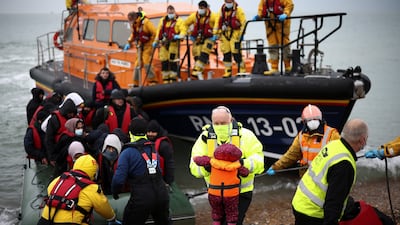
Migrants are brought ashore at Dungeness by RNLI Lifeboat members after crossing the Channel. Reuters -
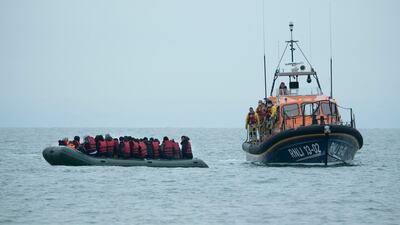
The past three years have seen a significant rise in attempted Channel crossings by migrants, despite the dangers. AFP -
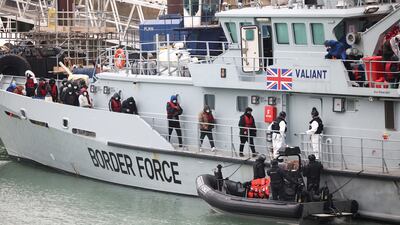
Migrants on board a Border Force rescue boat line up to disembark at Dover harbour after crossing the Channel. Reuters -
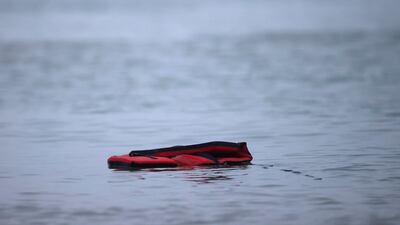
A life jacket is left in the water after a group of more than 40 migrants got on an inflatable dinghy to leave the coast of northern France and cross the Channel. Reuters -
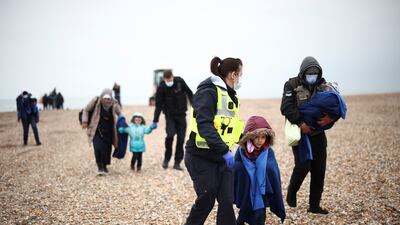
Migrants are escorted by Border Force staff in Dungeness, after being brought ashore by an RNLI lifeboat. Reuters -
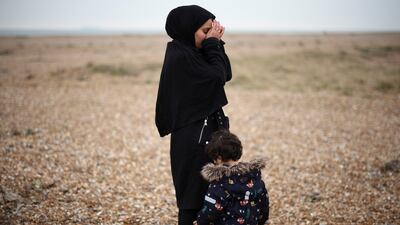
A woman with a child is brought ashore safely. Reuters -
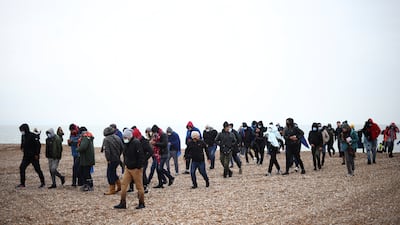
Migrants walk along a British beach after being brought ashore by an RNLI lifeboat. Reuters -

At least 27 migrants bound for Britain died on Wednesday when their boat sank in the English Channel. AP -
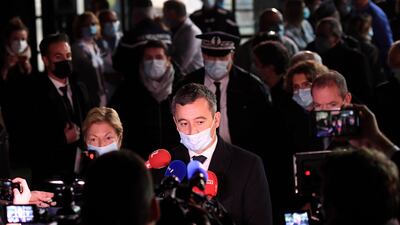
French Interior Minister Gerald Darmanin speaks to the press in Calais, northern France, after the tragedy. AP -
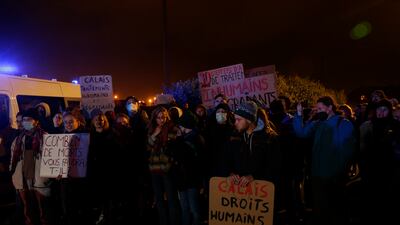
France's interior minister has called it the biggest tragedy involving migrants on the dangerous crossing to date. AP -
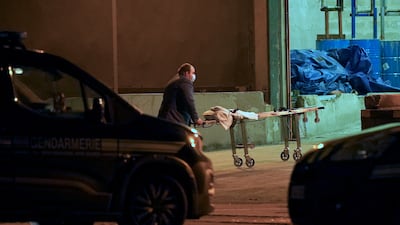
A man wheels a gurney into a warehouse in Calais, where it is believed the bodies of migrants are being transported. PA -
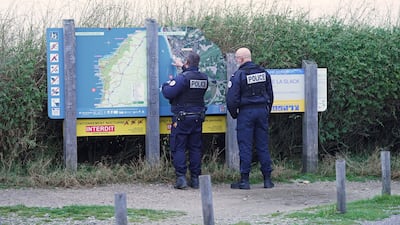
French police look at a map of the coast at Wimereux, in northern France. The stretch of beach is believed to be used by migrants aiming to cross the Channel. PA -
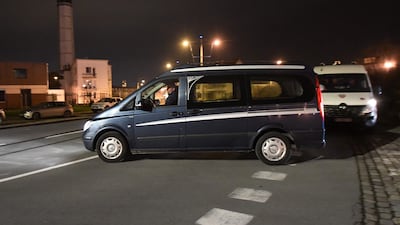
A funeral van leaves the port of Calais. AFP -
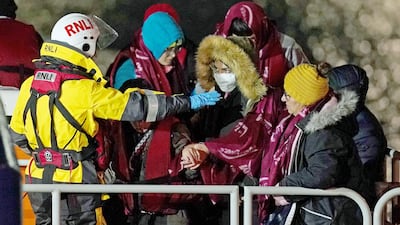
A group of people thought to be migrants are brought to Dover by the RNLI. PA


When word reached Zana that his brother might have died, he went to the office of the agent with whom he left his deposit, and threatened him in a fit of rage. The agent told him how to reach the smuggler, who calls himself “Bashdar Ranya”, a pseudonym.
Since Ranya is relatively small, Zana soon found the smuggler’s family. He threatened to send information about the smuggler to his sister in the UK to report them to the authorities.
Zana later was contacted by the smuggler via Facebook's messenger app, in which he said in a voice message that he was on the run in Germany.
“I am sorry. It was a surprise to me, too,” the voice in the message said. “I will compensate you.”
Authorities can do little about the smugglers, said Hazhar Azawi, director of Kurdish security in Ranya. "The smugglers are in Turkey. They [Iraqis] get a visa to go there, so what can we do?”
Lt Shorsh Ismail, a spokesman for Ranya's police, said authorities are aware of the travel agencies' activities but can do nothing without an order from Kurdistan’s presidency.
Mr Omar, the travel agent, said he does not believe he is doing anything wrong, insisting: "I am helping people.”
In the town's nearby park, 24-year-old Alan Aziz recalled his own failed attempt to reach Italy. He was on a boat in the Mediterranean when the currents took him to Libya instead. He spent nearly a month there before being repatriated.
“I need his help," he said of seeing a travel agent. "I want to try again for Europe.”

