


Weapons inspectors from the UN’s nuclear watchdog have detected uranium enriched almost to the purity required to build a nuclear bomb, senior diplomats told Bloomberg.
The two diplomats' comments were not independently verified but the International Atomic Energy Agency will issue a report on March 6 documenting whether Iran is returning towards compliance with nuclear “safeguards.”
The IAEA defines safeguards as "a set of technical measures that allow the IAEA to independently verify a state's legal commitment not to divert nuclear material from peaceful nuclear activities to nuclear weapons".
-
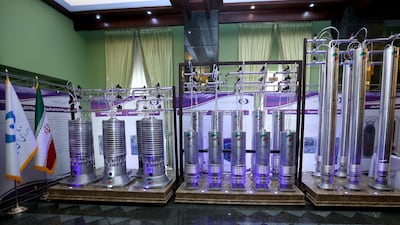
New generation Iranian centrifuges on display for Iran's National Nuclear Energy Day in Tehran, in April 2021. Iranian Presidency Office / Wana -

President Ebrahim Raisi, second right, is accompanied by Atomic Energy Organisation of Iran chief Mohammad Eslami, at Nuclear Technology Day in Tehran in April 2022. Iranian presidency / AFP -
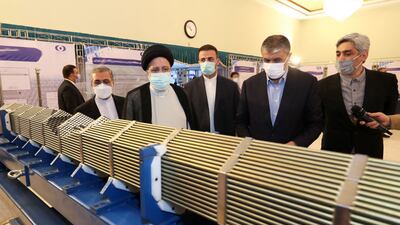
Mr Raisi and Mr Eslami at the April 2022 event. Iranian presidency / AFP -
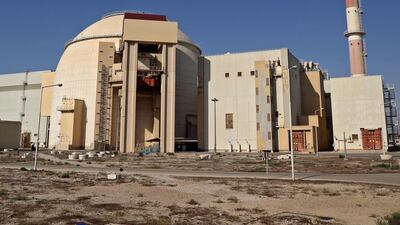
The Bushehr Nuclear Power Plant during a visit by Mr Raisi in October 2021. Iranian Presidency / AFP -
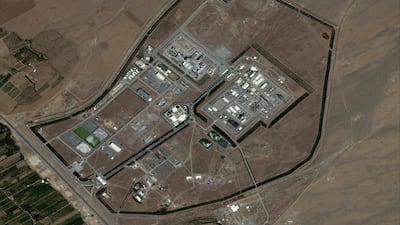
Iran's Arak Heavy Water Reactor complex, south of the capital Tehran in January 2020. Maxar Technologies / AFP -
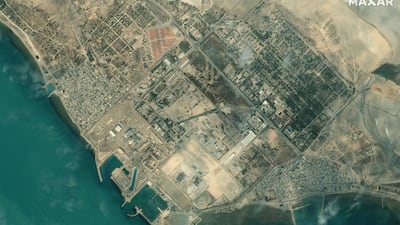
A satellite image of Iran's Bushehr Nuclear Power Plant in January 2020. Maxar Technologies / AFP -
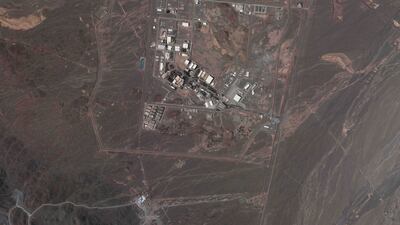
A satellite image of Iran's underground Natanz nuclear site in May 2022. Planet Labs PBC / AP -
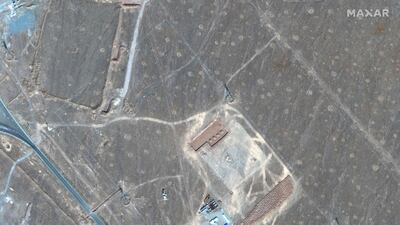
A satellite image in January 2020 of Iran's Fordow Fuel Enrichment Plant, north-east of the city of Qom. Maxar Technologies / AFP -
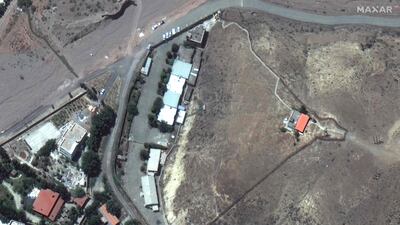
The Sanjarian nuclear centre, east of Tehran, in May 2021. Maxar Technologies / AFP


One diplomat said the highly enriched uranium found last week may have been an accidental accumulation of material in pipes at an enrichment centre, but this was something the IAEA was investigating.
The diplomats claimed the IAEA had found uranium enriched to 84 per cent last week.
Experts say that uranium must be enriched to about 90 per cent to make a nuclear weapon, although analysts from the US Institute for Scientific and Security Studies say devices can be made with slightly lower levels.
For civilian use in nuclear reactors, uranium is typically enriched below five per cent.
Some inspections have only recently resumed after more than a year of stalled negotiations to revive the 2015 nuclear deal between Iran and major powers.
It would have included regular UN inspections at sensitive nuclear research sites and Iran surrendering enriched material in exchange for a relaxing of trade sanctions.
Talks stalled as US, EU and Iranian negotiators drifted further from compromise while Iran continued to accelerate uranium enrichment, which jumped after former president Donald Trump walked away from the deal in 2018.
In 2019, Iran accused the IAEA of being complicit in industrial sabotage after attacks on nuclear and industrial sites, which Tehran also blames on Israel.
Iran also accused the IAEA of working for a US agenda in a dispute over remote monitoring cameras the organisation had installed at several sites where uranium was being enriched.
Last June, Iran switched off the cameras in a move that was roundly condemned by representatives of 30 countries on the IAEA board, except for China and Russia.
The IAEA is preparing its quarterly Iran safeguards report before a March 6 board of governors meeting in Vienna, where Tehran's nuclear work will figure prominently on the agenda.

