
A young couple in Iran have been sentenced to more than 10 years in jail after they were filmed dancing in front of a major Tehran landmark, activists have said.
Popular Instagram bloggers Astiyazh Haghighi and Amir Ahmadi, both in their early 20s, were arrested in early November after a video of them dancing in front of Azadi (Freedom) Tower went viral.
Ms Haghighi did not wear a headscarf in the video.
Iran has strict rules for women concerning headscarves and dancing in public.
A court in Tehran sentenced them each to 10 years and six months in prison, and banned them from using the internet and leaving Iran, US-based Human Rights Activists News Agency (HRANA) said on Tuesday.
The couple were convicted of “encouraging corruption and public prostitution”, as well as “gathering with the intention of disrupting national security”, it said.

HRANA quoted sources close to their families as saying they had been deprived of lawyers during the court proceedings, while attempts to secure their release on bail had been rejected.
The group said Ms Haghighi was now in the notorious Qarchak prison for women. Activists regularly condemn conditions at the prison, which lies outside Tehran.
Iranian authorities have clamped down severely on all forms of dissent since the death of Mahsa Amini in police custody in September, after she was arrested for wearing her hijab “inappropriately”.
Ms Amini's death triggered a wave of protests that have turned into a movement against the regime.
-

Iranians protest in Tehran after the death of 22-year-old Mahsa Amini after she was detained by the morality police in September. AP Photo -
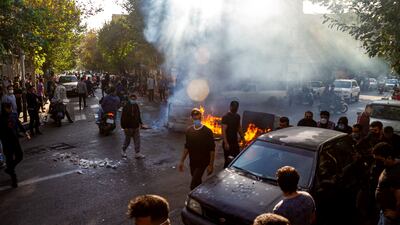
Protests have intensified despite a vicious government crackdown that has left as many as 200 people dead, although estimates of the toll by rights groups vary. AP Photo -
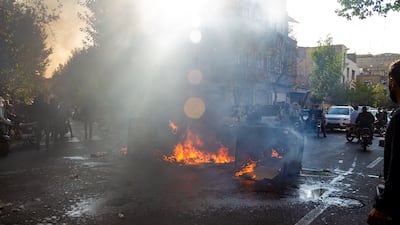
At least eight members of the security forces have also been killed or wounded during the unrest and there are signs that violent resistance could be intensifying. AP Photo -
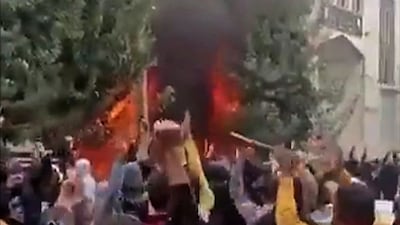
A fire burns at the office of the governor of Mahabad, in the West Azerbaijan province of Iran. AFP -
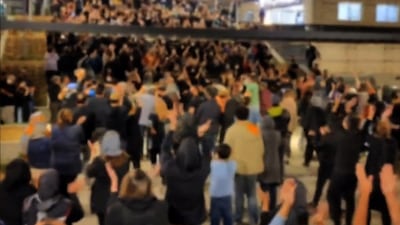
Protesters gather in the a courtyard of Chitgar complex in western Tehran. AFP -

Iranian protesters continue to defy a deadly crackdown by security forces. AFP -

A woman cuts her hair at the grave site of Nika Shahkarami in the city of Khorramabad, during a reported memorial held to mark 40 days since the death of the 16-year-old. AFP -
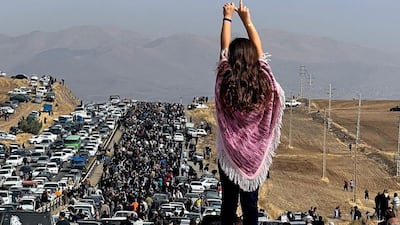
A woman not wearing a headscarf stands on top of a vehicle as thousands make their way towards Saqez, Mahsa Amini's home town, to mark 40 days since her death in police custody. AFP -
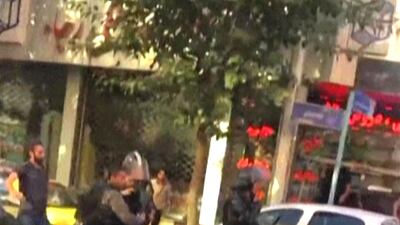
Iranian riot police prepare to confront protesters the capital, Tehran. AFP -

Iranian protesters surge forward amid clashes with riot police in Tehran. AFP -

A crowd blocks an intersection during a protest to mark 40 days since Amini's death in custody. AP Photo -

Iranian police arrive to disperse a protest in Tehran. AP Photo -
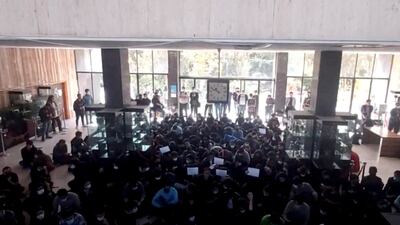
Protesters chant at a vigil for Amini at the Khajeh Nasir Toosi University of Technology in Tehran. Reuters -
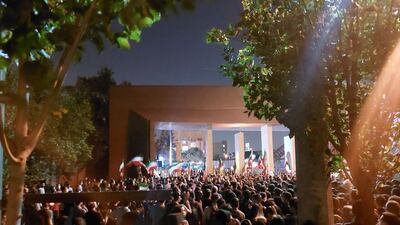
Students at Sharif University of Technology attend a protest. AP Photo -

Police outside Sharif University during a student protest. AP Photo -
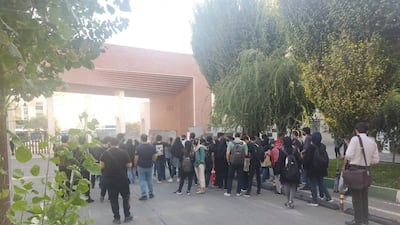
Students at the university protest over the death of Amini, who was in 'morality police' custody for allegedly breaking strict rules on head coverings for women. AP Photo -
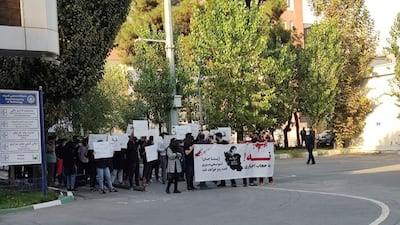
The students' banner says: 'No to mandatory hijab'. AP Photo


At least 14,000 people — ranging from prominent celebrities, journalists and lawyers to ordinary people who took to the streets — have been arrested, according to the UN.
The video of Ms Haghighi and Mr Ahmadi had been hailed as a symbol of the freedoms being demanded by the protest movement.
At one moment in the video, Mr Ahmadi lifts his fiancee as her long hair billows behind her.
The gigantic and futuristic Azadi Tower is a place of huge sensitivity. It opened under the rule of the last shah, Mohammad Reza Pahlavi, in the early 1970s when it was known as the Shahyad Tower. Shahyad means in memory of the Shah.
It was renamed after the shah was ousted in 1979. Its architect, a member of the Bahai faith that is not recognised in Iran today, now lives in exile.
Meanwhile, HRANA said Armita Abbasi, a young Iranian woman whose case has prompted international concern, went on trial on Sunday.
She was arrested in October in connection with protests in the city of Karaj, outside Tehran.
In November, US news outlet CNN cited sources and a medical official who said Ms Abbasi had been taken to hospital after she was raped in custody. Iranian authorities have denied the allegations.
HRANA and Iranian media on Tuesday quoted her lawyer Shahla Oroji as saying that the charges against Ms Abbasi, who has been denied bail, include disseminating propaganda against the system.

