

Iran has said it is stepping up its enrichment of uranium to 60 per cent at Fordow nuclear plant and is building more centrifuges just days after a UN watchdog pushed Tehran for answers on its nuclear activity.
Uranium for an atomic bomb must be enriched to 90 per cent — a short step away from 60 per cent enrichment, although some experts said it might be possible to build a bomb with more than 40 kilograms of 60 per cent enriched material.
According to the most recent quarterly report by the International Atomic Energy Agency (IAEA) Iran has about 62.3kg of 60 per cent enriched uranium.
-
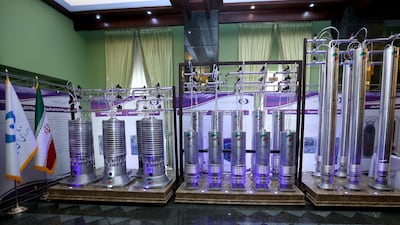
New generation Iranian centrifuges on display for Iran's National Nuclear Energy Day in Tehran, in April 2021. Iranian Presidency Office / Wana -

President Ebrahim Raisi, second right, is accompanied by Atomic Energy Organisation of Iran chief Mohammad Eslami, at Nuclear Technology Day in Tehran in April 2022. Iranian presidency / AFP -
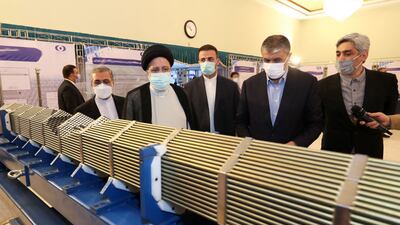
Mr Raisi and Mr Eslami at the April 2022 event. Iranian presidency / AFP -
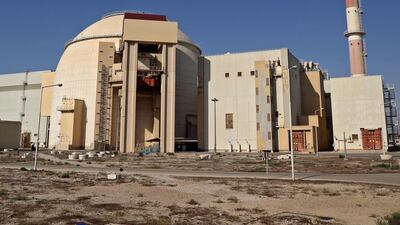
The Bushehr Nuclear Power Plant during a visit by Mr Raisi in October 2021. Iranian Presidency / AFP -
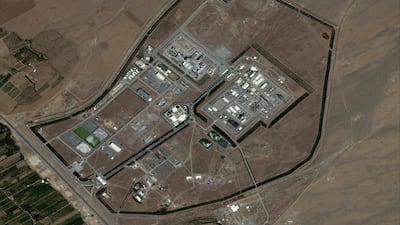
Iran's Arak Heavy Water Reactor complex, south of the capital Tehran in January 2020. Maxar Technologies / AFP -
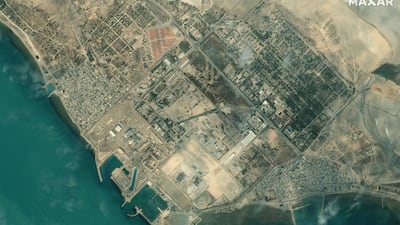
A satellite image of Iran's Bushehr Nuclear Power Plant in January 2020. Maxar Technologies / AFP -
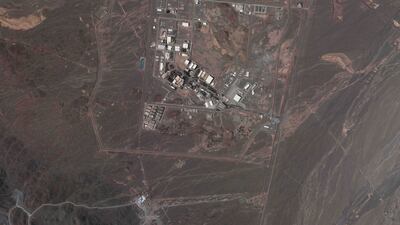
A satellite image of Iran's underground Natanz nuclear site in May 2022. Planet Labs PBC / AP -
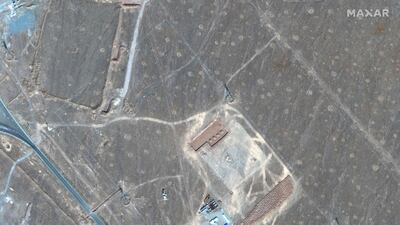
A satellite image in January 2020 of Iran's Fordow Fuel Enrichment Plant, north-east of the city of Qom. Maxar Technologies / AFP -
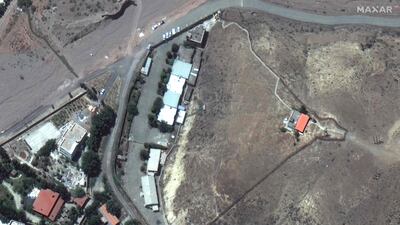
The Sanjarian nuclear centre, east of Tehran, in May 2021. Maxar Technologies / AFP


Tehran's SNN outlet reported the enrichment and new centrifuges on Tuesday, saying they sends “strong message” to the IAEA, which passed a resolution last week urging Iran to be clear about its nuclear activity.
Advanced centrifuges will be built at the Fordow and Natanz plants in what it said is a direct response to the IAEA resolution.
Iran has repeatedly stepped up its enrichment of uranium to levels prohibited under the 2015 nuclear deal, which broke down after the US withdrew from the agreement in 2018. Tehran has said it will install IR2M and IR4 centrifuges at the plants, more advanced than the IR1 centrifuges it is allowed to use under the accord.
It will also replace IR1 centrifuges at Fordow with IR6 centrifuges, the most advanced it possesses.
Tehran's leaders have said increased nuclear activity is in response to the US “maximum pressure” campaign imposed by former US president Donald Trump, who reimposed sanctions on Iran while in office.
The so-called maximum pressure campaign heavily restricted Iran's oil production and exports and, combined with the effect of the coronavirus pandemic, oil exports from Iran dropped sharply to about 300,000 barrels a day in late 2019, from about 2.5 million barrels per day before Mr Trump's sanctions.
Exports are now close to pre-sanctions levels, with most shipments going to China.
Earlier this year, the US said it would ease some sanctions on Iran's oil sector given modest progress in nuclear talks. But in September, Washington again tightened sanctions on crude exports.
Nonetheless, Iran has enough enriched uranium to build a nuclear bomb, experts said.
In October, the IAEA said it was racing to expand uranium enrichment at Natanz and intended to go further than previously planned.
This month, it agreed to an IAEA visit by the end of November over an IAEA investigation into traces of uranium at three undeclared sites, but was not expected to take action to address concerns about its operations.
It has yet to provide “technically credible explanations” for the traces, an EU delegation said at last week's IAEA board meeting.
The investigation is an obstacle to the revival of the nuclear agreement, with Iran saying it will not return to the deal until the investigation is closed.
The advanced centrifuges would have to be put into storage if the nuclear deal is revived.

