


Iran’s presidential candidates faced off on Tuesday in the country’s second electoral debate, only 10 days before polls open.
While the fiery first round yielded few coherent answers, its follow-up was dull, confusing and left little room for direct discussion.
Viewers and the candidates themselves criticised the format, in which questions were picked at random through a lottery system.
The host, television presenter Morteza Heydari, imposed a strict four-minute limit on responses, often cutting off candidates’ answers mid-sentence.
Sina Toossi, senior research analyst at the National Iranian American Council, said “the format of these debates is not conducive to eliciting substantive discussion from these candidates about themselves or their platforms”.
The restrictive format, he said, “prevents the moderate candidates from maximising the potential of these debates, which may be the intention behind them”.
-

Iran's former top nuclear negotiator and former presidential candidate Saeed Jalili. AFP -
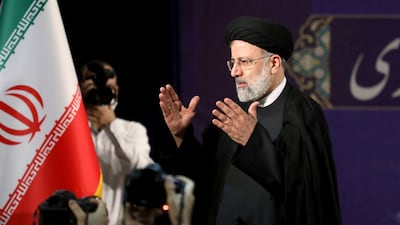
Ebrahim Raisi, head of Iran's judiciary. AP Photo -
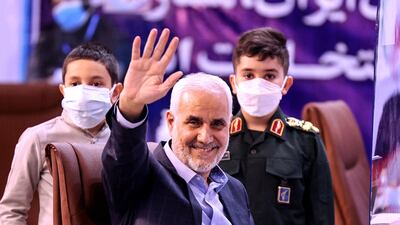
Former Iranian vice president Mohsen Mehralizadeh, accompanied by his grandsons, salutes supporters as he registers his candidacy at the Interior Ministry in the capital Tehran. AFP -
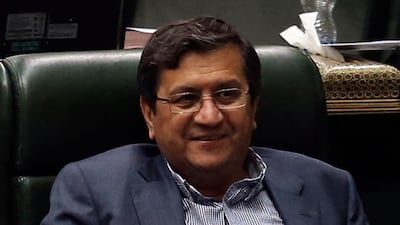
Abdolnaser Hemmati, Governor of the Central Bank of Iran, listens to a speech in parliament in Tehran. AFP -

Iranian conservative presidential candidate, Alireza Zakani. AFP -
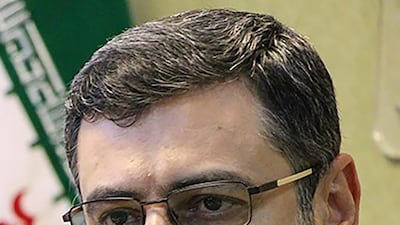
Amirhossein Ghazizadeh Hashemi. -
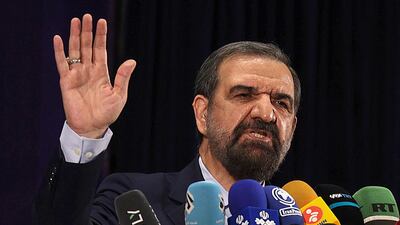
Iranian former chief of the Revolutionary Guards Mohsen Rezai. AFP


The debate was meant to focus on culture, society and politics but became a referendum on outgoing President Rouhani’s term, not discourse on substantive policy solutions.
The mostly hardliner candidates mocked Mr Rouhani’s previous campaign of hope, which focused on the now-defunct nuclear deal.
As the only Rouhani administration official, former Central Bank chief Abdolnaser Hemmati was immediately linked to the President’s failed policies, shouldering the criticisms aimed at the current administration.
Meanwhile, hardline judiciary chief Ebrahim Raisi, believed to be the race’s front-runner, largely escaped criticism. One candidate, Mohsen Mehralizadeh, did however, draw focus to Mr Raisi’s likely election win, saying the “sun, moon and universe” had been aligned by the Guardian Council to make “one person president”.
After taking much of the blame for Mr Rouhani, Mr Hemmati tried to defend himself, saying: “Some of you should send a letter to Trump and tell him: ‘Mr Trump, be happy, everything you did against the people of Iran, we blamed on Hemmati.’”
Iranian authorities hope to boost turnout, long held by government officials and Ayatollah Ali Khamenei himself as a sign of confidence in the government. After the debate, the state-linked Iranian Student Polling Agency projected a 38 per cent turnout by the country’s 59 million eligible voters, which would be a historic low signalling the deep-seated apathy of the Iranian electorate.
Economic sanctions, corruption and a general lack of trust in the government are largely fuelling the disinterest.
Mr Raisi, the ultra-hardline candidate, is believed to be a favourite of Mr Khamenei’s and a potential successor.
He brought up the lack of trust in the government, blaming much of the apathy on Mr Rouhani.
“People’s living conditions have been damaged badly. People’s businesses have been damaged gravely. People’s trust in the government maybe is at the lowest level in years and has been damaged severely,” he said.
Ironically, growing criticism with the current coming election largely comes from the perception that Mr Raisi is already the shoo-in for President, meaning very few societal changes are likely to be put into action. Calls for an election boycott have grown as the election draws closer, despite Mr Khamenei saying not voting is a sin.
But Fereshteh Sadeghi, a journalist in Tehran, said that in this election, turnout may no longer matter. Speaking at a Johns Hopkins University event for post-debate analysis, Ms Sadeghi said “low turnout will not affect the legitimacy of the Islamic Republic because it looks at itself as a stable establishment that has lasted for 43 years. If the economic situation improves, the Islamic Republic will capitalise on it for the next election.”
Though many already expect a win for Mr Raisi, the election on June 18 is far from a done deal.
“Iranian elections are notoriously unpredictable, and the dynamics of the race may very well change just a few days before the June 18th vote,” Mr Toossi said. There are only two reform-minded moderate candidates in the race, he said, and they have used the debates to speak directly to the public, urging them to vote.
The looming election is being held amid tension between Iran and the West as negotiations to resuscitate the nuclear deal continue in Vienna, Austria. Questions during the debate about the deal gave candidates such as Saeed Jalili the opportunity to criticise the Rouhani administration for its western-facing policies. He said the government was “waiting on” the West rather than focusing on regional alliances.
Mr Raisi, the frontrunner and long-time critic of the original nuclear deal, said he would make lifting sanctions a priority. Hours before the debate, a spokesman for the government confirmed the talks would continue regardless of who was elected.
US sanctions have taken an immense toll of Iran’s economy and have become a focal point of all the campaigns.
Since President Trump’s withdrawal from the deal, Iran has been clear that any future deal would require the lifting of US sanctions. But on Tuesday, US Secretary of State Antony Blinken told a Senate hearing he “would anticipate that, even in the event of a return to compliance with the JCPOA, hundreds of sanctions remain in place, including sanctions imposed by the Trump administration”.
The next and last debate is on June 12, six days before the election.

