• An Iranian vendor watches candidate Saeed Jalili speaking during the first televised debate between Iran presidential candidates, at a shop in Tehran on June 5, 2021. AFP
    An Iranian vendor watches candidate Saeed Jalili speaking during the first televised debate between Iran presidential candidates, at a shop in Tehran on June 5, 2021. AFP
  • An Iranian man watches candidate Ebrahim Raisi speaking during the first televised debate between presidential candidates, at a fresh produce shop in the capital Tehran, on June 5, 2021. AFP
    An Iranian man watches candidate Ebrahim Raisi speaking during the first televised debate between presidential candidates, at a fresh produce shop in the capital Tehran, on June 5, 2021. AFP
  • An Iranian man watches the first presidential candidates TV debate as candidate Ebrahim Raisi is speaking, in his shop in Tehran. EPA
    An Iranian man watches the first presidential candidates TV debate as candidate Ebrahim Raisi is speaking, in his shop in Tehran. EPA
  • An Iranian hairdresser works as the first presidential candidates' TV debate shows presidential candidate Ebrahim Raisi speaking. EPA
    An Iranian hairdresser works as the first presidential candidates' TV debate shows presidential candidate Ebrahim Raisi speaking. EPA
  • An Iranian woman watches the first presidential candidates TV debate on her phone. EPA
    An Iranian woman watches the first presidential candidates TV debate on her phone. EPA
  • Iranian presidential candidates, Saeed Jalili, Ebrahim Raisi, Amirhossein Ghazizade, Alireza Zakani, Mohsen Rezaie, Mohsen Mehralizadeh, and Abdol Naser Hemati, during the first televised debate between Iran presidential candidates at the Iran State television studio in Tehran. AFP PHOTO /Iranian Young Journalist Club
    Iranian presidential candidates, Saeed Jalili, Ebrahim Raisi, Amirhossein Ghazizade, Alireza Zakani, Mohsen Rezaie, Mohsen Mehralizadeh, and Abdol Naser Hemati, during the first televised debate between Iran presidential candidates at the Iran State television studio in Tehran. AFP PHOTO /Iranian Young Journalist Club
  • Iranian presidential candidate Ebrahim Raisi during the first televised debate between Iran presidential candidates. AFP PHOTO /Iranian Young Journalist Club
    Iranian presidential candidate Ebrahim Raisi during the first televised debate between Iran presidential candidates. AFP PHOTO /Iranian Young Journalist Club
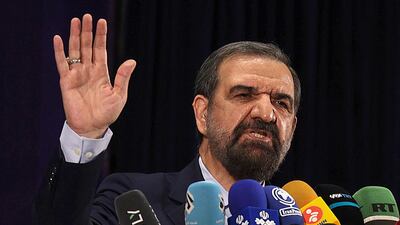
  • Iranian presidential candidate Mohsen Rezaie during the first televised debate between Iran presidential candidates. AFP PHOTO /Iranian Young Journalist Club
    Iranian presidential candidate Mohsen Rezaie during the first televised debate between Iran presidential candidates. AFP PHOTO /Iranian Young Journalist Club
  • Iranian presidential candidate Alireza Zakani during the first televised debate between Iran presidential candidates. AFP PHOTO /Iranian Young Journalist Club
    Iranian presidential candidate Alireza Zakani during the first televised debate between Iran presidential candidates. AFP PHOTO /Iranian Young Journalist Club
  • Iranian presidential candidate Mohsen Mehralizadeh during the first televised debate between Iran presidential candidates. AFP PHOTO /Iranian Young Journalist Club
    Iranian presidential candidate Mohsen Mehralizadeh during the first televised debate between Iran presidential candidates. AFP PHOTO /Iranian Young Journalist Club
  • Iranian presidential candidate Abdolnaser Hemati during the first televised debate between Iran presidential candidates. AFP PHOTO /Iranian Young Journalist Club
    Iranian presidential candidate Abdolnaser Hemati during the first televised debate between Iran presidential candidates. AFP PHOTO /Iranian Young Journalist Club
  • Iranian presidential candidate Amirhossein Ghazizade during the first televised debate between Iran presidential candidates. AFP PHOTO /Iranian Young Journalist Club
    Iranian presidential candidate Amirhossein Ghazizade during the first televised debate between Iran presidential candidates. AFP PHOTO /Iranian Young Journalist Club
  • Iranian presidential candidate Said Jalili during the first televised debate between Iran presidential candidates. AFP PHOTO /Iranian Young Journalist Club
    Iranian presidential candidate Said Jalili during the first televised debate between Iran presidential candidates. AFP PHOTO /Iranian Young Journalist Club

Iran's presidential candidates trade blame over economic woes


  • English
  • Arabic

Candidates in Iran's presidential election this month traded strong barbs in a debate on Saturday, accusing each other of treason or of lacking the education to run an economy devastated by three years of US sanctions.

While the five hardline candidates attacked the eight-year performance of outgoing pragmatist President Hassan Rouhani, the leading moderate candidate, former central bank chief Abdolnaser Hemmati, blamed hardliners for heightened tensions with the West that he said had worsened Iran’s economic woes.

In the first of three debates before the June 18 vote, former Revolutionary Guards chief Mohsen Rezaee accused Mr Hemmati of “fully complying” with US sanctions and said he should face treason charges.

“If I become president, I will ban Hemmati and a number of other officials of the Rouhani government from leaving the country, and I will prove in court which treacherous roles they played,” Mr Rezaee, an economics doctorate holder, said in the televised three-hour debate.

After Mr Rezaee's remarks, Mr Hemmati half-jokingly asked leading hardline candidate and judiciary chief Ebrahim Raisi: “Mr Raisi, can you give me assurances that no legal action will be taken against me after this event?”

With the hardline-led election watchdog, the Guardian Council, barring leading moderate and conservative candidates, the turnout is likely to be record low in a seven-man race between hardline and somewhat less hardline candidates, and two low-profile moderates.

“I watched the debate and now I am even more certain not to vote. This election is a joke,” said retired teacher Fariba Semsari by phone from the northern city of Rasht.

But a Tehran-based journalist, who asked not to be named, said: “Hemmati has drawn support among some who would have otherwise not voted. Among other things, his move to have himself represented in an interview with state TV by his outspoken wife has impressed some women.”

  • Iran's former top nuclear negotiator and former presidential candidate Saeed Jalili. AFP
    Iran's former top nuclear negotiator and former presidential candidate Saeed Jalili. AFP
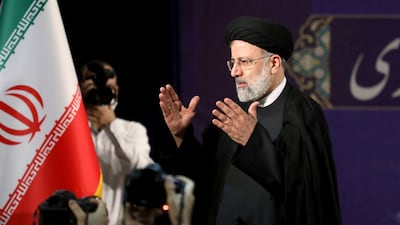
  • Ebrahim Raisi, head of Iran's judiciary. AP Photo
    Ebrahim Raisi, head of Iran's judiciary. AP Photo
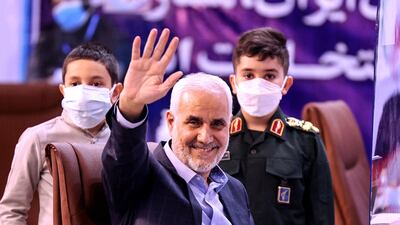
  • Former Iranian vice president Mohsen Mehralizadeh, accompanied by his grandsons, salutes supporters as he registers his candidacy at the Interior Ministry in the capital Tehran. AFP
    Former Iranian vice president Mohsen Mehralizadeh, accompanied by his grandsons, salutes supporters as he registers his candidacy at the Interior Ministry in the capital Tehran. AFP
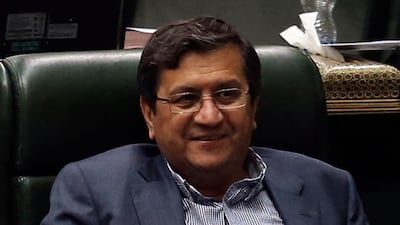
  • Abdolnaser Hemmati, Governor of the Central Bank of Iran, listens to a speech in parliament in Tehran. AFP
    Abdolnaser Hemmati, Governor of the Central Bank of Iran, listens to a speech in parliament in Tehran. AFP
  • Iranian conservative presidential candidate, Alireza Zakani. AFP
    Iranian conservative presidential candidate, Alireza Zakani. AFP
  • Amirhossein Ghazizadeh Hashemi.
    Amirhossein Ghazizadeh Hashemi.
  • Iranian former chief of the Revolutionary Guards Mohsen Rezai. AFP
    Iranian former chief of the Revolutionary Guards Mohsen Rezai. AFP

Mr Hemmati accused hardliners of isolating Iran internationally and ruining its economy, large sectors of which are dominated by hardline-run conglomerates.

“You have closed off our economy and our foreign contacts … I ask you and your friends, companies and institutions to please pull out of our economy, and then Iran's economy will surely improve,” said Mr Hemmati, an economics professor.

Mohsen Mehralizadeh, a moderate politician, said the economy could not be run by those with only traditional clerical studies, such as Mr Raisi.

“You have only six years of classic education, and while respecting your seminary studies, I must say that one cannot manage the economy and draw up plans for the country with this much education,” said Mr Mehralizadeh, who holds a doctorate in financial management.

Mr Raisi blasted Rouhani's government over the galloping inflation and the rapid fall in the value of Iran's currency, and rejected comments by Mr Hemmati and other moderates who blame US sanctions for Iran's economic troubles and say without proper management the country would have been worse off.

“This is like a goalkeeper who lets in 17 goals … and then says without me it would have been 30 goals!” said Mr Raisi, who holds a doctorate in Islamic law.

After the debate, cabinet spokesman Ali Rabiei asked state TV to provide an opportunity for the government to respond to “accusations and slanders” raised against it by some candidates.

The election is likely to reinforce the authority of Supreme Leader Ayatollah Ali Khamenei, who is close to hardliners, at a time when Tehran and six world powers are trying to revive their 2015 nuclear deal. Washington exited the accord three years ago and reimposed sanctions.