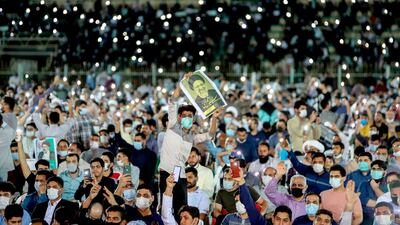

Iran will hold its presidential elections on Friday, largely seen as a referendum on the Rouhani administration and its policies.
The basic political structure of the Iranian government includes an executive branch, which is the president and his cabinet, then there is parliament, the judiciary and finally the Supreme Leader, at the top of the political order.
The president, although charged with making decisions both domestic and foreign is ultimately beholden to the direction of the Supreme Leader – Ayatollah Ali Khamenei, who will remain in the role until death or if he becomes too ill to rule.
The Supreme leader heads the assembly of experts and is the commander in chief in charge of the armed forces.
This is critical in Iran as the armed forces have a lot of power both inside Iran and outside Iran. They answer directly to Ayatollah Ali Khamenei.
In the coming election, it is expected that outgoing reformist president Hassan Rouhani will be replaced by a hardliner, most likely Ebrahim Raisi.
This is how the Iranian elections work. A few weeks ago, seven candidates were cleared to run for president by Iran’s hardline Guardian Council. The council chose seven men out of 592 hopefuls who registered to enter the contest. Nearly all the candidates were hardline and conservative candidates.
-

Iran's former top nuclear negotiator and former presidential candidate Saeed Jalili. AFP -
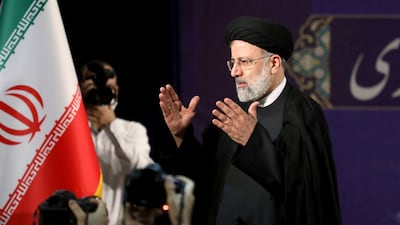
Ebrahim Raisi, head of Iran's judiciary. AP Photo -
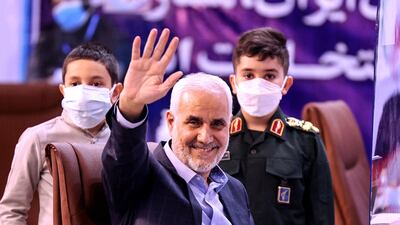
Former Iranian vice president Mohsen Mehralizadeh, accompanied by his grandsons, salutes supporters as he registers his candidacy at the Interior Ministry in the capital Tehran. AFP -
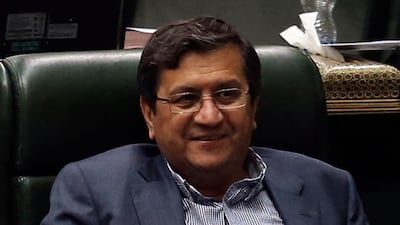
Abdolnaser Hemmati, Governor of the Central Bank of Iran, listens to a speech in parliament in Tehran. AFP -

Iranian conservative presidential candidate, Alireza Zakani. AFP -
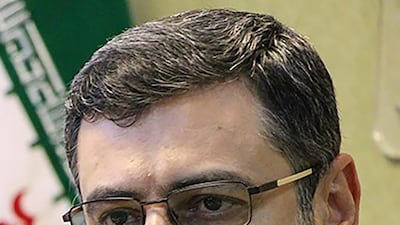
Amirhossein Ghazizadeh Hashemi. -
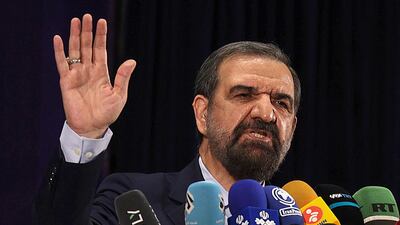
Iranian former chief of the Revolutionary Guards Mohsen Rezai. AFP


The Guardian Council is a panel of six senior clerics appointed by the Supreme Leader and six Islamic jurists. It vets aspiring candidates in all elections on a diverse range of technical and ideological grounds including level of education, commitment to Islam, the constitution and the Islamic Republic's values.
The hardline vetting body has never qualified women to stand, although some top clerics and human rights lawyers argue that the constitution does not exclude them.
In Iran, all Iranians over the age of 18 can vote, which means over 59.3 million of Iran's 85 million people can cast ballots. According to recent polling done by Iran's ISPA, a mere 42 per cent of eligible voters are expected to turnout.
Iran has a young to middle age demographic profile and this year the average age of voters will be nearly 40.
Polling stations will open at 7 am local time on June 18 and although typically they end at midnight, they are expected to run until 2 am the following day.
All ballots will be counted manually, so the final result may not be announced for three days, although partial results may appear sooner.
If no candidate wins at least 50 per cent plus one vote of all ballots cast, including blank ones, a run-off round between the top two candidates is held on the first Friday after the election result is declared.

