People gather around the rubble of a building that collapsed in the popular area of Gesr Suez, east of the Egyptian capital Cairo. AFP

Egypt's triple crises shine spotlight on societal ills but show appetite for change


Hamza Hendawi
  • English
  • Arabic

The past week has been exceptionally difficult for Egypt. A massive ship ran aground in the Suez Canal, blocking traffic in the vital trade route, a horrific train crash in the south of the country killed 19 and injured close to 200 others and the collapse of a 10-storey building in the heart of Cairo left 25 dead.

The three crises - on March 23, 26 and 27 - came at a time when the country of 100 million people was wrestling with even greater and perhaps more pressing problems: a third wave of the coronavirus pandemic and a massive Nile dam being built by Ethiopia that could deeply cut Egypt’s life-or-death share of the river’s water.

“The ship affair has severely taxed Egypt in terms of its international image,” said Gihad Auda, a political science professor at Cairo’s Helwan University. “It has been a litmus test for us in managing a crisis under the eyes of the world and amid growing perceptions of a nation struggling to manage a major resource.”

But the three incidents have revealed the duality of today’s Egypt, underscoring the serious challenges to modernising the most populous Arab nation at the same time as illuminating new and positive features of public discourse.

The Suez Canal crisis

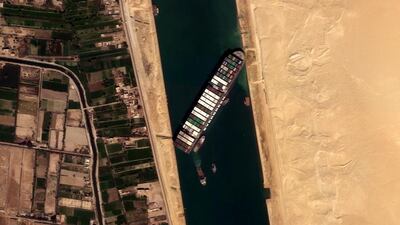
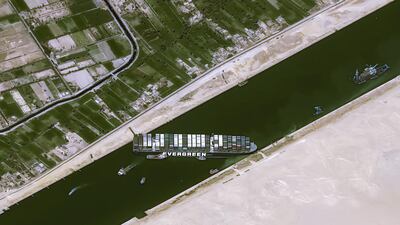
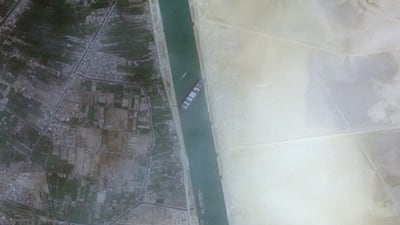
  • The 'Ever Given' container ship blocked the Suez Canal for six days. Reuters
    The 'Ever Given' container ship blocked the Suez Canal for six days. Reuters
  • The ship became grounded during high winds. Airbus Space
    The ship became grounded during high winds. Airbus Space
  • The incident cost the Suez Canal Authority up to $15 million in revenue. Airbus Space
    The incident cost the Suez Canal Authority up to $15 million in revenue. Airbus Space
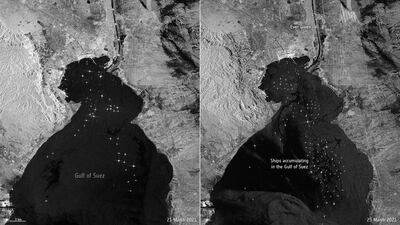
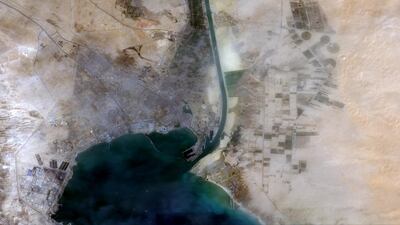
  • Left, the canal on March 21; right, traffic waits to enter the canal on March 25. Reuters
    Left, the canal on March 21; right, traffic waits to enter the canal on March 25. Reuters
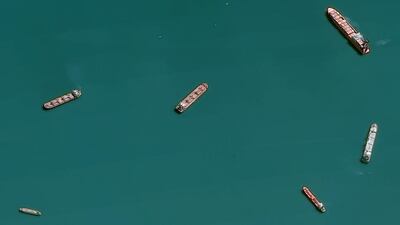
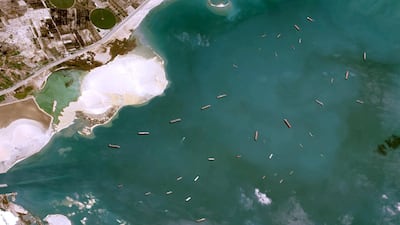
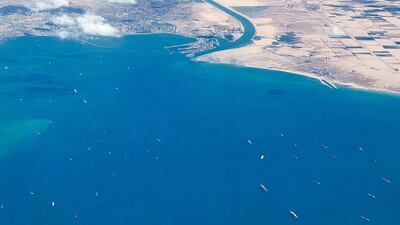
  • Vessels wait to pass through the canal after the 'Ever Given' ran aground. Airbus Space
    Vessels wait to pass through the canal after the 'Ever Given' ran aground. Airbus Space
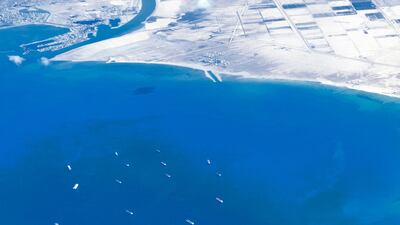
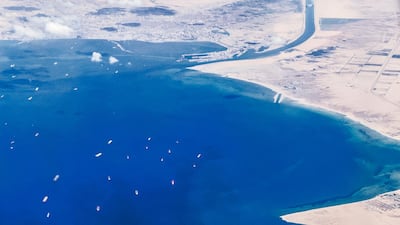
  • The incident caused a queue of vessels at the mouth of the canal. Airbus Space
    The incident caused a queue of vessels at the mouth of the canal. Airbus Space
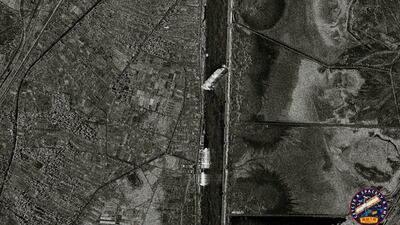
  • It took six days to free the 'Ever Given'. Research Institute of China Electronics Technology Group Corporation
    It took six days to free the 'Ever Given'. Research Institute of China Electronics Technology Group Corporation
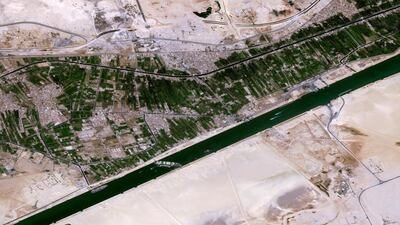
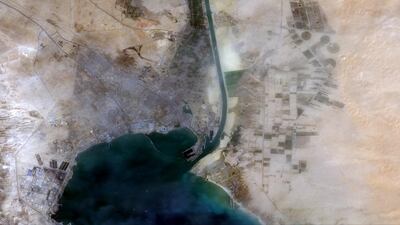
  • An image captured by the European Space Agency Copernicus Sentinel-2 satellite shows the canal during the blockage. Reuters
    An image captured by the European Space Agency Copernicus Sentinel-2 satellite shows the canal during the blockage. Reuters
  • The 200,000-tonne cargo ship caused damage to the vital waterway. Reuters
    The 200,000-tonne cargo ship caused damage to the vital waterway. Reuters
  • Egypt initially claimed $900m in compensation over the incident. Reuters
    Egypt initially claimed $900m in compensation over the incident. Reuters
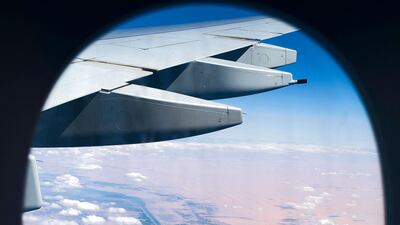
  • An image captured from a commercial plane shows traffic waiting to travel through the canal. AFP
    An image captured from a commercial plane shows traffic waiting to travel through the canal. AFP
  • The 'Ever Given' will be released by the Egyptian authorities on Wednesday. AFP
    The 'Ever Given' will be released by the Egyptian authorities on Wednesday. AFP
  • The 'Ever given' was stuck for six days and caused damage to the canal. AFP
    The 'Ever given' was stuck for six days and caused damage to the canal. AFP
  • The blockage cost the canal authority millions of dollars because cargo ships were unable to pass. AFP
    The blockage cost the canal authority millions of dollars because cargo ships were unable to pass. AFP

Egypt and the rest of the world first heard that the 200,000-tonne Ever Given had run aground in the Suez Canal, blocking all traffic in the strategic waterway, on Wednesday, a full day after disaster struck.

The chairman of the Suez Canal Authority, former Navy Admiral Osama Rabie, spoke directly to the media for the first time on Saturday, four days after the incident. Until then, the authority was issuing brief statements that appeared to focus more on Adm Rabie’s decision to monitor efforts to refloat the 400-metre-long vessel in person.

For the first two days of the crisis, which disrupted global trade and moved international markets, local media said very little about the Ever Given.

“The ship crisis may have a happy ending, but the world is unlikely to forget the initial news blackout on what happened,” said Ammar Ali Hassan, an Egyptian author and sociologist. “That is exactly how the international image of a nation is shattered.”

Adm Rabie owned up to criticism of the lack of transparency when he spoke in Saturday’s 80-minute news conference.

“I apologise for the delay in issuing press releases quoting me directly,” he said.

“It is a difficult situation and my main concern was to deal with it. Had I opened the door (to the media), I would have wasted so much of my time.”

The train crash

  • People gather around the wreckage of two trains that collided in the Tahta district of Sohag province, some 460 kilometres (285 miles) south of the Egyptian capital Cairo, reportedly killing at least 32 people and injuring scores of others. AFP
    People gather around the wreckage of two trains that collided in the Tahta district of Sohag province, some 460 kilometres (285 miles) south of the Egyptian capital Cairo, reportedly killing at least 32 people and injuring scores of others. AFP
  • People gather around the wreckage of two trains that collided in the Tahta district of Sohag province, some 460 kms (285 miles) south of the Egyptian capital Cairo. AFP
    People gather around the wreckage of two trains that collided in the Tahta district of Sohag province, some 460 kms (285 miles) south of the Egyptian capital Cairo. AFP
  • This image provided by Youm7 shows crowds of people inside a mangled train carriage at the scene of a train accident in southern Egypt. AP Photo
    This image provided by Youm7 shows crowds of people inside a mangled train carriage at the scene of a train accident in southern Egypt. AP Photo
  • This image provided by Youm7 shows crowds of people gathered around mangled train carriages at the scene of a train accident in southern Egypt. AP Photo
    This image provided by Youm7 shows crowds of people gathered around mangled train carriages at the scene of a train accident in southern Egypt. AP Photo
  • People gather around the wreckage of two trains that collided in the Tahta district of Sohag province, some 460 kilometres (285 miles) south of the Egyptian capital Cairo. AFP
    People gather around the wreckage of two trains that collided in the Tahta district of Sohag province, some 460 kilometres (285 miles) south of the Egyptian capital Cairo. AFP
  • People stand atop a turned over train carriage as others inspect the scene of a train crash in Sohag province. EPA
    People stand atop a turned over train carriage as others inspect the scene of a train crash in Sohag province. EPA
  • People stand atop a turned over train carriage as others inspect the scene of a train crash in Sohag province. EPA
    People stand atop a turned over train carriage as others inspect the scene of a train crash in Sohag province. EPA
  • A blanket covers a victim surrounded by people inspecting the scene of a train crash in Sohag province. EPA
    A blanket covers a victim surrounded by people inspecting the scene of a train crash in Sohag province. EPA
  • People inspect the scene of a train crash in Sohag province. EPA
    People inspect the scene of a train crash in Sohag province. EPA
  • People inspect the scene of a train crash in Sohag province. EPA
    People inspect the scene of a train crash in Sohag province. EPA
  • People inspect the scene of a train crash in Sohag province. EPA
    People inspect the scene of a train crash in Sohag province. EPA

In the aftermath of Friday’s train crash in the governorate of Sohag, Transport Minister Kamel El Wazir did something that’s rare in Egypt’s political discourse: He offered an apology. The retired army general, who enjoys the confidence of President Abdel Fatah El Sisi, offered more honesty the next day.

“Today, the president was clear. He asked whether we can still run the railway as we do now and prevent any more accidents from happening. I said ‘no,’ there will be more accidents,” he said on Saturday.

Gen El Wazir’s humility and honesty are refreshing in a country where top officials routinely shift the blame to others at times of crisis or promise what they cannot deliver.

Asked why he did not resign following the latest accident, he was equally candid.

“I am a combat soldier who does not run away. Running away is not a solution. If I run away then I betrayed my country.” But he also promised to step down if Egyptians thought he was not doing his job properly.

“It is indeed new that he offered an apology, but he needs to be held accountable, at least before parliament,” said Mr Hassan.

Gen El Wazir took up his current job in 2019, just days after his predecessor was fired following the death of 24 people when a fully fuelled engine car slammed into a wall in Cairo’s main station, igniting a ball of fire.

In the days since the Sohag incident, he has painted a harrowing picture of the challenges he faces while seeking to overhaul the transport sector at a cost of more than a trillion pounds.

The driver whose locomotive slammed into the back of a stationary train on Friday ignored warning signals and did not respond to radio messages warning him of the danger ahead. Some train drivers who caused past accidents were found to have switched off the automatic train control, the device that slows down trains or stops them altogether if potential trouble is ahead.

Amr Adeeb, a popular TV talk show host, said last week that he had learned that some passengers pull the brakes of trains near their homes and disembark to spare themselves the walk from the next station.

“If that’s true, then that is as bad as apostasy,” he said.

The building collapse

  • Rescuers work at the site where a building collapsed in Gesr al-Suez, Cairo. Reuters
    Rescuers work at the site where a building collapsed in Gesr al-Suez, Cairo. Reuters
  • Civilians, and security forces look on as rescue workers rush a victim to an ambulance after being removed from the rubble of a building that collapsed in the Egyptian capital Cairo. AFP
    Civilians, and security forces look on as rescue workers rush a victim to an ambulance after being removed from the rubble of a building that collapsed in the Egyptian capital Cairo. AFP
  • Civilians, and security forces look on as rescue workers search for survivors, with the aid of a bulldozer, in the rubble of a building that collapsed in the Egyptian capital Cairo. AFP
    Civilians, and security forces look on as rescue workers search for survivors, with the aid of a bulldozer, in the rubble of a building that collapsed in the Egyptian capital Cairo. AFP
  • Rescue team at work in the aftermath of a residential building collapse in Gesr Al Suez, Cairo. EPA
    Rescue team at work in the aftermath of a residential building collapse in Gesr Al Suez, Cairo. EPA
  • People and rescuers gather around the rubble of a building that collapsed in the Egyptian capital Cairo. AFP
    People and rescuers gather around the rubble of a building that collapsed in the Egyptian capital Cairo. AFP
  • Rescue team at work in the aftermath of a residential building collapse in Gesr Al Suez, Cairo. EPA
    Rescue team at work in the aftermath of a residential building collapse in Gesr Al Suez, Cairo. EPA
  • Civilians, and security forces look on as rescue workers search for survivors, with the aid of bulldozers, in the rubble of a building that collapsed in the Egyptian capital Cairo. AFP
    Civilians, and security forces look on as rescue workers search for survivors, with the aid of bulldozers, in the rubble of a building that collapsed in the Egyptian capital Cairo. AFP
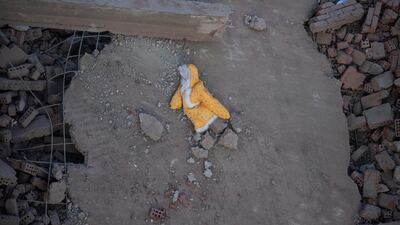
  • A coat sits among the rubble in the aftermath of a residential building collapse in Gesr Al Suez, Cairo. EPA
    A coat sits among the rubble in the aftermath of a residential building collapse in Gesr Al Suez, Cairo. EPA

It was the week’s grim finale, though tragically not uncommon.

A 10-storey building not far from the centre of Cairo collapsed on Saturday. Reasons given for the collapse varied.

Some accounts said seven of the 10 storeys were added illegally, placing too much pressure on the foundations. Other reports spoke of the first floor being rented out to investors using it for giant refrigerators to store fresh fruits and vegetables, with water constantly leaking and weakening the foundations.

Mr El Sisi has personally led a high-profile campaign to stop illegal construction in Egypt. Last August, he threatened to deploy the army in “every village” to stop more illegal buildings going up. He said there were a total of 700,000 building violations across the country.

At least 70 per cent of all construction in Egypt since 1985 is illegal and 50 per cent of the country’s entire urban areas are the product of illegal or unplanned construction, he said.

Adding floors to existing buildings without permits or skipping the counsel of qualified architects and civil engineers is common in Egypt, where developers look for quick profit without heed to building codes or safety.

Corruption is also partially to blame, especially at local councils where officials turn a blind eye to violations in exchange for bribes or favours.


Where%20the%20Crawdads%20Sing
%3Cp%3E%3Cstrong%3EDirector%3A%20%3C%2Fstrong%3EOlivia%20Newman%3Cbr%3E%3Cstrong%3EStars%3A%3C%2Fstrong%3E%20Daisy%20Edgar-Jones%2C%20Taylor%20John%20Smith%2C%20Harris%20Dickinson%2C%20David%20Strathairn%3Cbr%3E%3Cstrong%3ERating%3A%3C%2Fstrong%3E%202%2F5%3C%2Fp%3E%0A
What is dialysis?

Dialysis is a way of cleaning your blood when your kidneys fail and can no longer do the job.

It gets rid of your body's wastes, extra salt and water, and helps to control your blood pressure. The main cause of kidney failure is diabetes and hypertension.

There are two kinds of dialysis — haemodialysis and peritoneal.

In haemodialysis, blood is pumped out of your body to an artificial kidney machine that filter your blood and returns it to your body by tubes.

In peritoneal dialysis, the inside lining of your own belly acts as a natural filter. Wastes are taken out by means of a cleansing fluid which is washed in and out of your belly in cycles.

It isn’t an option for everyone but if eligible, can be done at home by the patient or caregiver. This, as opposed to home haemodialysis, is covered by insurance in the UAE.

The alternatives

• Founded in 2014, Telr is a payment aggregator and gateway with an office in Silicon Oasis. It’s e-commerce entry plan costs Dh349 monthly (plus VAT). QR codes direct customers to an online payment page and merchants can generate payments through messaging apps.

• Business Bay’s Pallapay claims 40,000-plus active merchants who can invoice customers and receive payment by card. Fees range from 1.99 per cent plus Dh1 per transaction depending on payment method and location, such as online or via UAE mobile.

• Tap started in May 2013 in Kuwait, allowing Middle East businesses to bill, accept, receive and make payments online “easier, faster and smoother” via goSell and goCollect. It supports more than 10,000 merchants. Monthly fees range from US$65-100, plus card charges of 2.75-3.75 per cent and Dh1.2 per sale.

2checkout’s “all-in-one payment gateway and merchant account” accepts payments in 200-plus markets for 2.4-3.9 per cent, plus a Dh1.2-Dh1.8 currency conversion charge. The US provider processes online shop and mobile transactions and has 17,000-plus active digital commerce users.

• PayPal is probably the best-known online goods payment method - usually used for eBay purchases -  but can be used to receive funds, providing everyone’s signed up. Costs from 2.9 per cent plus Dh1.2 per transaction.

Our family matters legal consultant

Name: Hassan Mohsen Elhais

Position: legal consultant with Al Rowaad Advocates and Legal Consultants.

Mercer, the investment consulting arm of US services company Marsh & McLennan, expects its wealth division to at least double its assets under management (AUM) in the Middle East as wealth in the region continues to grow despite economic headwinds, a company official said.

Mercer Wealth, which globally has $160 billion in AUM, plans to boost its AUM in the region to $2-$3bn in the next 2-3 years from the present $1bn, said Yasir AbuShaban, a Dubai-based principal with Mercer Wealth.

Within the next two to three years, we are looking at reaching $2 to $3 billion as a conservative estimate and we do see an opportunity to do so,” said Mr AbuShaban.

Mercer does not directly make investments, but allocates clients’ money they have discretion to, to professional asset managers. They also provide advice to clients.

“We have buying power. We can negotiate on their (client’s) behalf with asset managers to provide them lower fees than they otherwise would have to get on their own,” he added.

Mercer Wealth’s clients include sovereign wealth funds, family offices, and insurance companies among others.

From its office in Dubai, Mercer also looks after Africa, India and Turkey, where they also see opportunity for growth.

Wealth creation in Middle East and Africa (MEA) grew 8.5 per cent to $8.1 trillion last year from $7.5tn in 2015, higher than last year’s global average of 6 per cent and the second-highest growth in a region after Asia-Pacific which grew 9.9 per cent, according to consultancy Boston Consulting Group (BCG). In the region, where wealth grew just 1.9 per cent in 2015 compared with 2014, a pickup in oil prices has helped in wealth generation.

BCG is forecasting MEA wealth will rise to $12tn by 2021, growing at an annual average of 8 per cent.

Drivers of wealth generation in the region will be split evenly between new wealth creation and growth of performance of existing assets, according to BCG.

Another general trend in the region is clients’ looking for a comprehensive approach to investing, according to Mr AbuShaban.

“Institutional investors or some of the families are seeing a slowdown in the available capital they have to invest and in that sense they are looking at optimizing the way they manage their portfolios and making sure they are not investing haphazardly and different parts of their investment are working together,” said Mr AbuShaban.

Some clients also have a higher appetite for risk, given the low interest-rate environment that does not provide enough yield for some institutional investors. These clients are keen to invest in illiquid assets, such as private equity and infrastructure.

“What we have seen is a desire for higher returns in what has been a low-return environment specifically in various fixed income or bonds,” he said.

“In this environment, we have seen a de facto increase in the risk that clients are taking in things like illiquid investments, private equity investments, infrastructure and private debt, those kind of investments were higher illiquidity results in incrementally higher returns.”

The Abu Dhabi Investment Authority, one of the largest sovereign wealth funds, said in its 2016 report that has gradually increased its exposure in direct private equity and private credit transactions, mainly in Asian markets and especially in China and India. The authority’s private equity department focused on structured equities owing to “their defensive characteristics.”

How Apple's credit card works

The Apple Card looks different from a traditional credit card — there's no number on the front and the users' name is etched in metal. The card expands the company's digital Apple Pay services, marrying the physical card to a virtual one and integrating both with the iPhone. Its attributes include quick sign-up, elimination of most fees, strong security protections and cash back.

What does it cost?

Apple says there are no fees associated with the card. That means no late fee, no annual fee, no international fee and no over-the-limit fees. It also said it aims to have among the lowest interest rates in the industry. Users must have an iPhone to use the card, which comes at a cost. But they will earn cash back on their purchases — 3 per cent on Apple purchases, 2 per cent on those with the virtual card and 1 per cent with the physical card. Apple says it is the only card to provide those rewards in real time, so that cash earned can be used immediately.

What will the interest rate be?

The card doesn't come out until summer but Apple has said that as of March, the variable annual percentage rate on the card could be anywhere from 13.24 per cent to 24.24 per cent based on creditworthiness. That's in line with the rest of the market, according to analysts

What about security? 

The physical card has no numbers so purchases are made with the embedded chip and the digital version lives in your Apple Wallet on your phone, where it's protected by fingerprints or facial recognition. That means that even if someone steals your phone, they won't be able to use the card to buy things.

Is it easy to use?

Apple says users will be able to sign up for the card in the Wallet app on their iPhone and begin using it almost immediately. It also tracks spending on the phone in a more user-friendly format, eliminating some of the gibberish that fills a traditional credit card statement. Plus it includes some budgeting tools, such as tracking spending and providing estimates of how much interest could be charged on a purchase to help people make an informed decision. 

* Associated Press 

The specs

Engine: 6.2-litre V8

Transmission: ten-speed

Power: 420bhp

Torque: 624Nm

Price: Dh325,125

On sale: Now

Defence review at a glance

• Increase defence spending to 2.5% of GDP by 2027 but given “turbulent times it may be necessary to go faster”

• Prioritise a shift towards working with AI and autonomous systems

• Invest in the resilience of military space systems.

• Number of active reserves should be increased by 20%

• More F-35 fighter jets required in the next decade

• New “hybrid Navy” with AUKUS submarines and autonomous vessels

Related
Tamkeen's offering
  • Option 1: 70% in year 1, 50% in year 2, 30% in year 3
  • Option 2: 50% across three years
  • Option 3: 30% across five years 
Timeline

2012-2015

The company offers payments/bribes to win key contracts in the Middle East

May 2017

The UK SFO officially opens investigation into Petrofac’s use of agents, corruption, and potential bribery to secure contracts

September 2021

Petrofac pleads guilty to seven counts of failing to prevent bribery under the UK Bribery Act

October 2021

Court fines Petrofac £77 million for bribery. Former executive receives a two-year suspended sentence 

December 2024

Petrofac enters into comprehensive restructuring to strengthen the financial position of the group

May 2025

The High Court of England and Wales approves the company’s restructuring plan

July 2025

The Court of Appeal issues a judgment challenging parts of the restructuring plan

August 2025

Petrofac issues a business update to execute the restructuring and confirms it will appeal the Court of Appeal decision

October 2025

Petrofac loses a major TenneT offshore wind contract worth €13 billion. Holding company files for administration in the UK. Petrofac delisted from the London Stock Exchange

November 2025

180 Petrofac employees laid off in the UAE

The%20specs%3A%20Panamera%20Turbo%20E-Hybrid
%3Cp%3E%3Cstrong%3EEngine%3A%20%3C%2Fstrong%3E4.0-litre%20twin-turbo%20V8%20hybrid%0D%3Cbr%3E%3Cstrong%3EPower%3A%20%3C%2Fstrong%3E680hp%0D%3Cbr%3E%3Cstrong%3ETorque%3A%20%3C%2Fstrong%3E930Nm%0D%3Cbr%3E%3Cstrong%3ETransmission%3A%20%3C%2Fstrong%3EEight-speed%20dual-clutch%20auto%0D%3Cbr%3E%3Cstrong%3EPrice%3A%20%3C%2Fstrong%3EFrom%20Dh749%2C000%0D%3Cbr%3E%3Cstrong%3EOn%20sale%3A%20%3C%2Fstrong%3ENow%3C%2Fp%3E%0A
The%20specs%3A%202024%20Panamera
%3Cp%3E%3Cstrong%3EEngine%3A%20%3C%2Fstrong%3E2.9-litre%20twin-turbo%20V6%0D%3Cbr%3E%3Cstrong%3EPower%3A%20%3C%2Fstrong%3E353hp%0D%3Cbr%3E%3Cstrong%3ETorque%3A%20%3C%2Fstrong%3E500Nm%0D%3Cbr%3E%3Cstrong%3ETransmission%3A%20%3C%2Fstrong%3EEight-speed%20dual-clutch%20auto%0D%3Cbr%3E%3Cstrong%3EPrice%3A%20%3C%2Fstrong%3EFrom%20Dh408%2C200%0D%3Cbr%3E%3Cstrong%3EOn%20sale%3A%3C%2Fstrong%3E%20Now%3C%2Fp%3E%0A
COMPANY%20PROFILE
%3Cp%3E%3Cstrong%3ECompany%3A%20%3C%2Fstrong%3EGrowdash%0D%3Cbr%3E%3Cstrong%3EStarted%3A%20%3C%2Fstrong%3EJuly%202022%0D%3Cbr%3E%3Cstrong%3EFounders%3A%20%3C%2Fstrong%3ESean%20Trevaskis%20and%20Enver%20Sorkun%0D%3Cbr%3E%3Cstrong%3EBased%3A%20%3C%2Fstrong%3EDubai%2C%20UAE%0D%3Cbr%3E%3Cstrong%3EIndustry%3A%20%3C%2Fstrong%3ERestaurant%20technology%0D%3Cbr%3E%3Cstrong%3EFunding%20so%20far%3A%3C%2Fstrong%3E%20%24750%2C000%0D%3Cbr%3E%3Cstrong%3EInvestors%3A%20%3C%2Fstrong%3EFlat6Labs%2C%20Plus%20VC%2C%20Judah%20VC%2C%20TPN%20Investments%20and%20angel%20investors%2C%20including%20former%20Talabat%20chief%20executive%20Abdulhamid%20Alomar%2C%20and%20entrepreneur%20Zeid%20Husban%3C%2Fp%3E%0A
GAC GS8 Specs

Engine: 2.0-litre 4cyl turbo

Power: 248hp at 5,200rpm

Torque: 400Nm at 1,750-4,000rpm

Transmission: 8-speed auto

Fuel consumption: 9.1L/100km

On sale: Now

Price: From Dh149,900

The bio

Favourite book: Peter Rabbit. I used to read it to my three children and still read it myself. If I am feeling down it brings back good memories.

Best thing about your job: Getting to help people. My mum always told me never to pass up an opportunity to do a good deed.

Best part of life in the UAE: The weather. The constant sunshine is amazing and there is always something to do, you have so many options when it comes to how to spend your day.

Favourite holiday destination: Malaysia. I went there for my honeymoon and ended up volunteering to teach local children for a few hours each day. It is such a special place and I plan to retire there one day.

THE SPECS

Engine: 1.5-litre turbocharged four-cylinder

Transmission: Constant Variable (CVT)

Power: 141bhp 

Torque: 250Nm 

Price: Dh64,500

On sale: Now

Huroob Ezterari

Director: Ahmed Moussa

Starring: Ahmed El Sakka, Amir Karara, Ghada Adel and Moustafa Mohammed

Three stars