The autobiographical journey of Zineb Sedira, from a Parisian 'ghetto' to the upper echelons of the international art world, is never far from the surface of her art. Photo: Thierry Bal, courtesy of Zineb Sedira and Mennour, Paris
The autobiographical journey of Zineb Sedira, from a Parisian 'ghetto' to the upper echelons of the international art world, is never far from the surface of her art. Photo: Thierry Bal, courtesy of Z

Me, myself and identity: Artist Zineb Sedira likes to get up close and political


Lemma Shehadi
  • English
  • Arabic

In a small framed photograph in the living room of a flat in Brixton, young Zineb Sedira is pictured in her father’s arms surrounded by three older siblings.

The family would grow from that moment captured in circa 1965 to include five more children but Sedira’s favourite was always Farida, on the left of the image, hands clasped in front of her white dress and looking slightly off camera.

As the eldest, Farida was the only one born in her parents’ native Algeria before, daring to dream an emancipatory dream, they left their conflict-torn country for a better life.

Looking back, Sedira, now 60, regards that promise of a more hopeful future to have remained largely unfulfilled not least because of its backdrop - a housing estate in the neglected Parisian suburbs.

“It was where all the immigrants were, particularly the North Africans and sub-Saharan Africans,” the acclaimed photographer and video artist tells The National. “In a kind of ghetto.”

Zineb Sedira in her father's arms with sister Farida and brothers Djamel and Boualem in Gennevilliers, France. Photo: Zineb Sedira

There was, however, a strong sense of community among the immigrant families in the Gennevilliers commune that lends a bittersweet tinge to the memories that Sedira shares.

“We were a lot of Moroccans, Tunisians and Algerians. Our house was always full of mothers who came with their children,” she says.

She was born in 1963, just after the end of the eight-year war of independence in which an estimated 400,000 Algerians died.

Despite the vast number of refugees - Algerians, Jews and European settlers - who poured in from the Mediterranean seeking refuge, Sedira evokes a period in which France’s defeat as a colonial power had all but been erased from collective memory.

“In the 1960s and 1970s, when I was at school, they didn’t call it the Algerian War. The teachers referred to it as: ‘The events’, which minimalised the brutality of the conflict.”

Nonetheless, the Sediras acutely felt the conflict’s repercussions daily. They, as with many of the displaced, were marginalised and even the young Zineb noticed the “enormous amounts of racism around me”.

Her parents, previously freedom fighters in Algeria, became a factory worker and homemaker after crossing the Mediterranean Sea by boat.

Much to Zineb’s irritation as a child, they were never addressed using the respectful vous, as is common when speaking to strangers in France, but in the informal tu as an expression of their subordination.

Family holidays to the countryside in Algeria came as a welcome relief, where she especially recalls the house of her grandmother. It was basic, but Zineb loved it.

The housing estate, above in the background, where the Sedira family lived in the neglected Parisian suburb of Gennevilliers. Getty Images

With no schools in the region during colonisation, knowledge was transmitted orally, and her own storytelling skills were honed at the feet of her grandmother and mother, who habitually recounted tales, real and imagined.

But the complicated interplay between belonging, displacement and integration was also revealed cruelly to the brood of siblings who were taunted as foreigners on their stays in what Sedira regarded as their homeland.

“Some kids threw stones at us and told us to go back to where we came from,” she recalls.

During her teenage years in Paris, she strongly identified with the struggles for freedom and social justice in the lyrics of the funk and rhythm & blues played by Afro-American musicians.

Her fondest memories are of the Thursdays, when school was closed, and her lifelong love story with cinema began with visits to Les Variétés with her father.

Sedira's fondest memories of childhood are of the Thursdays, when school was closed, and her life-long love story with cinema began with visits to Les Variétés with her father. Photo: Zineb Sedira

In that magical space, the two would watch Hollywood blockbusters and Egyptian melodramas full of music and dance, although the Italian epics and Spaghetti Westerns were to have the greatest impact.

Later, she would be drawn to Cinema Jean Vigo with its art-house offerings and militant, anti-colonial movies.

Sedira went on to use the medium of film to striking effect decades afterwards in an homage to cinema in Dreams Have No Titles, which she first presented at the Venice Biennale - widely regarded as the most important event on the arts calendar - in 2022.

It is a cautionary tale that relates her own family’s migrant experience, encompassing the relentless discrimination in France and Algeria that took a toll on all of them but particularly on Farida.

Sedira remembers being told the news of her sister’s suicide over the telephone. Plagued by what she describes as a mal de vivre identitaire - an existential discomfort with her own identity - Farida had killed herself at 19.

The Venice Biennale was the first time that Sedira revealed in public the suicide of her beloved sister Farida. 'This is the kind of thing you only talk about when you’re ready,' she says. Photo: Thierry Bal. Courtesy Zineb Sedira and Mennour, Paris

The Biennale was the first time that Sedira had revealed the tragedy in public. “People were surprised, even though I’m known for making autobiographical work. I don’t shout from the rooftops about it. This is the kind of thing that you only talk about when you’re ready.”

Shot largely within the sets she built inside the French Pavilion, the film brings together two common strands in Sedira’s artistic work: the personal and the political.

The year 2022 marked the 60th anniversary of Algeria’s independence, prompting Sedira’s decision to connect her own narrative to the country’s revolutionary cinema culture.

Her film incorporated footage from the Italian filmmaker Gillo Pontecorvo’s The Battle of Algiers (1963), which was banned in France and then struggled for decades to find distribution. “I saw it for the first time when I was at art school in London, in the mid 1990s,” Sedira says.

After 1962, the country became a hub for left-wing filmmakers from around the world, who congregated at the Cinematheque d’Algiers, a cultural centre for cinema, and the Pan-African film festival of Algiers in 1969.

Young Algerians hang a national flag on a wall in the Casbah of Algiers on July 6, 1962, a day after the proclamation of the independence. AFP

“The Sixties are really an important decade, because there was strong international political consciousness that was anti-capitalist and anti-colonial,” she says.

Sedira began exploring this chapter in Algeria's history for her exhibition A Brief Moment at the Jeu de Paume in 2019 for which she was shortlisted for the prestigious Deutsche Borse Photography Prize.

“Algiers became the liberation capital of the 'Third World' with a strong emphasis on Pan Africanism. What did it mean for an Algerian to discover his African-ness? Under colonialism, he knew the country had a north and a south. But, suddenly, he discovered that the country was huge and the people had their own cultures.”

It is telling of social mobility in France that the first woman and first artist of North African descent to represent the country at the Biennale had been an expatriate in London for more than 30 years.

“I thought: finally France takes steps to modernise. The UK has been presenting women artists in Venice for over 20 years,” she remembers thinking on learning of her selection.

Sedira moved to London in 1986, aged 23, partly prompted by wanting to distance herself from the constant questions of identity.

The friendship between Zineb Sedira and the British Afro-Caribbean artist Sonia Boyce, who has long been a neighbour in Brixton, endures to this day. Getty Images

Had she remained in France, she thinks she might not have become an artist at all. “It was only a certain elite who went to art schools there,” Sedira says.

But the main reason for relocating was a desire to learn English “while partying”, and a passion for music, particularly jazz and blues.

Coincidentally, she ended up living opposite an island of green parkland that was named after the pioneer bebop drummer Max Roach, in a Victorian terraced house on one of the UK’s most squatted streets.

She was quickly absorbed into the British Black Art movement. Her friendship with the British Afro-Caribbean artist Sonia Boyce, who is a neighbour in Brixton, endures to this day. Boyce became the first black woman to represent the UK in Venice - in the pavilion next to Sedira’s - and won the festival’s top award, the Golden Lion.

Sedira enrolled at Central Saint Martins in 1992 to study fine arts and pursue photography because it was the medium with which she could best express herself.

Mother, Daughter and I (2003). Courtesy Zineb Sedira and Kamel Mennour, Paris/London

She still uses the battered old Olympus picked up at a market 40 years ago, conceding that “it’s the only camera that I know how to use”.

But she soon found herself making films and installations while doing a masters at the Slade and, later, at the Royal Academy.

Early works often featured the women in her family in explorations of generational links and migration. Mother Tongue (2002) sees a conversation between Sedira, her mother and daughter with each speaking her own native language - French, Arabic and English, respectively.

Another recurring theme is the sea that evokes not only her parents’ migration but Sedira’s own to the UK by boat before the Eurostar existed.

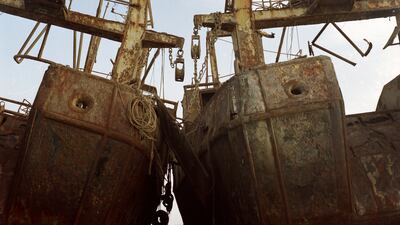
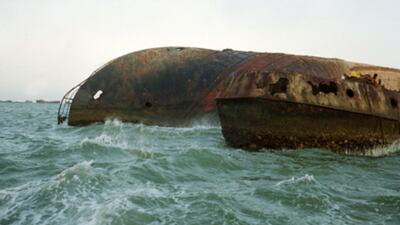
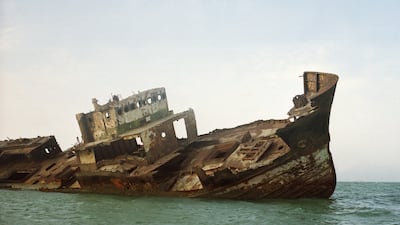
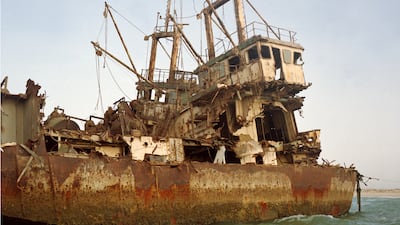
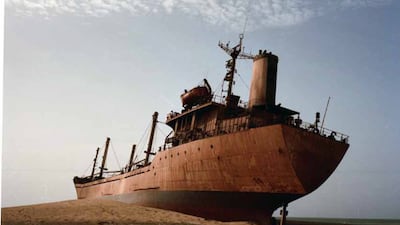
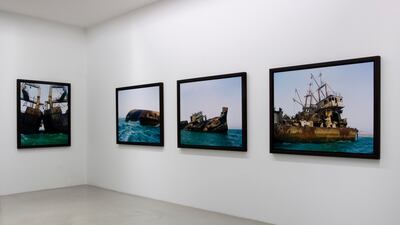
During a work trip to Mauritania in 2009, she developed a photographic series and film installation based around a maritime graveyard that is also an embarkation point for refugees from Africa to Europe. “I found myself between the desert and the sea, with abandoned boats on the beach. It was apocalyptic and somehow magnificent,” she says.

Her latest solo exhibition Can’t you see the sea changing? is on display at the Dundee Contemporary Arts in Scotland, and features parts of her London studio, including a collection of souvenir boats and other seaside town memorabilia.

“The sea is often seen as a space of freedom, but it can also be a barrier,” she says, in reference to the many victims of dangerous sea crossings from the Middle East and Africa.

Sedira was still a student when she became a mother, and raised her first two children alone for 12 years until some pressure was eased by a new partner who fathered her youngest daughter. “Motherhood made me more focused,” she says. “There was no messing around,” she adds in English to underscore her work ethic.

“I didn’t waste time with other students at cafes or pubs. It gave me an important structure. I slaved away. I was really, really tired. But it also gave me that fighting spirit, that motivation.”

With the children all grown up now, Sedira made the perhaps surprising decision recently to move her studio to Paris where she says the cinema scene affords more opportunities.

The abundant decor of Zineb Sedira's 1960s-themed living room in Brixton recreated as an installation, replete with plants, antique furniture, cinema posters, hand-woven rugs, and objects collected from markets. Courtesy Zineb Sedira and Mennour, Paris

“There’re a lot of art-house films being made and access to cinema is more affordable than in London.

“I’ve reached the age where I want to go back to my roots but also my Algerian community and family. London is getting too expensive and more difficult. In Paris, life feels a bit easier, gentler. If you have some money, it can be pleasant - the restaurants, the terraces.”

She hopes to find a rhythm, perhaps dividing her time between three weeks in Paris, one in Brixton but “it’s hard because I’m always travelling - whether it’s Tunisia, Berlin or Bali…” she says, trailing off as though the list might be never-ending.

As we sit in her flat, the sunshine pours in through the large arched windows opposite, bathing the family photo featuring her beloved Farida on a low side table in shafts of light.

It might otherwise be easily missed amid the abundant decor of the 1960s-themed room, replete with plants, antique furniture, cinema posters, hand-woven rugs, and bits and pieces collected from flea markets.

All of it was recreated for the Venice Biennale as an installation to invite people to immerse themselves in Sedira’s story by sitting on the sofa or flicking through the pages of a book.

For Dreams Have No Titles, Zineb Sedira designed a boite, or nightclub, in which she recreated the tango from a scene in Le Bal by the great Italian director Ettore Scola. Getty Images

“Making an installation out of my living room is an autobiographical act. There are pictures of my father, my mother, of Makkah, intimate photos, and traces of my life as a mother and artist in Brixton,” she says. “I’ve had so many dinners and parties in here. We dance, play vinyls.”

Sedira is an inveterate dancer. In childhood, her father used to ask her to dance to Algerian music for a symbolic sum, and she would create the setting from whatever was to hand to stage a show.

For Dreams Have No Titles, she had considerably more artistic budget to design a boîte, or nightclub, in which she recreates a tango, echoing a scene from Le Bal by the great Italian director Ettore Scola.

“I played in it,” she says, "and I invited my friends who are artists and curators to play in it, too. They’re my artistic community, my family.”

The vast number of people who have viewed the film plots a spectacular trajectory from her indulgent paternal audience of one in the gruelling French suburbs to the heights of the international art world.

It is a tale of survival, of taking one day at a time. As she says in a voice-over while shimmying in a yellow retro dress to Charles Wright’s Express Yourself in the final frames: ‘Just keep on dancing… dance to the tempo of life.’’


In the film's final frames, Zineb Sedira shimmies to Charles Wright's Express Yourself, a timeless hit that is a soulful urge for freedom. Courtesy Zineb Sedira and Mennour, Paris

Mercer, the investment consulting arm of US services company Marsh & McLennan, expects its wealth division to at least double its assets under management (AUM) in the Middle East as wealth in the region continues to grow despite economic headwinds, a company official said.

Mercer Wealth, which globally has $160 billion in AUM, plans to boost its AUM in the region to $2-$3bn in the next 2-3 years from the present $1bn, said Yasir AbuShaban, a Dubai-based principal with Mercer Wealth.

Within the next two to three years, we are looking at reaching $2 to $3 billion as a conservative estimate and we do see an opportunity to do so,” said Mr AbuShaban.

Mercer does not directly make investments, but allocates clients’ money they have discretion to, to professional asset managers. They also provide advice to clients.

“We have buying power. We can negotiate on their (client’s) behalf with asset managers to provide them lower fees than they otherwise would have to get on their own,” he added.

Mercer Wealth’s clients include sovereign wealth funds, family offices, and insurance companies among others.

From its office in Dubai, Mercer also looks after Africa, India and Turkey, where they also see opportunity for growth.

Wealth creation in Middle East and Africa (MEA) grew 8.5 per cent to $8.1 trillion last year from $7.5tn in 2015, higher than last year’s global average of 6 per cent and the second-highest growth in a region after Asia-Pacific which grew 9.9 per cent, according to consultancy Boston Consulting Group (BCG). In the region, where wealth grew just 1.9 per cent in 2015 compared with 2014, a pickup in oil prices has helped in wealth generation.

BCG is forecasting MEA wealth will rise to $12tn by 2021, growing at an annual average of 8 per cent.

Drivers of wealth generation in the region will be split evenly between new wealth creation and growth of performance of existing assets, according to BCG.

Another general trend in the region is clients’ looking for a comprehensive approach to investing, according to Mr AbuShaban.

“Institutional investors or some of the families are seeing a slowdown in the available capital they have to invest and in that sense they are looking at optimizing the way they manage their portfolios and making sure they are not investing haphazardly and different parts of their investment are working together,” said Mr AbuShaban.

Some clients also have a higher appetite for risk, given the low interest-rate environment that does not provide enough yield for some institutional investors. These clients are keen to invest in illiquid assets, such as private equity and infrastructure.

“What we have seen is a desire for higher returns in what has been a low-return environment specifically in various fixed income or bonds,” he said.

“In this environment, we have seen a de facto increase in the risk that clients are taking in things like illiquid investments, private equity investments, infrastructure and private debt, those kind of investments were higher illiquidity results in incrementally higher returns.”

The Abu Dhabi Investment Authority, one of the largest sovereign wealth funds, said in its 2016 report that has gradually increased its exposure in direct private equity and private credit transactions, mainly in Asian markets and especially in China and India. The authority’s private equity department focused on structured equities owing to “their defensive characteristics.”

Champions League Last 16

Red Bull Salzburg (AUT) v Bayern Munich (GER) 

Sporting Lisbon (POR) v Manchester City (ENG) 

Benfica (POR) v Ajax (NED) 

Chelsea (ENG) v Lille (FRA) 

Atletico Madrid (ESP) v Manchester United (ENG) 

Villarreal (ESP) v Juventus (ITA) 

Inter Milan (ITA) v Liverpool (ENG) 

Paris Saint-Germain v Real Madrid (ESP)  

%3Cp%3E%3Cstrong%3ETHE%20SPECS%3C%2Fstrong%3E%0D%3Cbr%3EEngine%3A%203.5-litre%20V6%0D%3Cbr%3ETransmission%3A%209-speed%20automatc%0D%3Cbr%3EPower%3A%20279hp%0D%3Cbr%3ETorque%3A%20350Nm%0D%3Cbr%3EPrice%3A%20From%20Dh250%2C000%0D%3Cbr%3EOn%20sale%3A%20Now%3C%2Fp%3E%0A
Should late investors consider cryptocurrencies?

Wealth managers recommend late investors to have a balanced portfolio that typically includes traditional assets such as cash, government and corporate bonds, equities, commodities and commercial property.

They do not usually recommend investing in Bitcoin or other cryptocurrencies due to the risk and volatility associated with them.

“It has produced eye-watering returns for some, whereas others have lost substantially as this has all depended purely on timing and when the buy-in was. If someone still has about 20 to 25 years until retirement, there isn’t any need to take such risks,” Rupert Connor of Abacus Financial Consultant says.

He adds that if a person is interested in owning a business or growing a property portfolio to increase their retirement income, this can be encouraged provided they keep in mind the overall risk profile of these assets.

Dirham Stretcher tips for having a baby in the UAE

Selma Abdelhamid, the group's moderator, offers her guide to guide the cost of having a young family:

• Buy second hand stuff

 They grow so fast. Don't get a second hand car seat though, unless you 100 per cent know it's not expired and hasn't been in an accident.

• Get a health card and vaccinate your child for free at government health centres

 Ms Ma says she discovered this after spending thousands on vaccinations at private clinics.

• Join mum and baby coffee mornings provided by clinics, babysitting companies or nurseries.

Before joining baby classes ask for a free trial session. This way you will know if it's for you or not. You'll be surprised how great some classes are and how bad others are.

• Once baby is ready for solids, cook at home

Take the food with you in reusable pouches or jars. You'll save a fortune and you'll know exactly what you're feeding your child.

START-UPS%20IN%20BATCH%204%20OF%20SANABIL%20500'S%20ACCELERATOR%20PROGRAMME
%3Cp%3E%3Cstrong%3ESaudi%20Arabia%3C%2Fstrong%3E%3C%2Fp%3E%0A%3Cp%3E%3Cstrong%3EJoy%3A%3C%2Fstrong%3E%20Delivers%20car%20services%20with%20affordable%20prices%3C%2Fp%3E%0A%3Cp%3E%3Cstrong%3EKaraz%3A%3C%2Fstrong%3E%20Helps%20diabetics%20with%20gamification%2C%20IoT%20and%20real-time%20data%3C%2Fp%3E%0A%3Cp%3E%3Cstrong%3EMedicarri%3A%3C%2Fstrong%3E%20Medical%20marketplace%20that%20connects%20clinics%20with%20suppliers%3C%2Fp%3E%0A%3Cp%3E%3Cstrong%3EMod5r%3C%2Fstrong%3E%3A%20Makes%20automated%20and%20recurring%20investments%20to%20grow%20wealth%3C%2Fp%3E%0A%3Cp%3E%3Cstrong%3EStuck%3A%3C%2Fstrong%3E%20Live%2C%20on-demand%20language%20support%20to%20boost%20writing%3C%2Fp%3E%0A%3Cp%3E%3Cstrong%3EWalzay%3A%3C%2Fstrong%3E%20Helps%20in%20recruitment%20while%20reducing%20hiring%20time%3C%2Fp%3E%0A%3Cp%3E%3Cstrong%3EUAE%3C%2Fstrong%3E%3C%2Fp%3E%0A%3Cp%3E%3Cstrong%3EEighty6%3A%20%3C%2Fstrong%3EMarketplace%20for%20restaurant%20and%20supplier%20procurements%3C%2Fp%3E%0A%3Cp%3E%3Cstrong%3EFarmUnboxed%3A%20%3C%2Fstrong%3EHelps%20digitise%20international%20food%20supply%20chain%3C%2Fp%3E%0A%3Cp%3E%3Cstrong%3ENutriCal%3A%3C%2Fstrong%3E%20Helps%20F%26amp%3BB%20businesses%20and%20governments%20with%20nutritional%20analysis%3C%2Fp%3E%0A%3Cp%3E%3Cstrong%3EWellxai%3A%3C%2Fstrong%3E%20Provides%20insurance%20that%20enables%20and%20rewards%20user%20habits%3C%2Fp%3E%0A%3Cp%3E%3Cstrong%3EEgypt%3C%2Fstrong%3E%3C%2Fp%3E%0A%3Cp%3E%3Cstrong%3EAmwal%3A%3C%2Fstrong%3E%20A%20Shariah-compliant%20crowd-lending%20platform%3C%2Fp%3E%0A%3Cp%3E%3Cstrong%3EDeben%3A%3C%2Fstrong%3E%20Helps%20CFOs%20manage%20cash%20efficiently%3C%2Fp%3E%0A%3Cp%3E%3Cstrong%3EEgab%3A%3C%2Fstrong%3E%20Connects%20media%20outlets%20to%20journalists%20in%20hard-to-reach%20areas%20for%20exclusives%3C%2Fp%3E%0A%3Cp%3E%3Cstrong%3ENeqabty%3A%3C%2Fstrong%3E%20Digitises%20financial%20and%20medical%20services%20of%20labour%20unions%3C%2Fp%3E%0A%3Cp%3E%3Cstrong%3EOman%3C%2Fstrong%3E%3C%2Fp%3E%0A%3Cp%3E%3Cstrong%3EMonak%3A%3C%2Fstrong%3E%20Provides%20financial%20inclusion%20and%20life%20services%20to%20migrants%3C%2Fp%3E%0A
Forced%20Deportations
%3Cp%3EWhile%20the%20Lebanese%20government%20has%20deported%20a%20number%20of%20refugees%20back%20to%20Syria%20since%202011%2C%20the%20latest%20round%20is%20the%20first%20en-mass%20campaign%20of%20its%20kind%2C%20say%20the%20Access%20Center%20for%20Human%20Rights%2C%20a%20non-governmental%20organization%20which%20monitors%20the%20conditions%20of%20Syrian%20refugees%20in%20Lebanon.%3C%2Fp%3E%0A%3Cp%3E%E2%80%9CIn%20the%20past%2C%20the%20Lebanese%20General%20Security%20was%20responsible%20for%20the%20forced%20deportation%20operations%20of%20refugees%2C%20after%20forcing%20them%20to%20sign%20papers%20stating%20that%20they%20wished%20to%20return%20to%20Syria%20of%20their%20own%20free%20will.%20Now%2C%20the%20Lebanese%20army%2C%20specifically%20military%20intelligence%2C%20is%20responsible%20for%20the%20security%20operation%2C%E2%80%9D%20said%20Mohammad%20Hasan%2C%20head%20of%20ACHR.%3Cbr%3EIn%20just%20the%20first%20four%20months%20of%202023%20the%20number%20of%20forced%20deportations%20is%20nearly%20double%20that%20of%20the%20entirety%20of%202022.%26nbsp%3B%3C%2Fp%3E%0A%3Cp%3ESince%20the%20beginning%20of%202023%2C%20ACHR%20has%20reported%20407%20forced%20deportations%20%E2%80%93%20200%20of%20which%20occurred%20in%20April%20alone.%26nbsp%3B%3C%2Fp%3E%0A%3Cp%3EIn%20comparison%2C%20just%20154%20people%20were%20forcfully%20deported%20in%202022.%3C%2Fp%3E%0A
Violence%20
%3Cp%3EInstances%20of%20violence%20against%20Syrian%20refugees%20are%20not%20uncommon.%3C%2Fp%3E%0A%3Cp%3EJust%20last%20month%2C%20security%20camera%20footage%20of%20men%20violently%20attacking%20and%20stabbing%20an%20employee%20at%20a%20mini-market%20went%20viral.%20The%20store%E2%80%99s%20employees%20had%20engaged%20in%20a%20verbal%20altercation%20with%20the%20men%20who%20had%20come%20to%20enforce%20an%20order%20to%20shutter%20shops%2C%20following%20the%20announcement%20of%20a%20municipal%20curfew%20for%20Syrian%20refugees.%3Cbr%3E%E2%80%9CThey%20thought%20they%20were%20Syrian%2C%E2%80%9D%20said%20the%20mayor%20of%20the%20Nahr%20el%20Bared%20municipality%2C%20Charbel%20Bou%20Raad%2C%20of%20the%20attackers.%3Cbr%3EIt%20later%20emerged%20the%20beaten%20employees%20were%20Lebanese.%20But%20the%20video%20was%20an%20exemplary%20instance%20of%20violence%20at%20a%20time%20when%20anti-Syrian%20rhetoric%20is%20particularly%20heated%20as%20Lebanese%20politicians%20call%20for%20the%20return%20of%20Syrian%20refugees%20to%20Syria.%3Cbr%3E%3Cbr%3E%3C%2Fp%3E%0A
Our legal consultant

Name: Hassan Mohsen Elhais

Position: legal consultant with Al Rowaad Advocates and Legal Consultants.

Company profile

Date started: 2015

Founder: John Tsioris and Ioanna Angelidaki

Based: Dubai

Sector: Online grocery delivery

Staff: 200

Funding: Undisclosed, but investors include the Jabbar Internet Group and Venture Friends

Revival
Eminem
Interscope

Key findings of Jenkins report
  • Founder of the Muslim Brotherhood, Hassan al Banna, "accepted the political utility of violence"
  • Views of key Muslim Brotherhood ideologue, Sayyid Qutb, have “consistently been understood” as permitting “the use of extreme violence in the pursuit of the perfect Islamic society” and “never been institutionally disowned” by the movement.
  • Muslim Brotherhood at all levels has repeatedly defended Hamas attacks against Israel, including the use of suicide bombers and the killing of civilians.
  • Laying out the report in the House of Commons, David Cameron told MPs: "The main findings of the review support the conclusion that membership of, association with, or influence by the Muslim Brotherhood should be considered as a possible indicator of extremism."
CRICKET%20WORLD%20CUP%20QUALIFIER%2C%20ZIMBABWE%20
%3Cp%3E%3Cstrong%3EUAE%20fixtures%20%20%3C%2Fstrong%3E%3C%2Fp%3E%0A%3Cp%3E%3Cstrong%3EMonday%2C%20June%2019%20%3C%2Fstrong%3E%3C%2Fp%3E%0A%3Cp%3ESri%20Lanka%20v%20UAE%2C%20Queen%E2%80%99s%20Sports%20Club%26nbsp%3B%3C%2Fp%3E%0A%3Cp%3E%3Cstrong%3EWednesday%2C%20June%2021%20%3C%2Fstrong%3E%3C%2Fp%3E%0A%3Cp%3EOman%20v%20UAE%2C%20Bulawayo%20Athletic%20Club%26nbsp%3B%3C%2Fp%3E%0A%3Cp%3E%3Cstrong%3EFriday%2C%20June%2023%3C%2Fstrong%3E%3C%2Fp%3E%0A%3Cp%3EScotland%20v%20UAE%2C%20Bulawayo%20Athletic%20Club%26nbsp%3B%3C%2Fp%3E%0A%3Cp%3E%3Cstrong%3ETuesday%2C%20June%2027%20%3C%2Fstrong%3E%3C%2Fp%3E%0A%3Cp%3EIreland%20v%20UAE%2C%20Bulawayo%20Athletic%20Club%3C%2Fp%3E%0A
JOKE'S%20ON%20YOU
%3Cp%3EGoogle%20wasn't%20new%20to%20busting%20out%20April%20Fool's%20jokes%3A%20before%20the%20Gmail%20%22prank%22%2C%20it%20tricked%20users%20with%20%3Ca%20href%3D%22https%3A%2F%2Farchive.google%2Fmentalplex%2F%22%20target%3D%22_blank%22%3Emind-reading%20MentalPlex%20responses%3C%2Fa%3E%20and%20said%3Ca%20href%3D%22https%3A%2F%2Farchive.google%2Fpigeonrank%2F%22%20target%3D%22_blank%22%3E%20well-fed%20pigeons%20were%20running%20its%20search%20engine%20operations%3C%2Fa%3E%20.%3C%2Fp%3E%0A%3Cp%3EIn%20subsequent%20years%2C%20they%20announced%20home%20internet%20services%20through%20your%20toilet%20with%20its%20%22%3Ca%20href%3D%22https%3A%2F%2Farchive.google%2Ftisp%2Finstall.html%22%20target%3D%22_blank%22%3Epatented%20GFlush%20system%3C%2Fa%3E%22%2C%20made%20us%20believe%20the%20Moon's%20surface%20was%20made%20of%20cheese%20and%20unveiled%20a%20dating%20service%20in%20which%20they%20called%20founders%20Sergey%20Brin%20and%20Larry%20Page%20%22%3Ca%20href%3D%22https%3A%2F%2Farchive.google%2Fromance%2Fpress.html%22%20target%3D%22_blank%22%3EStanford%20PhD%20wannabes%3C%2Fa%3E%20%22.%3C%2Fp%3E%0A%3Cp%3EBut%20Gmail%20was%20all%20too%20real%2C%20purportedly%20inspired%20by%20one%20%E2%80%93%20a%20single%20%E2%80%93%20Google%20user%20complaining%20about%20the%20%22poor%20quality%20of%20existing%20email%20services%22%20and%20born%20%22%3Ca%20href%3D%22https%3A%2F%2Fgooglepress.blogspot.com%2F2004%2F04%2Fgoogle-gets-message-launches-gmail.html%22%20target%3D%22_blank%22%3Emillions%20of%20M%26amp%3BMs%20later%3C%2Fa%3E%22.%3C%2Fp%3E%0A
UAE currency: the story behind the money in your pockets
What can victims do?

Always use only regulated platforms

Stop all transactions and communication on suspicion

Save all evidence (screenshots, chat logs, transaction IDs)

Report to local authorities

Warn others to prevent further harm

Courtesy: Crystal Intelligence

Dubai Bling season three

Cast: Loujain Adada, Zeina Khoury, Farhana Bodi, Ebraheem Al Samadi, Mona Kattan, and couples Safa & Fahad Siddiqui and DJ Bliss & Danya Mohammed 

Rating: 1/5

COMPANY PROFILE
Name: Mamo 

 Year it started: 2019 Founders: Imad Gharazeddine, Asim Janjua

 Based: Dubai, UAE

 Number of employees: 28

 Sector: Financial services

 Investment: $9.5m

 Funding stage: Pre-Series A Investors: Global Ventures, GFC, 4DX Ventures, AlRajhi Partners, Olive Tree Capital, and prominent Silicon Valley investors. 

 
Your rights as an employee

The government has taken an increasingly tough line against companies that fail to pay employees on time. Three years ago, the Cabinet passed a decree allowing the government to halt the granting of work permits to companies with wage backlogs.

The new measures passed by the Cabinet in 2016 were an update to the Wage Protection System, which is in place to track whether a company pays its employees on time or not.

If wages are 10 days late, the new measures kick in and the company is alerted it is in breach of labour rules. If wages remain unpaid for a total of 16 days, the authorities can cancel work permits, effectively shutting off operations. Fines of up to Dh5,000 per unpaid employee follow after 60 days.

Despite those measures, late payments remain an issue, particularly in the construction sector. Smaller contractors, such as electrical, plumbing and fit-out businesses, often blame the bigger companies that hire them for wages being late.

The authorities have urged employees to report their companies at the labour ministry or Tawafuq service centres — there are 15 in Abu Dhabi.

North Pole stats

Distance covered: 160km

Temperature: -40°C

Weight of equipment: 45kg

Altitude (metres above sea level): 0

Terrain: Ice rock

South Pole stats

Distance covered: 130km

Temperature: -50°C

Weight of equipment: 50kg

Altitude (metres above sea level): 3,300

Terrain: Flat ice
 

UAE currency: the story behind the money in your pockets
The%20Color%20Purple
%3Cp%3E%3Cstrong%3EDirector%3A%20%3C%2Fstrong%3EBlitz%20Bazawule%3Cbr%3E%3Cstrong%3EStarring%3A%20%3C%2Fstrong%3EFantasia%20Barrino%2C%20Taraji%20P%20Henson%2C%20Danielle%20Brooks%2C%20Colman%20Domingo%3Cbr%3E%3Cstrong%3ERating%3A%3C%2Fstrong%3E%204%2F5%3C%2Fp%3E%0A
What are NFTs?

Are non-fungible tokens a currency, asset, or a licensing instrument? Arnab Das, global market strategist EMEA at Invesco, says they are mix of all of three.

You can buy, hold and use NFTs just like US dollars and Bitcoins. “They can appreciate in value and even produce cash flows.”

However, while money is fungible, NFTs are not. “One Bitcoin, dollar, euro or dirham is largely indistinguishable from the next. Nothing ties a dollar bill to a particular owner, for example. Nor does it tie you to to any goods, services or assets you bought with that currency. In contrast, NFTs confer specific ownership,” Mr Das says.

This makes NFTs closer to a piece of intellectual property such as a work of art or licence, as you can claim royalties or profit by exchanging it at a higher value later, Mr Das says. “They could provide a sustainable income stream.”

This income will depend on future demand and use, which makes NFTs difficult to value. “However, there is a credible use case for many forms of intellectual property, notably art, songs, videos,” Mr Das says.

SPECS
%3Cp%3E%3Cstrong%3EEngine%3A%3C%2Fstrong%3E%202-litre%204-cylinder%20turbo%0D%3Cbr%3E%3Cstrong%3EPower%3A%20%3C%2Fstrong%3E268hp%0D%3Cbr%3E%3Cstrong%3ETorque%3A%20%3C%2Fstrong%3E380Nm%0D%3Cbr%3E%3Cstrong%3EPrice%3A%20%3C%2Fstrong%3EFrom%20Dh208%2C000%0D%3Cbr%3E%3Cstrong%3EOn%20sale%3A%20%3C%2Fstrong%3ENow%0D%3Cbr%3E%3C%2Fp%3E%0A

Florida: The critical Sunshine State

Though mostly conservative, Florida is usually always “close” in presidential elections. In most elections, the candidate that wins the Sunshine State almost always wins the election, as evidenced in 2016 when Trump took Florida, a state which has not had a democratic governor since 1991. 

Joe Biden’s campaign has spent $100 million there to turn things around, understandable given the state’s crucial 29 electoral votes.

In 2016, Mr Trump’s democratic rival Hillary Clinton paid frequent visits to Florida though analysts concluded that she failed to appeal towards middle-class voters, whom Barack Obama won over in the previous election.

Profile

Company: Justmop.com

Date started: December 2015

Founders: Kerem Kuyucu and Cagatay Ozcan

Sector: Technology and home services

Based: Jumeirah Lake Towers, Dubai

Size: 55 employees and 100,000 cleaning requests a month

Funding:  The company’s investors include Collective Spark, Faith Capital Holding, Oak Capital, VentureFriends, and 500 Startups. 

'Champions'

Director: Manuel Calvo
Stars: Yassir Al Saggaf and Fatima Al Banawi
Rating: 2/5
 

STAY%2C%20DAUGHTER
%3Cp%3E%3Cstrong%3EAuthor%3A%20%3C%2Fstrong%3EYasmin%20Azad%3C%2Fp%3E%0A%3Cp%3E%3Cstrong%3EPublisher%3A%20%3C%2Fstrong%3ESwift%20Press%3C%2Fp%3E%0A%3Cp%3E%3Cstrong%3EAvailable%3A%20%3C%2Fstrong%3ENow%3C%2Fp%3E%0A
Updated: August 17, 2023, 8:08 AM