

Thousands of Israelis continue to demonstrate across the country, days after the Israeli Knesset passed the first of three readings of its highly contested plans for reforms aimed at scaling back the power of the judiciary.
The proposed reform argues that the courts engage in too much political interference, overriding the will of the electorate. Critics of the reforms say the government's plans are too extensive and are a grave threat to the country's democratic system.
The government of Prime Minister Benjamin Netanyahu, which proposed the plans, is considered the most right wing in Israel's history.
Hours after the first vote was passed on Tuesday, thousands of protesters blocked main roads and Ben Gurion International Airport, packing into a designated protest area at Terminal 3, the airport's main hub, as part of a “day of disruption”.
Israeli police clashed with protesters and used water cannons to clear a motorway. More than 70 people were arrested across the country.
Demonstrators also turned up outside the President's residence in Jerusalem, the Israeli Ministry of Defence in Tel Aviv and the US embassy's branch office there.
And on Thursday, protesters took to the streets again.
“We are very determined. We are not afraid and for us this is an independence war. We are the warriors in the Israeli defence forces of democracy and we will not let any government ruin our democracy,” Ilan Samish, critic of the Netanyahu government and protester, told The National on his way to a demonstration in Haifa.
Mass rallies are expected to take place at the weekend.

What is Israel's 'reasonableness' bill?
The bill would prevent the court system from using a test of “reasonableness” when ruling against decisions and appointments made by all elected officials.
Mr Samish said that enacting the bill into law would allow the government and its ministers to carry out “unreasonable” acts and “not in a light way, in an extreme way”, paving the way for corruption and nepotism.
“Ministers will be able to appoint a director general of their office – someone who isn't capable, like a son or brother – and if their legal adviser tells them they can't do this, they will be able to just fire them.”
Adam Shinar, an associate professor at the Harry Radzyner Law School at Reichman University, was among the thousands of demonstrators who took to the streets in Tel Aviv this week.
“The bill has to pass three readings and the first one was a major step,” he told The National.
Mr Shinar gave an example of lighter issues that the Supreme Court rules on based on reasonableness.
“In 2018 the Supreme Court accepted Lara Alqassem's appeal against her deportation allowing her to study in Israel after former Strategic Affairs Minister Gilad Erdan insisted she was a security threat to the country. Ms Alqassem was accused of joining the Boycott, Divestment and Sanctions movement.”
The reasonableness bill is expected to be enacted into law before the end of the month, when the Knesset breaks for the summer, he added.
“The remaining bills include ones about appointments, limitations of judicial review and state attorneys,” he said.
-

Mass protests continue across Israel against the government's justice system reform plan. EPA -

Anti-government protesters march towards the Israeli Knesset in Jerusalem. EPA -

Protesters blocked roads across Israel, hours after parliament adopted a key clause of the government's judicial overhaul package, which opponents say threatens democracy. AFP -

A demonstrator in a dinosaur suit marches at Ben Gurion Airport near Lod. AFP -
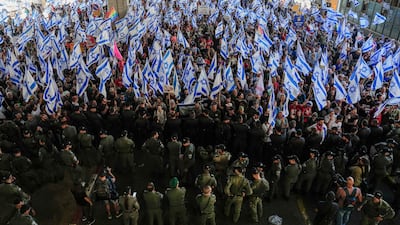
Israelis wave flags during a protest against plans by Prime Minister Benjamin Netanyahu's government to overhaul the judicial system. AP -

Israelis have taken to the streets en masse to protest against the government’s plans to weaken the power of judges. Bloomberg -

Mass protests continue across the country against the government's justice system reform plan. EPA -
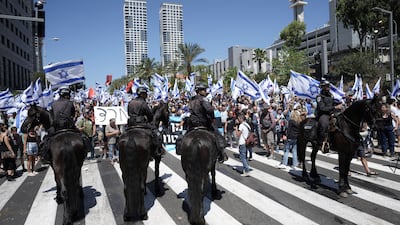
Mounted police in Tel Aviv, Israel, control protesters demonstrating against plans to overhaul the judicial system. AP -

Police and protesters clash on the 'Day of Disruption' opposing the judicial overhaul, in Tel Aviv. Reuters -

Israeli demonstrators wave flags as they block Highway 443 between Jerusalem and Tel Aviv, near Modiin. AFP -
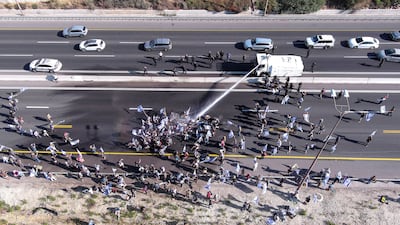
Israeli police use a water cannon against demonstrators at the Ein Hemed junction towards Jerusalem. Reuters -
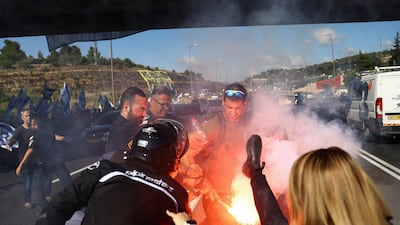
Protesters set off a flare near Jerusalem as they oppose a bill to curb the Israeli Supreme Court's power to void government decisions. Reuters -

A confrontation in Tel Aviv, Israel, during protests against the move by Prime Minister Benjamin Netanyahu's coalition. Reuters -
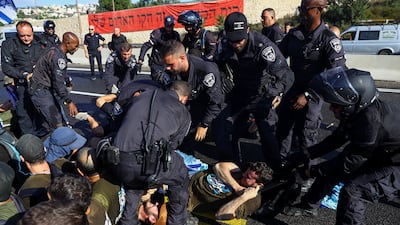
Members of the Israeli security forces remove demonstrators blocking a highway to Jerusalem. Reuters -
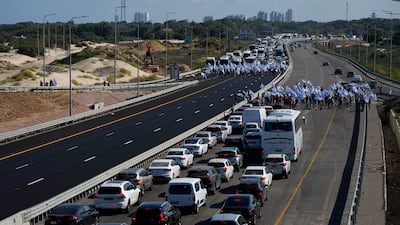
Israeli protesters block the Tel Aviv to Haifa highway near Beit Yanai, Israel. AP -
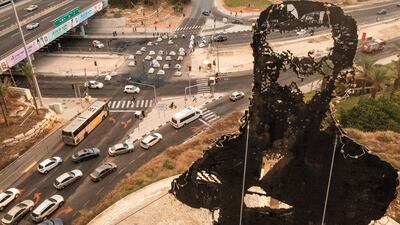
Demonstrators block a road with tents at the entrance to Herzliya, north of Tel Aviv, Israel. Reuters -

Israeli anti-government protesters block the entrance to Jerusalem, where some demonstrators entered the Knesset building. EPA


The reform plans have deeply divided the country since the government unveiled them at the start of the year.
Mass protests have taken place weekly since, with hundreds of thousands taking to the streets.
Although protests have peaked and waned in recent months, Tuesday's was one of the biggest this year, aside from when Mr Netanyahu said he would dismiss Defence Minister Yoav Gallant in April in response to his criticism of the judicial reforms.
Mr Netanyahu has since reversed that decision and later insisted that the reforms would help democracy rather than hurt it.
Hundreds of reservists in Israel's military and the Mossad intelligence service have threatened to stop turning up for duty this week in protest against the reforms.
More protests are planned on Saturday but they have become normalised, Mr Shinar said.
“The government has seen that it can allow demonstrations to take place and still go on with its plans,” he said, although he did not expect that opposition to Mr Netanyahu's judicial plans will go away in the near future.
Almost 500 Israeli active reservist pilots and navigators are also threatening to go on strike, public broadcaster Kan public reported. They intend to make a joint decision on whether to stop volunteering for service at this stage, the report said.
Supporters of the government’s judicial overhaul are planning a large rally backing its judiciary reforms in Tel Aviv on July 23.
The demonstration is planned for a Sunday evening at the same site where anti-overhaul protests are held on Saturdays.
The rally will coincide with the final days of the government’s legislative push, as it seeks to pass its limitations on the “reasonableness” clause by the end of the month.

