

Israeli President Isaac Herzog has issued a passionate call for unity as his country battles one of the most politically tense eras in its history, saying that Israel’s greatest existential threat “comes from within”.
Addressing about 2,000 affiliates of the Jewish Federations of North America (JFNA) in Tel Aviv, Mr Herzog said: “Within the abundance of our gifts, we can also acknowledge that there are some concerning trends in our peoplehood, trends that cast a shadow on our joint future.”
The President is playing a leading role in attempts to bring calm to the country's politics, as Prime Minister Benjamin Netanyahu’s government pushes ahead with a controversial, far-right policy agenda that opponents say threatens Israeli democracy.
Despite the call for unity, a panel event at the assembly involving government politician Simcha Rothman, the architect of the reforms, descended into chaos on Monday after protesters interrupted the session, with several being ejected from the room.
Demonstrators shouted "shame", and panellist and former politician Yohanan Plesner accused Mr Rothman of "crushing Israeli democracy".

During recent months, Mr Herzog has been playing a prominent role in negotiations between the government and opposition politicians over the coalition’s deeply divisive plans to overhaul the judiciary.
Proposed measures would limit the power of Israeli courts, including the Supreme Court, and give the government more say in the appointment of judges and senior legal officials.
Mass protests have been raging in the country for almost four months over the drastic reforms, despite the Prime Minister ordering a month-long hiatus on the proposals to allow for compromise talks.
Julie Platt, chairwoman of the board of trustees for JFNA, spoke directly to protesters gathered outside the meeting. “To the protesters outside: We see you, we hear you and we are inspired by your love for Israel,” she said.
Demonstrations are expected to intensify in the coming weeks as the Israeli Parliament returns for its summer session, a key period for the government as it tries to get the legal reforms over the line.
Attempts to do so last month ground to a halt after Defence Minister Yoav Gallant said the measures posed a “tangible” threat to state security and Israel’s biggest trade union launched a general strike.
Mr Netanyahu then sacked the Mr Gallant, only to reverse on the decision soon after.
Mr Gallant issued his public warning as growing numbers of Israeli reservists across the security establishment threaten to not turn up for duty in opposition to the legal overhaul.
This month, Mossad, Israel’s foreign intelligence agency, was forced to strenuously deny it had helped organise the demonstrations, after US media reported that leaked classified American documents suggested that the organisation’s leadership fomented public opposition and encouraged its officials to protest.
-
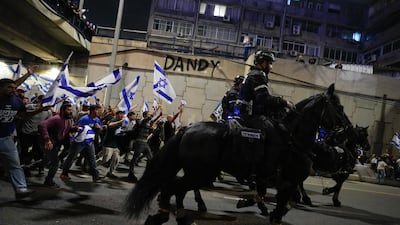
Israeli police disperse demonstrators blocking a road in Tel Aviv during a protest against plans by the government to overhaul the judicial system. AP -
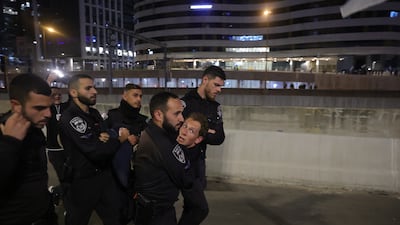
Police arrest a protester in Tel Aviv. EPA -
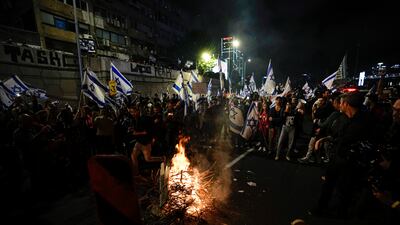
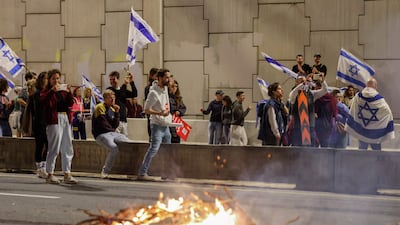
Demonstrators set up a bonfire on a road. AP -
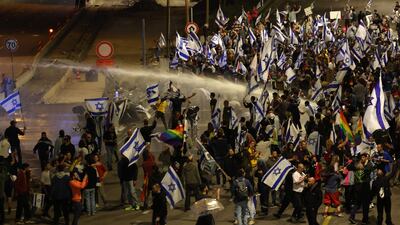
Israeli security forces use a water cannon to disperse protesters. AFP -
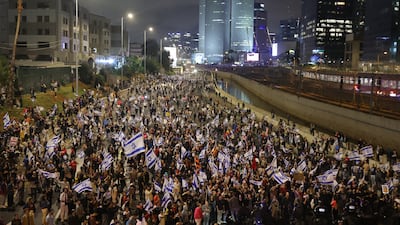
Thousands of protesters block the Ayalon main road. EPA -
The Tel Aviv protest swelled on Saturday to about 200,000 demonstrators, according to Israeli media estimates. AFP -
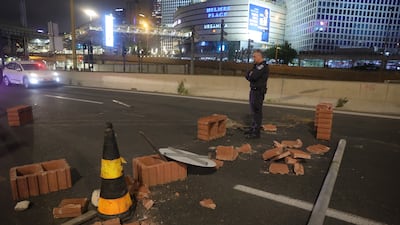
A roadblock placed by protesters on the Ayalon main road. EPA -
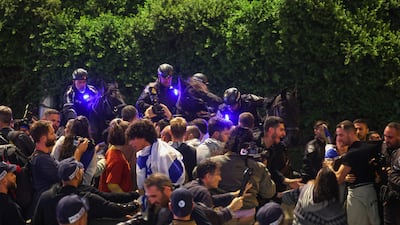
Demonstrations erupted in January after the coalition government announced its package of changes. AFP -
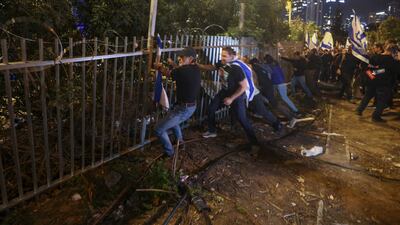
Israeli protesters dislodge a fence. AFP -
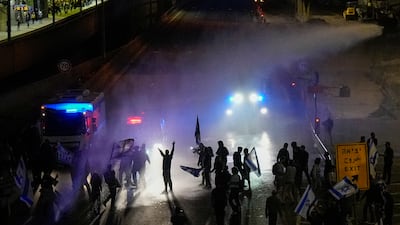
Police use a water cannon to disperse protesters. AP -
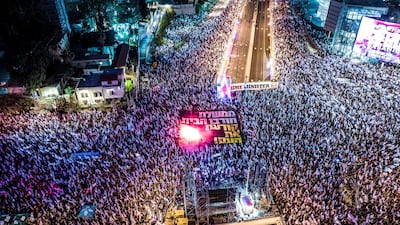
An aerial view of the protest. Reuters -
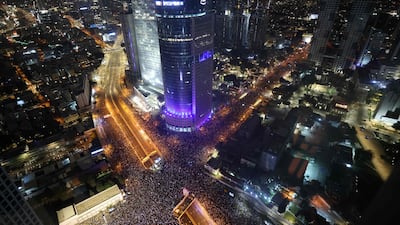
Plans to hand more control to politicians and diminish the role of the court have been questioned by Israel’s allies including the US. AFP -
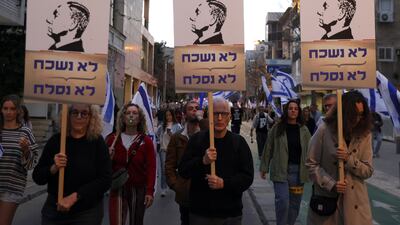
Protesters with placards of Prime Minister Netanyahu saying 'We will not forget, we will not forgive'. EPA


A statement from the Prime Minister’s office on behalf of the organisation said the reports were “completely false and absurd”.
Members of the country's air force, special forces and other branches of the intelligence branch are among the groups to have signalled disquiet over the government's proposals.
Plans for Israel’s Memorial Day commemoration on Tuesday have also been thrown into chaos, after a number of controversial government ministers pulled out of scheduled speaking engagements amid intense opposition by families of the deceased. The day commemorates Israeli soldiers and civilians killed in conflict since 1948.
Nonetheless, National Security Minister Itamar Ben-Gvir still aims to address a gathering at a cemetery.
Mr Ben-Gvir never served in the Israeli military and has been an outspoken advocate for far-right policies throughout his political career, including the annexation of the entire West Bank and loosening rules of engagement that bind Israeli forces.

