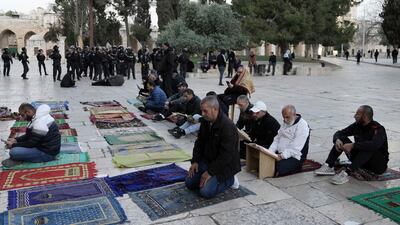
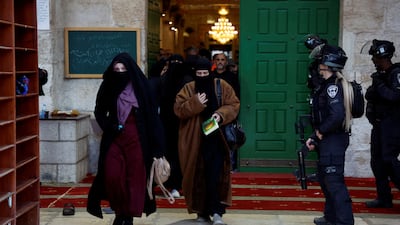
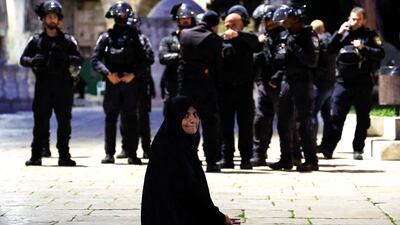
Jewish visitors and tourists will be barred from entering Al Aqsa Mosque compound in occupied East Jerusalem until the end of Ramadan, Israeli Prime Minister Benjamin Netanyahu's office said on Tuesday.
The entry of Jewish visitors and tourists will be prohibited "until the end of Ramadan on the unanimous recommendation of the Defence Minister, the Israeli Defence Forces Chief of Staff, the head of the Shin Bet and the Police Commissioner," the office said.
It follows a meeting between Mr Netanyahu and senior officials including Defence Minister Yoav Gallant and National Security Minister Itamar Ben-Gvir.
Jews are permitted to visit the site — revered by Muslims and Jews — but are not allowed to pray there under long-standing agreements between the two sides.
In Islam, during the final 10 days of the holy month of Ramadan, Muslims pray at the site overnight.
The number of visits by Jews to the mosque has grown in numbers in recent years, stoking anger, particularly as some Jews are often seen quietly praying.
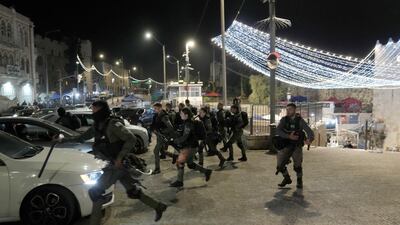
The rare convergence of Ramadan and the Passover festival brought dozens of Jews to the site last week, fuelling tensions that spiralled into unrest in Jerusalem and also across the region.
Mr Ben-Gvir described the move as "a serious mistake that will not bring peace, but may only escalate the situation".
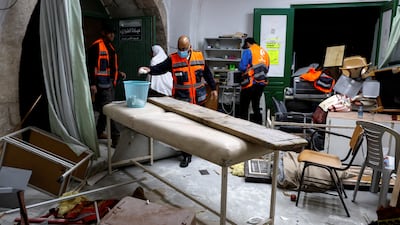
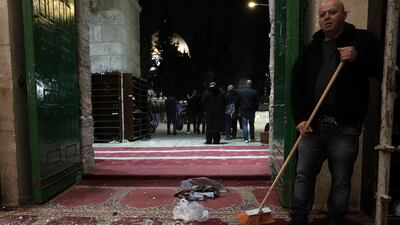
An Israeli police raid at the site last week triggered rocket attacks against Israel from Gaza, Lebanon and Syria. Israeli forces retaliated with strikes.
In previous years, Israel has barred Jewish visitors from entering the compound in the final 10 days of Ramadan.
Global criticism has mounted after violence between police and Palestinians inside Islam's third-holiest site during Passover and Ramadan this month.

What sanctions would be reimposed?
Under ‘snapback’, measures imposed on Iran by the UN Security Council in six resolutions would be restored, including:
- An arms embargo
- A ban on uranium enrichment and reprocessing
- A ban on launches and other activities with ballistic missiles capable of delivering nuclear weapons, as well as ballistic missile technology transfer and technical assistance
- A targeted global asset freeze and travel ban on Iranian individuals and entities
- Authorisation for countries to inspect Iran Air Cargo and Islamic Republic of Iran Shipping Lines cargoes for banned goods
COMPANY%20PROFILE
%3Cp%3E%3Cstrong%3EName%3A%20%3C%2Fstrong%3EEjari%3Cbr%3E%3Cstrong%3EBased%3A%20%3C%2Fstrong%3ERiyadh%2C%20Saudi%20Arabia%3Cbr%3E%3Cstrong%3EFounders%3A%20%3C%2Fstrong%3EYazeed%20Al%20Shamsi%2C%20Fahad%20Albedah%2C%20Mohammed%20Alkhelewy%20and%20Khalid%20Almunif%3Cbr%3E%3Cstrong%3ESector%3A%20%3C%2Fstrong%3EPropTech%3Cbr%3E%3Cstrong%3ETotal%20funding%3A%20%3C%2Fstrong%3E%241%20million%3Cbr%3E%3Cstrong%3EInvestors%3A%20%3C%2Fstrong%3ESanabil%20500%20Mena%2C%20Hambro%20Perks'%20Oryx%20Fund%20and%20angel%20investors%3Cbr%3E%3Cstrong%3ENumber%20of%20employees%3A%20%3C%2Fstrong%3E8%3C%2Fp%3E%0A
Dubai works towards better air quality by 2021
Dubai is on a mission to record good air quality for 90 per cent of the year – up from 86 per cent annually today – by 2021.
The municipality plans to have seven mobile air-monitoring stations by 2020 to capture more accurate data in hourly and daily trends of pollution.
These will be on the Palm Jumeirah, Al Qusais, Muhaisnah, Rashidiyah, Al Wasl, Al Quoz and Dubai Investment Park.
“It will allow real-time responding for emergency cases,” said Khaldoon Al Daraji, first environment safety officer at the municipality.
“We’re in a good position except for the cases that are out of our hands, such as sandstorms.
“Sandstorms are our main concern because the UAE is just a receiver.
“The hotspots are Iran, Saudi Arabia and southern Iraq, but we’re working hard with the region to reduce the cycle of sandstorm generation.”
Mr Al Daraji said monitoring as it stood covered 47 per cent of Dubai.
There are 12 fixed stations in the emirate, but Dubai also receives information from monitors belonging to other entities.
“There are 25 stations in total,” Mr Al Daraji said.
“We added new technology and equipment used for the first time for the detection of heavy metals.
“A hundred parameters can be detected but we want to expand it to make sure that the data captured can allow a baseline study in some areas to ensure they are well positioned.”
Racecard
5pm: Al Maha Stables – Maiden (PA) Dh80,000 (Turf) 1,600m
5.30pm: Wathba Stallions Cup – Maiden (PA) Dh70,000 (T) 1,600m
6pm: Emirates Fillies Classic – Prestige (PA) Dh100,000 (T) 1,600m
6.30pm: Emirates Colts Classic – Prestige (PA) Dh100,000 (T) 1,600m
7pm: The President’s Cup – Group 1 (PA) Dh2,500,000 (T) 2,200m
7.30pm: The President’s Cup – Listed (TB) Dh380,000 (T) 1,400m
The biog
Name: Sarah Al Senaani
Age: 35
Martial status: Married with three children - aged 8, 6 and 2
Education: Masters of arts in cultural communication and tourism
Favourite movie: Captain Corelli’s Mandolin
Favourite hobbies: Art and horseback ridding
Occupation: Communication specialist at a government agency and the owner of Atelier
Favourite cuisine: Definitely Emirati - harees is my favourite dish
THE%20STRANGERS'%20CASE
%3Cp%3E%3Cstrong%3EDirector%3C%2Fstrong%3E%3A%20Brandt%20Andersen%3Cbr%3E%3Cstrong%3EStarring%3A%20%3C%2Fstrong%3EOmar%20Sy%2C%20Jason%20Beghe%2C%20Angeliki%20Papoulia%3Cbr%3E%3Cstrong%3ERating%3A%3C%2Fstrong%3E%204%2F5%3C%2Fp%3E%0A
What is a calorie?
A food calorie, or kilocalorie, is a measure of nutritional energy generated from what is consumed.
One calorie, is the amount of heat needed to raise the temperature of 1 kilogram of water by 1°C.
A kilocalorie represents a 1,000 true calories of energy.
Energy density figures are often quoted as calories per serving, with one gram of fat in food containing nine calories, and a gram of protein or carbohydrate providing about four.
Alcohol contains about seven calories a gram.